How Po Makes Hand Drums, Portia Chapman, Uncategorized

Step-by-Step Guide to Stringing a Rawhide Drum with Portia “Po” Chapman, Kingston

A Photo Reference – Your Step-by-Step Guide

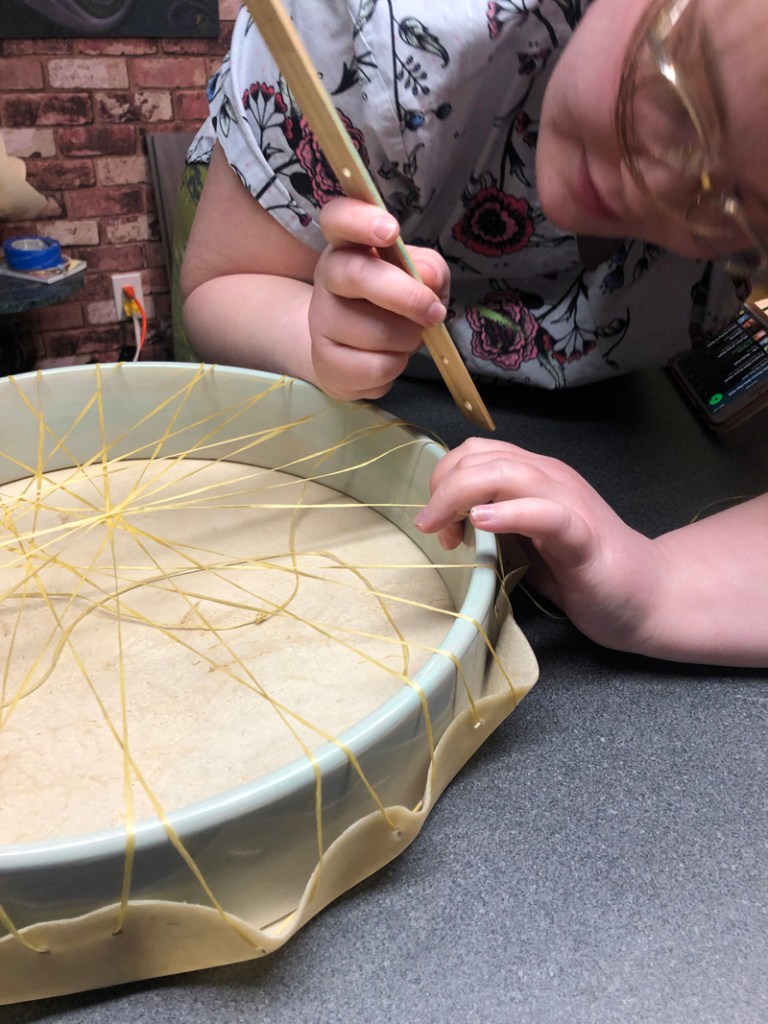
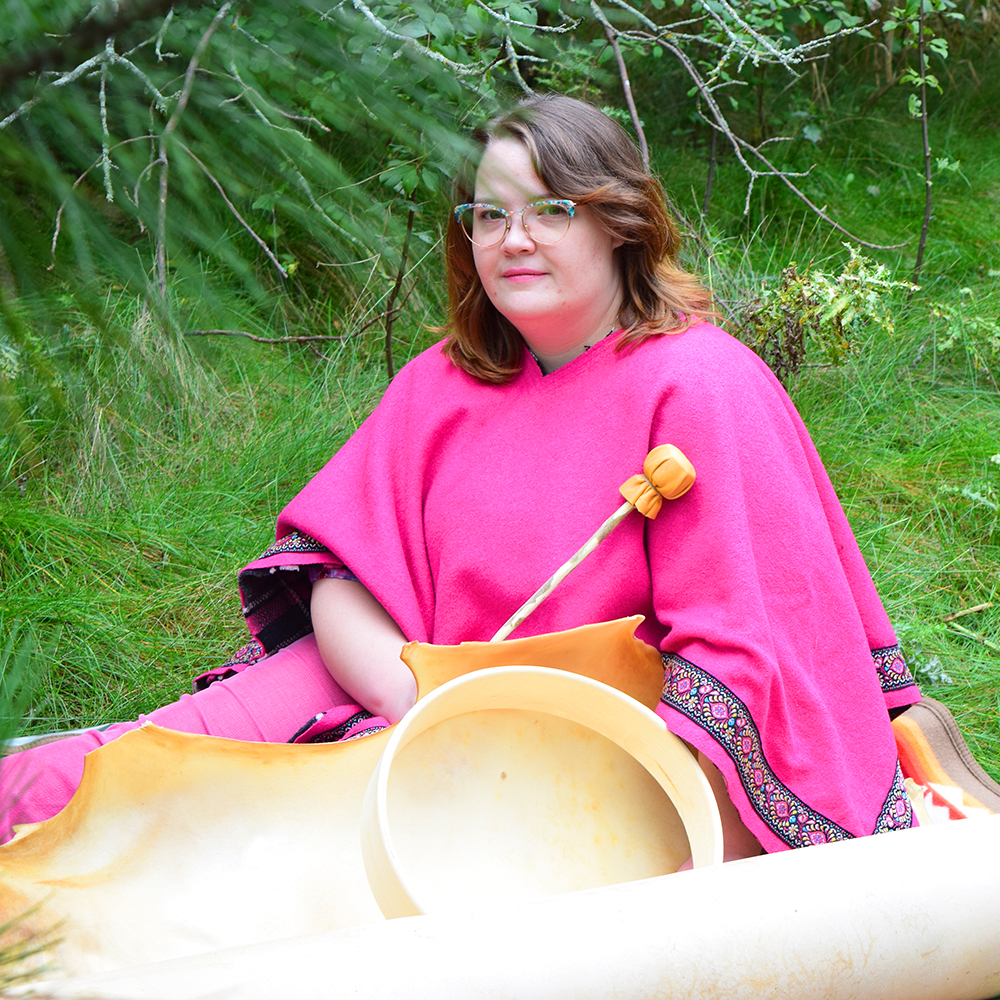
Po Stringing the Spokes of a 14″ Rawhide Drum
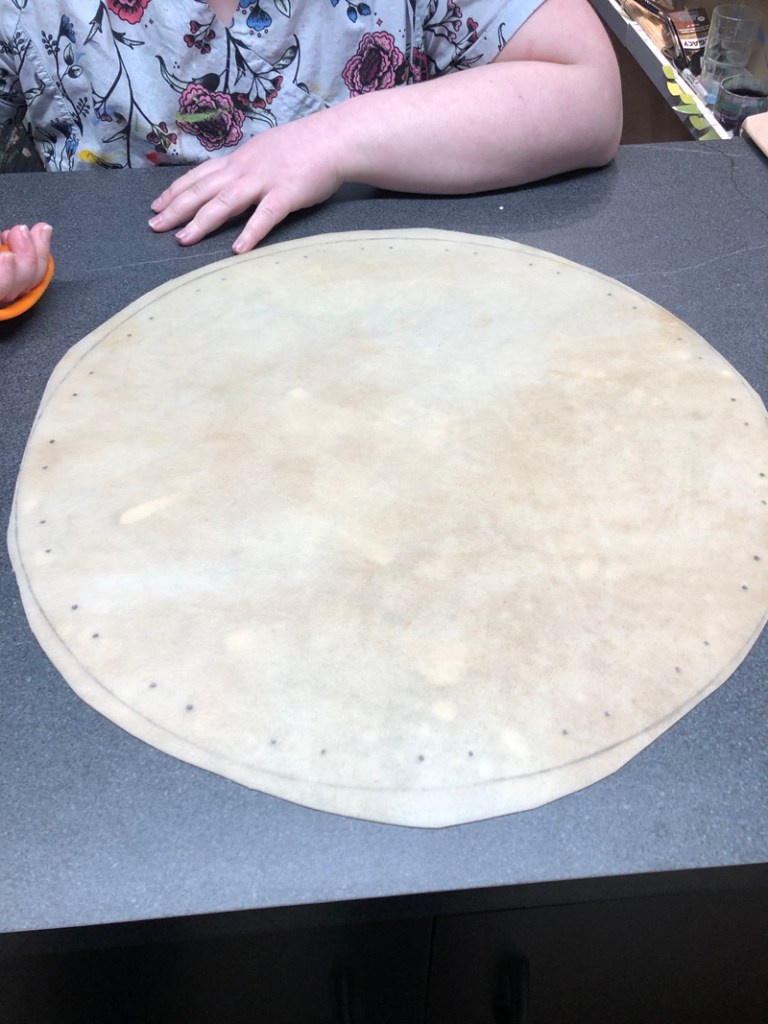
Po has Drawn on Shape and String Holes
and is Ready to Cut the Rawhide

In order to cut the shape, I first draw on the pattern. In order to do this, I lay the drum frame on the soaked rawhide and draw the shape with an HB pencil that is not very sharp. The size that I draw on is usually about 2-1/2″ larger all the way around the frame. So for a 14″D frame, I draw on a 19″D shape that is the same shape of the frame. After I do this, I mark the string pleating holes, to be punched out later. This can be a very frustrating step, so I create a paper template and fold the paper to assure that the pleat holes are perfectly symmetrical. I will be posting another how-to concerning this step, but basically the two holes close together are for the pleat and the wider space is where the hide will lay flat against the frame when dry. The number one thing to remember is, the pleats must be evenly spaced and even in number, such as 8, 12, 16 pleats and so on. Keep the string holes about 3/4″ from the edge, all the way around. Premium drums have 16+ pleats. But to begin, I would only use 8 or 12 pleats.

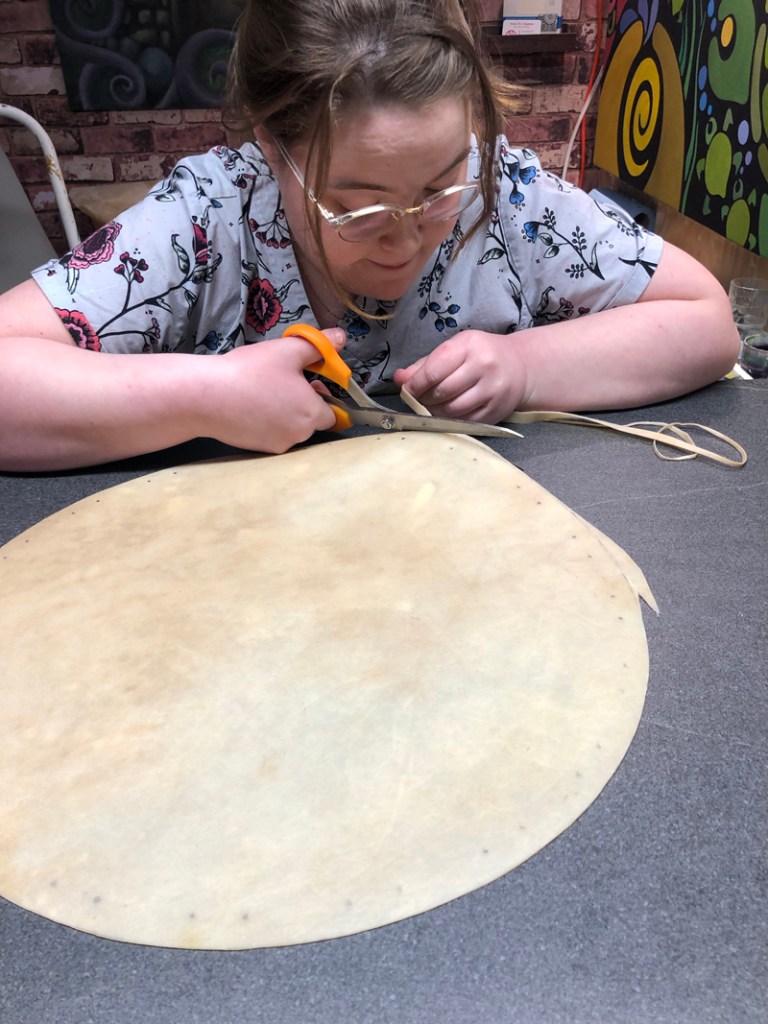
Po Cutting Soaked Rawhide to be Stretched Over
the Drum Frame

Cutting rawhide is fairly easy to do if the hide is thin. In this step-by-step guide, I am using opaque elk because this drum head will be painted. Elk and deer are from the same family. Deer is typically the more thin of the two. I will be posting another guide concerning the different rawhides, but for now a rule of thumb is: 14″D and smaller drums use deer or elk. In the photo at the top of this post, I am stringing a 14″ D drum with a coiled white cedar frame that I have painted. In order to cut thin elk, I find that using kitchen sheers or fabric scissors does a good job.

Po Punching Hole in Rawhide for Stringing the Frame Drum

This step is quite simple, once you have the hole spacing figured out. After I mark on the dots for stringing the drum skin pleats, I use a leather hole punch. There are two hole punches that are readily available to purchase at craft and building supplies stores, they are: ones that work like scissors (as in the photo above), and punches that resemble awls that you hammer through the rawhide. The former is usually strong enough for deer and elk, but the latter may need to be used when punching moose and bison. Punching holes through rawhide is not like punching holes through note paper. Rawhide is fibrous, almost stringy. When it is soaked, it becomes thick and rubbery too. In other words, every hole punches differently from each other.

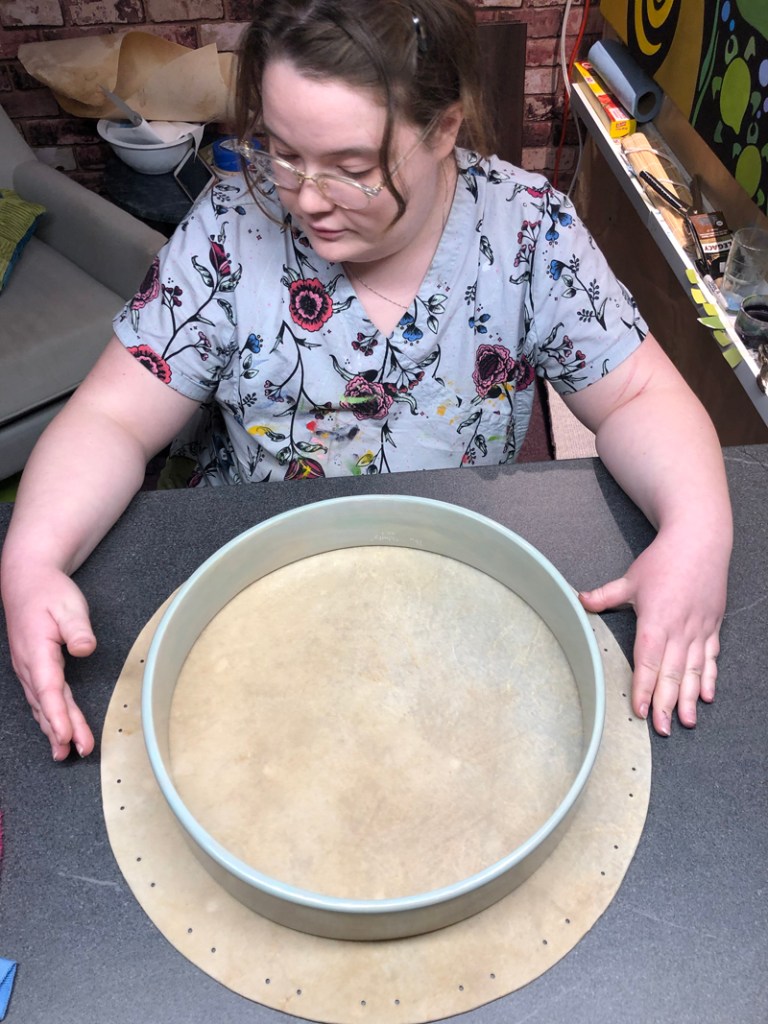
Po Placing Drum Frame in Centre of Cut Rawhide

Before stringing, I check to make sure that everything fits and is evenly spaced. I place the finished drum frame in the centre of the cut and punched rawhide. To assure that it fits the way I want it to fit, I use a ruler and measure the distances between the frame and the edge. All the way around, there should be the same amount of rawhide outside the drum frame.

Po Stringing Through First Punched Hole
After Measuring Out Sinew String/Lace

I use synthetic sinew for stringing. Some people call the sinew, “string,” and other people call it, “lace.” There are 4 types of string/lace, that are commonly used, they are: sinew (from a deer’s Achilles Tendon), synthetic sinew (buy by the spool), rawhide (thin strips that are cut from the perimeter of a soaked piece of rawhide), and rope for large moose, double headed, pow-wow drums. Measuring out the sinew is a tricky, nerve wrecking procedure. The length you need, needs to be one continuous strip. I measure about 5′ of string for every 1″ of drum frame diameter. So for a 14″D drum, I measure out 70′ of sinew. For a 24″ drum, I measure out 120′ of sinew. Also, just to be safe, I measure out another 20′ of sinew. I ran short once. I never want that to happen again. So now I wheel off extra! “Better safe than sorry,” as they say. This is the number 1 reason I use synthetic sinew. It is the best choice to use 120′ of continuous string.

While Stringing the Drum, Po Measures the Edges
to Assure that the Drum Frame
has Remained in Place

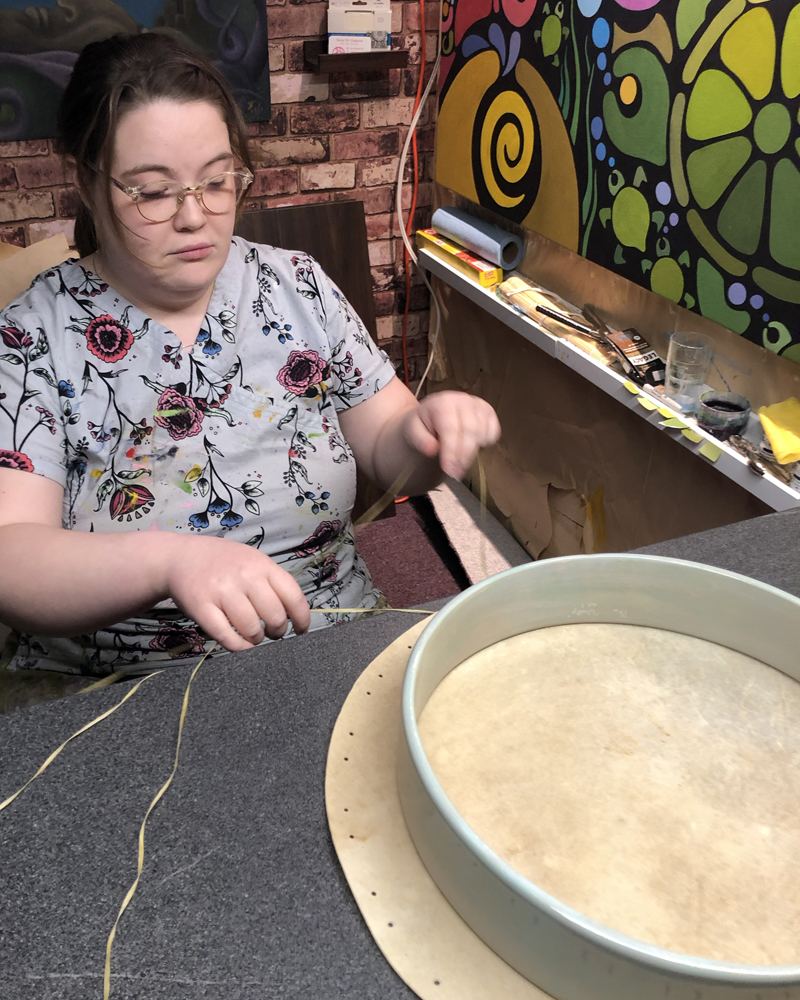
To string a drum, I pull one end of the string through one hole and then through the hole on the exact opposite side. Please note, I pull the entire strand through both holes, leaving about 2′ hanging outside the first hole. Then I continue to do the same, all the way around the drum, crossing the strings through the centre. In the image immediately above, notice that the string passes through the frame-side of the pleats (the two closest hole pairs). This allows for an attractive, elegant pleating of the hide. So when stringing, pass your needle through the outside of the hide, across the inside, and then through the inside to the outside. You’ll catch on. The practical reason I do this is due to physics. By pleating through two holes, rather than one, creates a stronger hold while applying less pulling on the individual holes. If you use one hole, you stand a pretty good chance that the rawhide will rip through. Believe me when I say: “YOU DO NOT WANT THAT!” Please note that I am creating a video to illustrate this more clearly and will be posting in the near future.

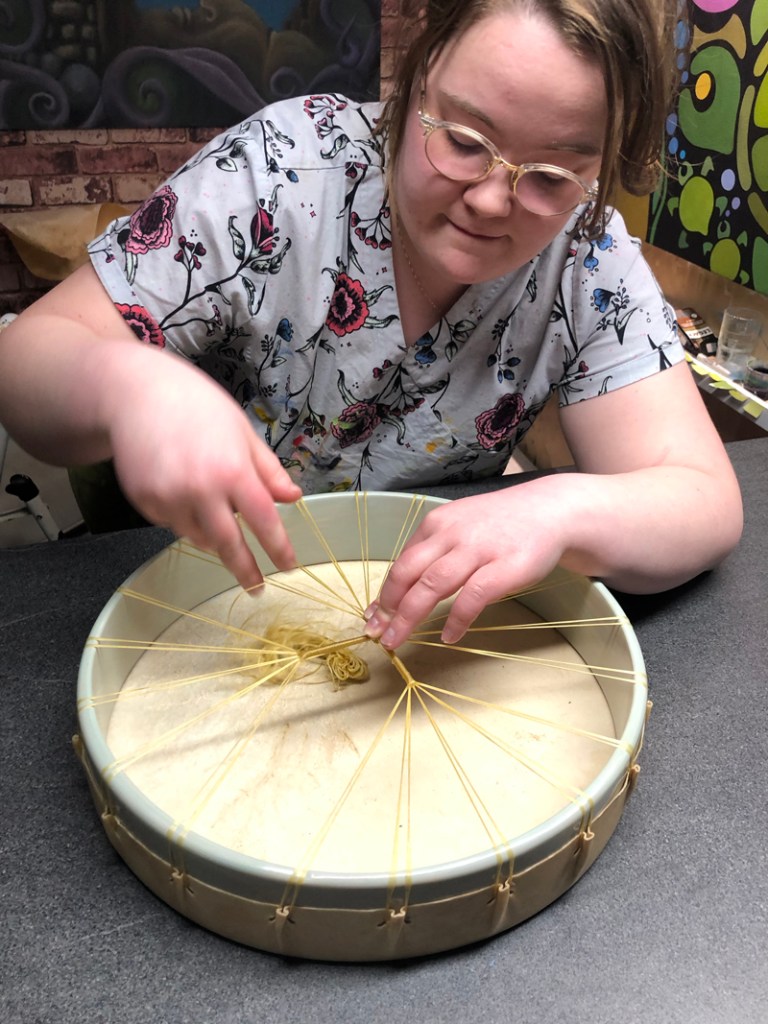
After Stringing, Po Creates Spokes to Hang Onto While Drumming

Before I begin with this step, take a look at how the pleats look after the rawhide has been stretched and strung. By stringing through the frame side of the pleats, a uniform pleating is created and the pulled holes are firm and uniform. If you want to make a premium drum, you will need to master this step with this method of drum stringing. Now onto the spokes. From what I can tell, in various traditions, the spokes are formed by wrapping cord, sinew, or deer hide. Locally, they are formed and wrapped using split deer hide. I prefer using the continuous synthetic sinew because it is strong and I prefer the appearance. So what I do is, I wrap the sinew around multiple pleat (forming) strings. As you can see in the photo, I am wrapping 10 strings (5 pleats’ worth) together. I wrap them as far up as I want to achieve the desired tightness of hide. When I reach the furthest point desired, I weave the sinew through the individual strings 3 or 4 times. This creates a basket weave appearance. I do this to anchor the spoke so that it won’t slide out of place. When the weaving is complete, I wind the sinew back down the spoke. Once the centre knot of the strings is reached, I wrap the centre knot a few times and pull it tightly. Then I proceed to create another spoke. Once all 4 spokes have been created, I knot off the string behind the main centre knot. At this point, the drum is complete. I then sit the drum in a dryish (50% humidity) location with good ventilation above and below the drum. In just a few days the drum is ready to be drummed.

Materials you need:
– scissors ($10-$50)
– darning needle ($2)
– pencil ($1)
– paper and tape ($10)
– hole puncher ($30)
– finished drum frame ($100-$300)
– soaked rawhide ($300-$700)
– synthetic sinew ($30)
– patience (priceless)

Go back

Contact Email Confirmation

Hi, Po here! Thanks for sending me an email. I will get back to you within a few days. Have a beautiful day!
Warning
Warning
Warning
Warning.

How Po Makes Hand Drums, Portia Chapman, Uncategorized

How to Stretch and String a Rawhide Hand Drum: Kingston Artist Portia Po Chapman’s Method

How to Stretch and String a Rawhide Hand Drum: Kingston Artist Portia Po Chapman’s Method
Po Stringing Her 24 Inch Elk Rawhide Drum Entitled: “Nature in Me.”

Link to: Phase 1 of Drum Making is Making the Drum Frame
Link to: Phase 3 – Painting the Drum Face
Link to: Painted Drums Page

Phase 2 of Drum Making is Working with Rawhide: Soaking, Stretching, Stringing

In order to make a drum, there are 3 basic stages of working with the rawhide: Soaking, Stretching and Stringing. Although these stages can be rushed, to achieve a premium drum that sings beautifully, it takes a lot of time, care and love. Hence, from receiving the rawhide to completing a playable tuned instrument, it takes about 1 month, sometimes longer. In my studio, I do all of the steps below. Please note that I do employ a shop hand to help detangle sinew when I am stringing large drums, like the one in the above image, because a 24 inch diameter drum requires a 100+ feet long continuous strand of sinew .

Phase 2 of Drum Making: Working with Raw Hide

  • Purchase sustainable rawhide that supports Indigenous communities across Canada.
  • Build relationship with the hide.
  • Humidity condition hide in the hide room.
  • Po waits for the hide to “speak” to her – it may sound strange but the hide will choose to make a drum or a drum will not be made. Working with rawhide requires patience and a lot of love.
  • Once the hide is ready to make a drum and make its voice once-again heard, Po introduces the hide to the frame options – this is a beautifully mystical step in Po’s drum making process whereby a holistic, earthy bond is made between wood, rawhide and drum maker.
  • With the marriage of drum frame and drum skin, Po designs a drum skin template with the number and placement of stringing pleats marked.
  • The rawhide is rough cut to match the shape of the template.
  • The rawhide is cleaned, scrubbed, pealed , rubbed and polished.
  • Sometimes the rawhide requires a sunshine bath or controlled UV bath.
  • Using a galvanized wash tub, Po soaks the rawhide for 24-48 hours in a rain water bath as the rawhide is kept submerged using special quartz and/or citrine rocks that she found while diving in her childhood lake.
  • Once the rawhide has become thick and pliable, it is removed from the water and rubbed with a soft terry towel. It is then cut to the shape of the pre-designed template.
  • String holes are punched (Po’s premium drums have between 16 and 30 pleats).
  • Of synthetic and waxed sinew, Po measures out about 5 feet per pleat – yes 80+ feet.
  • The frame is laid onto the underside of the rawhide and Po begins the lacing process.
  • As you can see in the above photo, generally, Po strings the drums by putting the string through two holes (to make pleat) on one side of the drum and then does the same on the exact opposite side of the drum. Po uses more decorative / ornate stringing patterns when stringing Po’s non-circular hand-bent drums.
  • Using a darning needle to string a drum, it takes Po between 2 hours and 8 hours of hand stitching, winding and wrapping the sinew as she pulls the rawhide into place. It can be tricky, when stringing large drums, because the hide begins to dry and become stiff within 30 minutes of being removed from the water. Aligning the timing of stitching and drying is possibly the most difficult thing for a drum maker must grow accustomed.
  • At this step, Po has found that the hide wins the tugging process. No matter how even the rawhide edge is originally made by Po, the rawhide will pull it to where it wants – resulting in a less uniform rawhide edge around the frame. Synthetic skin head drums do not present this challenge.
  • It is also worth noting that each animal and species’ rawhide pulls differently – and the spinal ridge pulls differently from the belly region. This takes a long time to get used to. In the case of working with rawhide as a textile, Po has had to relax and work with the rawhide, rather than demanding that it behave as she may want it to.
  • The drum is placed on the drum drying racks and is dried in a 50% humidity controlled space.
  • Once the drum is dry, it is taken out into the sunlight and drummed.
  • Po sings, chants and drums the new drum as they both rejoice. It is a seemingly miraculous happening.
  • Sometimes the general pitch of the drum is determined by drumming it beside a well tuned 1950’s Heinzman piano.
  • You cannot get use to the moment when the rawhide seems to come back to life and express its own voice and connection with the drummer.
  • The drum’s pulse throbs upon the breeze.
  • The ethers rejoice and the heart smiles with an air of wellness.
  • The central sinew knot at the back of the drum is then waxed. To try the drums, Po has people use nitrile gloves. When the drum is paid for and drummer is ready, the drummer’s glove is removed. At that time, the drummer & drum imprint. Their bond is marked by the drummer’s hand print pressed into the beeswax.
  • The drum is then cared for and sung with in the humidity controlled studio until it is to have a painted face (if it is ever painted – some drums refuse to be painted while other drums seek to be painted).
  • Another phenomenon then occurs – the drum picks the drummer at exactly the same time as when the drummer picks the drum. The moment of bonding is nothing short of magical.
  • Premium drums made by Po are very, very special – and premium special drums cannot be rushed.

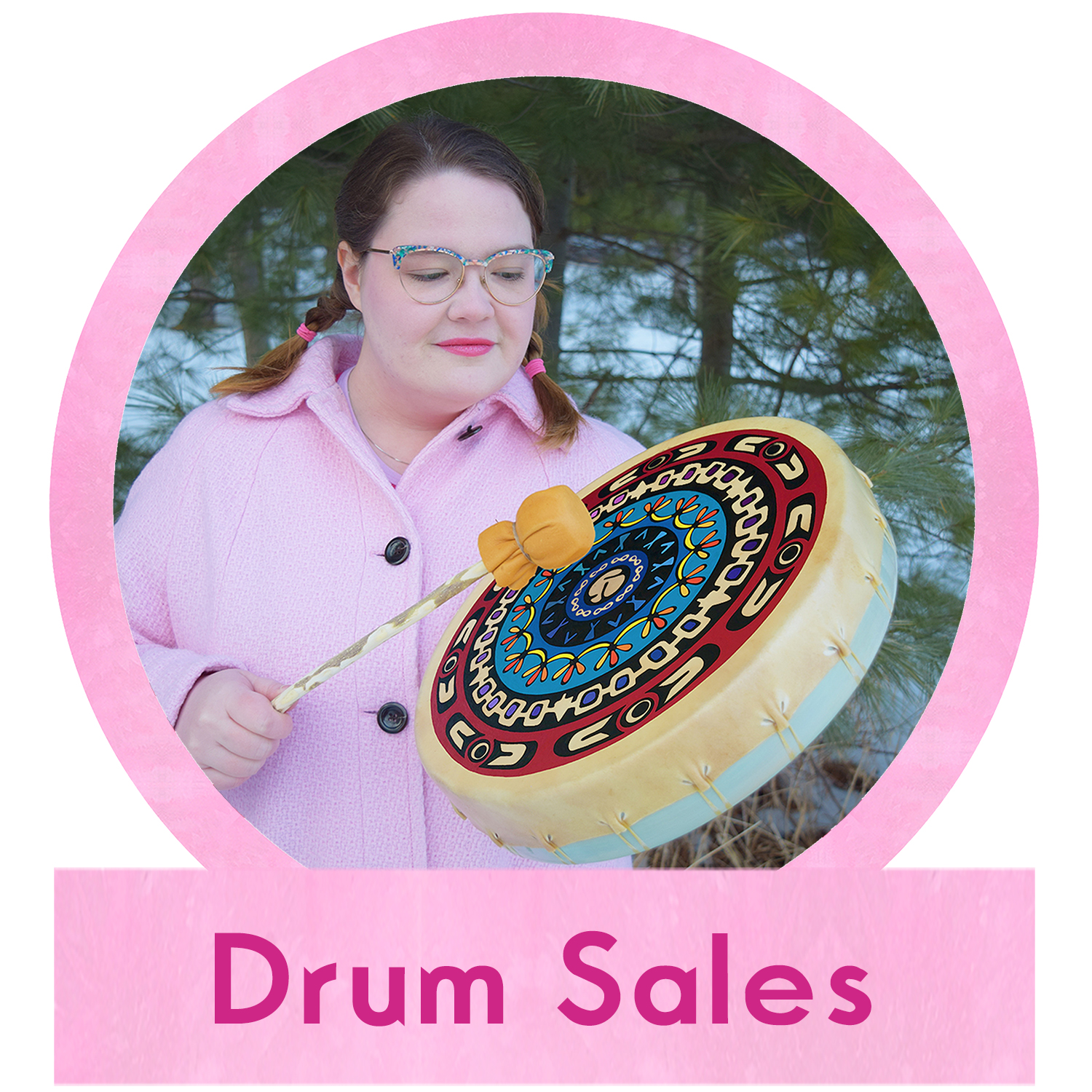
I exhibit and sell the drums I make. Please contact me to purchase a completed drum or to discuss a custom hand drum made just for you. Drums range from $200-$2000.

I look forward to fitting you with your drum,
Po

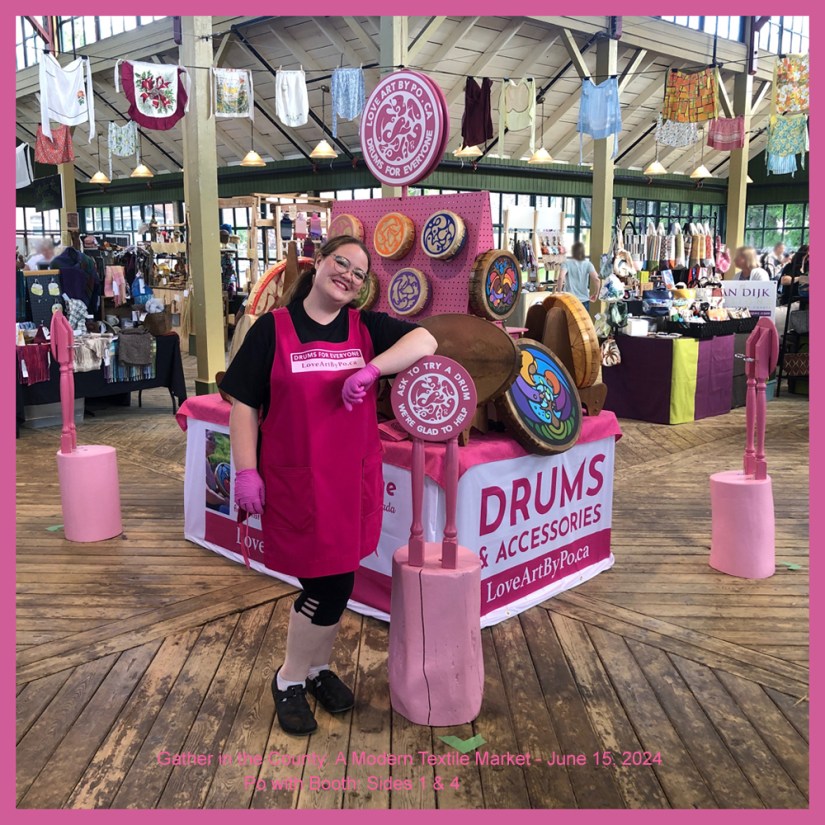
Po Standing with Drum Booth
At the Gather in the County – Modern Textile Market – Picton, ON
June 15, 2024

Portia Chapman

Portia “Po” Chapman Begins Painted Hand Drum Trials

Portia “Po” Chapman Begins Painted Hand Drum Trials

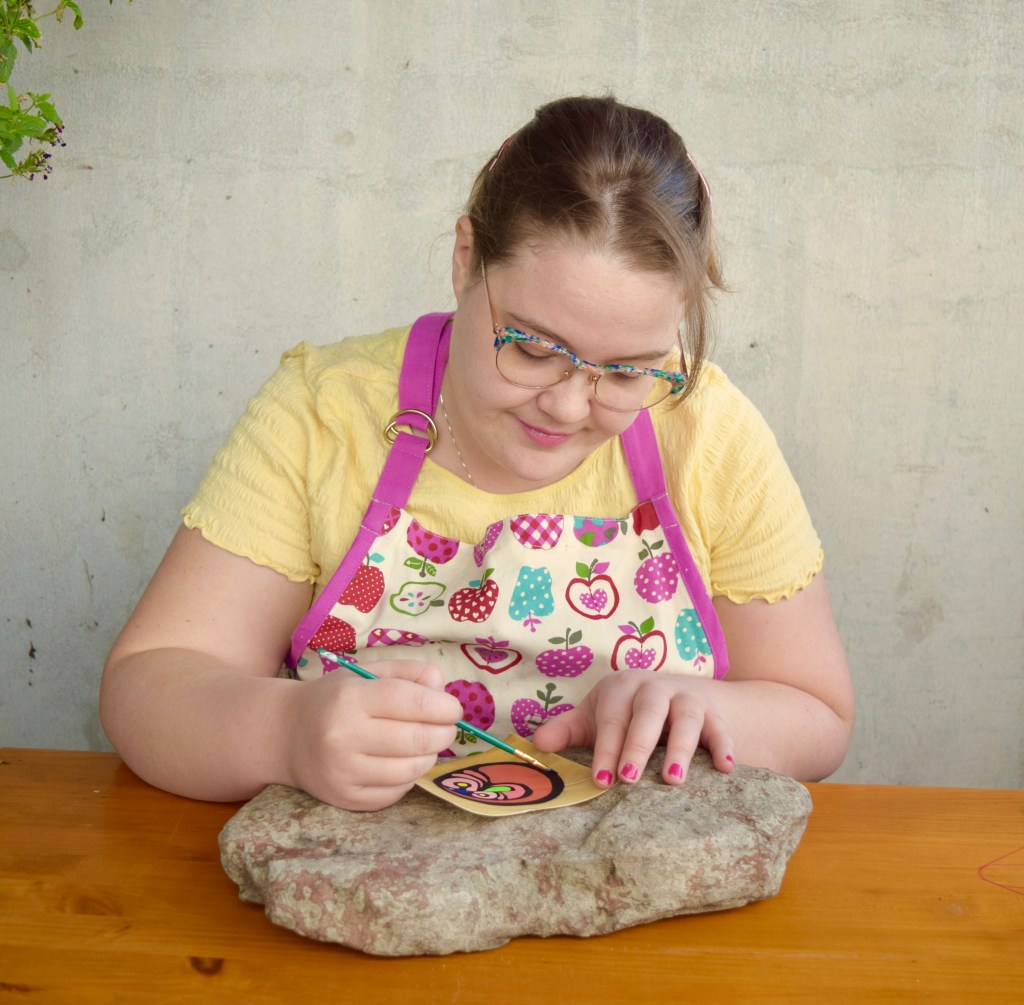
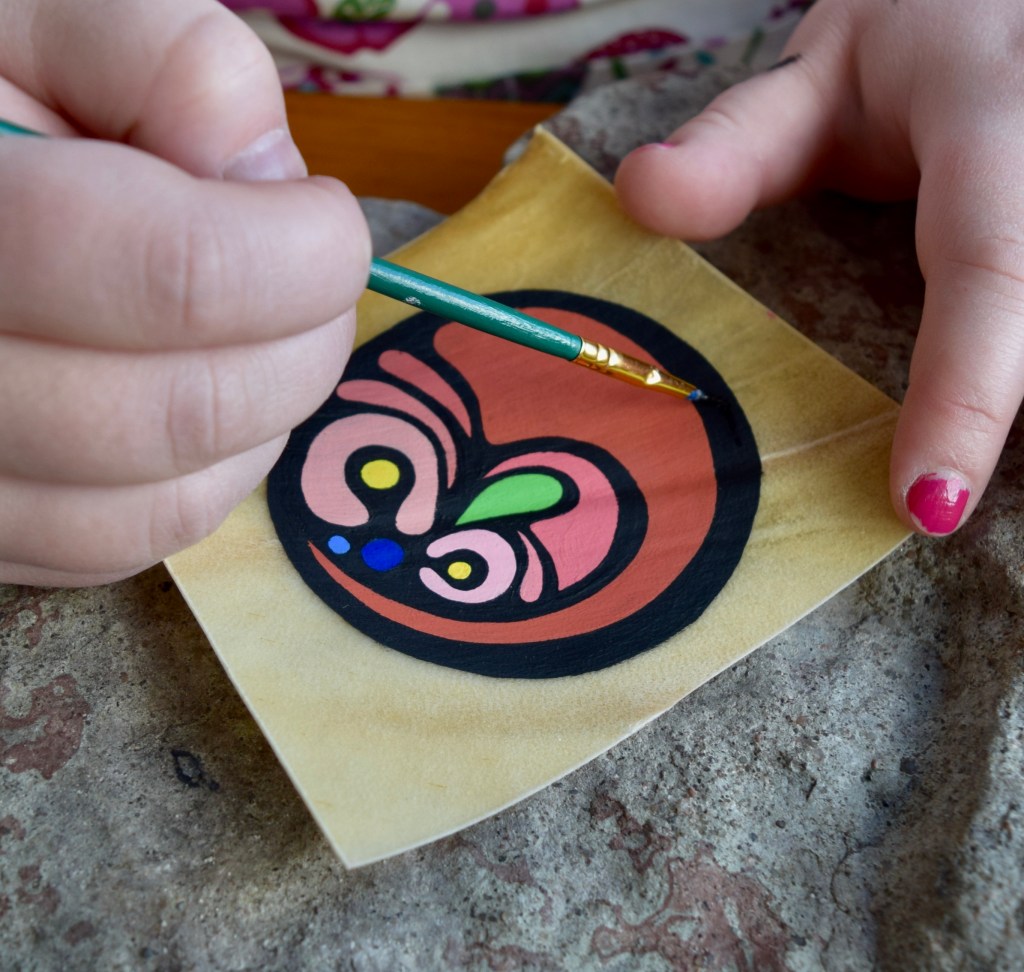
Portia “Po” Chapman trial painting on elk rawhide.

I am excited to announce that painted hand drum trials have commenced. After experimenting with a variety of different mediums and paints, I finally found the paint that is right for me and my new painted hand drum collection. Golden’s new SoFlat matte acrylic paints glide beautifully on the surface of the elk rawhide as if a perfect marriage between the two mediums (Golden, not a sponsor, but I would be glad to accept a sponsorship from them 🙂 ). The paint’s self levelling qualities allow for intense pigment while keeping the natural integrity of the hide’s textures. The paint is also flexible enough that I could almost bend the hide in half without the paint cracking, allowing for the flexibility required of a hand drum. While the paint is amazingly opaque, when the painted hide is held up to the sun, you can still see the light shine through it. My patrons will be very pleased with the quality of their new hand drum.

Portia “Po” Chapman painting with Golden SoFlat acrylic paints on elk rawhide.

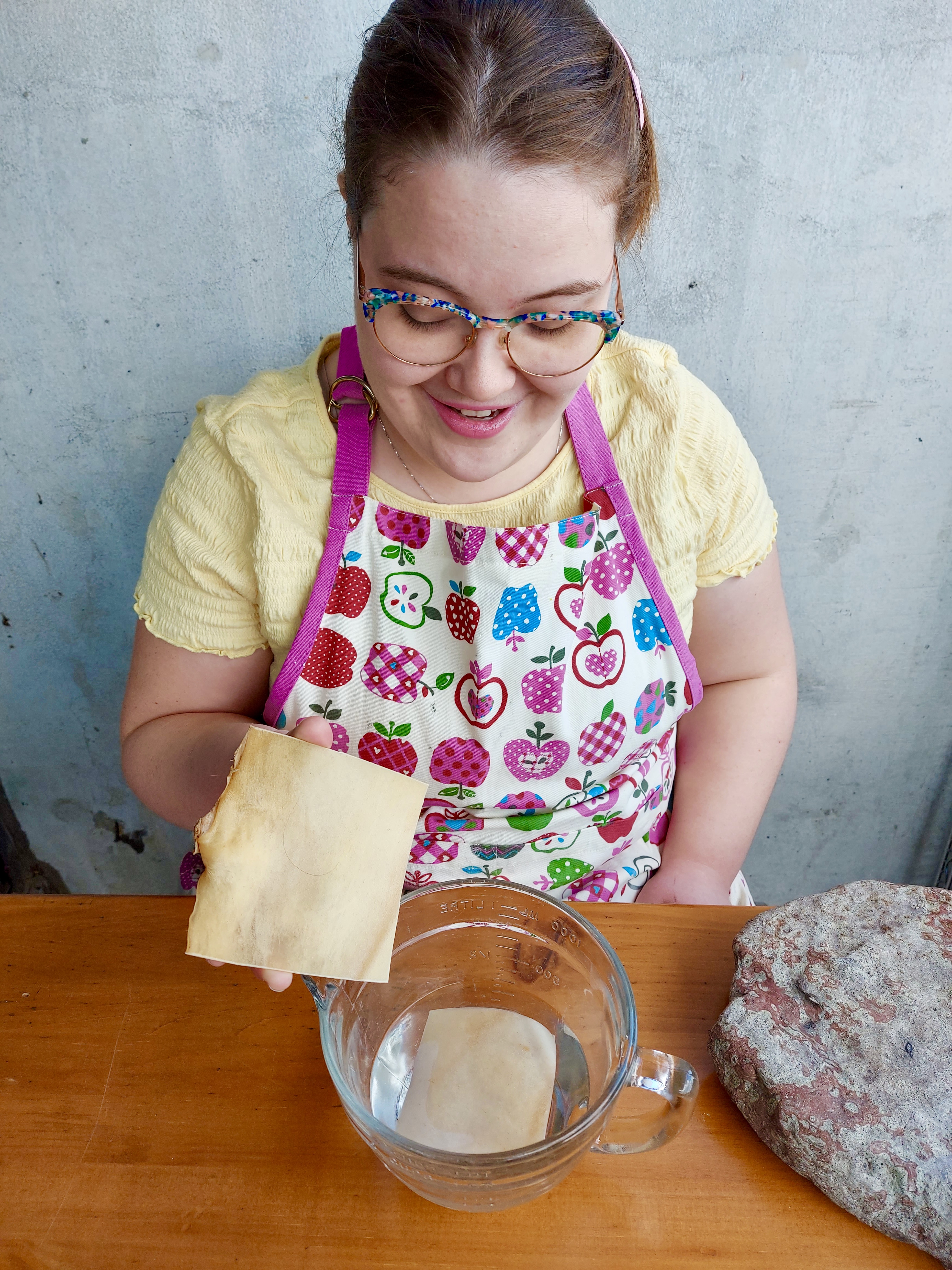
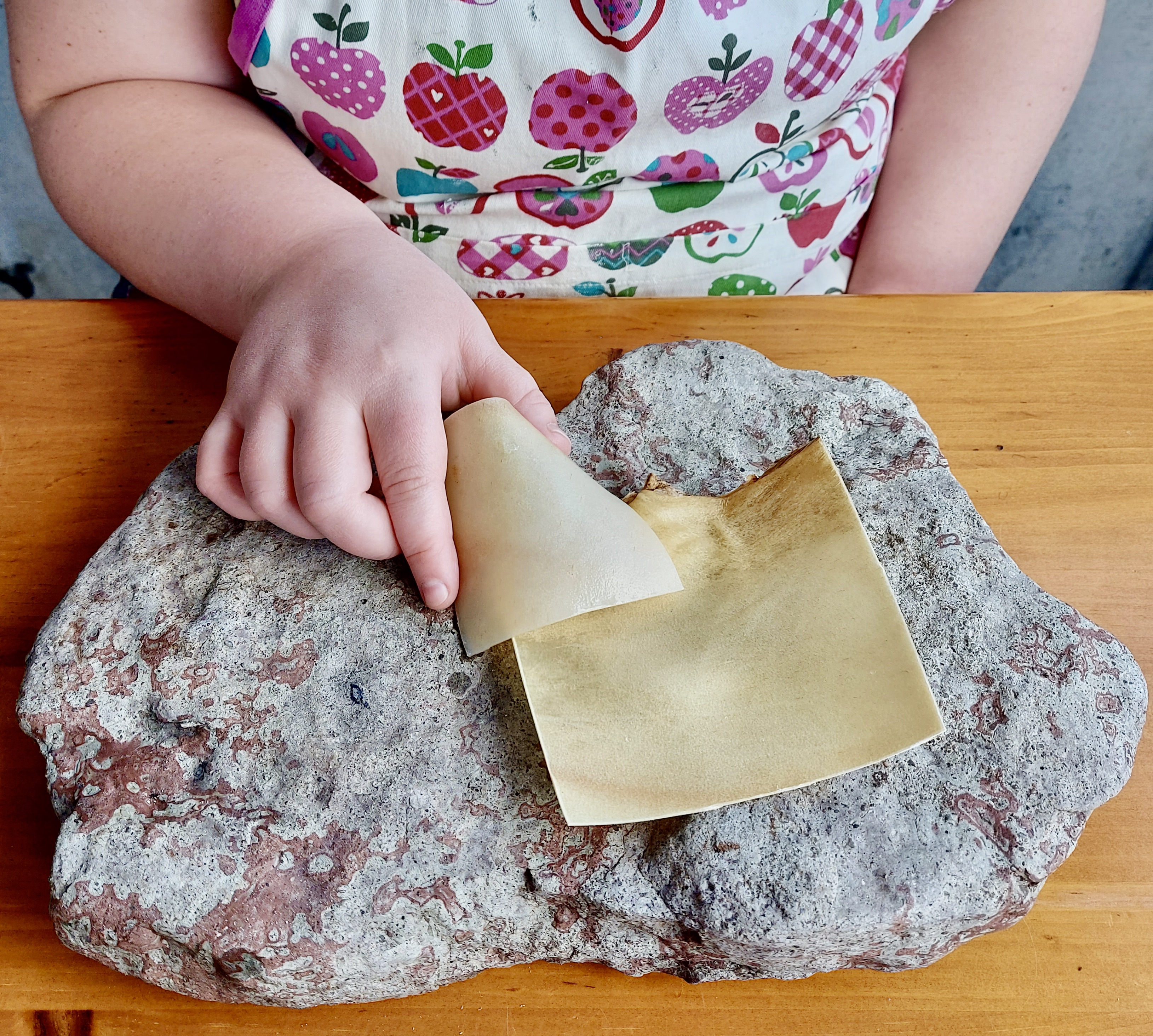
In order to stretch the raw hide over the white cedar drum frames, the hide must be soaked, I found for at least 12 hours. With an end piece of the elk rawhide, I did a trial run of the soaking process to see how the hide behaved after being soaked. Here you can see the comparison between the flexibility of the soaked raw hide and the dried rawhide. The soaked rawhide is the smaller piece (it did not shrink, it was cut a smaller size). The soaked rawhide is very flexible and almost rubbery in texture (the sensation of feeling it is similar to what I remember when petting a beluga whale as a child), whereas the dried raw hide is stiff and paper like in texture.

I am always excited for the experimental and trial stages of a project. You never know how a material behaves until you try using it yourself, especially a natural Creator-made rawhide that can differ greatly depending on the animal. I am looking forward to stretching the soaked elk rawhide over my freshly sanded and treated white cedar drum frames shortly and beginning the painting process. Once dry, the rawhide will regain much of its translucent nature. I’ll post about these processes too in the near future.

Portia “Po” Chapman smudging soaked elk rawhide with sage and a goose feather fan.

My new painted hand drum collection features 14″ painted hand drums. Each painted hand drum is $500. I am accepting pre-orders to reserve these pieces. I chose to create a new collection of painted hand drums rather than wood block prints/stamps because the artwork and drum can sing in perfect harmony when drummed by their drummer. I like creating art pieces that can be used by the collector. I think this collection is very special. With these painted hand drums, collectors will surely turn heads at their local drum circle gatherings.

Contact

Go back

Your message has been sent

Warning
Warning
Warning
Warning.

Belleville, Ontario, Canada
portia@loveartbypo.ca
613-779-7975

Portia Chapman

Portia Po Chapman Reveals New Hand Drum Materials – Thanks Bill Worb Furs!

Portia Po Chapman Reveals New Hand Drum Materials – Thanks Bill Worb Furs!

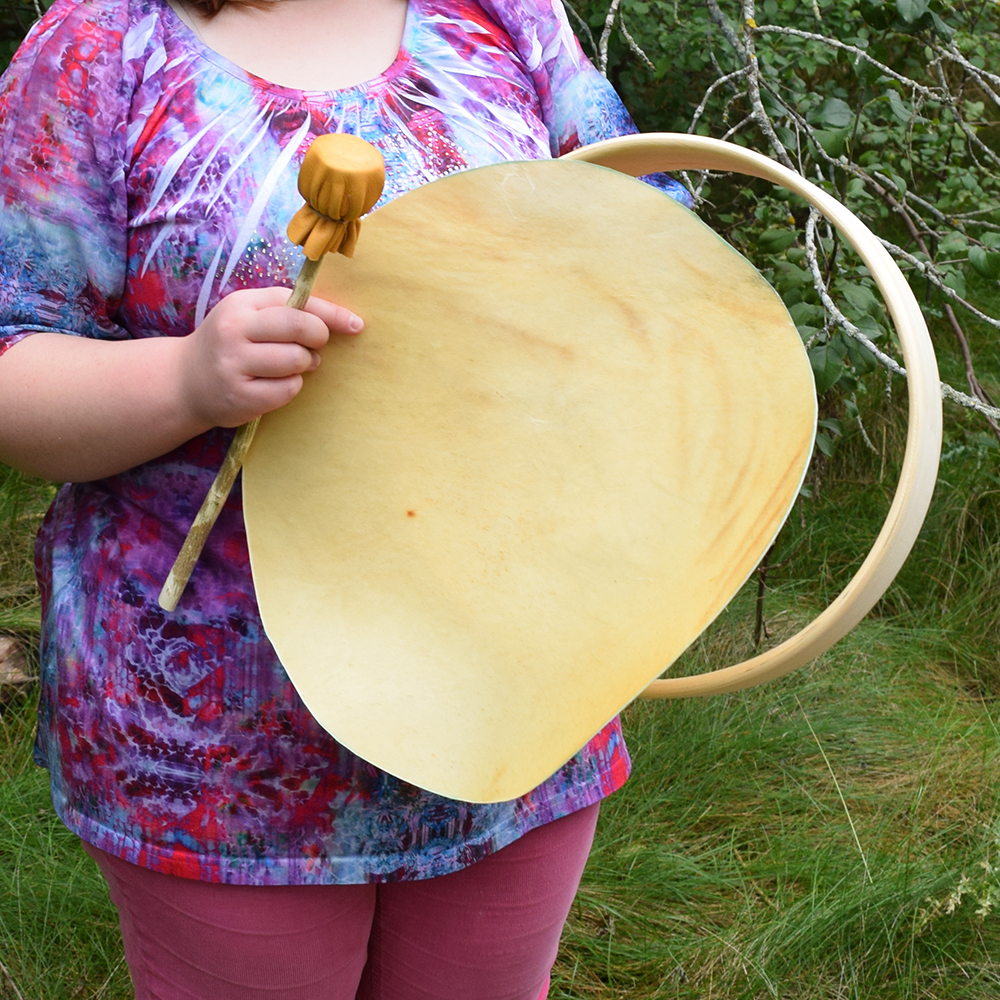
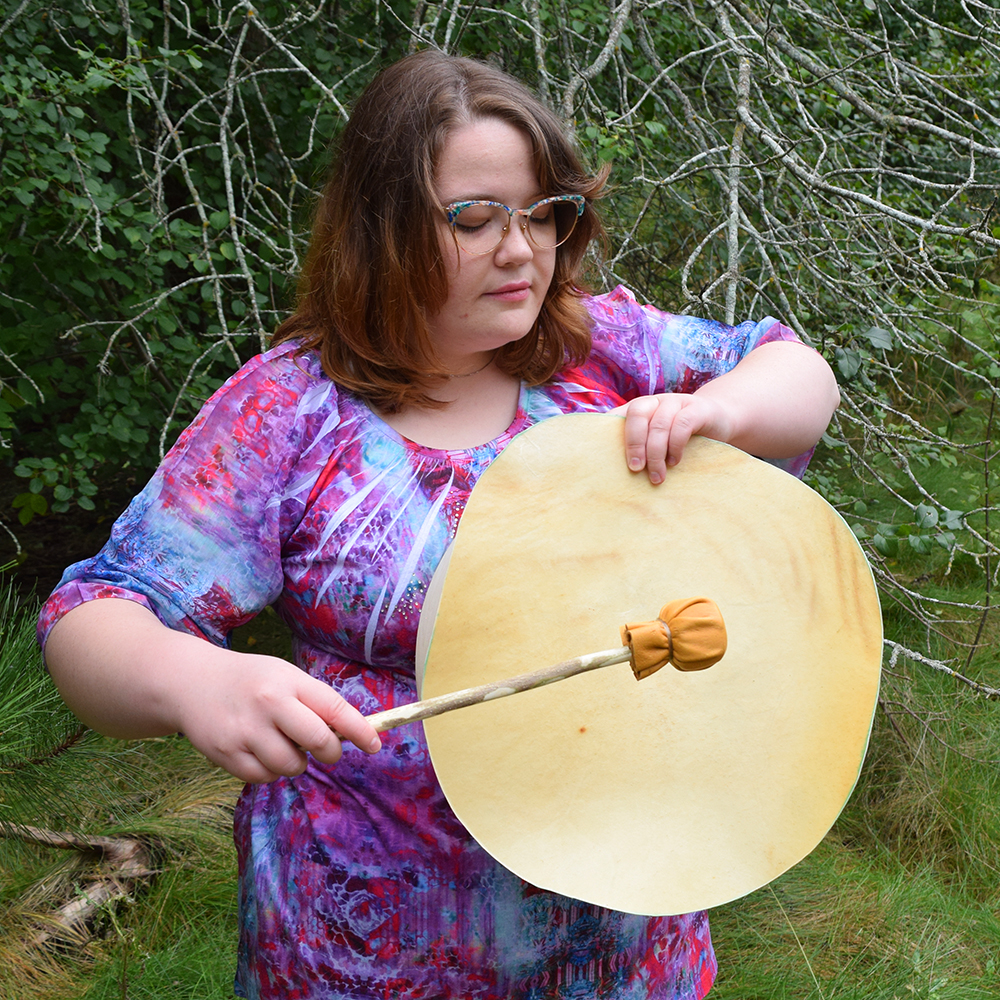
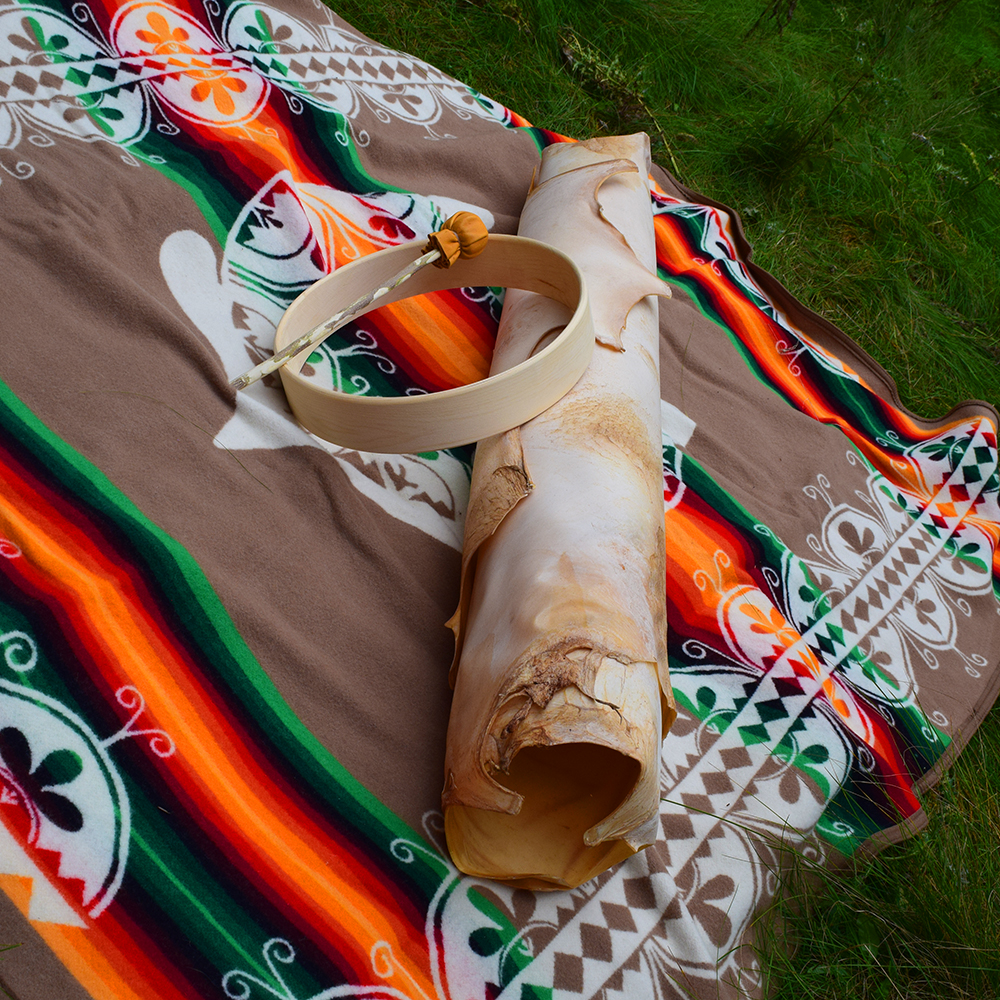
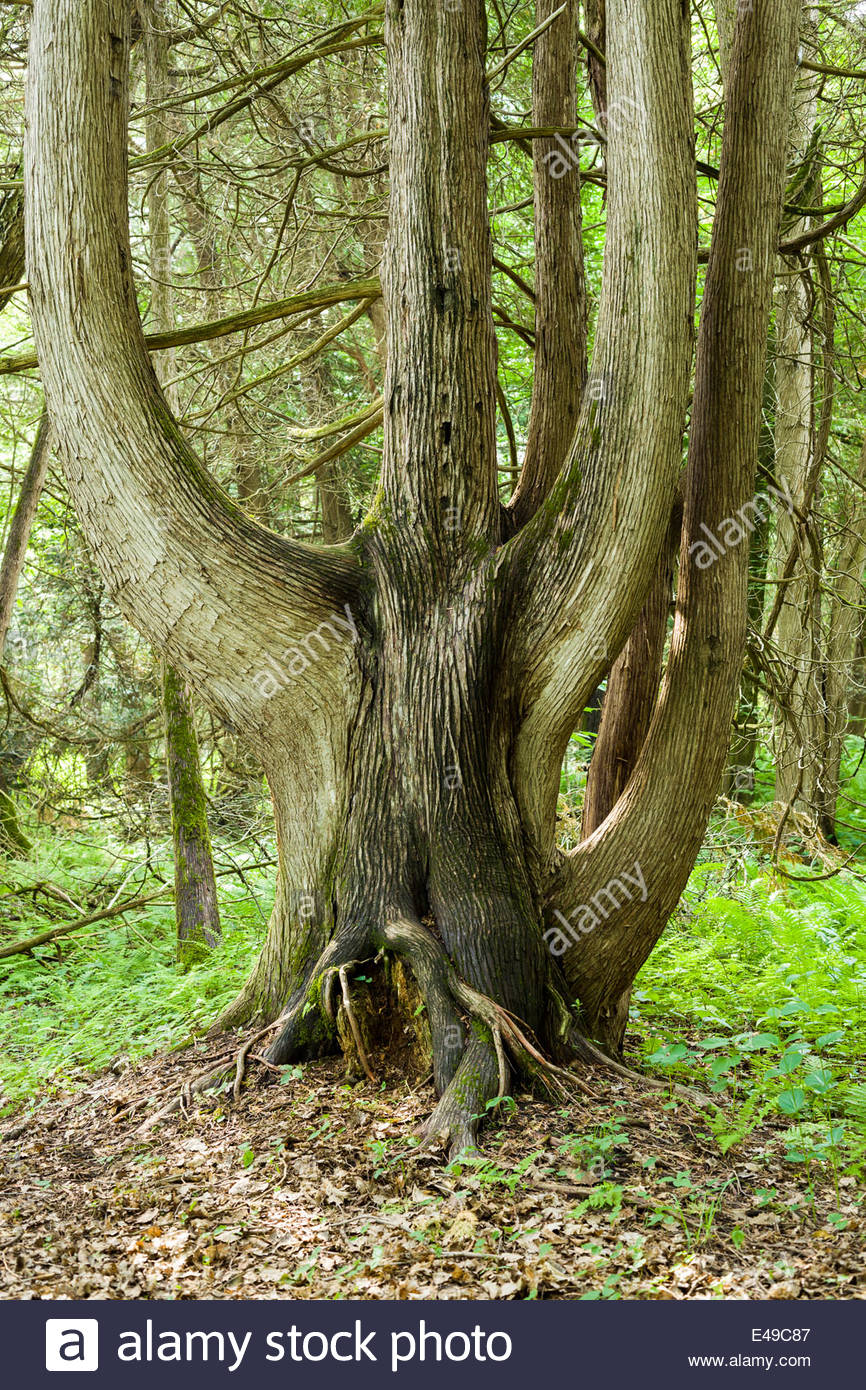
For my new collection of hand painted hand drums, I have been called to use sacred white cedar tree wood and elk rawhide. My supplier for these materials is Bill Worb Furs from Winnipeg, Manitoba. I hope this gives an idea of the size of the drums and the raw materials being used. The drum frames are 14″ in diameter.

I will post more information soon.

Contact

Go back

Your message has been sent

Warning
Warning
Warning
Warning.

Belleville, Ontario, Canada
portia@loveartbypo.ca
613-779-7975