Hand-painted kitchen murals may feel like a recent design trend, but their history stretches back thousands of years. As long as humans have gathered around food and fire, we have decorated the spaces where we cook, eat, and connect. These murals reflect cultural values, artistic innovation, and the evolution of the kitchen itself. (See the original sample kitchen without mural.)
Below is a journey through time exploring how kitchen murals began, how they changed, and why they continue to flourish today.
Ancient Beginnings: Art Around the Hearth – FromCave Paintings to Early Communal Kitchens
Long before contemporary kitchens existed, early humans adorned the walls of communal living spaces with painted symbols and scenes. The spaces where people prepared food were often decorated with images of animals, hunts, and daily life.
These early images did more than beautify spaces, they told stories, marked traditions, and connected communities.
Egyptian and Roman Domestic Art
In ancient Egypt, homes of wealthy families featured painted walls depicting food, agriculture, and abundance. These symbols reflected the household’s prosperity and honoured deities connected to nourishment.
The Romans pushed wall painting even further. In Pompeii and Herculaneum, frescoes decorated kitchens, pantries, and dining areas with images of fruits, fish, wines, and market scenes.
Medieval and Renaissance Kitchens: Function First, Decoration Later
During the Middle Ages, kitchens were utilitarian, smoky, and often separate from the main living quarters. Decoration was limited due to soot and open flames. Still, some monasteries and noble estates painted devotional symbols near hearths as blessings for safety and abundance.
With the Renaissance came a renewed interest in beauty within the home. Frescoes began appearing in dining halls and hearth rooms, including scenes of feasts, harvests, and nature. These early murals set the precedent for connecting kitchens and dining spaces with artistic expression.
The 17th–19th Centuries: Folk Art and Cultural Identity
As homes became cleaner and better ventilated, painted kitchen walls became more common, especially in rural communities.
European Folk Art Traditions
Regions such as:
Bavaria (Germany)
Scandinavia
Eastern Europe became known for bright, hand-painted kitchen motifs: flowers, birds, vines, and symbolic patterns.
These murals were typically done by local artisans or homeowners, making the designs deeply personal. They celebrated family heritage, religious beliefs, and seasonal cycles.
Colonial North America
Early North American settlers brought European traditions with them. Hand-painted stencils, sweeping floral garlands, and pastoral scenes decorated hearth rooms and kitchens. Many of these murals doubled as storytelling tools to record harvests, travels, or family events.
The Early 20th Century: Murals Meet Modern Design
As kitchens became more central to the home as gathering spaces, rather than just practical spaces, kitchen murals experienced a revival.
Arts & Crafts Movement
This movement celebrated craftsmanship and natural motifs. Hand-painted tiles and wall panels featuring fruits, flowers, and farm life became common, particularly in English and American kitchens.
Art Deco & Art Nouveau Eras
Sleek, stylized murals with geometric or botanical themes brought elegance to kitchens, often blending artistic flair with the era’s growing interest in beautifying the home.
Post-War Boom: Murals as Cheerful Homemaking
The 1950s and 1960s brought bright colors, optimism, and a quickly growing home décor industry.
Popular Themes Included:
Fruit baskets
Vineyards
Roosters and country motifs
Cheerful kitchen scenes
Checkerboard patterns
Decorative borders
Hand-painted murals and stencilling kits became widely available, allowing everyday people to personalize their kitchens for the first time.
Late 20th Century to Today: Custom Art for Modern Lifestyles
The contemporary kitchen is a social space, and murals have reemerged as a sophisticated and creative form of self-expression. Today’s hand-painted kitchen murals combine historical inspiration with contemporary design and technique.
Current Trends Reflect:
Nature and botanicals — a nod to earlier folk traditions
Food and wine themes — inspired by Roman and Tuscan frescoes
Minimalist line art — echoing modern aesthetics
Cultural motifs — celebrating heritage
Large-scale abstract murals — turning kitchens into art installations
Artisans now use durable paints, sealants, and washable surfaces, allowing murals to stand up to heat, moisture, and daily use.
Why Hand-Painted Kitchen Murals Remain Desired
Across centuries, cultures, and artistic movements, kitchen murals have persisted because they provide:
A personal story: They connect the homeowner to heritage, memory, and meaning.
A sense of warmth: Art transforms a utilitarian space into a welcoming space.
A celebration of food and community: Murals reinforce the kitchen’s emotional significance.
Timeless craftsmanship: Hand painting creates authenticity that printed murals can’t fully replicate.
Final Thoughts
The history of hand-painted kitchen murals is a history of home, family, and creativity. From ancient frescoes to contemporary custom artwork, these murals have always served as more than decoration; they are symbols of nourishment, heritage, family, and the beauty of everyday life.
Contact Po, if you’re ready to create a mural that sets your kitchen apart from your friends and families’ kitchens with a bold, contemporary, and hand-painted mural. Book your complimentary e-consultation and you can collaborate to design a wall that leaves a lasting impression and tells your story.
Organic Colour-Blocking Murals in Kingston | Contemporary Hand-Painted Art by Po
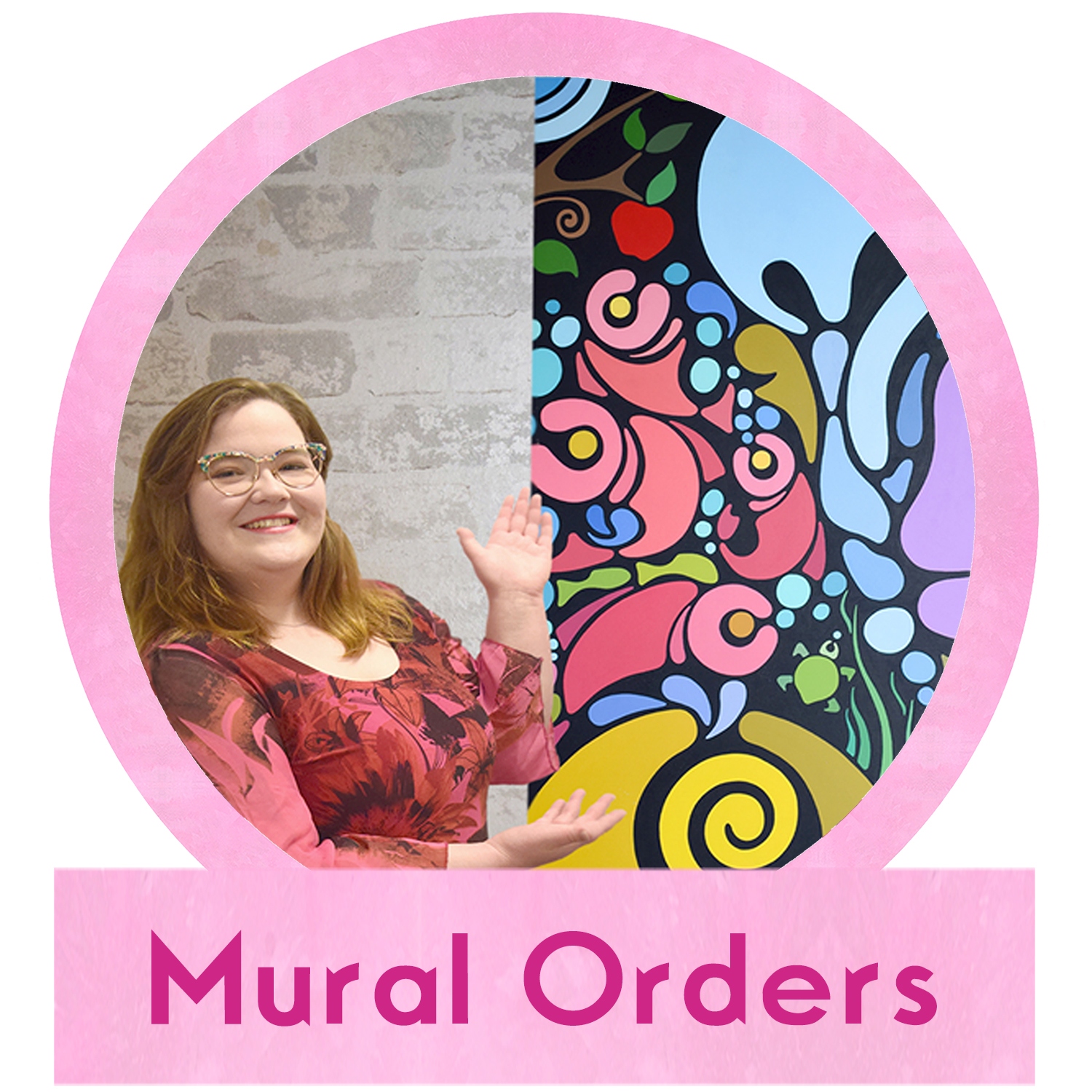
Kingston homeowners are increasingly choosing original, hand-painted murals over traditional prints or wallpaper. Why? Contemporary interior design trends incorporate murals because they are more than decoration — they are living, breathing elements of your home.
My style, organic colour blocking, uses precise brushwork to create vivid, flowing shapes and razor-sharp edges. It’s contemporary, sophisticated, and impossible to replicate digitally or with spray cans. Each mural interacts with the light, architecture, and atmosphere of your room.
Benefits of organic colour-block murals for Kingston homes:
Custom fit for your space: Every curve and colour is tailored to your room, wall, and lifestyle.
Adds personality: Your mural reflects your taste, energy, and story.
Timeless impact: Hand-painted murals remain striking for years, unlike printed designs that can fade or feel flat.
A mural in your foyer, living room, bedroom, or studio is more than art — it’s a statement. It changes how you feel in the room, how you move through the space, and how visitors experience your home.
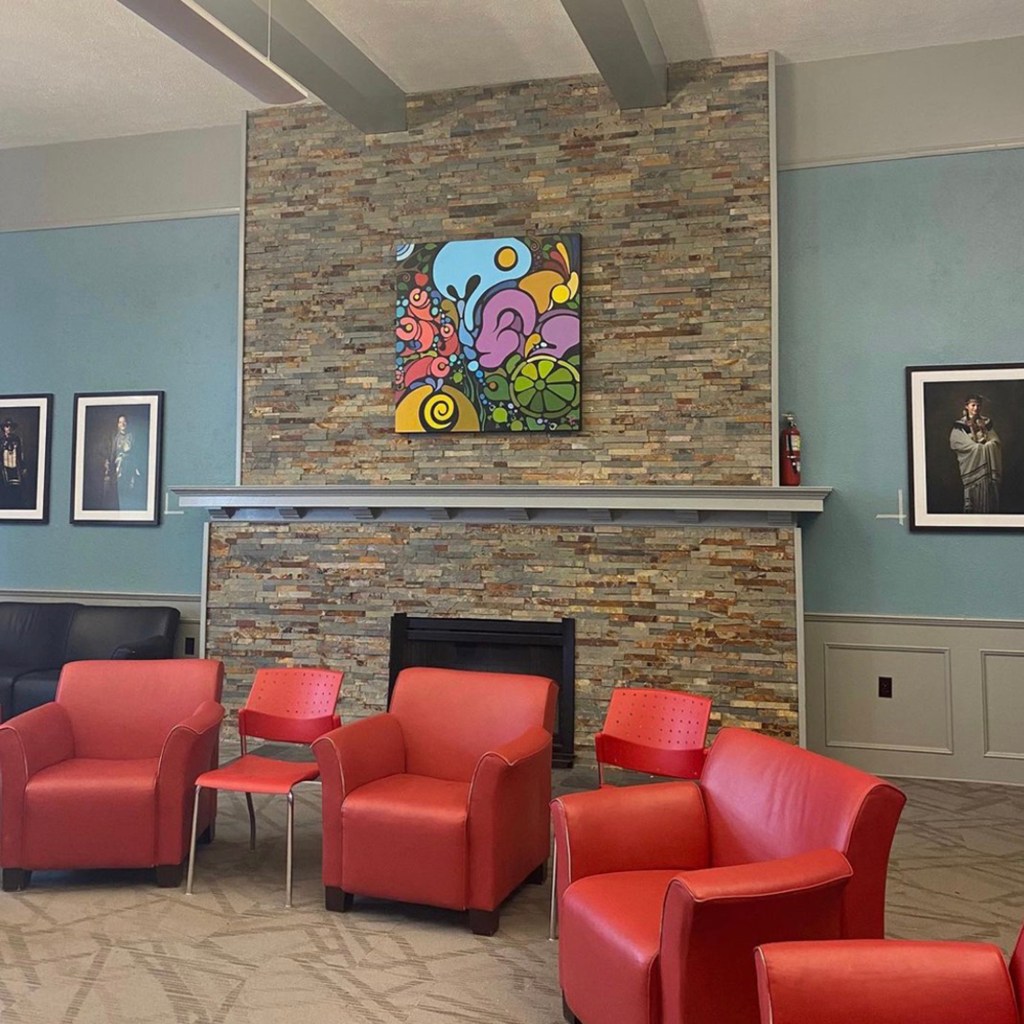
Colour Blocked Mural over Fireplace by Po in Kingston
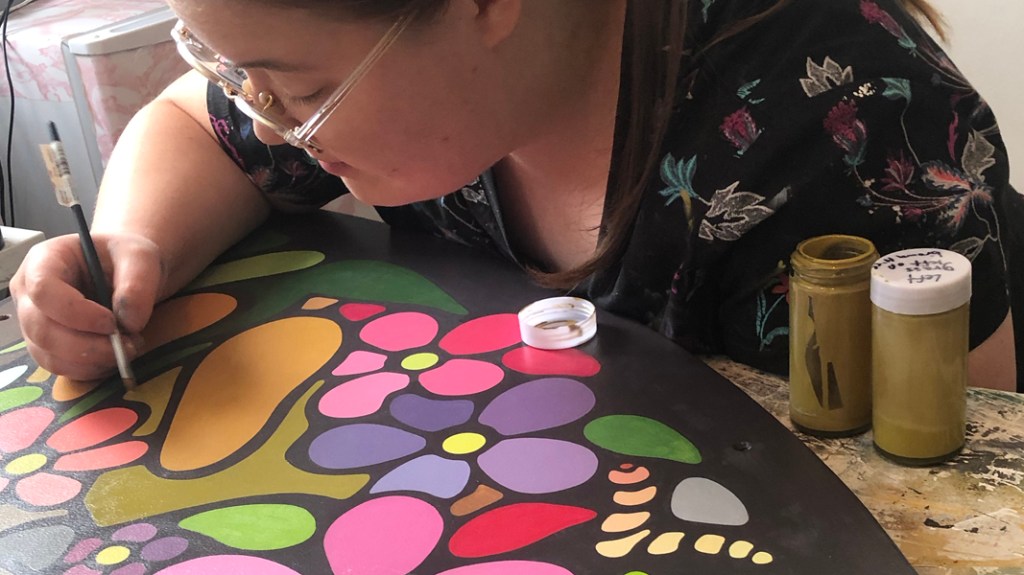
Using a brush when painting a mural featuring colour blocking achieves crisp, opaque lines and shapes. It takes a painter many years of practice to produce sumptuous, flowing edges that are crisp and fluid. My own technique produces “flat” brush strokes that appear almost textureless.
The power of the murals I paint is the seamless connection with the viewer and the space – only achieved through exactness. The mind and soul immediately understand the imagery because without blurred edges, one need not interpret – just enjoy.
If you’re ready to bring contemporary, hand-painted mural energy into your Kingston home, I can help design and create a space that feels alive, intentional, and completely unique.
Portia Po Chapman Painting My Creation Artist Talk Question and Answer Transcript Queen’s University
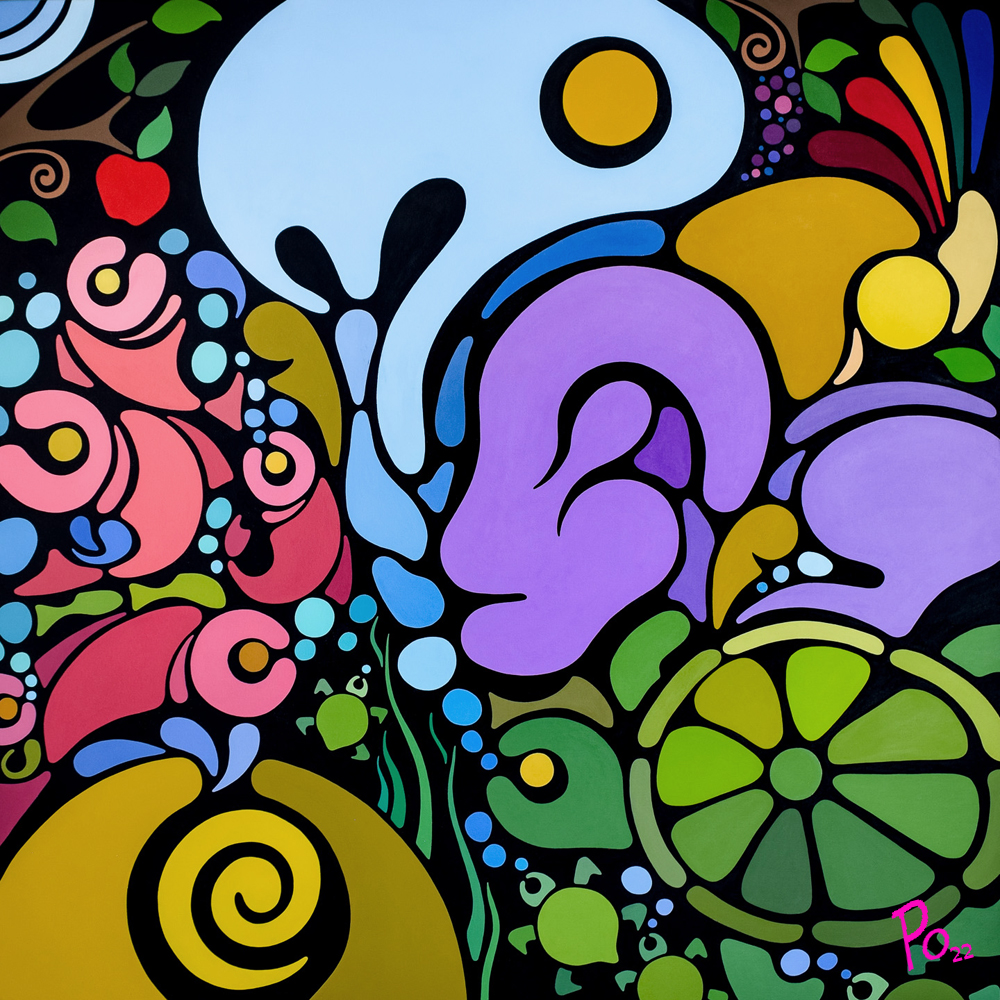
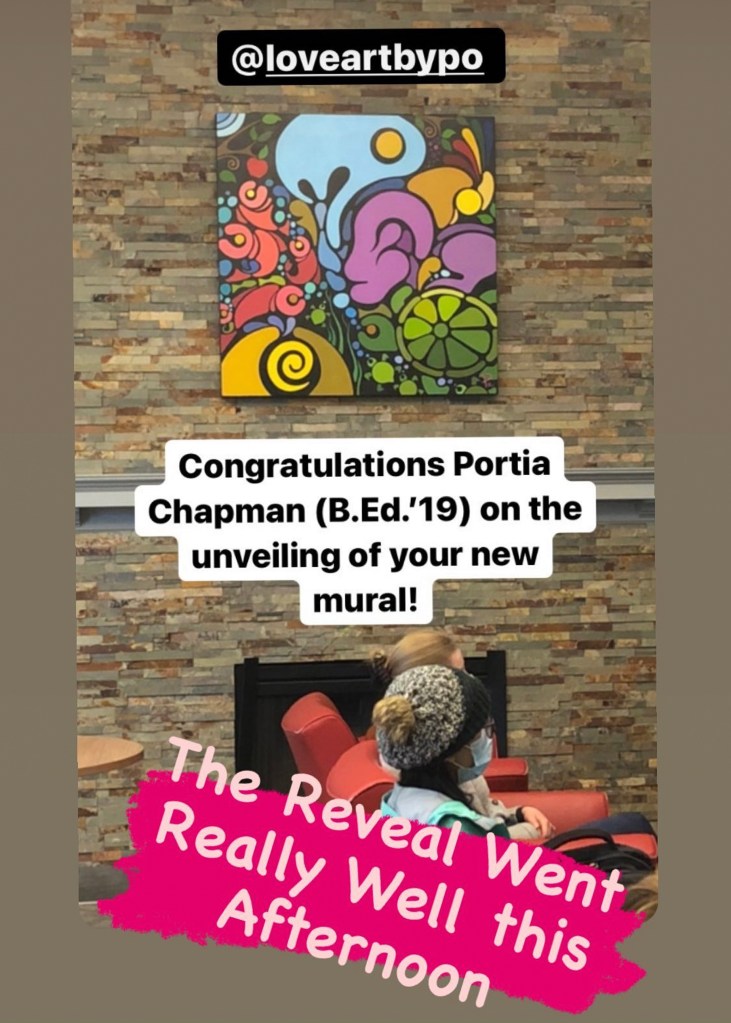
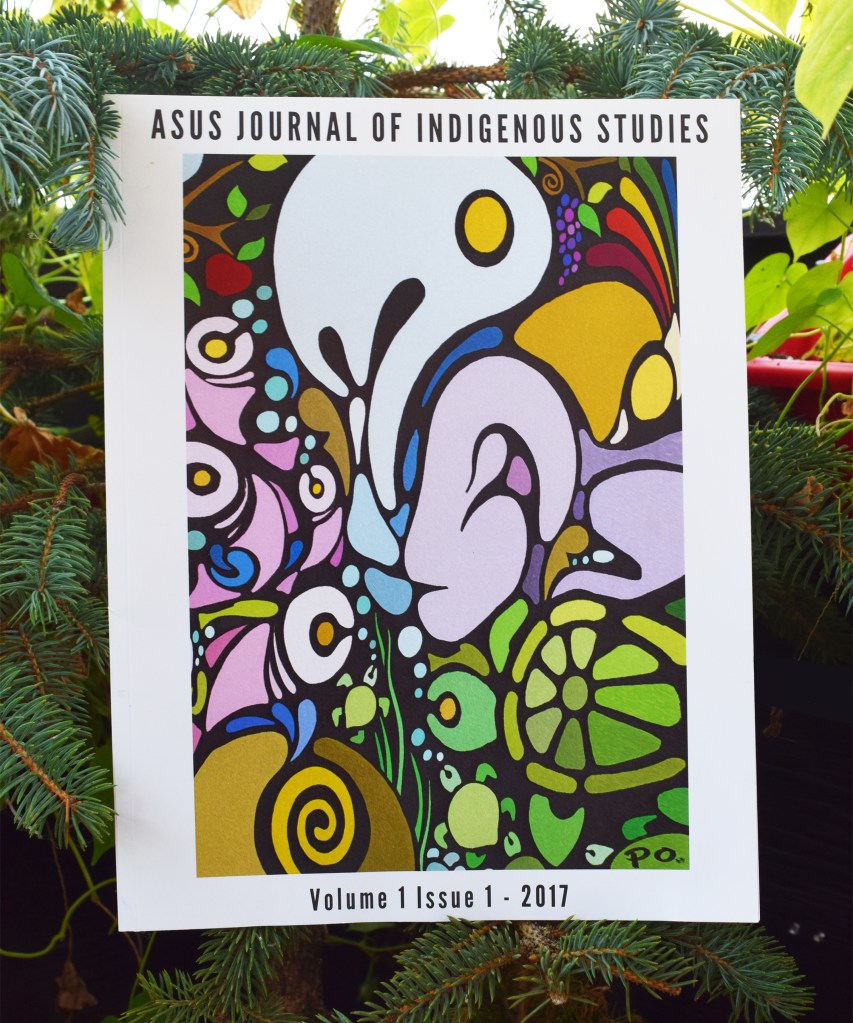
Portia Po Chapman’s “My Creation” Mural Commission for Queen’s University ASUS
Q: How has your artistic journey been shaped by your lived experiences?
A: A cute story, on the first day of my BFA we were asked to introduce ourselves. Pretty much everybody came from an urban or suburban background, me, I walked straight out of the woods. I told my story and from that day on, my BFA colleagues referred to me as Snow White. I will explain, very much like a Disney character, I really lived without many friends, playing in the woods, talking to little people, and animals and plants. My artistic development began playing in a creek. Other than crayons, my early art pieces were from rocks, and bark, and feathers. I never thought I needed many friends because whether I was in the lake, the creek, or gathering water from the spring, nature provided me with all the friends I ever needed. You can see from “My Creation” and most of my other artworks, that I have included friends of mine in the imagery. I didn’t have salmon as friends, but I had a lot of other fish. Like sunfish who would nibble on my toes as I swam through the lake. I remember at about 5 years old just sitting in the shallow water and the little fish coming up to say “hi.”
I come from a very artistic family. I was raised in a house that had plywood interior walls built for artworks to be nailed on their surfaces or repainted. You see, my parents allowed my sister and I to draw and paint on our walls whenever we felt like it. And whether it was a scribble or figurative drawing, it was cherished in the house just as if the Mona Lisa was just hung upon the wall. My dad’s a line artist and choral vocalist, my mom’s a seamstress and pianist. They are both graduates of Queen’s University. I started taking art class in Grade 11. There was a prerequisite to take Grade 9 or 10 art before taking Grade 11, but the Art teacher thought I was so talented (as I had won the ALCDSB’s Faith in Action logo contest the year before), so he let me skip ahead. As an artist, I never had restrictions. I was able to create with pretty much anything I put my hands on. I mean, I swear I grew up in a yarn box crocheting in my parent’s yarn shop. When I was about 7, my dad had a sudden urge to paint, but we couldn’t afford a canvas, so I remember fetching a screwdriver and him deciding to remove the kitchen cupboard doors to paint on. He has received the highest offers from art collectors for those paintings, and he will not sell them because they represent a time when money was not going to stop our family from creating beautiful works. As being an indigenous artist, I come from a family who were subject to colonial displacement. My dad’s family celebrated our Indigeneity, but tried to keep it quiet in the public. For generations they chose not to reveal their Indigeneity because of colonial persecution. Just before my grandfather died, he gave permission for us to publicly celebrate our Indigeneity. When I came to Queen’s, it was soon after he gave our family this permission. My mother’s family, they only recently started talking about their Indigeneity openly. So it was at Queen’s, during my BFAH, that I began to share who I was through my artworks. And it is because of that celebration, and Queen’s University’s welcome to self-identify that I began to flourish as an artist.
Q: Your website mentions that art has supported you in reclaiming your Indigenous identity. How do you think art has supported you in this way?
A: Having never lived on a reserve or with an Indigenous community, my experience has been different than people who have. I continue to state that I express my Indigeneity through my connection with Creation. My life has been lived in communion with the life of Creation. Sadly, for many years of my life it felt like I was the only one with that lived experience. You can see this expression of my Indigeneity in my many artworks. So where did my art take an Indigenous direction? I think it was in the early 2000s when on a walk with my parents I went on a scavenger hunt gathering various things from nature, like feathers, bark, acorns, stones, thinks like that. When I got home, I arranged them on a piece of birch bark and hung it on our living room wall. Then, I travelled with my parents to various art shows whereby my dad was a guest to draw. At that time, he was not telling people about his Indigeneity, but his artwork seemed to tell people anyway. There was never a time that we were at a show and someone didn’t ask, if he was Indigenous. Of course he would proudly tell a story, because his Indigenous ancestry is very precious to him. Because of these art shows, our family became close friends with many Indigenous people from and near various reserves. Although we did not hold any band cards, we were welcome into Indigenous families and never made to feel as though we were outsiders. So as a little girl, I experienced first-hand how art could tell our story and how it encouraged us to share with others. When I began preparing for my Queen’s BFA application portfolio, viewers of my artwork began questioning me about my Indigeneity. As you can see from my artwork, I am not a propagandist, I am simply an Indigenous woman happy to share my view and relationship with Creation. Because of my artwork, I am meeting and sharing with other Indigenous people and developing wonderful relationships with families, friends and organizations. In so doing I am reclaiming my Indigeneity.
“My Creation” in Kingston Hall, Queen’s University – Photo Credit: Queen’s ASUS
Q: Given the challenges of Covid-19, how has art supported you as an outlet during this period?
A: When the spread of Covid began, in the winter of 2020, I was at my teaching practicum at a local school in the Indigenous Art class. I remember taking the bus from my downtown residence in Kingston to the school and many people on the bus were coughing. As a germaphobe, it was my total nightmare. Just before the lockdown, I had taken a placement at the Agnes Etherington Art Centre. My placement lasted 1 day. The next day the World Health Organization declared a pandemic and the whole province was locked down. So here I was, an artist not able to work in an art gallery and an art teacher not able to teach art! My art equipment was in multiple storage units in and out of Kingston and they had rules about retrieving your things. I’d swear the only thing that kept me going as an artist at that moment was that my apartment was filled with my paintings, sculptures, tool boxes, and most of all my cats. In the summer, I graduated from Con. Ed as a high school art teacher and within 3 weeks, I was teaching Junior Kindergarten online for the ALCDSB remote school. I taught full time for 10 straight months followed by another month of summer literacy school. I must profess, that Junior Kindergarten was the single most beneficial event that kept me going as a visual artist. There’s just something about teaching 3 and 4 year olds that brought me back to teaching arts and crafts every single day. My students became the most advanced students at working a pair of scissors. I had them cutting out snowflakes in no time. We used art to teach every single subject. We mixed up acting, dancing, singing and art. In fact, I think we all had the times of our lives. There was no way that I was going to let this seeming diversion from my art career hold me back as an artist. So I created arts and crafts out of egg shells, recycled materials, extra cereal boxes, and other things that were piling up around the house because we couldn’t get out.
It is said that a person knows of their calling when 3 unrelated people or events happen that confirm that calling. As amazing as this sounds, this actually happened. My emails started exploding with people seemingly out of the blue asking about art commissions. And then the “Truth” image was featured on the Queen’s Landing page during the week of the National Day for Truth and Reconciliation. Now this is how the Great Spirit works, being a self-proclaimed germaphobe, I was terrified to teach this fall, so unlike the previous year, I was unemployed. I literally had nothing to do but stare at myself in the mirror. Then, the “Truth” image went public big time. I was able to entertain commission requests and the requests came to me. And what’s even more amazing about this, I had already created two studio spaces in my family home overlooking the beautiful Bay of Quinte. So other than August and part of September 2021, I have been working on my art almost solidly during the Pandemic. And that is how I got here today.
Q: As mentioned, you are a Queen’s alumnus, how did your time with Queen’s both in and outside of the classroom shape your growth as an artist?
A: It was a difficult decision choosing Queen’s University to pursue my art career. I was accepted on scholarships everywhere I applied. My decision at first was based upon my ability to pursue the Bachelors of Fine Art degree while simultaneously doing Concurrent Education (Con. Ed.). It was the first year the BFA students could be Con. Ed students as well. I think we were kind of an experiment, but it worked out. I couldn’t really grasp why the Queen’s BFA program taught so many skills rather than freedom of creation that some other well known art schools take as their direction. So I found it really frustrating, but then, in the 3rd year, the program takes a drastic turn and we begin to specialize. By the 4th year, we were working on our thesis projects with our own mentors, and creating what we chose to create. Now the amazing thing about this program direction is that it does come with great gain. In other words, by our 4th years, I found that we were very well prepared to create amazing artworks. In my 4th year, I had several interviews with gallery representatives and well-known professional artists. They truly helped me as a young artist appreciate my direction and the struggle that it would take to compete in an art world that can at times seem like there is no possible way to succeed as an emerging artist.
One of the things about being in the art program was that we were able to show our work in galleries even in 1st year. The Union Gallery really provided a boost in confidence and enthusiasm to continue toward a career as a professional artist. I found that Cezanne’s Closet was one of my best experiences. It was really thrilling to see my “Our Worlds” stone lithography triptych hanging on the walls of a well known professor’s studio apartment. I had won a few art awards before this happened, but seeing these prints on this professor’s wall was really a thrilling moment that recognized my success as an emerging artist. Because of the Medal in Visual Art that I received at my 2019 BFAH Graduation, I have gained respect from clients seeking commissioned works.
It was really amazing that I was able to work on the images for the Office of Indigenous Initiatives while I was finishing my Con. Ed. Degree. Had Queen’s not offered me to be part of this experiment (completing BFAH concurrently with BEd), I may have had to leave Queen’s to do my BEd. And if that were the case, a series of art opportunities would have never come my way. As an Indigenous artist, the 4 Directions along with a few other Indigenous professors were very supportive. When I first began mentioning my Indigenous background, or creating artworks that were viewed as being in the style of popular Indigenous artists, I was frequently told by others that I was not in any way Indigenous because I looked too white. These ladies helped me weather the storm that I faced during my early years of self-identification. I have found that my artwork has become more beautiful, expressive, and vibrant because I celebrate who I am and my Indigeneity. It was because of Queen’s that you see this very colourful mural before you today.
Q: If you had one piece of advice for someone looking to begin a career in art, what would it be?
A: My advice is, get yourself a BFA in studio art and possibly follow it up with an MFA. The reason I think this is very important is that when galleries, competitions, and granting organizations ask for proof of being a professional artist, one of the pieces of evidence they may request is a BFA. As a new emerging artist, without much gallery experience on one’s CV, the BFA makes a world of difference. It seems that with a BFA, people seem to take you more seriously as a visual artist. My second piece of advice, is to create artworks that you like creating. And my 3rd piece of advice is to know who you are and without apology celebrate your identity as an expression echoed in your artwork. Even without the BFA, these 2 things go a long way in the art world because collectors, galleries, and commissioning patrons are interested in you as a person and as an artist. I believe that your voice as an artist needs to leap off the canvas no matter what your voice is saying. There will always be an audience.
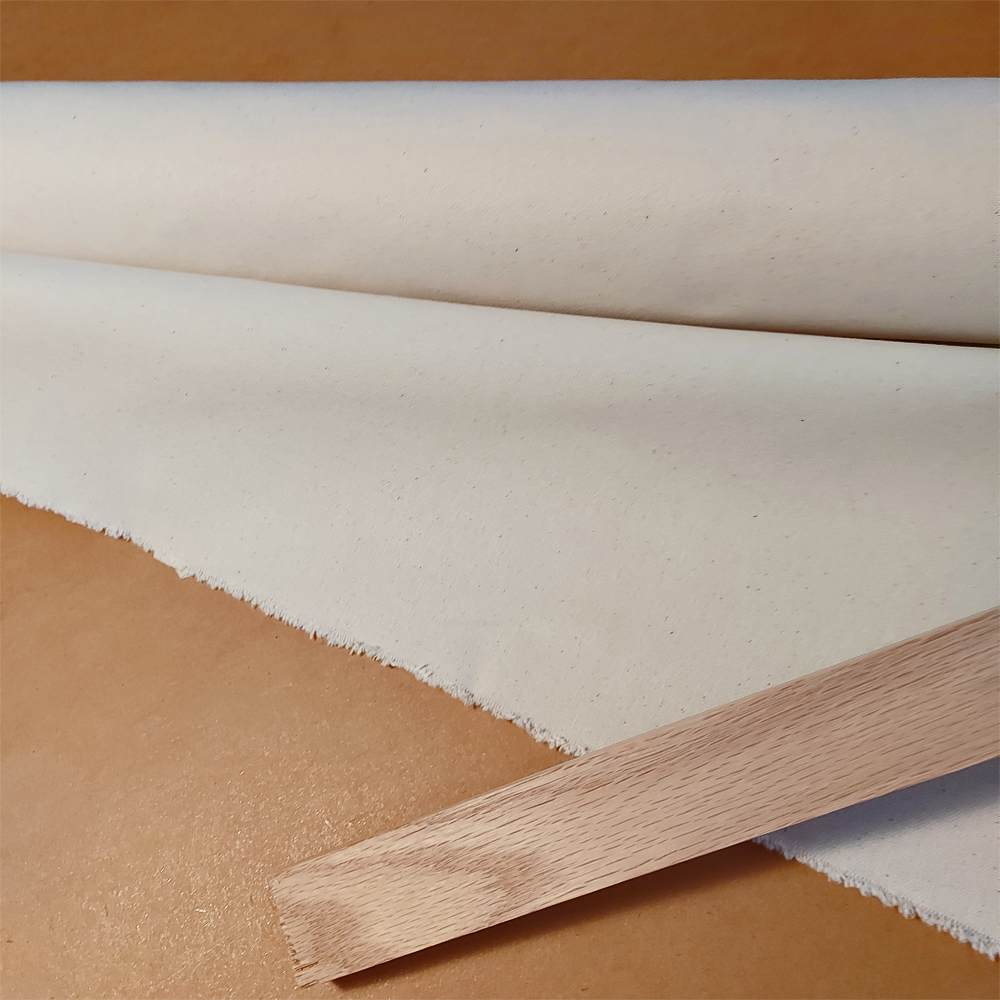
Today, the final steps of the the stretcher creation journey before stretching the canvas were completed, and the canvas will hopefully be stretched with 12oz. cotton canvas by the end of tomorrow. The stretcher is different from most other canvas stretchers as I am using a solid face sign board with a stretcher frame attached made of red oak to create a stretcher with a statement-making depth of 2 1/4″.
These are the materials used as mentioned above.
I decided to make a stretcher with a solid surface on which to stretch the canvas to provide the following two things:
A layer of protection for hanging and transporting such a large piece
To assure the image is able to have a chic, flat, ‘muralesque’ appearance.
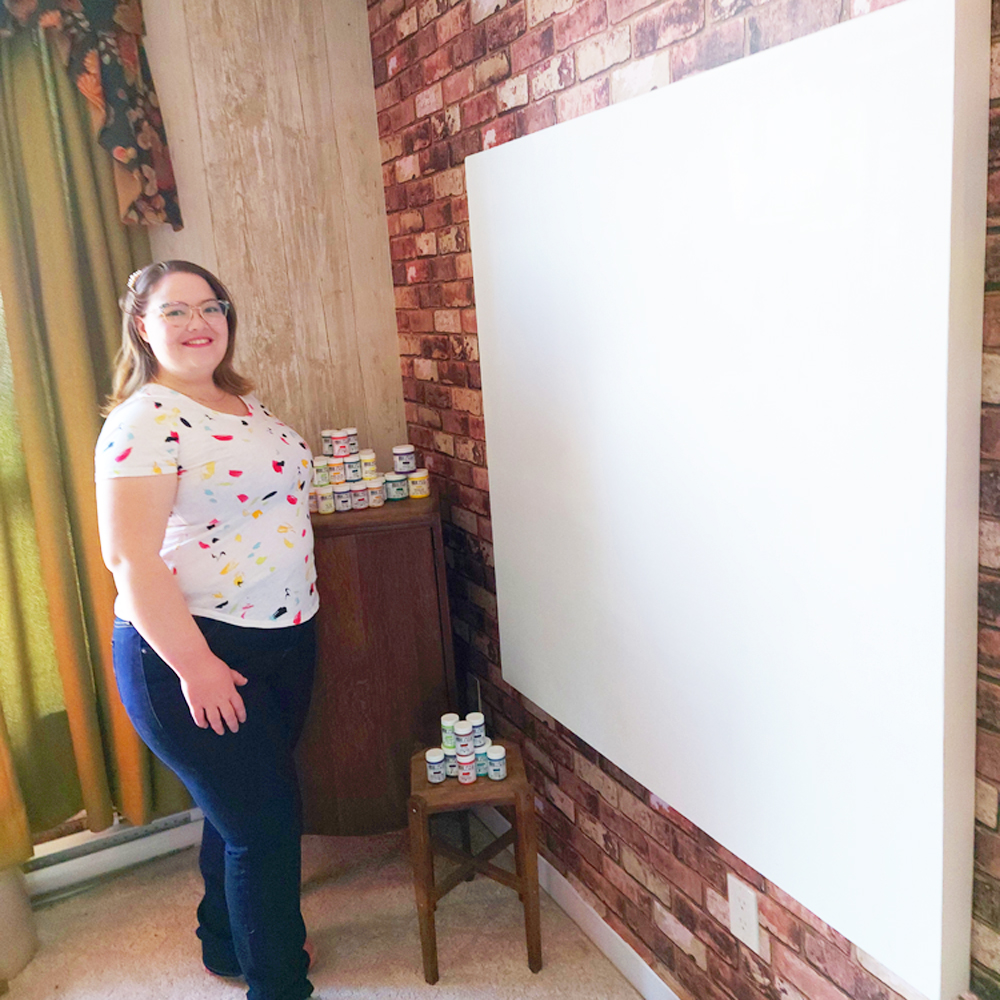
Stretcher hung on Po’s wall without canvas.
Not many know or even think about the process that goes on with a stretched painting before the paint even hits the canvas. However, as a sculptress, I find what you don’t see behind the painting just as amazing as the completed painting seen on the surface.
Here are some photos to document the stretcher making process:
Filling screw holes and any imperfections.
Sanding the corners and sharp edges so not to cut canvas.
Po priming the stretcher frame with Tri-Art Professional Quality Gesso.
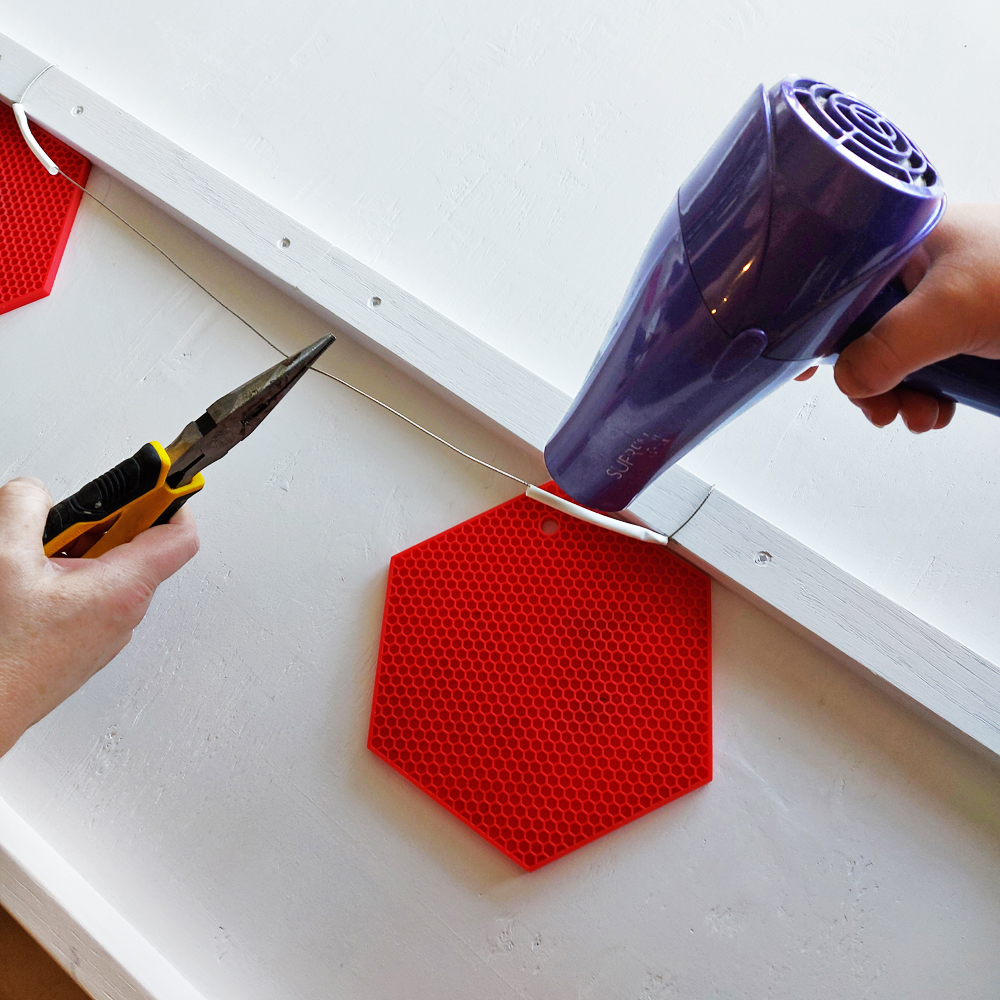
Securing the hanging wire.
Keep coming back to my blog to see more updates ahead.
Po standing with her Golden SoFlat paint and stretcher without canvas. As you can see the stretcher has been moved out of the woodshop and into the painting studio.
Portia “Po” Chapman Begins Painted Hand Drum Trials
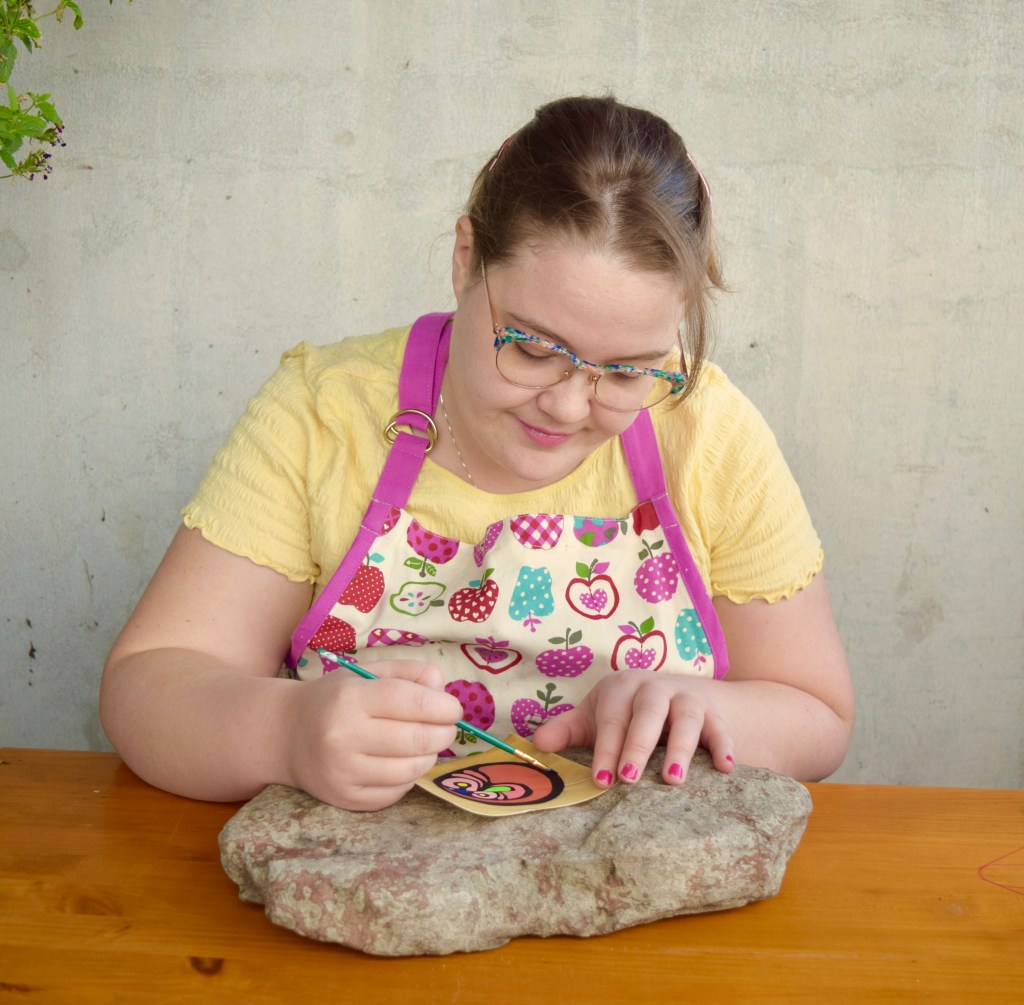
Portia “Po” Chapman trial painting on elk rawhide.
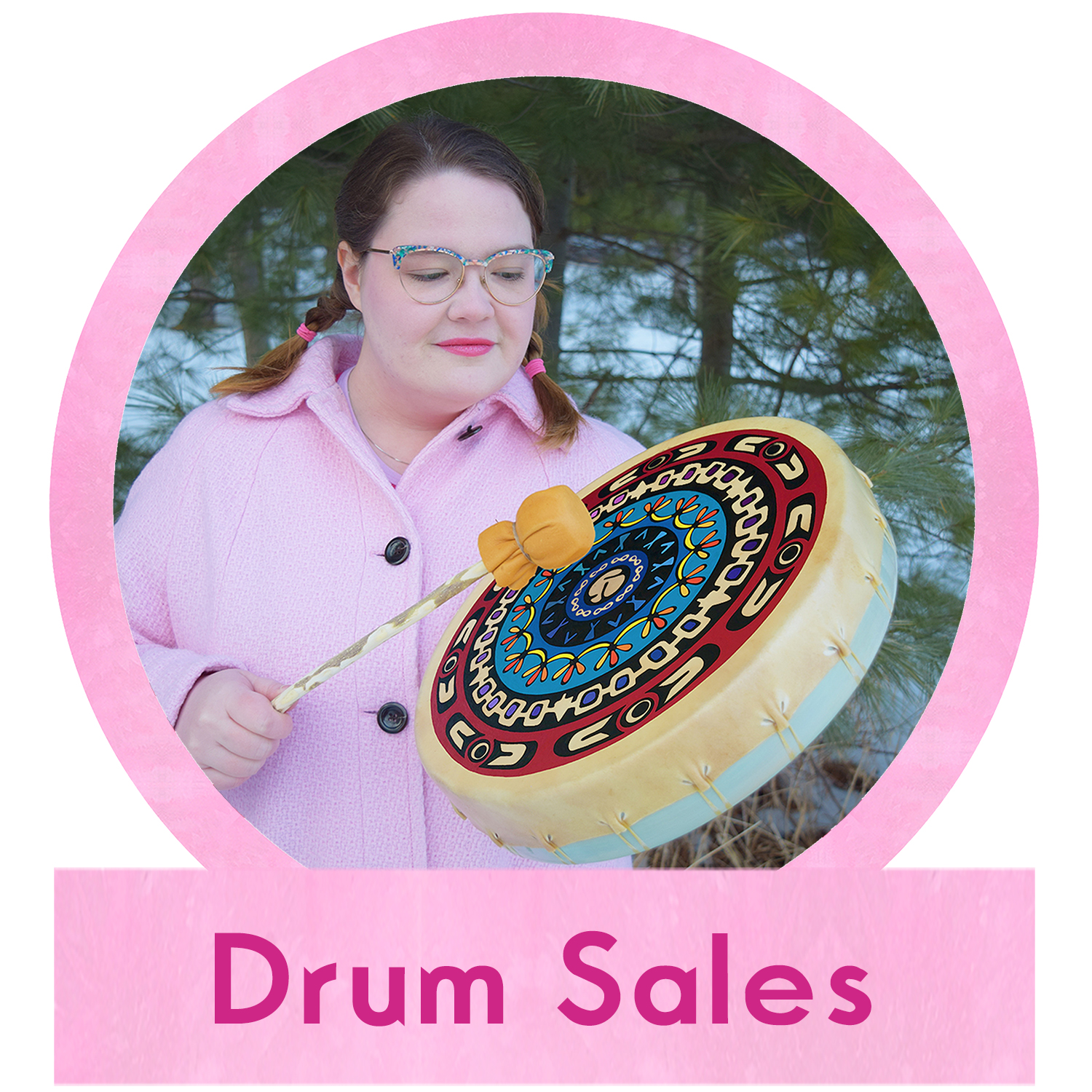
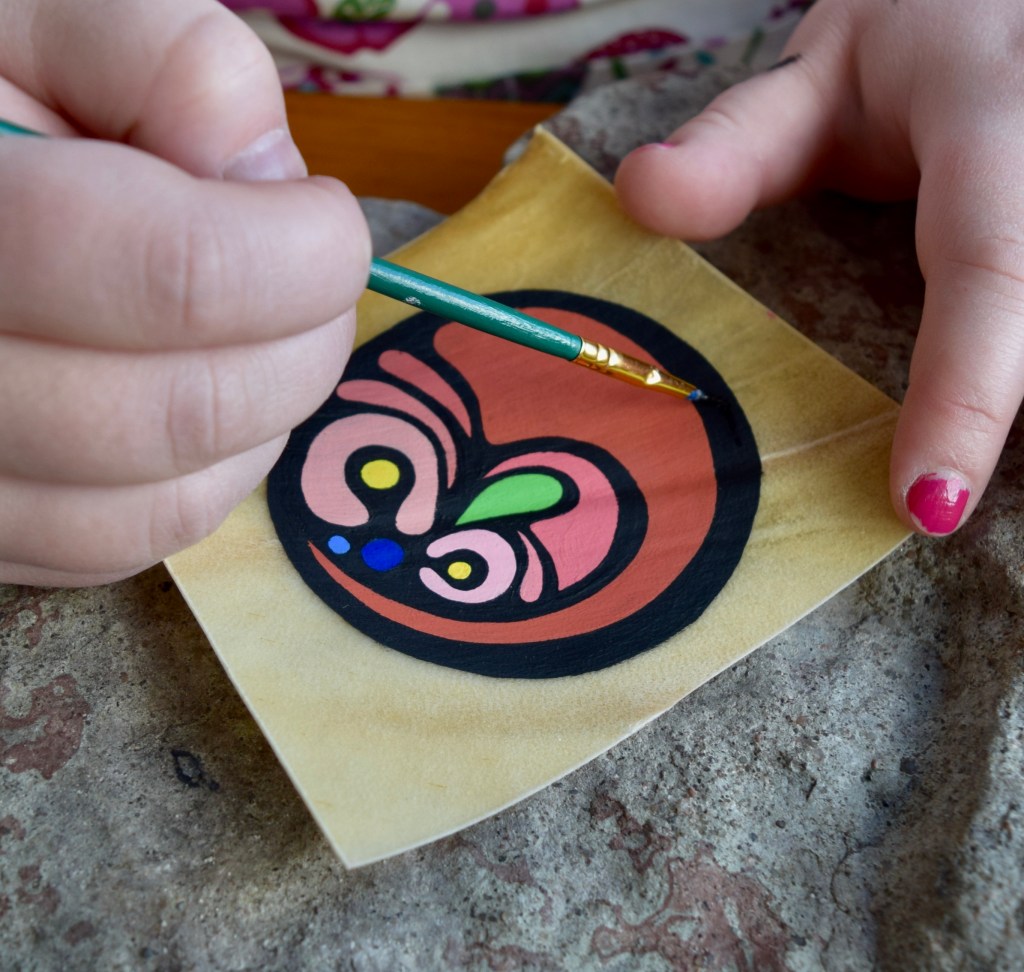
I am excited to announce that painted hand drum trials have commenced. After experimenting with a variety of different mediums and paints, I finally found the paint that is right for me and my new painted hand drum collection. Golden’s new SoFlat matte acrylic paints glide beautifully on the surface of the elk rawhide as if a perfect marriage between the two mediums (Golden, not a sponsor, but I would be glad to accept a sponsorship from them 🙂 ). The paint’s self levelling qualities allow for intense pigment while keeping the natural integrity of the hide’s textures. The paint is also flexible enough that I could almost bend the hide in half without the paint cracking, allowing for the flexibility required of a hand drum. While the paint is amazingly opaque, when the painted hide is held up to the sun, you can still see the light shine through it. My patrons will be very pleased with the quality of their new hand drum.
Portia “Po” Chapman painting with Golden SoFlat acrylic paints on elk rawhide.
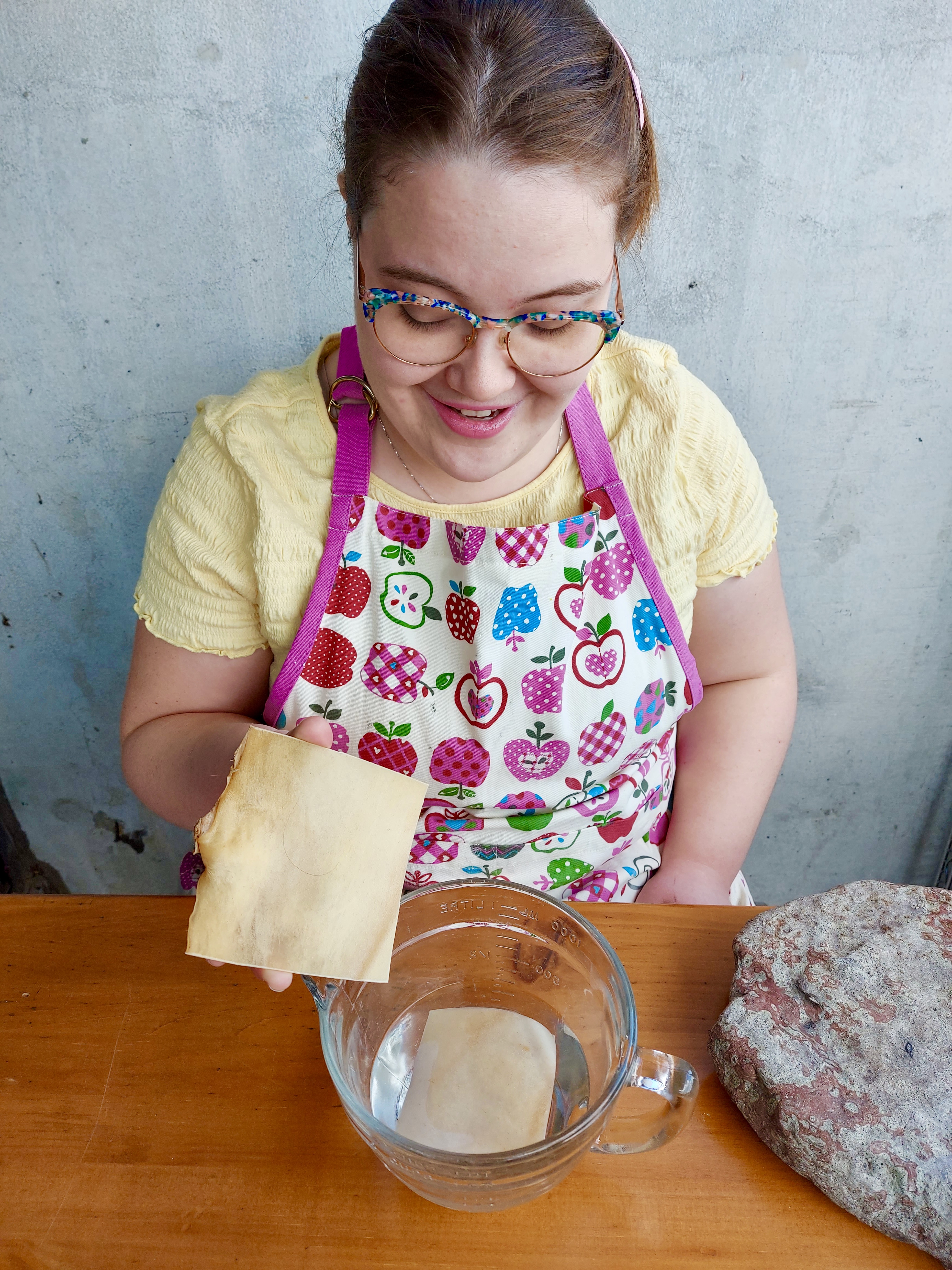
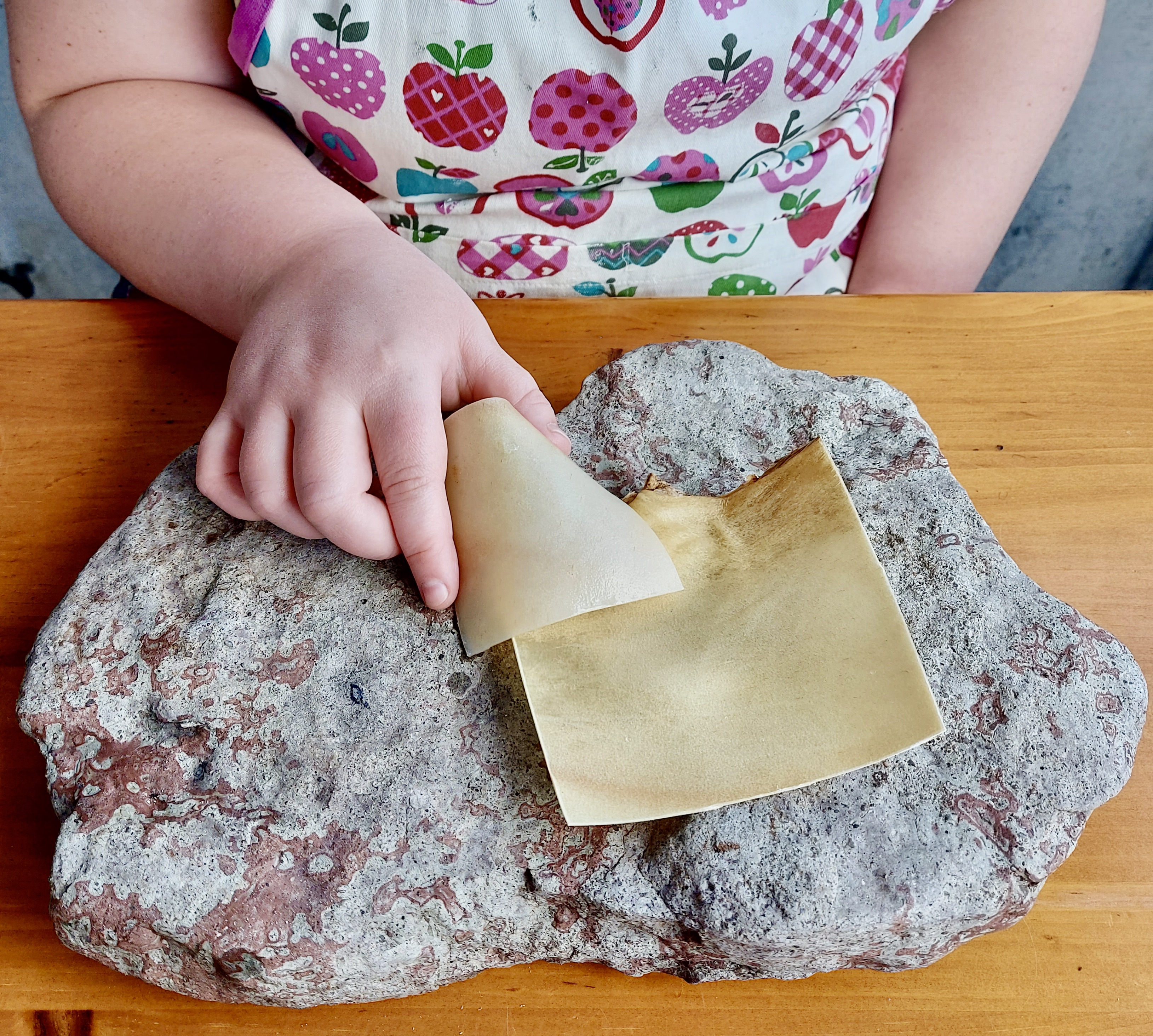
In order to stretch the raw hide over the white cedar drum frames, the hide must be soaked, I found for at least 12 hours. With an end piece of the elk rawhide, I did a trial run of the soaking process to see how the hide behaved after being soaked. Here you can see the comparison between the flexibility of the soaked raw hide and the dried rawhide. The soaked rawhide is the smaller piece (it did not shrink, it was cut a smaller size). The soaked rawhide is very flexible and almost rubbery in texture (the sensation of feeling it is similar to what I remember when petting a beluga whale as a child), whereas the dried raw hide is stiff and paper like in texture.
I am always excited for the experimental and trial stages of a project. You never know how a material behaves until you try using it yourself, especially a natural Creator-made rawhide that can differ greatly depending on the animal. I am looking forward to stretching the soaked elk rawhide over my freshly sanded and treated white cedar drum frames shortly and beginning the painting process. Once dry, the rawhide will regain much of its translucent nature. I’ll post about these processes too in the near future.
Portia “Po” Chapman smudging soaked elk rawhide with sage and a goose feather fan.
My new painted hand drum collection features 14″ painted hand drums. Each painted hand drum is $500. I am accepting pre-orders to reserve these pieces. I chose to create a new collection of painted hand drums rather than wood block prints/stamps because the artwork and drum can sing in perfect harmony when drummed by their drummer. I like creating art pieces that can be used by the collector. I think this collection is very special. With these painted hand drums, collectors will surely turn heads at their local drum circle gatherings.










 Love Art by Po
Let Me Know What You Think! Start or Join the Convesation