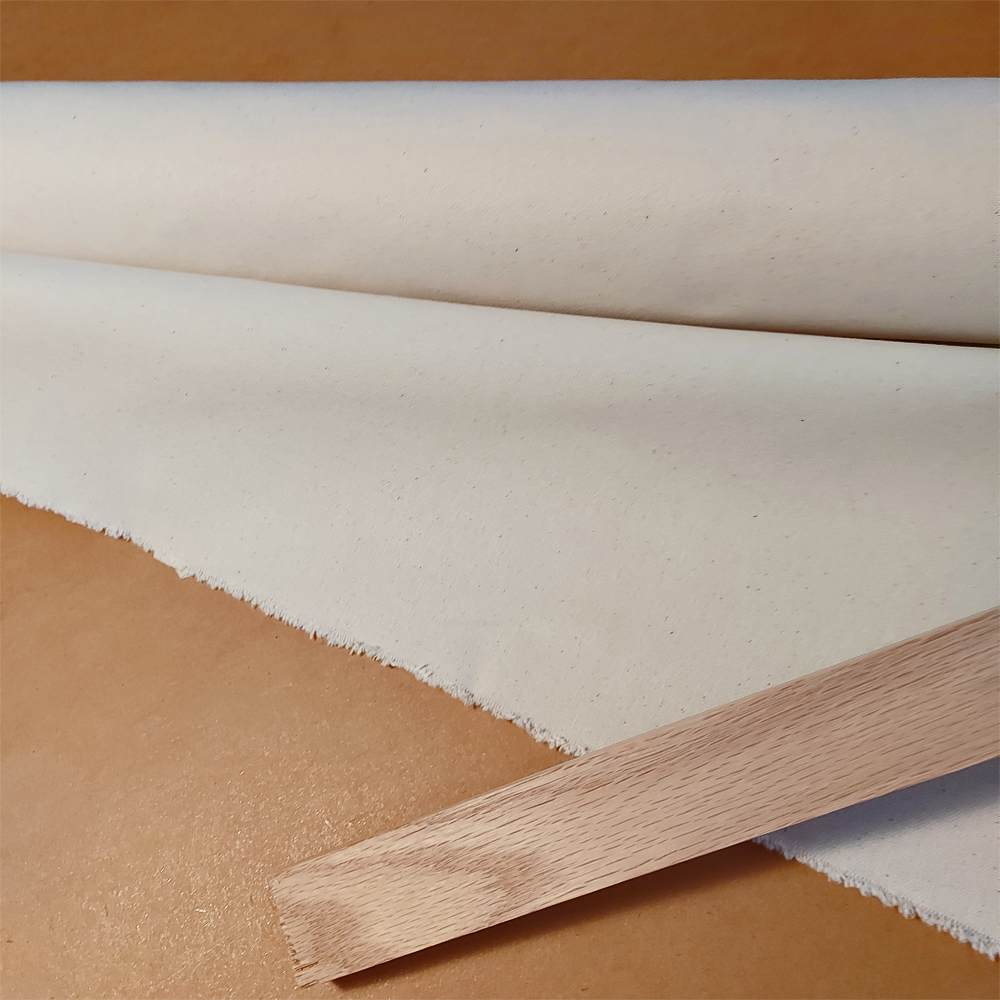
Today, the final steps of the the stretcher creation journey before stretching the canvas were completed, and the canvas will hopefully be stretched with 12oz. cotton canvas by the end of tomorrow. The stretcher is different from most other canvas stretchers as I am using a solid face sign board with a stretcher frame attached made of red oak to create a stretcher with a statement-making depth of 2 1/4″.
These are the materials used as mentioned above.
I decided to make a stretcher with a solid surface on which to stretch the canvas to provide the following two things:
A layer of protection for hanging and transporting such a large piece
To assure the image is able to have a chic, flat, ‘muralesque’ appearance.
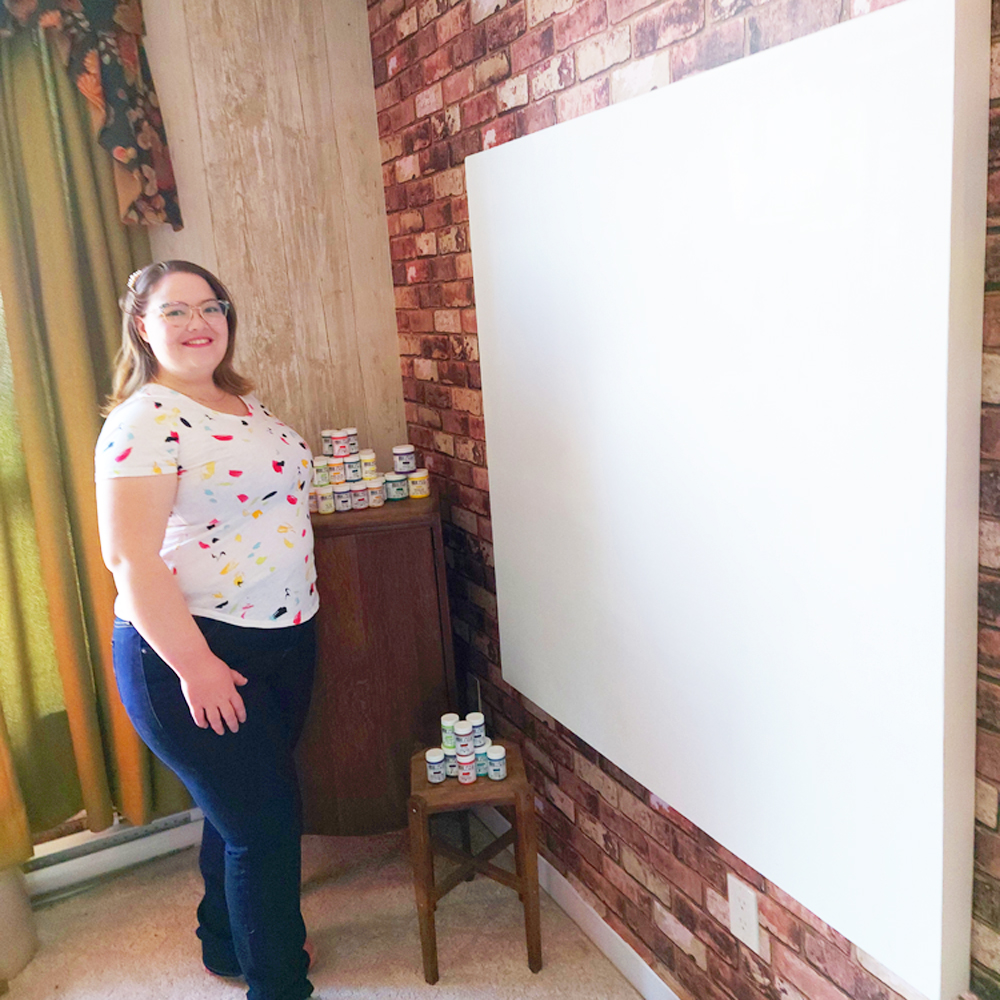
Stretcher hung on Po’s wall without canvas.
Not many know or even think about the process that goes on with a stretched painting before the paint even hits the canvas. However, as a sculptress, I find what you don’t see behind the painting just as amazing as the completed painting seen on the surface.
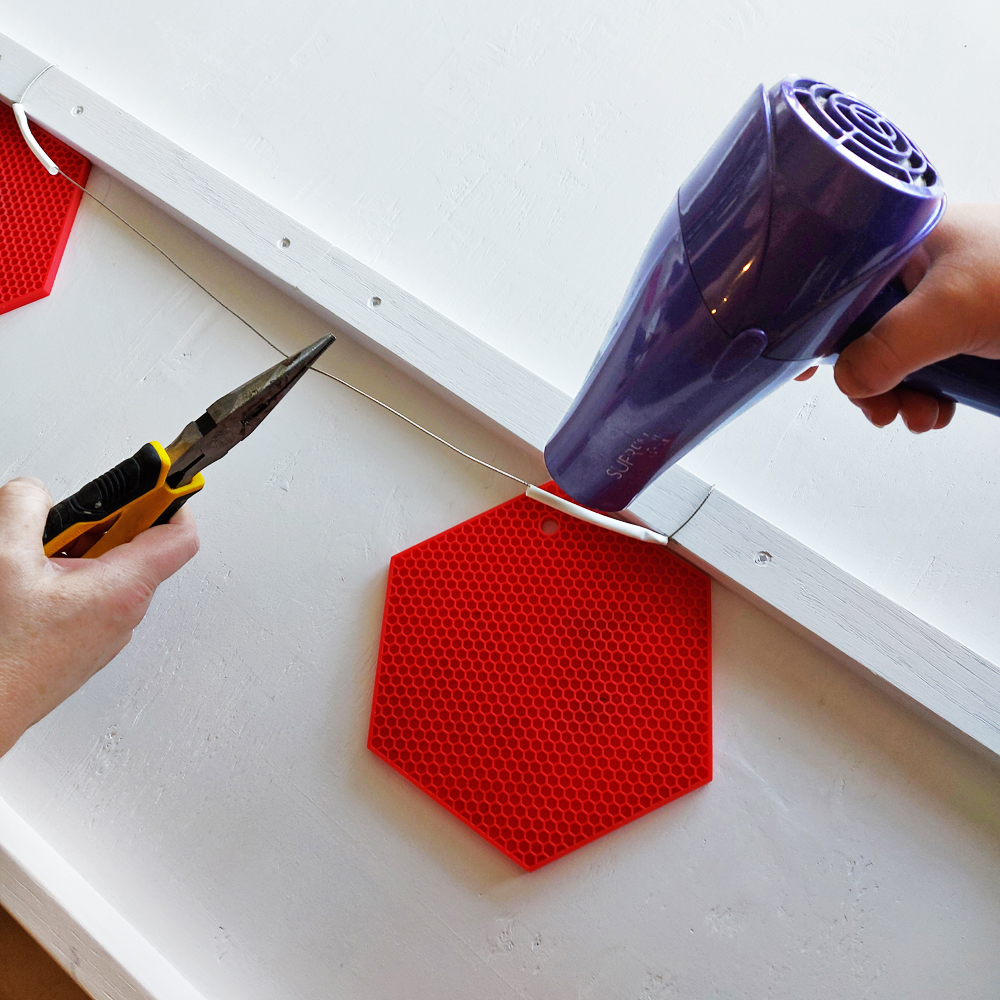
Here are some photos to document the stretcher making process:
Filling screw holes and any imperfections.
Sanding the corners and sharp edges so not to cut canvas.
Po priming the stretcher frame with Tri-Art Professional Quality Gesso.
Securing the hanging wire.
Keep coming back to my blog to see more updates ahead.
Po standing with her Golden SoFlat paint and stretcher without canvas. As you can see the stretcher has been moved out of the woodshop and into the painting studio.
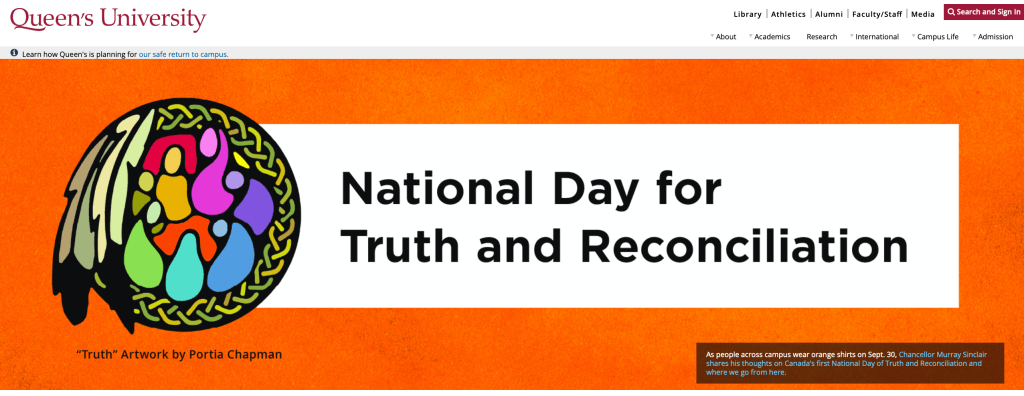
Since I wanted the illustrations to be interpretive, I struggled to provide art interpretations. But as I was creating these images, I could hear and see words. For this illustration, I kept seeing and hearing: “Truth.” But the truth that I kept repeatedly experiencing was not the word, but rather the action and essence of Truth. There were times that I could feel the Sprit of Truth guiding me as the spirit whispered in my ear with faint drumming and singing surrounding us.
As a visual storyteller with Indigenous heritage, generations of my ancestors were silenced as their/our culture was wiped from public display. It was only through story and storytelling did I learn my family’s story. It was because of story and storytelling that I grew to cherish my heritage and ancestry. Our truth may have been hidden from the general public, but it remained alive in our family. Now with my aging family, so many have died but their story is alive as ever.
In the illustration, you will notice a circle of people sharing stories of TRUTH. At the top of the gathering circle, there is a pinkish, larger figure. To me, she represents both Spirit and Clan Mother / Grandmother. She exudes story and the embodiment of truth. She is active and alive as she shares the Truth with the generations to follow her. The orangish space in the middle is a ceremonial fire gathering everyone together.
So as you can see, “Truth,” tells a living story or storytelling. After everything that has been lost, gained or changed over time, Indigenous STORY and STORYTELLING has continued to tell TRUTH!
As an integral part of the Truth and Reconciliation process, please hear the stories of Indigenous Peoples from across this land. It is through hearing the stories shared that we may all, in Truth, move forward together.
Portia Po Chapman using the “Truth” Zoom / Teams Background
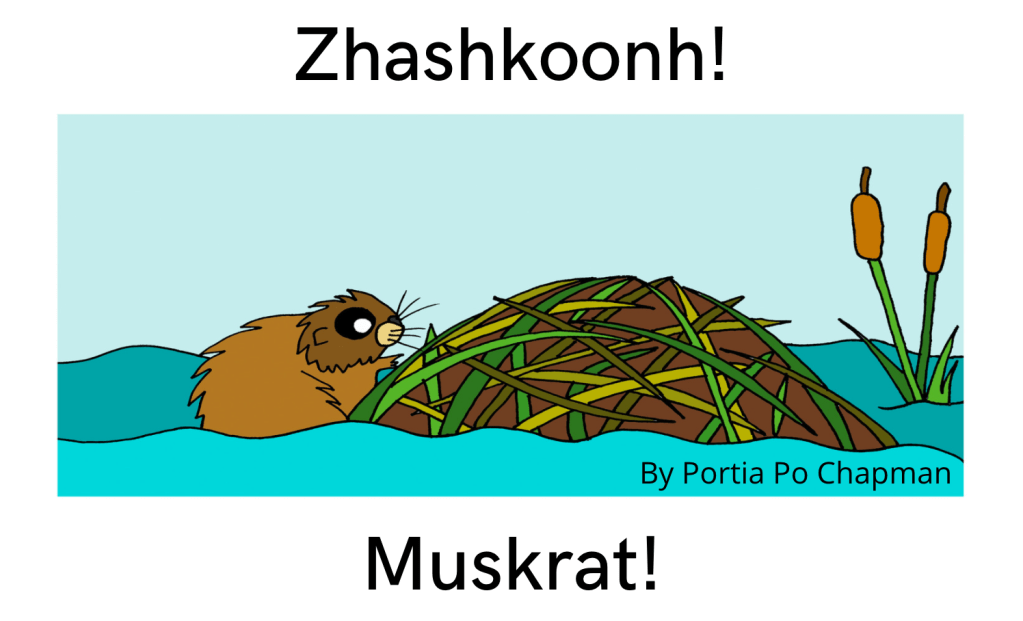
Zhashkoonh ( Muskrat ): Nishnaabemowin Children’s Book by Portia Po Chapman
During the Summer (2021), I began learning Nishnaabemowin. My Trent University Professor was Shirley Ida Williams. Professor Williams wrote the textbook for the course: “Eshkintam Nishinaabemang Mzinagan: Introduction to Nishnaabemowin.” On page iv, Professor Williams describes the dialect as, “The main dialect used in this manual is linguistically classified as Manitoulin Central dialect of Ojibwe and Odawa and is part of Eastern Ojibway and an offshoot of the Mother language of Algonkian.”
It was really exciting to begin my journey learning the language.
As part of the course, I wrote, read aloud, and illustrated my first children’s book in Nishnaabemowin. In this little video, you can read along with me.
Why did I choose to write about the Zhashkoonh ( Muskrat )? As well as being part of the creation story, I enjoyed watching the muskrats as I grew up along side the lake. They always seemed to be a bit more playful than the beavers. While they are tiny, they sure are mighty!
I hope you enjoy reading along with me! Maybe you too can learn few Nishnaabemowin words!
2 weeks after completing my Bachelor of Education in August 2020 (Secondary School Teacher of Visual Art and First Nations, Metis and Inuit Studies) I secured my first teaching position.
I was planning on creating a new collection of woodcut prints inspired by the illustrations I did for Queen’s University, but my teaching position and Additional Teaching Qualification courses occupied my time.
In order to focus more on my artwork, I am teaching less this year (2021/22). As so many of us have found our lives altered by Covid-19, I have found a new breath of creative energy.
If there ever was a time to create, now is that time!
I will be posting more of my art process and documentation. Please continue to check in.
I have 3 projects that I have begun. Well, some of the materials have arrived. I’m really excited about this year.








 Love Art by Po