Today, the final steps of the the stretcher creation journey before stretching the canvas were completed, and the canvas will hopefully be stretched with 12oz. cotton canvas by the end of tomorrow. The stretcher is different from most other canvas stretchers as I am using a solid face sign board with a stretcher frame attached made of red oak to create a stretcher with a statement-making depth of 2 1/4″.
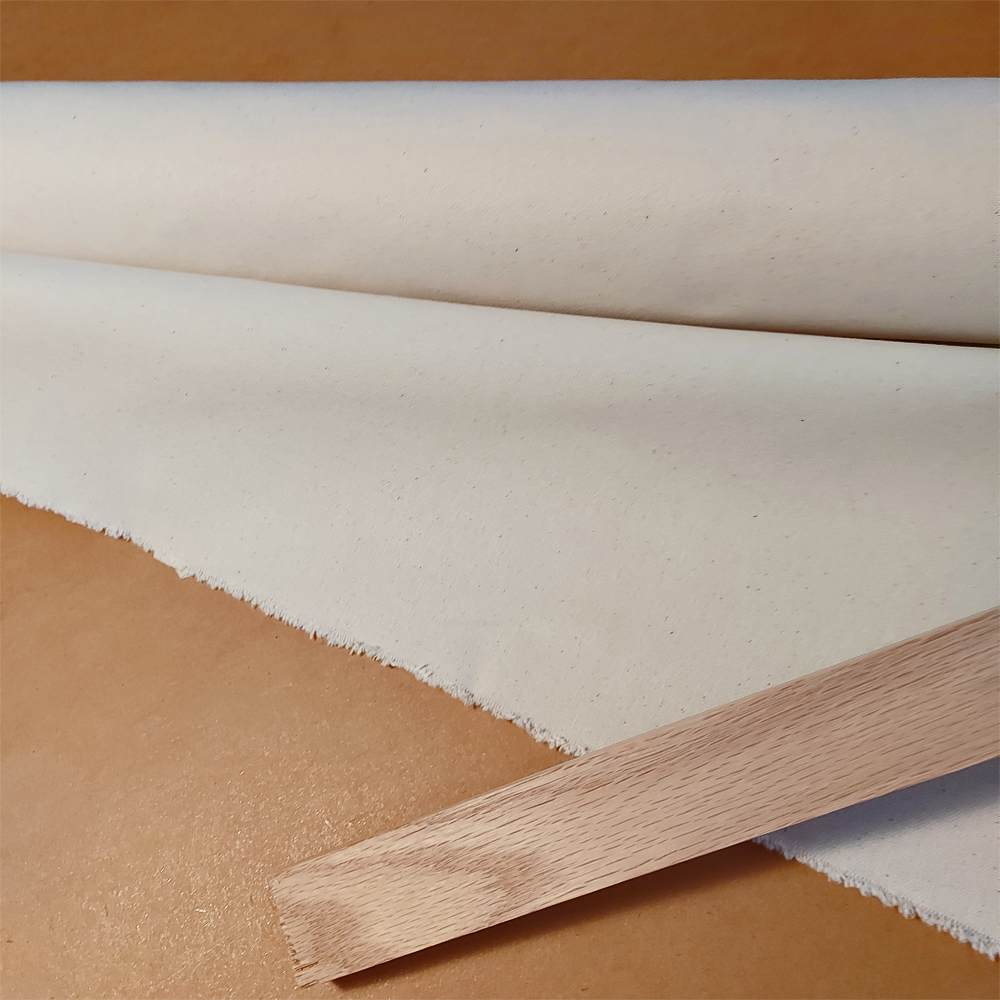
These are the materials used as mentioned above.
I decided to make a stretcher with a solid surface on which to stretch the canvas to provide the following two things:
A layer of protection for hanging and transporting such a large piece
To assure the image is able to have a chic, flat, ‘muralesque’ appearance.
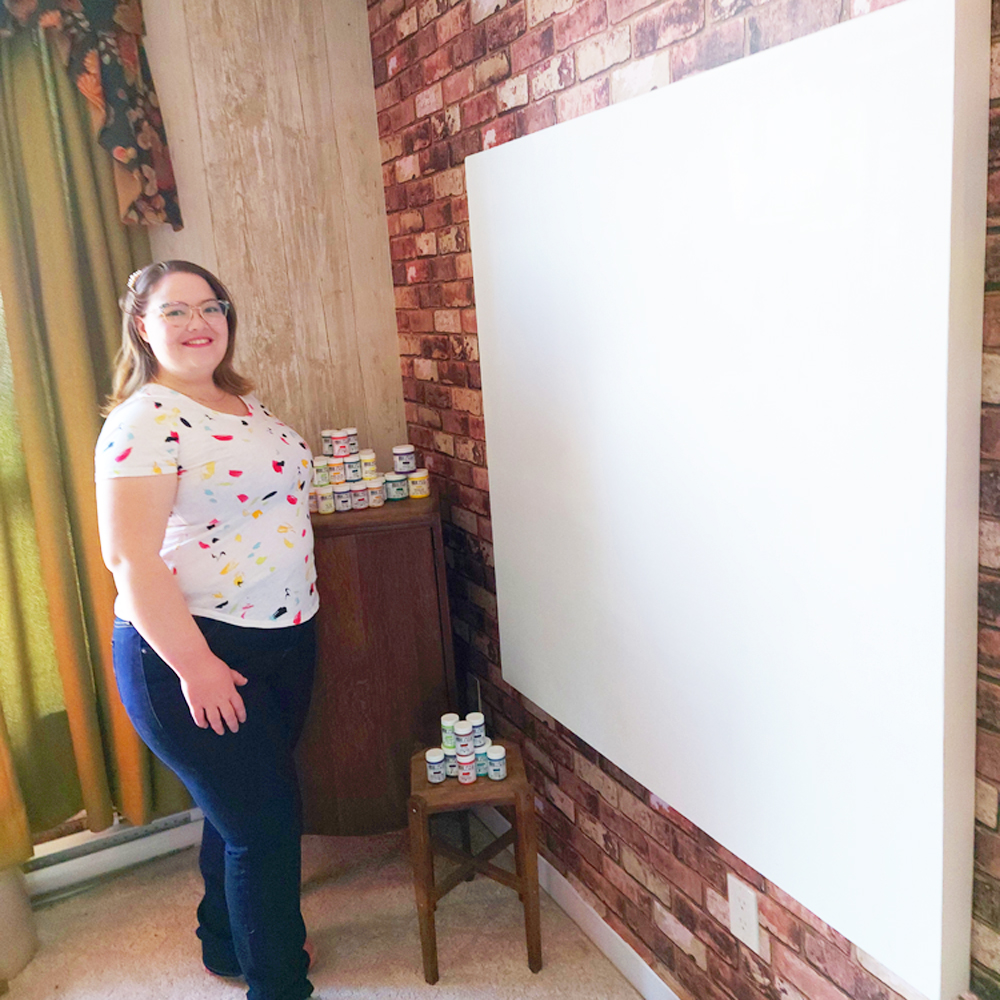
Stretcher hung on Po’s wall without canvas.
Not many know or even think about the process that goes on with a stretched painting before the paint even hits the canvas. However, as a sculptress, I find what you don’t see behind the painting just as amazing as the completed painting seen on the surface.
Here are some photos to document the stretcher making process:
Filling screw holes and any imperfections.
Sanding the corners and sharp edges so not to cut canvas.
Po priming the stretcher frame with Tri-Art Professional Quality Gesso.
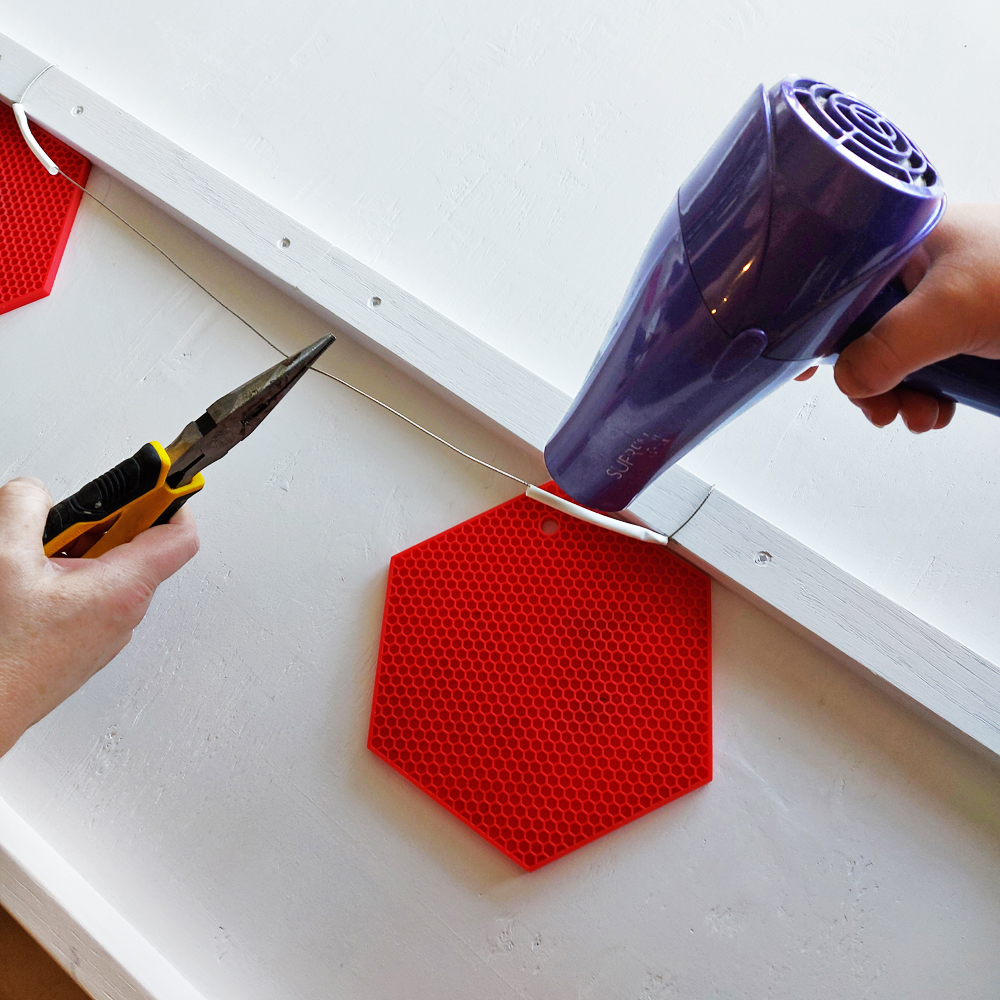
Securing the hanging wire.
Keep coming back to my blog to see more updates ahead.
Po standing with her Golden SoFlat paint and stretcher without canvas. As you can see the stretcher has been moved out of the woodshop and into the painting studio.
Portia “Po” Chapman Begins Painted Hand Drum Trials
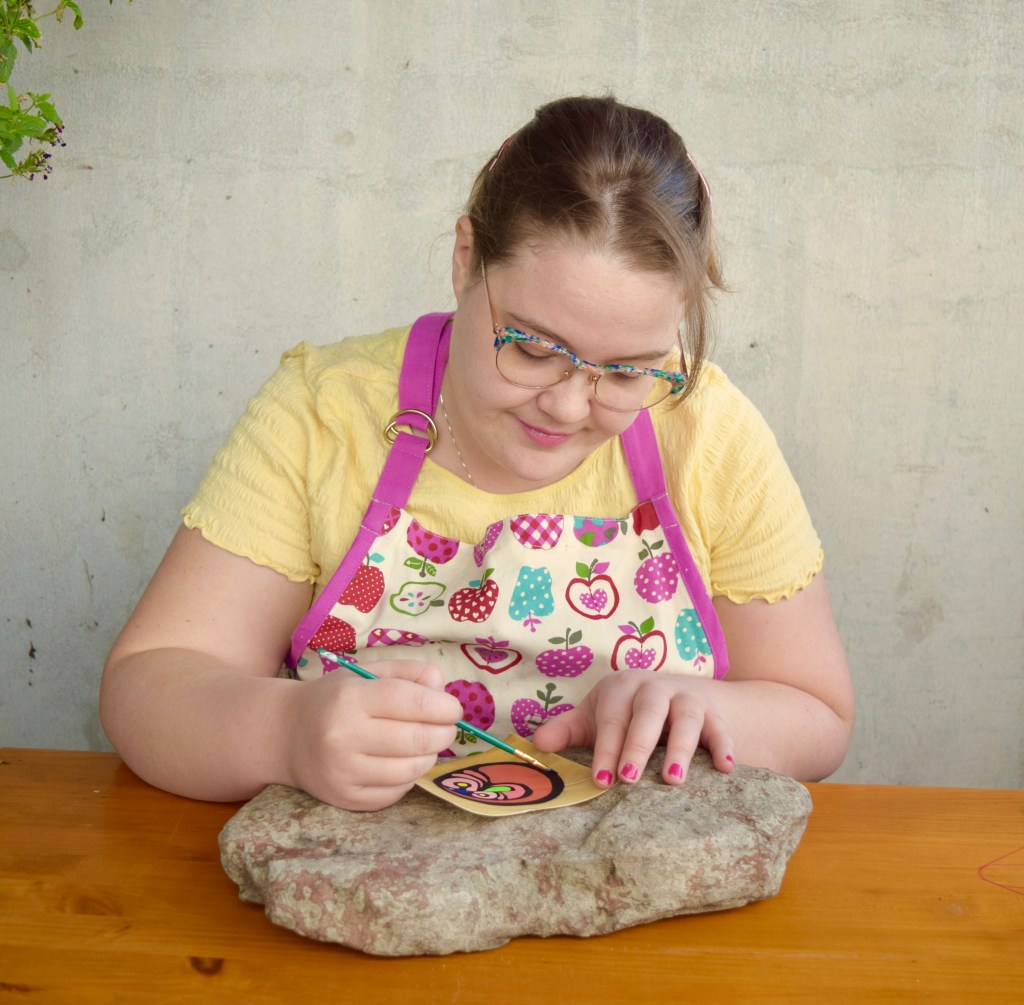
Portia “Po” Chapman trial painting on elk rawhide.
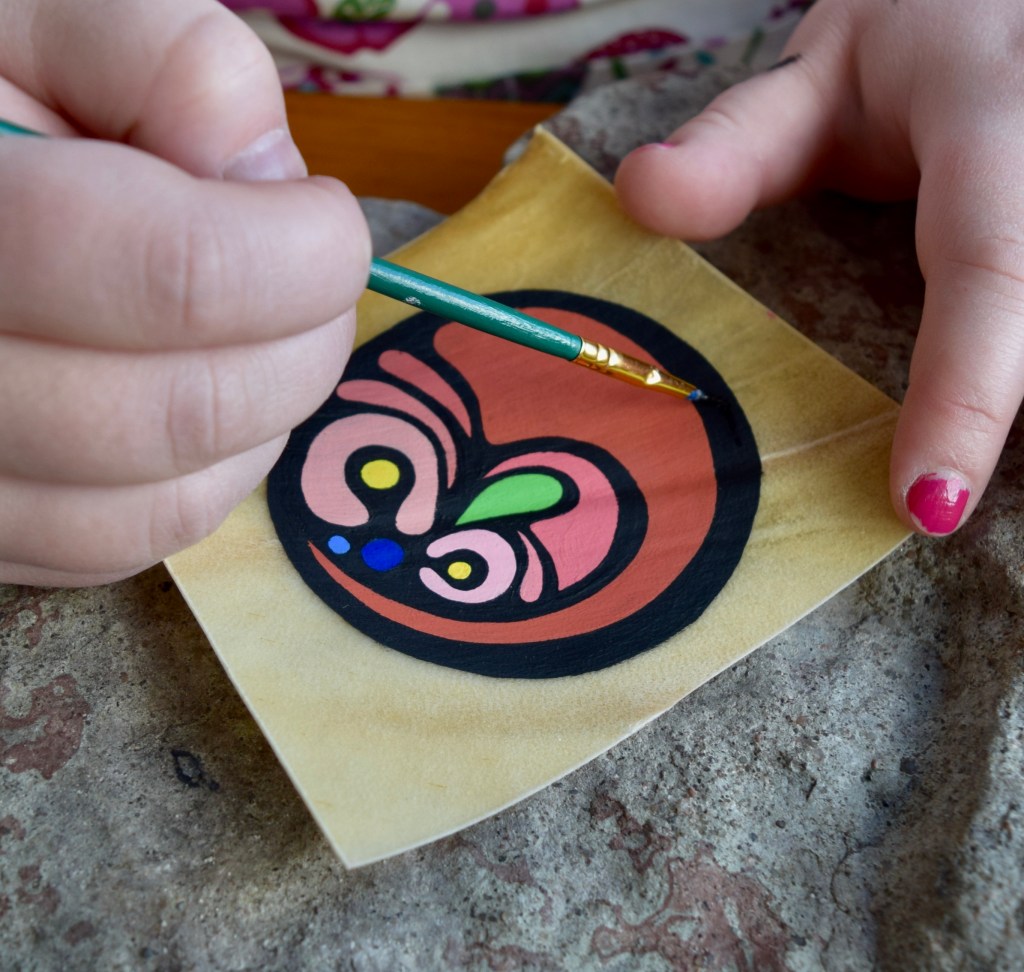
I am excited to announce that painted hand drum trials have commenced. After experimenting with a variety of different mediums and paints, I finally found the paint that is right for me and my new painted hand drum collection. Golden’s new SoFlat matte acrylic paints glide beautifully on the surface of the elk rawhide as if a perfect marriage between the two mediums (Golden, not a sponsor, but I would be glad to accept a sponsorship from them 🙂 ). The paint’s self levelling qualities allow for intense pigment while keeping the natural integrity of the hide’s textures. The paint is also flexible enough that I could almost bend the hide in half without the paint cracking, allowing for the flexibility required of a hand drum. While the paint is amazingly opaque, when the painted hide is held up to the sun, you can still see the light shine through it. My patrons will be very pleased with the quality of their new hand drum.
Portia “Po” Chapman painting with Golden SoFlat acrylic paints on elk rawhide.
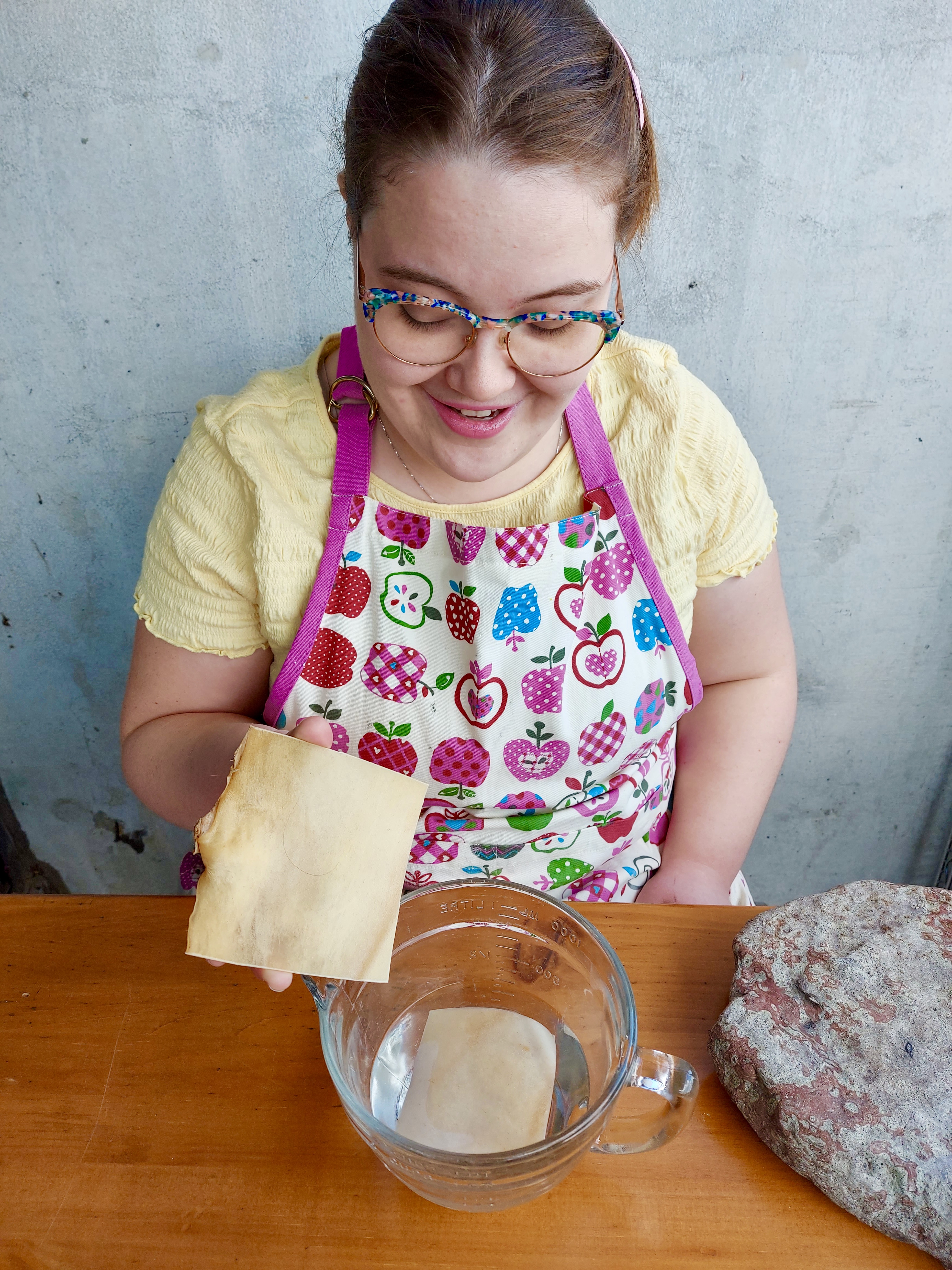
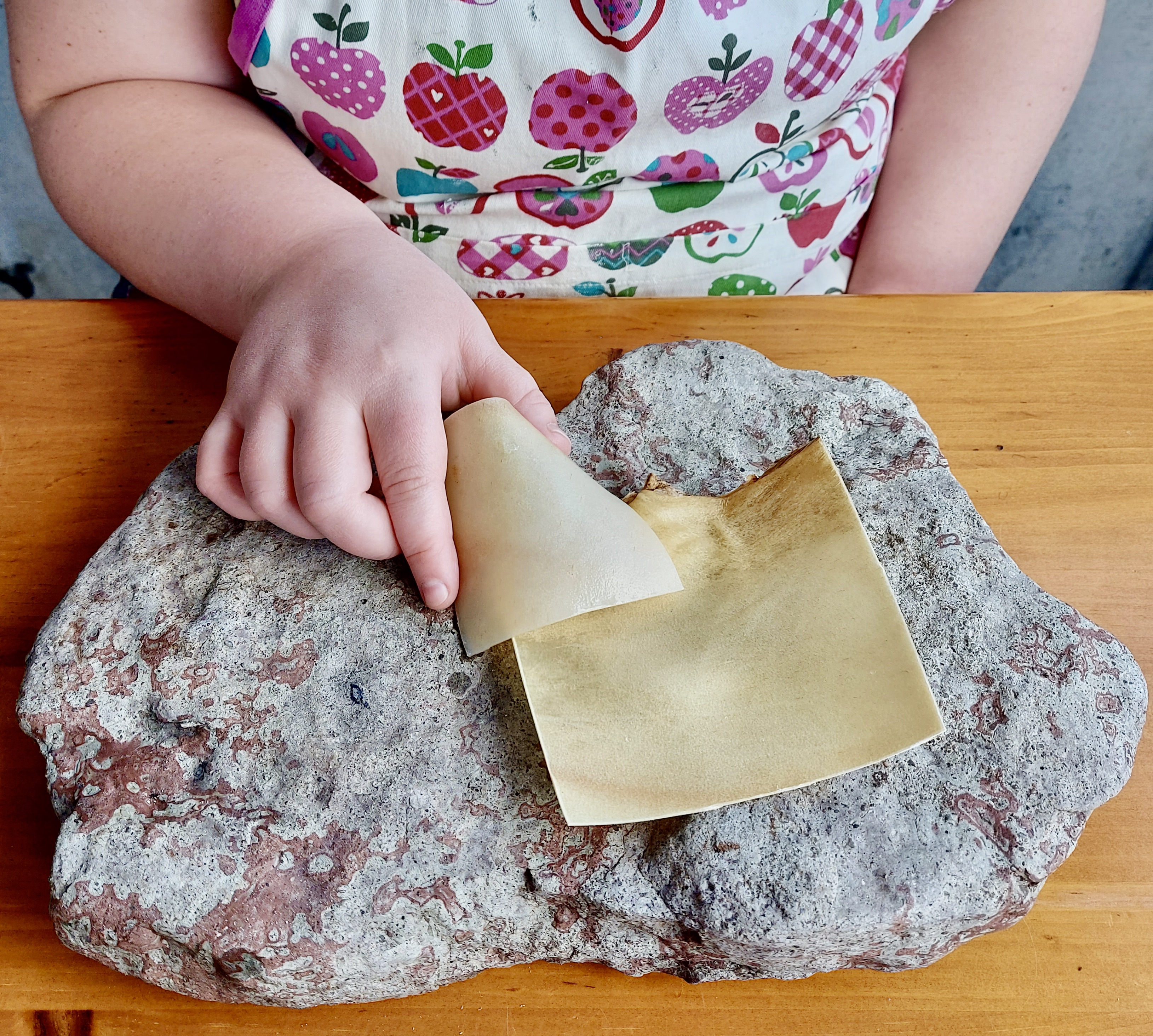
In order to stretch the raw hide over the white cedar drum frames, the hide must be soaked, I found for at least 12 hours. With an end piece of the elk rawhide, I did a trial run of the soaking process to see how the hide behaved after being soaked. Here you can see the comparison between the flexibility of the soaked raw hide and the dried rawhide. The soaked rawhide is the smaller piece (it did not shrink, it was cut a smaller size). The soaked rawhide is very flexible and almost rubbery in texture (the sensation of feeling it is similar to what I remember when petting a beluga whale as a child), whereas the dried raw hide is stiff and paper like in texture.
I am always excited for the experimental and trial stages of a project. You never know how a material behaves until you try using it yourself, especially a natural Creator-made rawhide that can differ greatly depending on the animal. I am looking forward to stretching the soaked elk rawhide over my freshly sanded and treated white cedar drum frames shortly and beginning the painting process. Once dry, the rawhide will regain much of its translucent nature. I’ll post about these processes too in the near future.
Portia “Po” Chapman smudging soaked elk rawhide with sage and a goose feather fan.
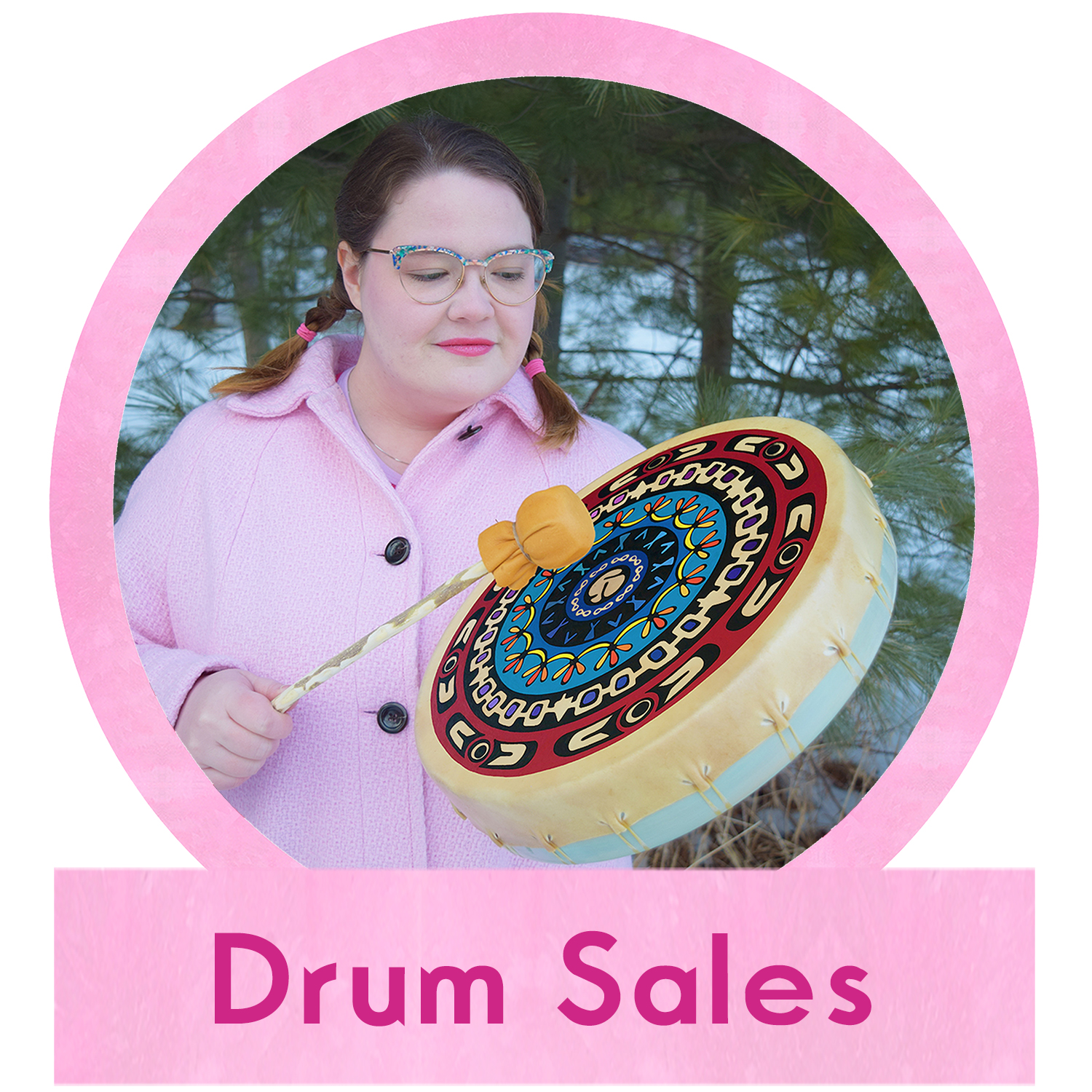
My new painted hand drum collection features 14″ painted hand drums. Each painted hand drum is $500. I am accepting pre-orders to reserve these pieces. I chose to create a new collection of painted hand drums rather than wood block prints/stamps because the artwork and drum can sing in perfect harmony when drummed by their drummer. I like creating art pieces that can be used by the collector. I think this collection is very special. With these painted hand drums, collectors will surely turn heads at their local drum circle gatherings.










 Love Art by Po