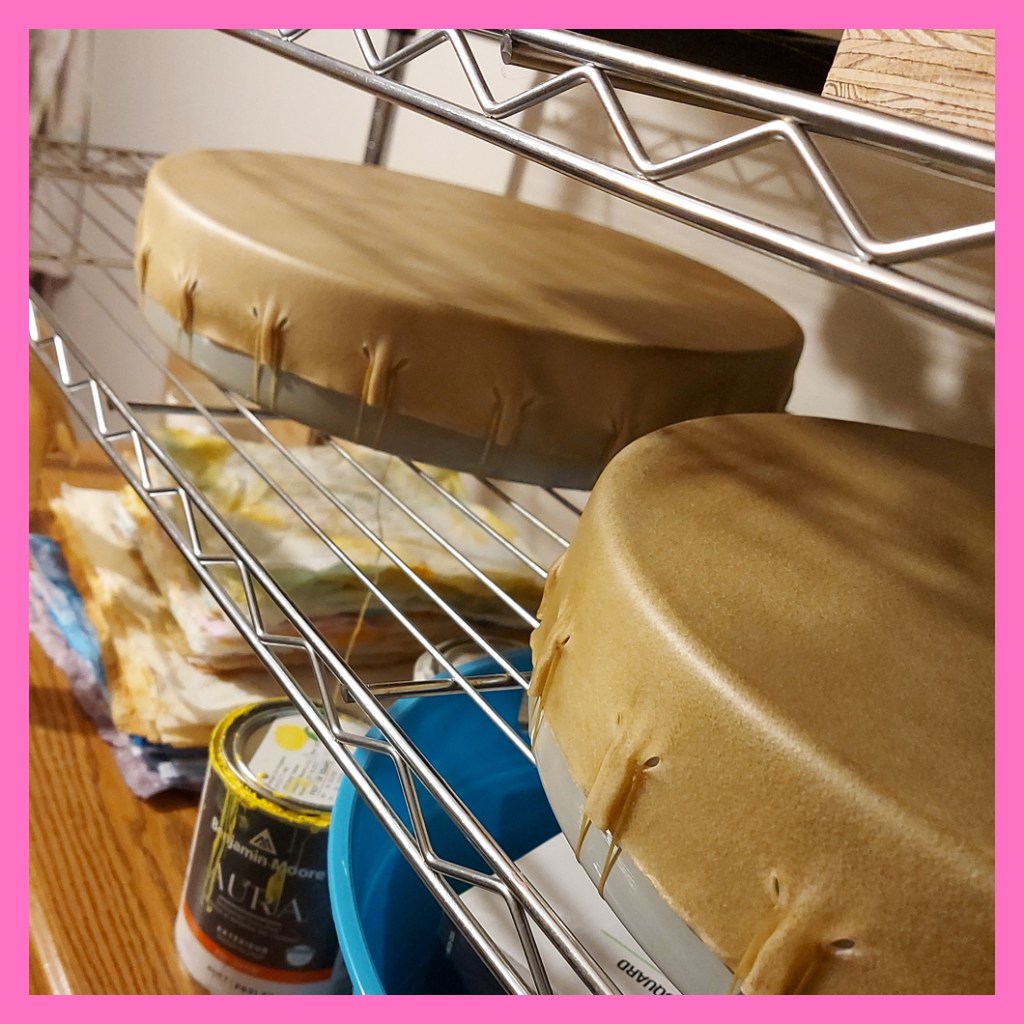
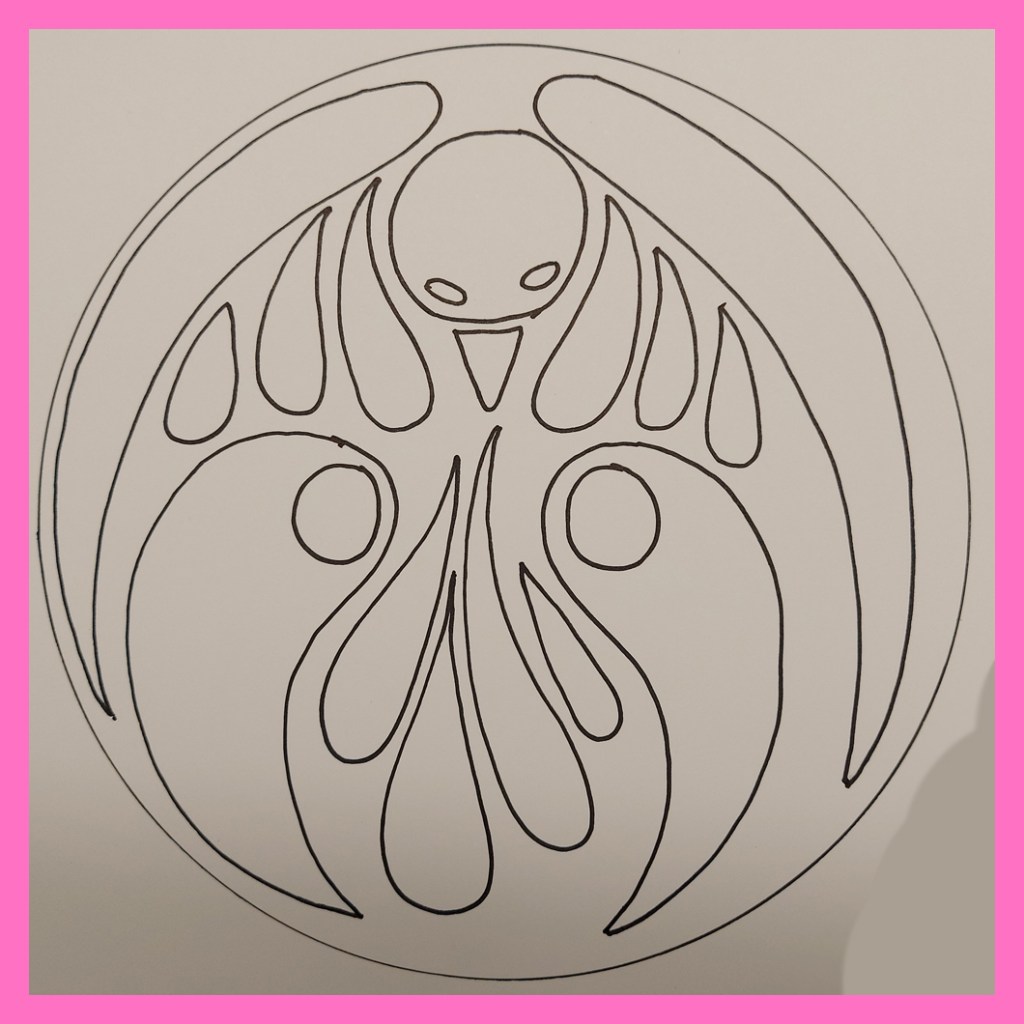
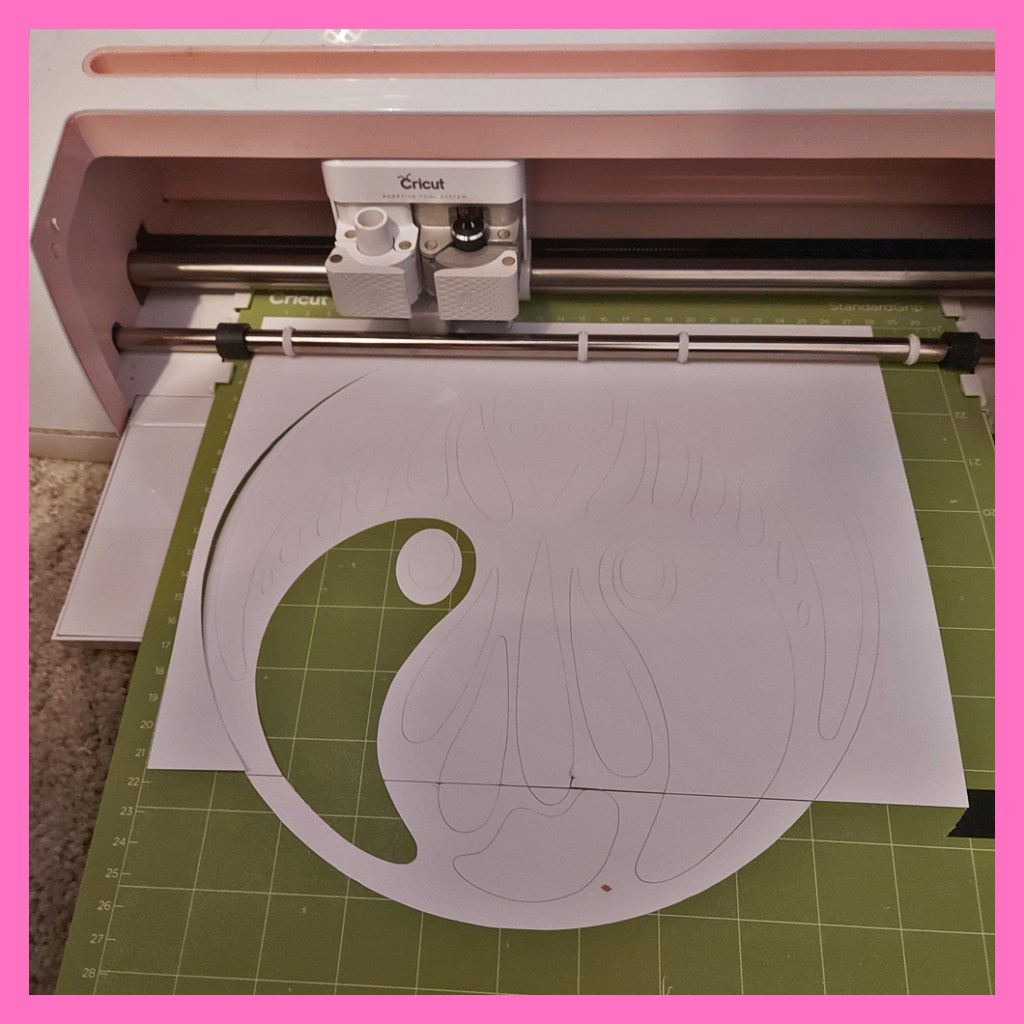
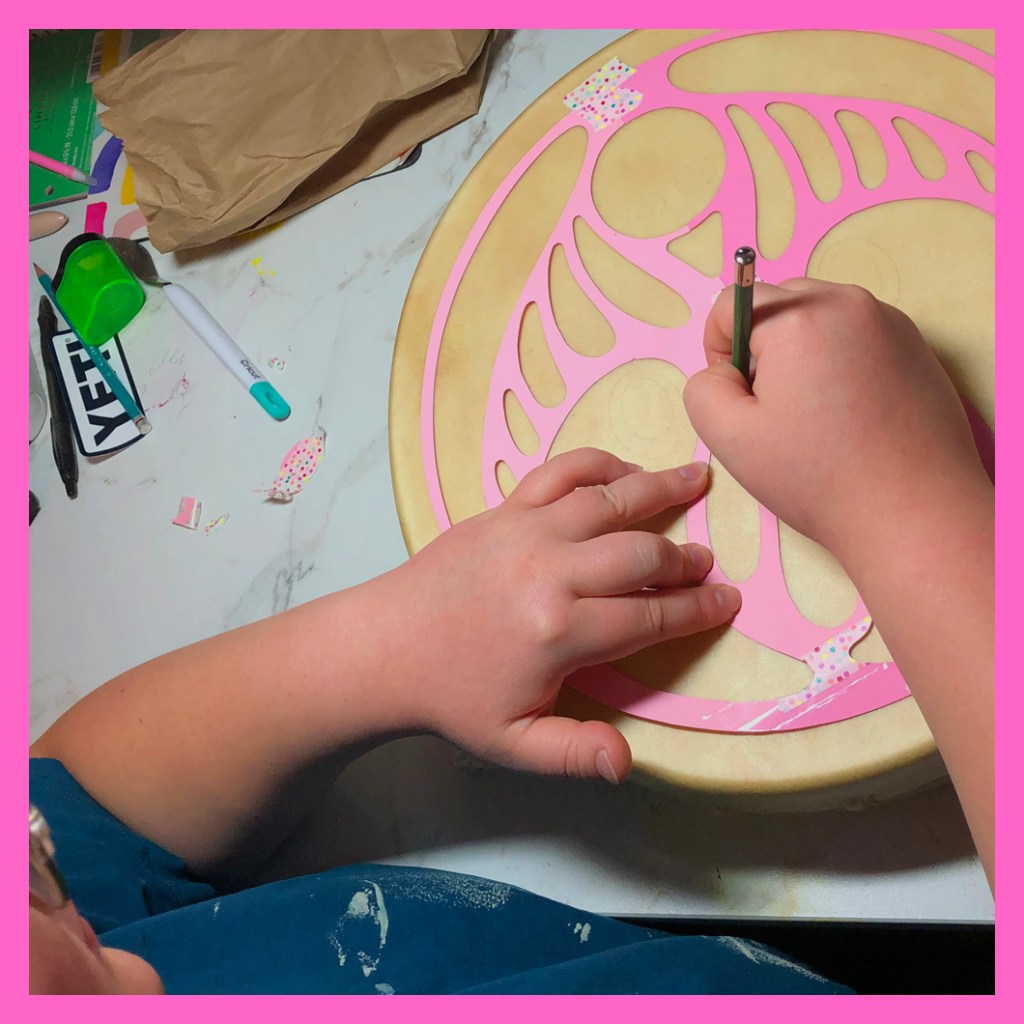
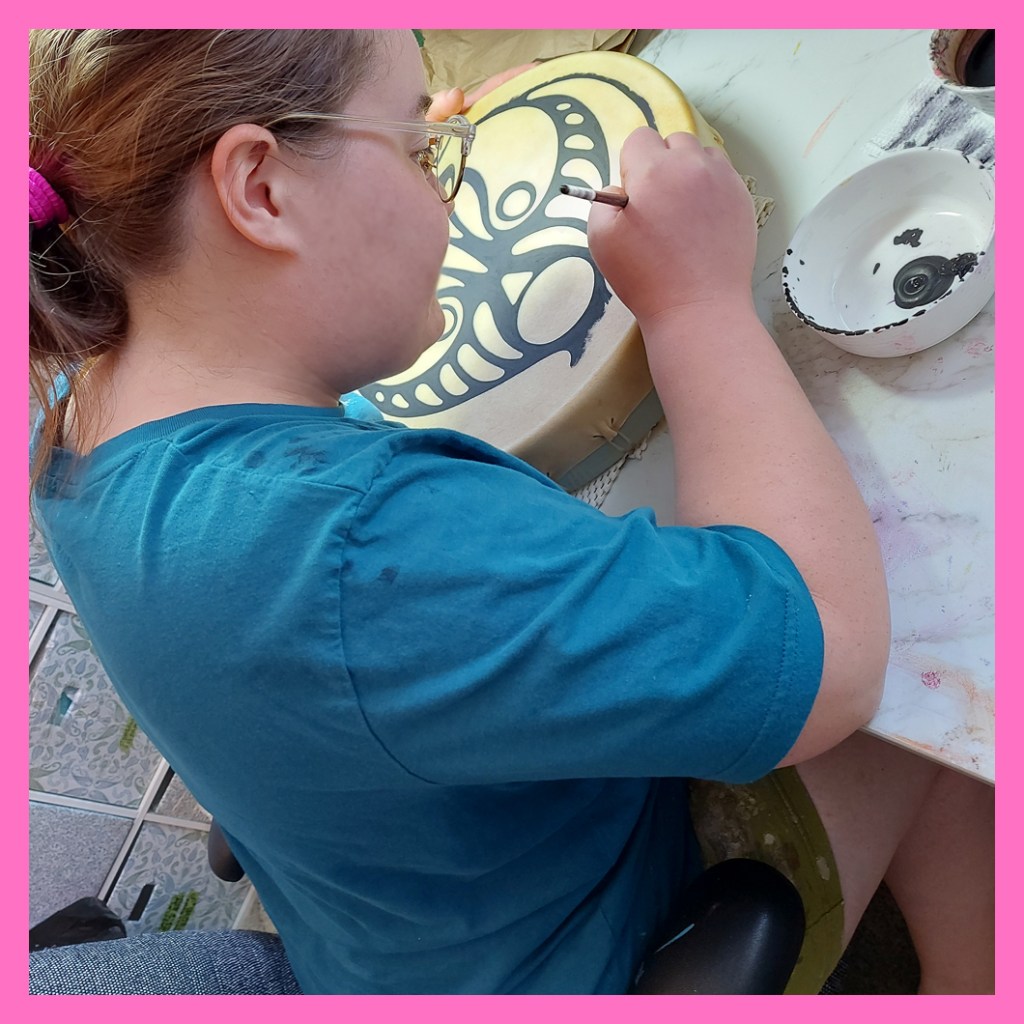
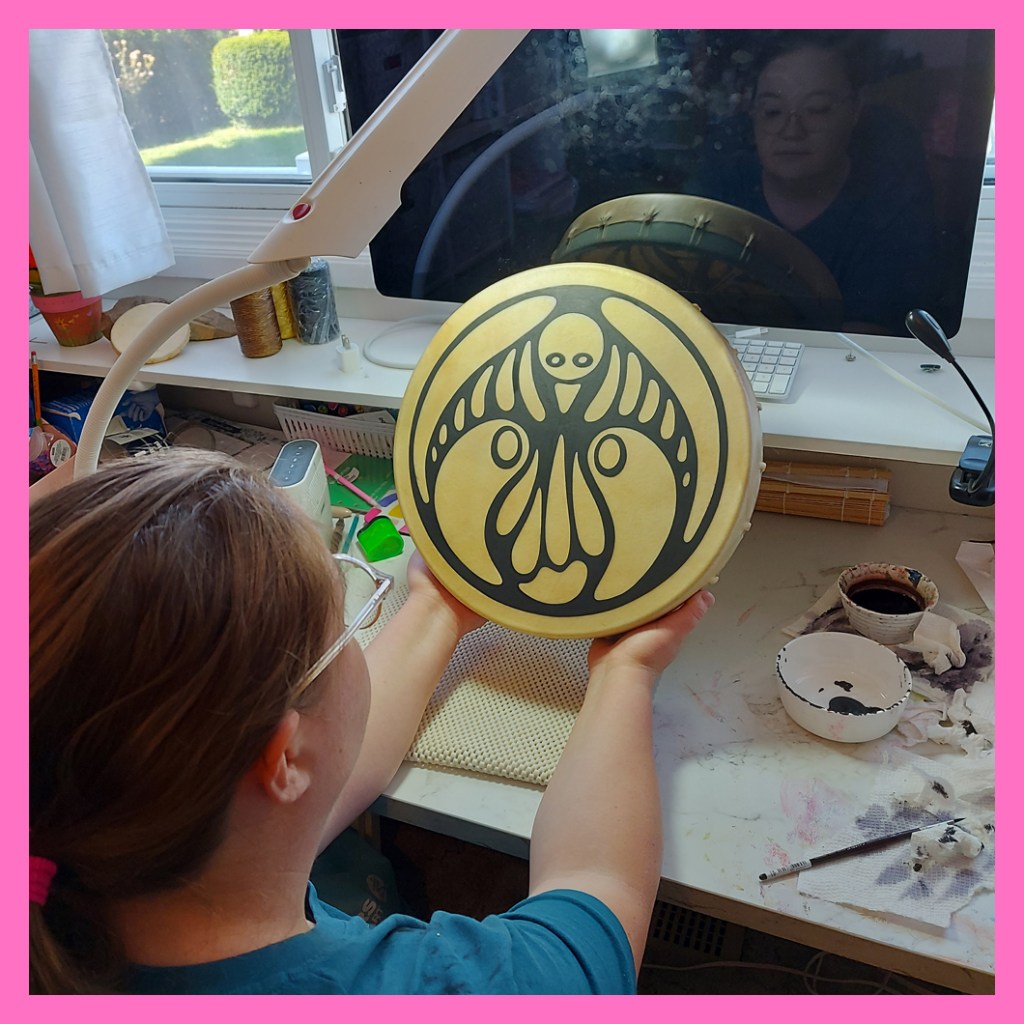
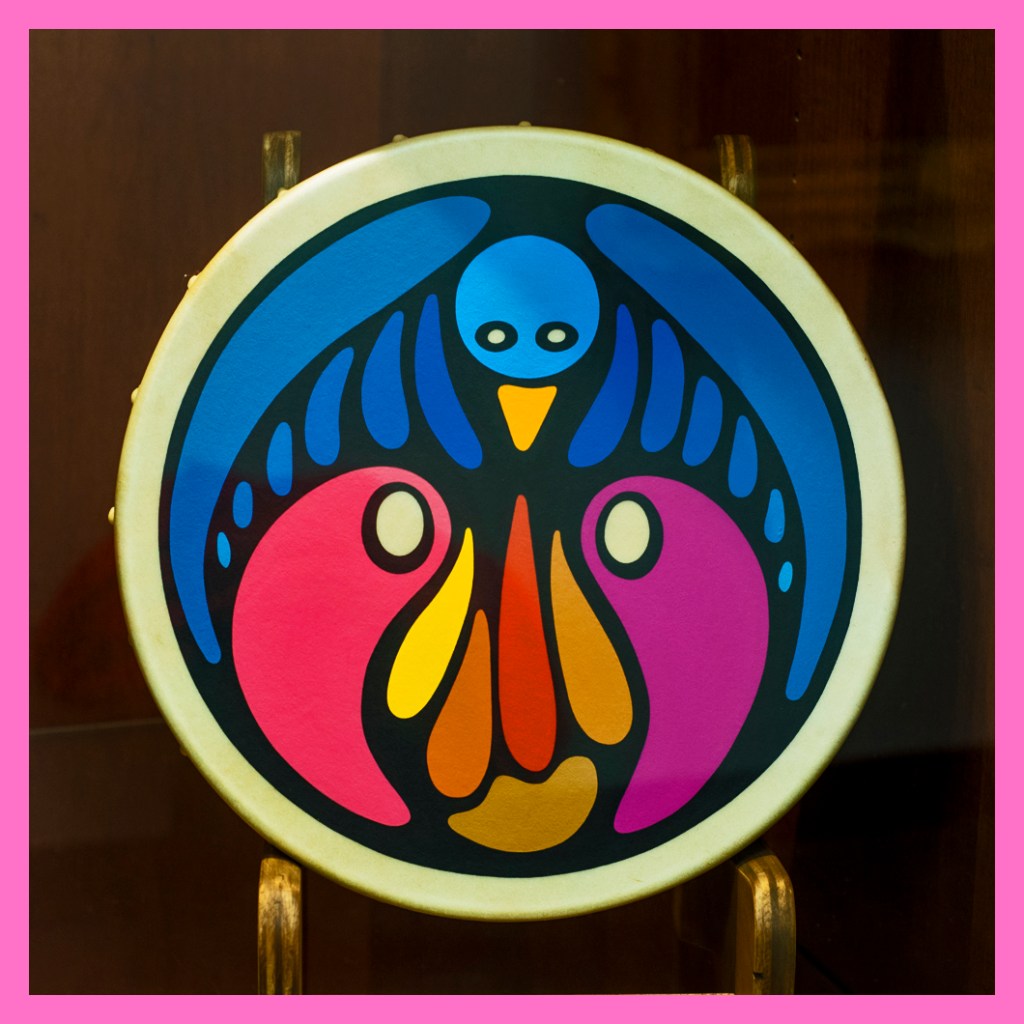
Behind the Art, Behind the scenes, Drum December, Drum Works, How Po Makes Hand Drums, Kingston Artist, Portia Chapman

Drum December Day 3: Po’s Bendy Wood Reveal

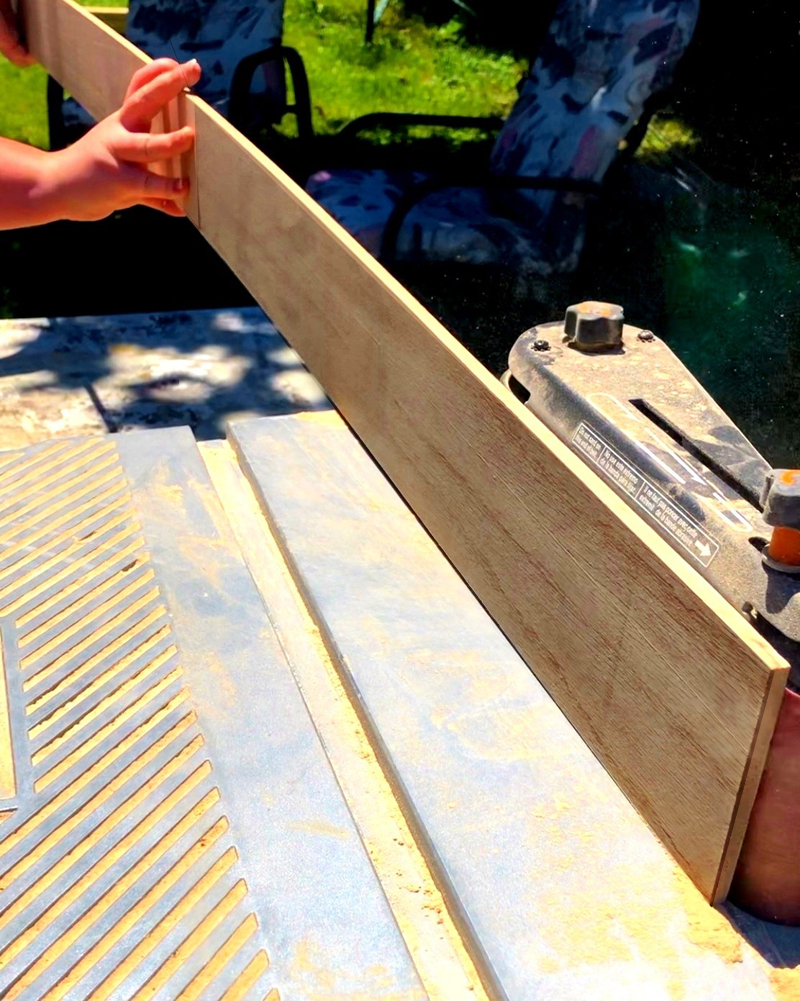
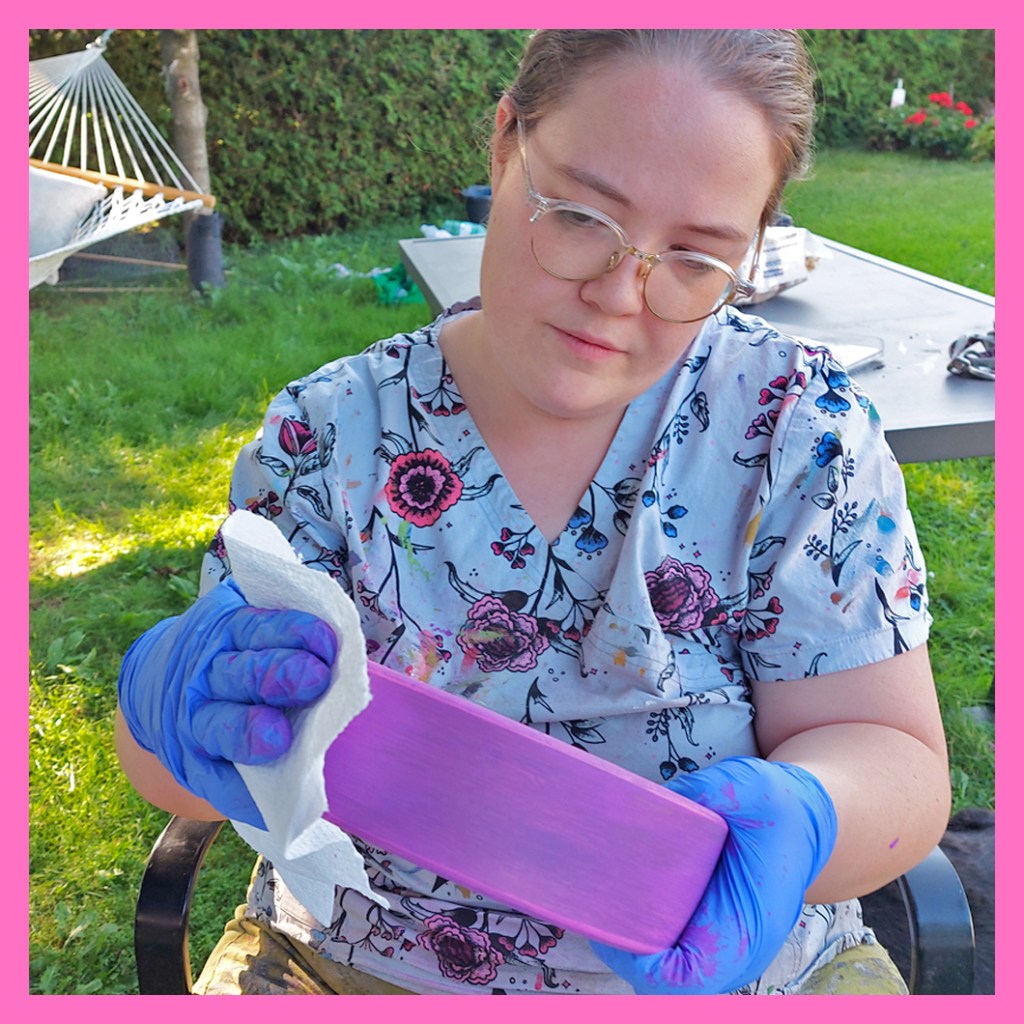
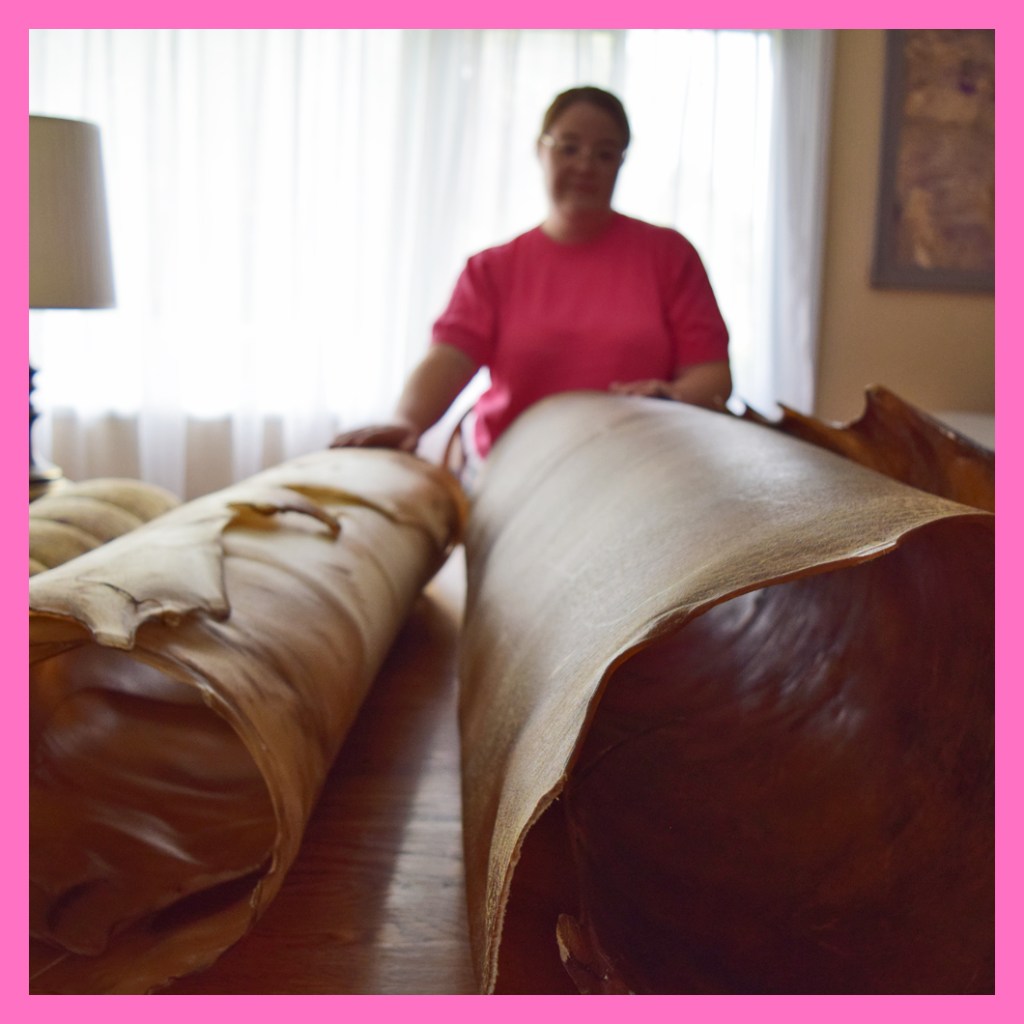
Po Chapman holds a freshly sun-steamed hardwood plank in her backyard studio, demonstrating how flexible the wood has become during Day 3 of her Drum December drum-making process.
The Bendy Test — Po checks the flexibility of her sun-steamed hardwood before shaping it into a drum frame.

Today, Po reveals the next step in her innovative sun-steaming process — the moment when three days of sunlight, water, and patient preparation finally transform kiln-dried hardwood into a material that is ready to bend.

Testing the Wood After Three Days of Sun-Steaming

Today marks the moment when Po checks the results of the full three-day sun-steaming cycle. In yesterday’s post, we watched her begin this method by sliding the hardwood into the long ridged tube and filling it with water to let the sun do the work. By this morning, the fibres within the wood had warmed, expanded, and begun to relax. Now it was time to see whether the wood had softened enough to become flexible — or whether it needed more time in the sun.

After pouring out the steaming water, Po slid the hardwood out of the tube and laid it gently on the grass. The board emerges from the tube hot, ridged, and stiff — the opposite of what you might expect from a piece of wood that will soon become a circular drum frame. But this is where Po’s ingenuity comes in.

Still too hot to handle with bare hands, Po begins a technique she discovered through experimentation: walking on the wood. Wearing proper shoes, she carefully steps along the length of the board, back and forth, allowing her weight to massage the fibres into motion. The grass protects the surface from dents and provides the perfect soft foundation for the wood to ease into its new flexibility.

For about five minutes, she continues this rhythmic movement — a sculptor’s touch expressed through her feet rather than her hands. And then comes the test.

With one foot still grounding the board, Po gently lifts the opposite end.

In today’s video, you can see the moment the wood answers.

It bends — cleanly, smoothly, willingly.

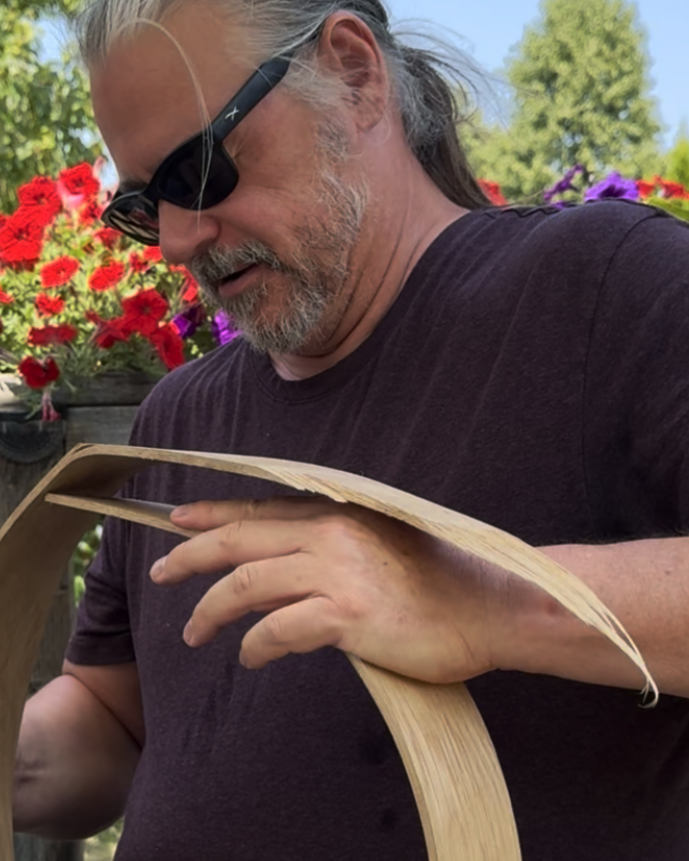
This once rigid hardwood is now supple enough to be shaped into the elegant circular frame of a drum. What seemed impossible only days before becomes possible through Po’s blend of patience, innovation, and the natural power of the sun.

Tomorrow, Po will continue the transformation as she prepares the wood for its first bends toward the circle it is destined to become.

Drum December unfolds one authentic, beautiful step at a time.

Stay tuned for Day 4.

📧 Portia@loveartbypo.ca

2 responses to “Drum December Day 3: Po’s Bendy Wood Reveal”

  1. Drum December Day 21: Drumming in the New Year 2026 – Love Art by Po Avatar

    […] how beautiful the Drum December drum turned out. This where we started with Drum December. You can learn exactly how we crafted this instrument by visiting the previous 20 days of the […]

Let Me Know What You Think! Start or Join the Convesation

Artist Portia Po Chapman Mural, Portia Chapman, Uncategorized

The Rich History of Hand-Painted Kitchen Murals: From Ancient Hearths to Modern Homes

Contemporary Kitchen Mural

History of Hand-Painted Kitchen Murals

Hand-painted kitchen murals may feel like a recent design trend, but their history stretches back thousands of years. As long as humans have gathered around food and fire, we have decorated the spaces where we cook, eat, and connect. These murals reflect cultural values, artistic innovation, and the evolution of the kitchen itself. (See the original sample kitchen without mural.)

Below is a journey through time exploring how kitchen murals began, how they changed, and why they continue to flourish today.

Ancient Beginnings: Art Around the HearthFrom Cave Paintings to Early Communal Kitchens

Long before contemporary kitchens existed, early humans adorned the walls of communal living spaces with painted symbols and scenes. The spaces where people prepared food were often decorated with images of animals, hunts, and daily life.

These early images did more than beautify spaces, they told stories, marked traditions, and connected communities.

Egyptian and Roman Domestic Art

In ancient Egypt, homes of wealthy families featured painted walls depicting food, agriculture, and abundance. These symbols reflected the household’s prosperity and honoured deities connected to nourishment.

The Romans pushed wall painting even further. In Pompeii and Herculaneum, frescoes decorated kitchens, pantries, and dining areas with images of fruits, fish, wines, and market scenes.

Medieval and Renaissance Kitchens: Function First, Decoration Later

During the Middle Ages, kitchens were utilitarian, smoky, and often separate from the main living quarters. Decoration was limited due to soot and open flames. Still, some monasteries and noble estates painted devotional symbols near hearths as blessings for safety and abundance.

With the Renaissance came a renewed interest in beauty within the home. Frescoes began appearing in dining halls and hearth rooms, including scenes of feasts, harvests, and nature. These early murals set the precedent for connecting kitchens and dining spaces with artistic expression.

The 17th–19th Centuries: Folk Art and Cultural Identity

As homes became cleaner and better ventilated, painted kitchen walls became more common, especially in rural communities.

European Folk Art Traditions

Regions such as:

  • Bavaria (Germany)
  • Scandinavia
  • Eastern Europe
    became known for bright, hand-painted kitchen motifs: flowers, birds, vines, and symbolic patterns.

These murals were typically done by local artisans or homeowners, making the designs deeply personal. They celebrated family heritage, religious beliefs, and seasonal cycles.

Colonial North America

Early North American settlers brought European traditions with them. Hand-painted stencils, sweeping floral garlands, and pastoral scenes decorated hearth rooms and kitchens. Many of these murals doubled as storytelling tools to record harvests, travels, or family events.

The Early 20th Century: Murals Meet Modern Design

As kitchens became more central to the home as gathering spaces, rather than just practical spaces, kitchen murals experienced a revival.

Arts & Crafts Movement

This movement celebrated craftsmanship and natural motifs. Hand-painted tiles and wall panels featuring fruits, flowers, and farm life became common, particularly in English and American kitchens.

Art Deco & Art Nouveau Eras

Sleek, stylized murals with geometric or botanical themes brought elegance to kitchens, often blending artistic flair with the era’s growing interest in beautifying the home.

Post-War Boom: Murals as Cheerful Homemaking

The 1950s and 1960s brought bright colors, optimism, and a quickly growing home décor industry.

Popular Themes Included:

  • Fruit baskets
  • Vineyards
  • Roosters and country motifs
  • Cheerful kitchen scenes
  • Checkerboard patterns
  • Decorative borders

Hand-painted murals and stencilling kits became widely available, allowing everyday people to personalize their kitchens for the first time.

Late 20th Century to Today: Custom Art for Modern Lifestyles

The contemporary kitchen is a social space, and murals have reemerged as a sophisticated and creative form of self-expression. Today’s hand-painted kitchen murals combine historical inspiration with contemporary design and technique.

Current Trends Reflect:

  • Nature and botanicals — a nod to earlier folk traditions
  • Food and wine themes — inspired by Roman and Tuscan frescoes
  • Minimalist line art — echoing modern aesthetics
  • Cultural motifs — celebrating heritage
  • Large-scale abstract murals — turning kitchens into art installations

Artisans now use durable paints, sealants, and washable surfaces, allowing murals to stand up to heat, moisture, and daily use.

Why Hand-Painted Kitchen Murals Remain Desired

Across centuries, cultures, and artistic movements, kitchen murals have persisted because they provide:

  • A personal story: They connect the homeowner to heritage, memory, and meaning.
  • A sense of warmth: Art transforms a utilitarian space into a welcoming space.
  • A celebration of food and community: Murals reinforce the kitchen’s emotional significance.
  • Timeless craftsmanship: Hand painting creates authenticity that printed murals can’t fully replicate.

Final Thoughts

The history of hand-painted kitchen murals is a history of home, family, and creativity. From ancient frescoes to contemporary custom artwork, these murals have always served as more than decoration; they are symbols of nourishment, heritage, family, and the beauty of everyday life.

Contact Po, if you’re ready to create a mural that sets your kitchen apart from your friends and families’ kitchens with a bold, contemporary, and hand-painted mural. Book your complimentary e-consultation and you can collaborate to design a wall that leaves a lasting impression and tells your story.

Request a Custom Project Quote

One response to “The Rich History of Hand-Painted Kitchen Murals: From Ancient Hearths to Modern Homes”

Let Me Know What You Think! Start or Join the Convesation

Artist Portia Po Chapman Mural, Portia Chapman, Uncategorized

Transform Your Kingston Business With a Hand-Painted Mural

Kingston Mural Artist Po hand painted mural in corporate office building
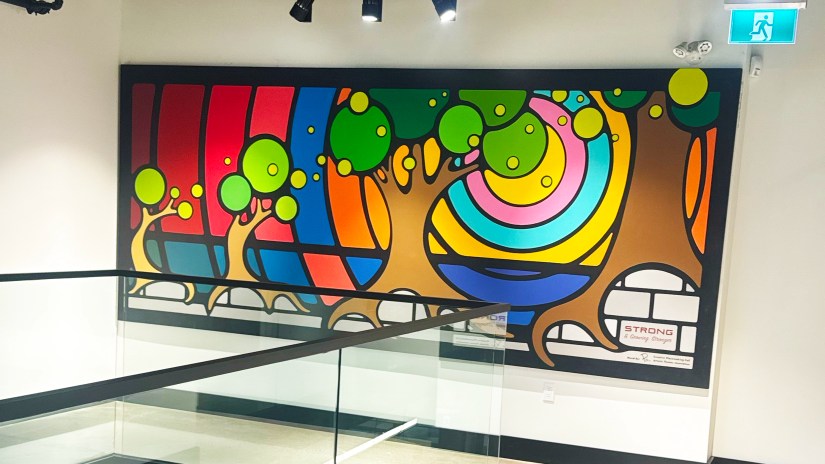
Kingston artist Portia Po Chapman’s mural, “Strong and Growing Stronger” mounted on the second floor of the new Strong Enterprises Headquarters building in Belleville, Ontario. 2025

Kingston Business Murals | Hand-Painted, Original, Vivid Wall Art by Po

Your Kingston business deserves more than generic décor. A hand-painted mural does more than fill a wall — it communicates your brand, energizes the space, and creates a lasting impression.

Unlike digital prints or spray-painted walls, my murals are entirely hand-painted with vivid, crisp organic colour blocking. Every line, edge, and colour is intentional, resulting in murals that feel alive and unmistakably original.

Benefits for your business:

  • Brand identity: Your mural tells your story visually.
  • Customer experience: Clients spend more time in spaces that are engaging and beautiful.
  • Social impact: A striking mural encourages sharing and word-of-mouth marketing.
  • Employee inspiration: Vibrant art energizes your team and workplace atmosphere.

From cafés and studios to offices and public spaces, Kingston businesses have embraced hand-painted murals because they combine art, branding, and space transformation in one unforgettable experience.

More about Po’s Murals

If you’re ready to create a mural that sets your business apart — bold, contemporary, and hand-painted — let’s collaborate to design a wall that leaves a lasting impression.

Request a Custom Project Quote

3 responses to “Transform Your Kingston Business With a Hand-Painted Mural”

  1. Linda Chapman Avatar
    Linda Chapman

    They are truly beautiful Po.

    1. Portia "Po" Chapman Avatar

      Ahhh. Thank you. I love what I do.

Let Me Know What You Think! Start or Join the Convesation

Artist Portia Po Chapman Mural, Portia Chapman, Uncategorized

Why Organic Colour Blocking Is Perfect for Kingston Homes

Colour Blocking in Kingston Hand Brushed Mural painted by Portia Po Chapman
Po painting a 6’D mural with a brush in Kingston.

Organic Colour-Blocking Murals in Kingston | Contemporary Hand-Painted Art by Po

Kingston homeowners are increasingly choosing original, hand-painted murals over traditional prints or wallpaper. Why? Contemporary interior design trends incorporate murals because they are more than decoration — they are living, breathing elements of your home.

My style, organic colour blocking, uses precise brushwork to create vivid, flowing shapes and razor-sharp edges. It’s contemporary, sophisticated, and impossible to replicate digitally or with spray cans. Each mural interacts with the light, architecture, and atmosphere of your room.

Not sure what colour blocking is? See: History of Colour Blocking

Benefits of organic colour-block murals for Kingston homes:

  • Custom fit for your space: Every curve and colour is tailored to your room, wall, and lifestyle.
  • Adds personality: Your mural reflects your taste, energy, and story.
  • Timeless impact: Hand-painted murals remain striking for years, unlike printed designs that can fade or feel flat.

A mural in your foyer, living room, bedroom, or studio is more than art — it’s a statement. It changes how you feel in the room, how you move through the space, and how visitors experience your home.

Colour Blocking Hand Brush Painted Mural Kingston Residence
Colour Blocked Mural over Fireplace by Po in Kingston

Using a brush when painting a mural featuring colour blocking achieves crisp, opaque lines and shapes. It takes a painter many years of practice to produce sumptuous, flowing edges that are crisp and fluid. My own technique produces “flat” brush strokes that appear almost textureless.


The power of the murals I paint is the seamless connection with the viewer and the space – only achieved through exactness. The mind and soul immediately understand the imagery because without blurred edges, one need not interpret – just enjoy.

If you’re ready to bring contemporary, hand-painted mural energy into your Kingston home, I can help design and create a space that feels alive, intentional, and completely unique.

Request a Custom Project Quote

One response to “Why Organic Colour Blocking Is Perfect for Kingston Homes”

Let Me Know What You Think! Start or Join the Convesation

Artist Portia Po Chapman Mural, Portia Chapman, Uncategorized

Kingston’s Hand-Painted Murals: Why Originals Beat Digital Prints

Kingston brush painted mural art
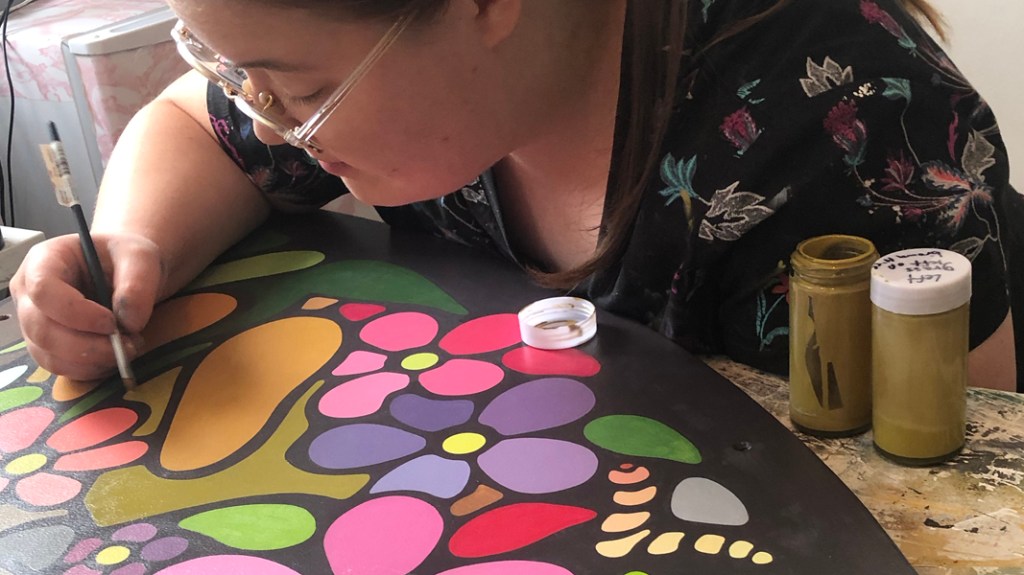
Kingston Mural Artist Portia “Po” Chapman Painting Outlines with a Small Brush using Specialty Exterior Acrylic Paint

Kingston Hand-Painted Murals by Po | Original, Vivid, Organic Colour Blocking

From cozy cafés to modern offices, Kingston is home to incredible spaces. I am sure that we can all agree that every incredible space deserves magnificent artwork. Of any art, nothing transforms a wall like a hand-painted mural. While digital prints or projector-based murals are quick and convenient, they lack the energy, precision, and human touch that a true hand-painted mural delivers.

My work uses organic colour blocking, a contemporary technique I developed that produces razor-sharp edges, fluid forms, and sumptuous colours that seem to breathe. Unlike spray cans or mechanical reproductions, every brush stroke is intentional, every edge precise, every colour alive, every shape beloved.

Why choose a hand-painted mural for your Kingston space?

  • Presence: Hand-painted murals carry the signature of the artist. They are tactile, alive, and impossible to duplicate digitally.
  • Custom fit: Each mural is designed for your space, wall dimensions, and the energy you want to create.
  • Emotional impact: Organic colour blocking resonates on a subconscious level, making rooms feel calm, energized, or expansive — depending on the design.

Clients across the Kingston, Picton and Belleville region have told me that stepping into a room with one of my murals is like stepping into a new world — vibrant, contemporary, and unmistakably personal.

Original hand-painted mural transforming a Belleville office
Kingston artist Portia Po Chapman’s mural.
“Strong and Growing Stronger” is Installed at the Strong Enterprises Headquarters Office Building in Belleville, Ontario. 2025

If you’re ready to make your space unforgettable, a hand-painted mural is the ultimate investment in art, atmosphere, and identity. To start your mural process, contact me today – e-consultations and quotes are complimentary.

Request a Custom Project Quote

3 responses to “Kingston’s Hand-Painted Murals: Why Originals Beat Digital Prints”

  1.  Avatar
    Anonymous

    I agree! Hand painted murals are amazing and so unique. You do amazing work, Po!

    1. Portia "Po" Chapman Avatar

      Thanks for your comment. Hand painted murals take longer, but I think that the care it takes to paint them is worth it.

Let Me Know What You Think! Start or Join the Convesation

How Po Makes Hand Drums, Portia Chapman, Uncategorized

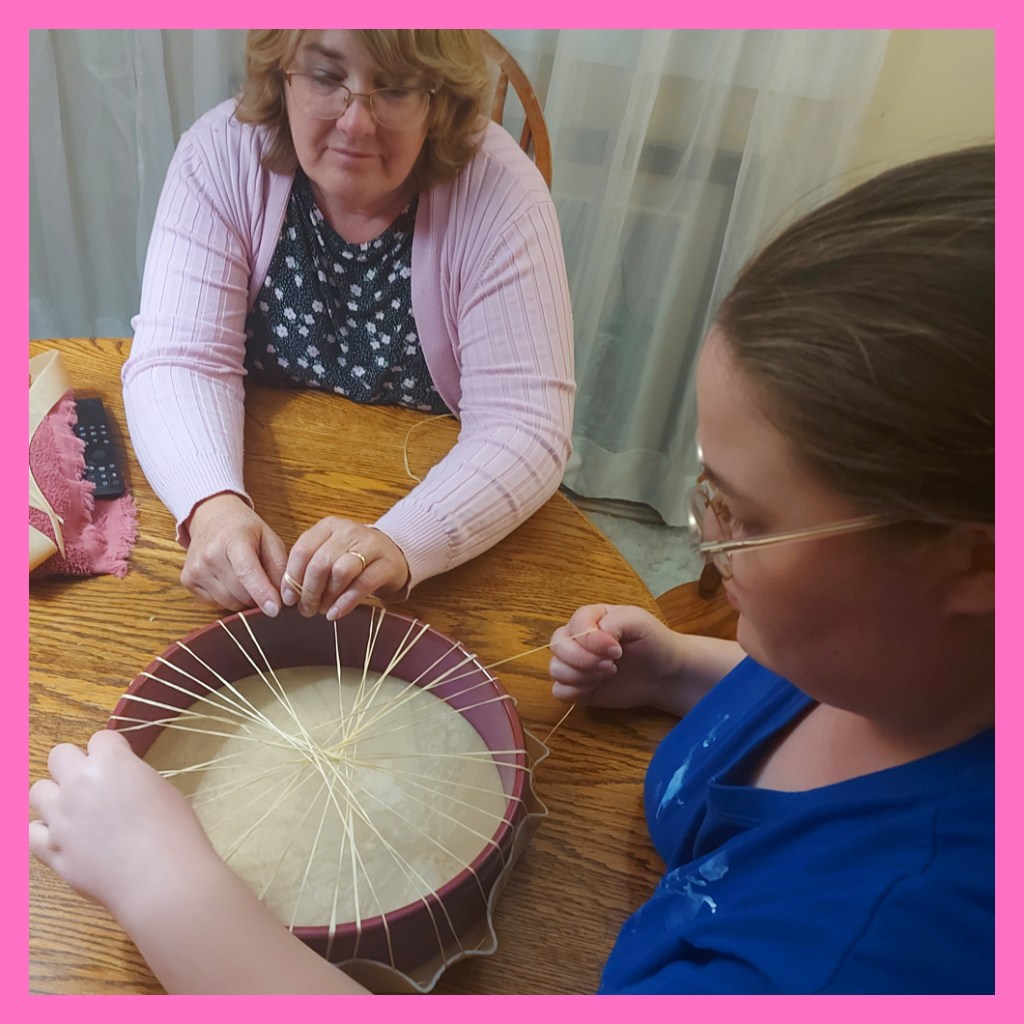
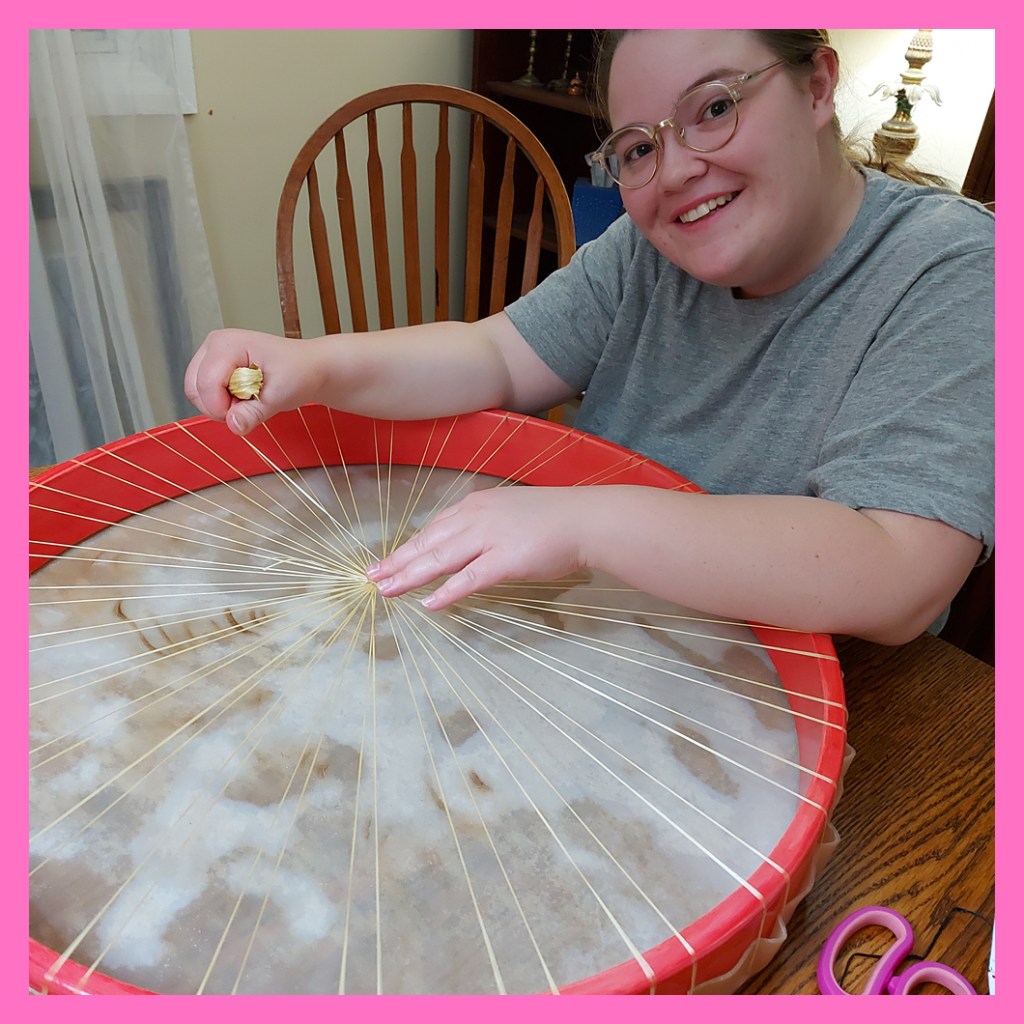
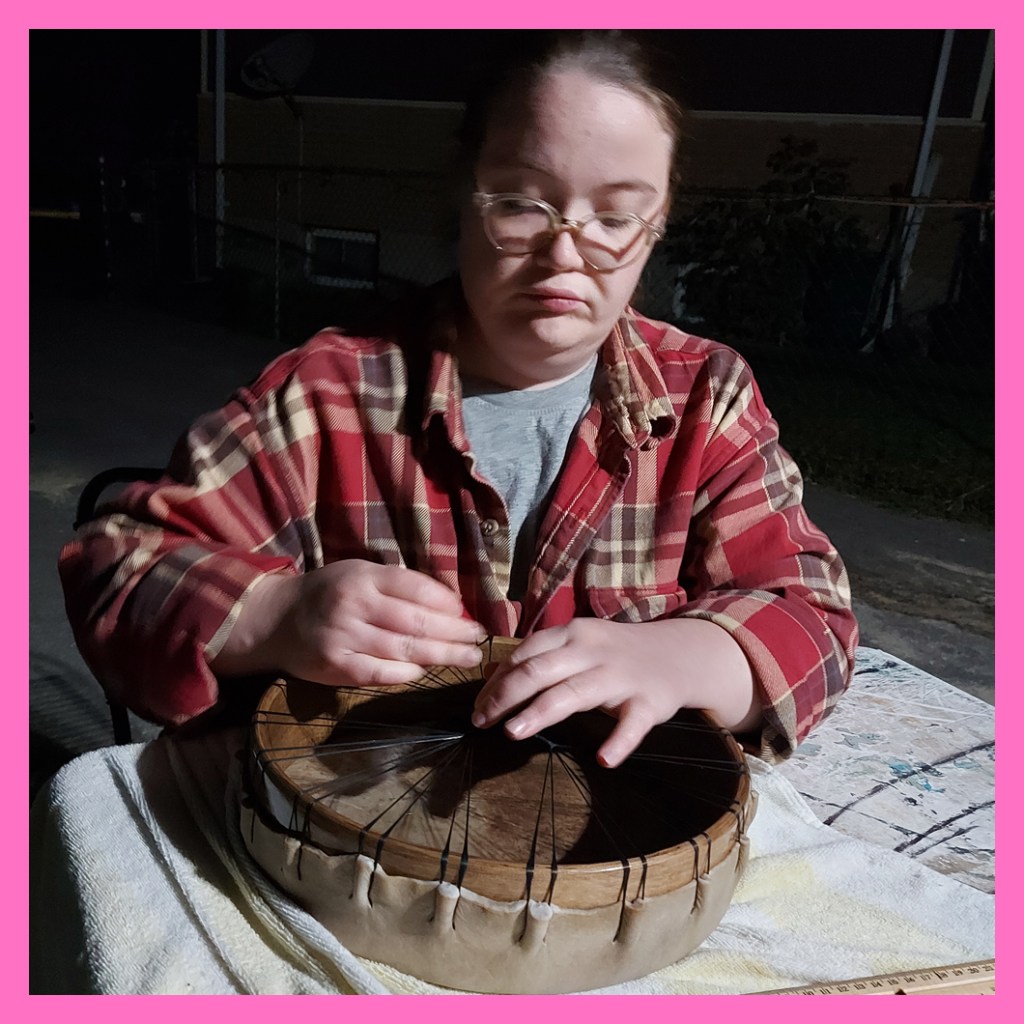
Step-by-Step Guide to Stringing a Rawhide Drum with Portia “Po” Chapman, Kingston

A Photo Reference – Your Step-by-Step Guide

Po Stringing the Spokes of a 14″ Rawhide Drum
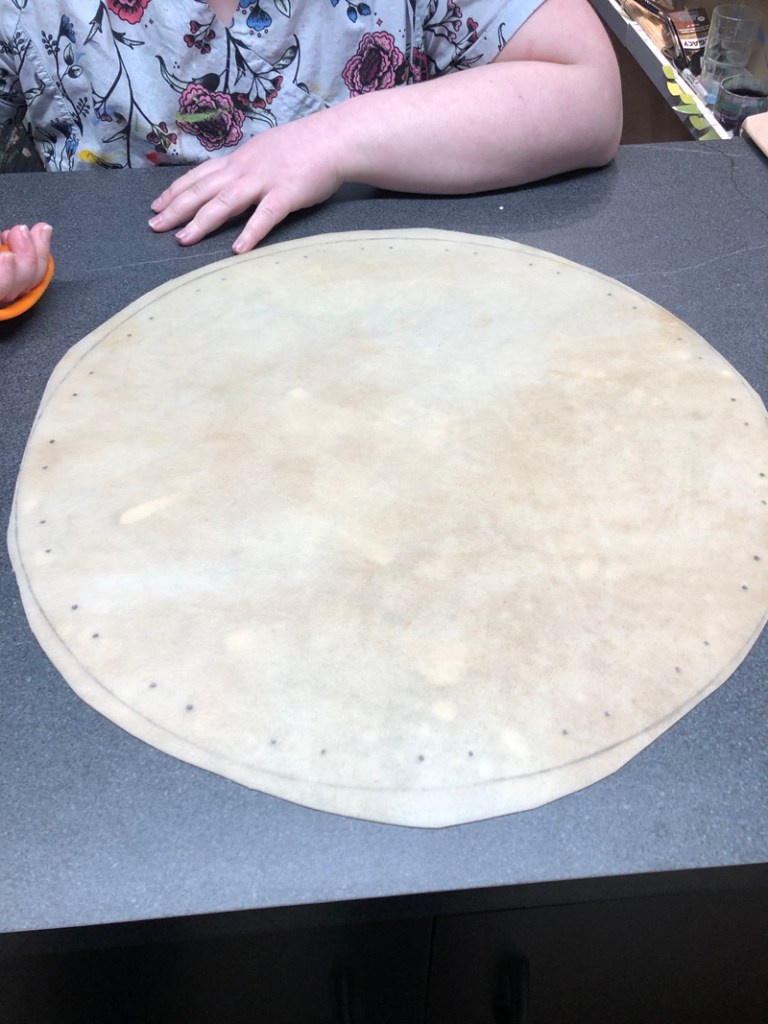
Po has Drawn on Shape and String Holes
and is Ready to Cut the Rawhide

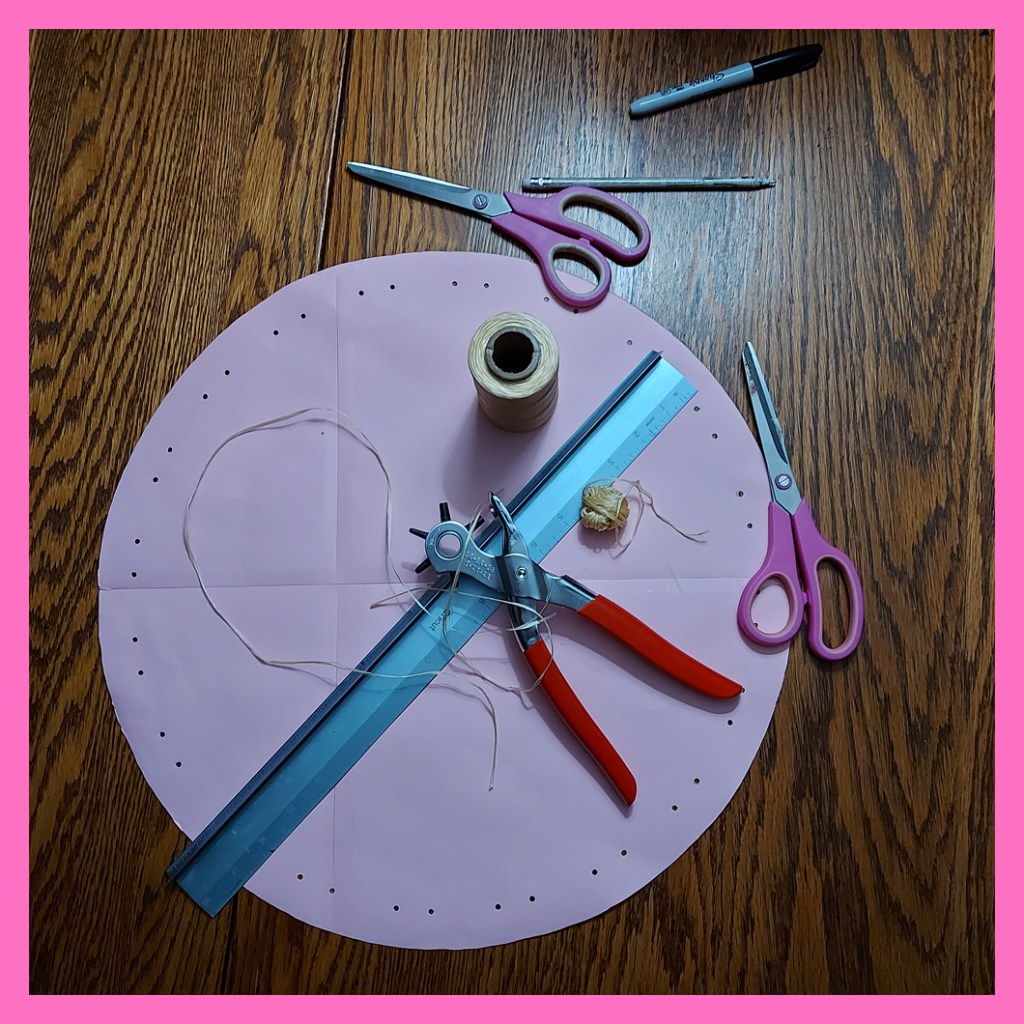
In order to cut the shape, I first draw on the pattern. In order to do this, I lay the drum frame on the soaked rawhide and draw the shape with an HB pencil that is not very sharp. The size that I draw on is usually about 2-1/2″ larger all the way around the frame. So for a 14″D frame, I draw on a 19″D shape that is the same shape of the frame. After I do this, I mark the string pleating holes, to be punched out later. This can be a very frustrating step, so I create a paper template and fold the paper to assure that the pleat holes are perfectly symmetrical. I will be posting another how-to concerning this step, but basically the two holes close together are for the pleat and the wider space is where the hide will lay flat against the frame when dry. The number one thing to remember is, the pleats must be evenly spaced and even in number, such as 8, 12, 16 pleats and so on. Keep the string holes about 3/4″ from the edge, all the way around. Premium drums have 16+ pleats. But to begin, I would only use 8 or 12 pleats.

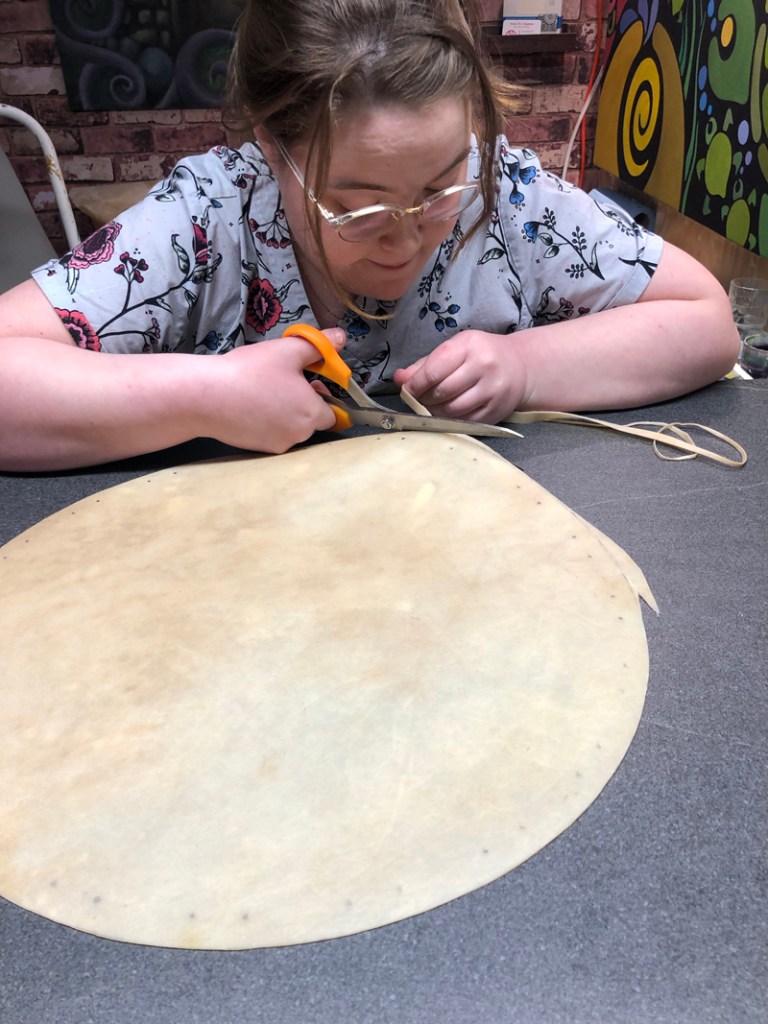
Po Cutting Soaked Rawhide to be Stretched Over
the Drum Frame

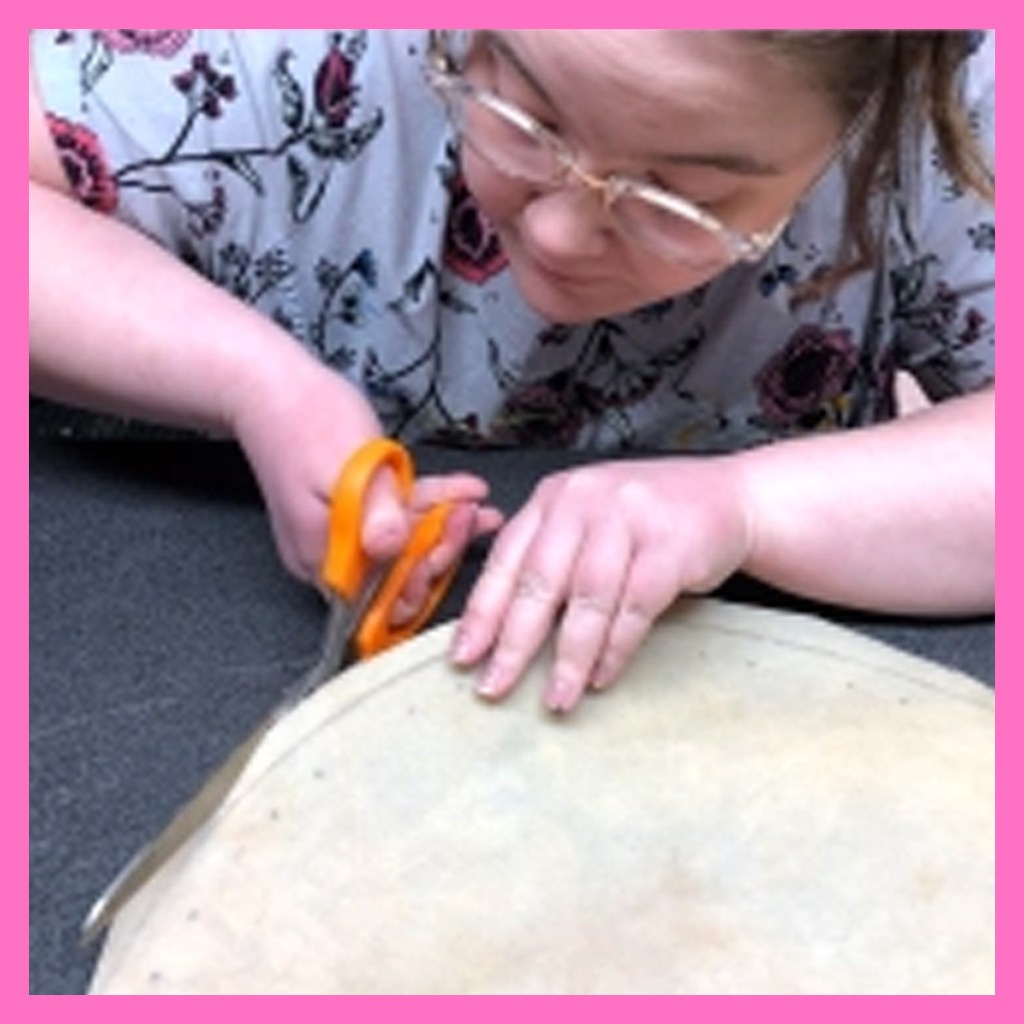
Cutting rawhide is fairly easy to do if the hide is thin. In this step-by-step guide, I am using opaque elk because this drum head will be painted. Elk and deer are from the same family. Deer is typically the more thin of the two. I will be posting another guide concerning the different rawhides, but for now a rule of thumb is: 14″D and smaller drums use deer or elk. In the photo at the top of this post, I am stringing a 14″ D drum with a coiled white cedar frame that I have painted. In order to cut thin elk, I find that using kitchen sheers or fabric scissors does a good job.

Po Punching Hole in Rawhide for Stringing the Frame Drum

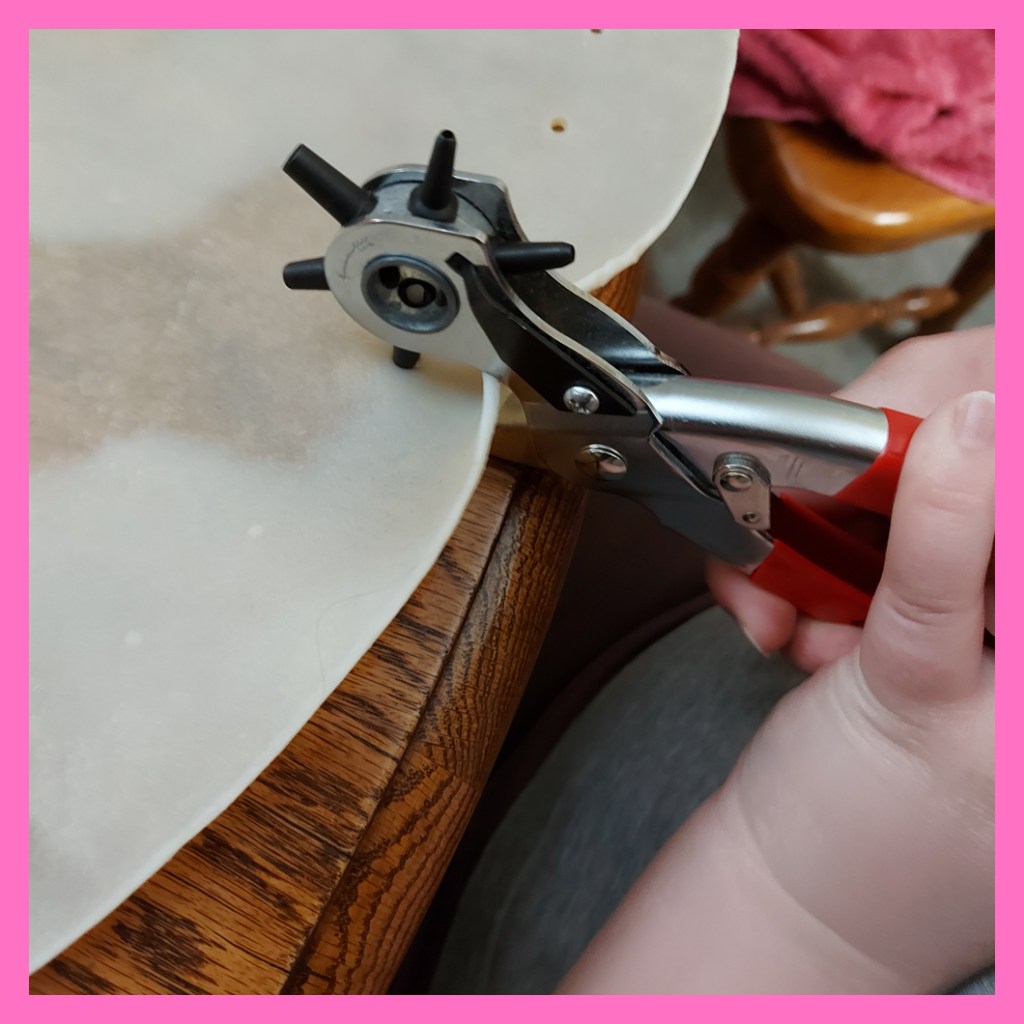
This step is quite simple, once you have the hole spacing figured out. After I mark on the dots for stringing the drum skin pleats, I use a leather hole punch. There are two hole punches that are readily available to purchase at craft and building supplies stores, they are: ones that work like scissors (as in the photo above), and punches that resemble awls that you hammer through the rawhide. The former is usually strong enough for deer and elk, but the latter may need to be used when punching moose and bison. Punching holes through rawhide is not like punching holes through note paper. Rawhide is fibrous, almost stringy. When it is soaked, it becomes thick and rubbery too. In other words, every hole punches differently from each other.
Po Placing Drum Frame in Centre of Cut Rawhide

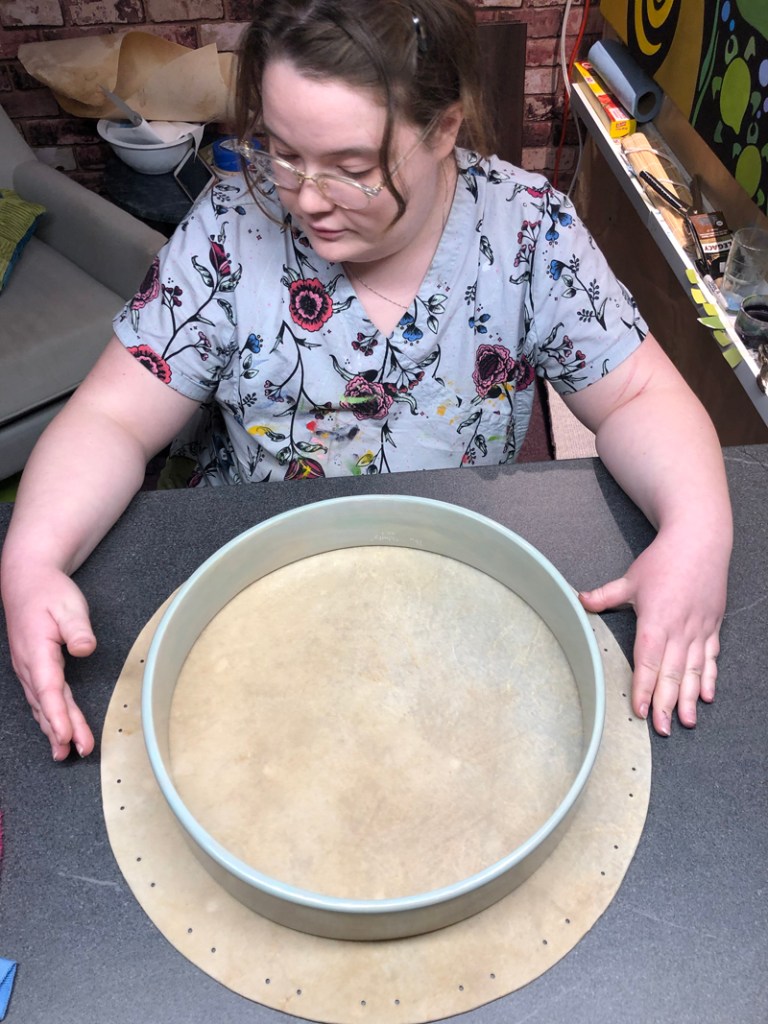
Before stringing, I check to make sure that everything fits and is evenly spaced. I place the finished drum frame in the centre of the cut and punched rawhide. To assure that it fits the way I want it to fit, I use a ruler and measure the distances between the frame and the edge. All the way around, there should be the same amount of rawhide outside the drum frame.

Po Stringing Through First Punched Hole
After Measuring Out Sinew String/Lace

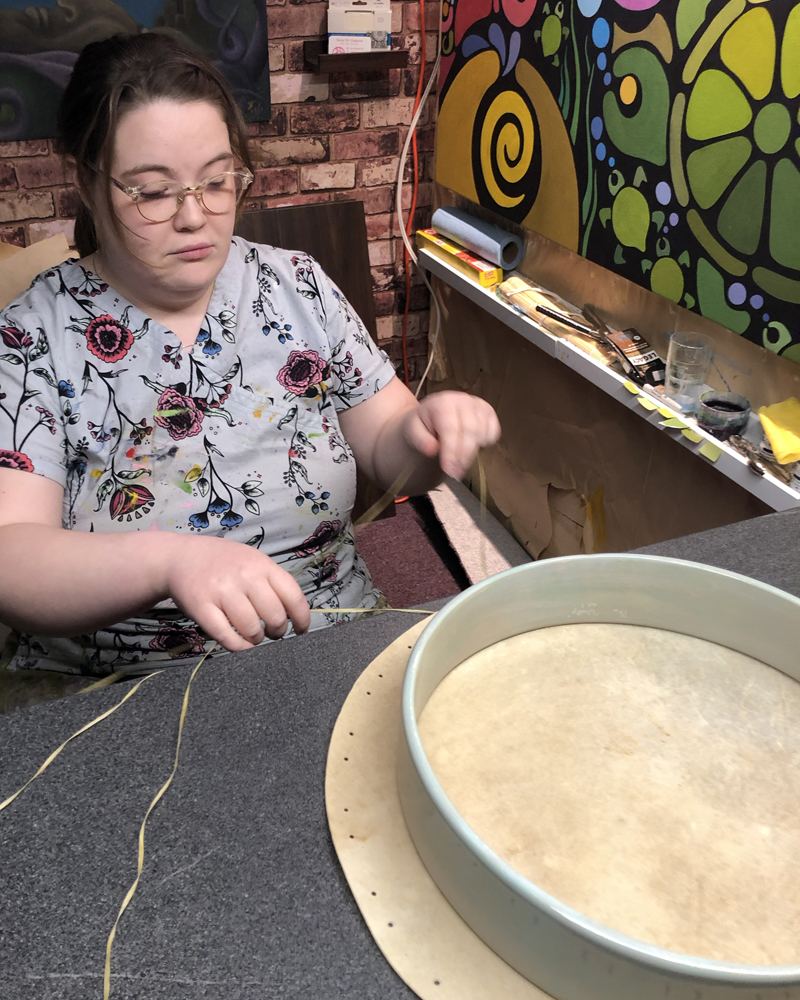
I use synthetic sinew for stringing. Some people call the sinew, “string,” and other people call it, “lace.” There are 4 types of string/lace, that are commonly used, they are: sinew (from a deer’s Achilles Tendon), synthetic sinew (buy by the spool), rawhide (thin strips that are cut from the perimeter of a soaked piece of rawhide), and rope for large moose, double headed, pow-wow drums. Measuring out the sinew is a tricky, nerve wrecking procedure. The length you need, needs to be one continuous strip. I measure about 5′ of string for every 1″ of drum frame diameter. So for a 14″D drum, I measure out 70′ of sinew. For a 24″ drum, I measure out 120′ of sinew. Also, just to be safe, I measure out another 20′ of sinew. I ran short once. I never want that to happen again. So now I wheel off extra! “Better safe than sorry,” as they say. This is the number 1 reason I use synthetic sinew. It is the best choice to use 120′ of continuous string.

While Stringing the Drum, Po Measures the Edges
to Assure that the Drum Frame
has Remained in Place

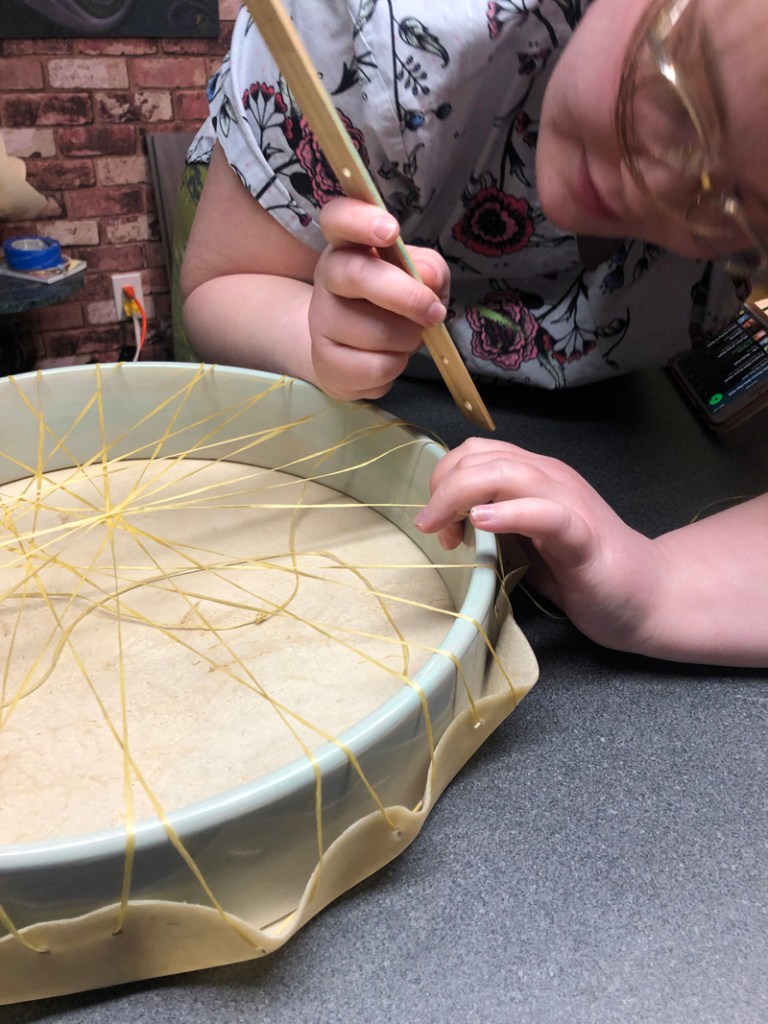
To string a drum, I pull one end of the string through one hole and then through the hole on the exact opposite side. Please note, I pull the entire strand through both holes, leaving about 2′ hanging outside the first hole. Then I continue to do the same, all the way around the drum, crossing the strings through the centre. In the image immediately above, notice that the string passes through the frame-side of the pleats (the two closest hole pairs). This allows for an attractive, elegant pleating of the hide. So when stringing, pass your needle through the outside of the hide, across the inside, and then through the inside to the outside. You’ll catch on. The practical reason I do this is due to physics. By pleating through two holes, rather than one, creates a stronger hold while applying less pulling on the individual holes. If you use one hole, you stand a pretty good chance that the rawhide will rip through. Believe me when I say: “YOU DO NOT WANT THAT!” Please note that I am creating a video to illustrate this more clearly and will be posting in the near future.
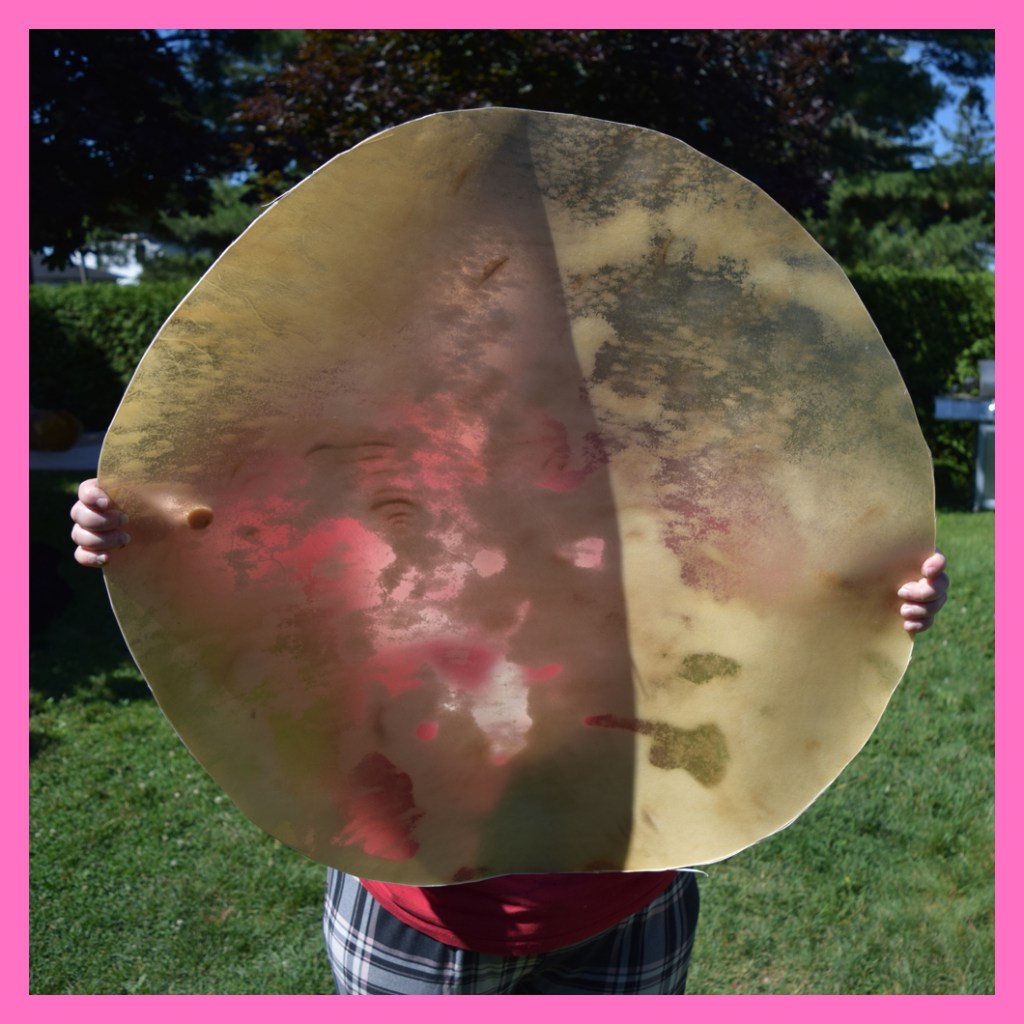
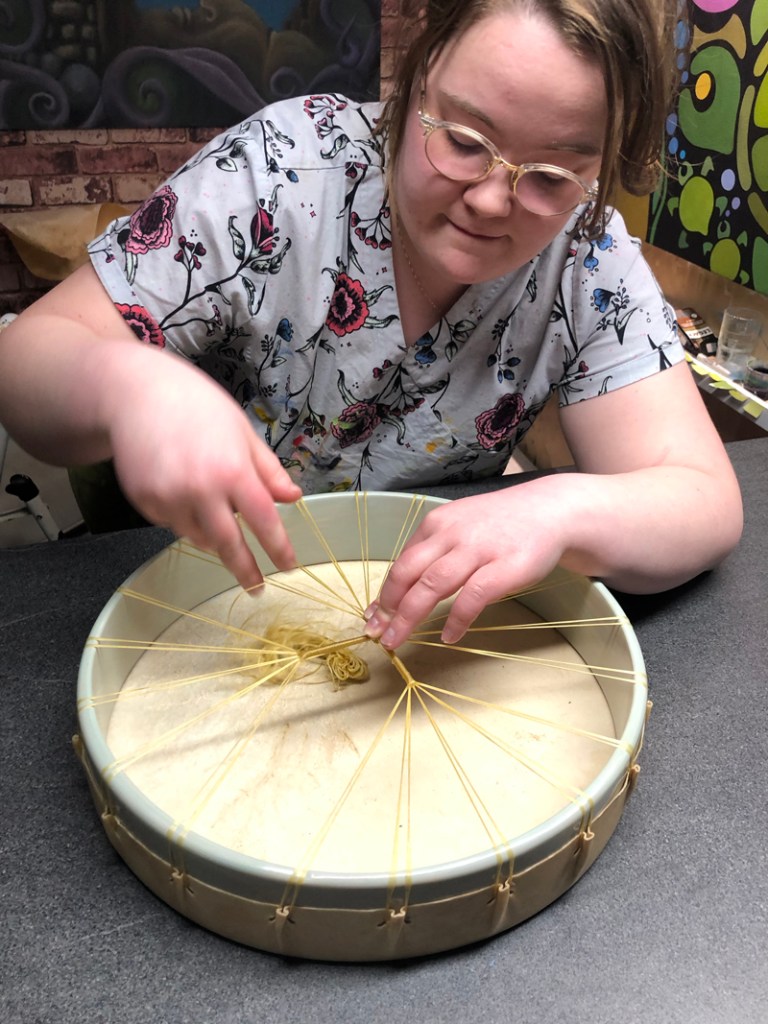
After Stringing, Po Creates Spokes to Hang Onto While Drumming

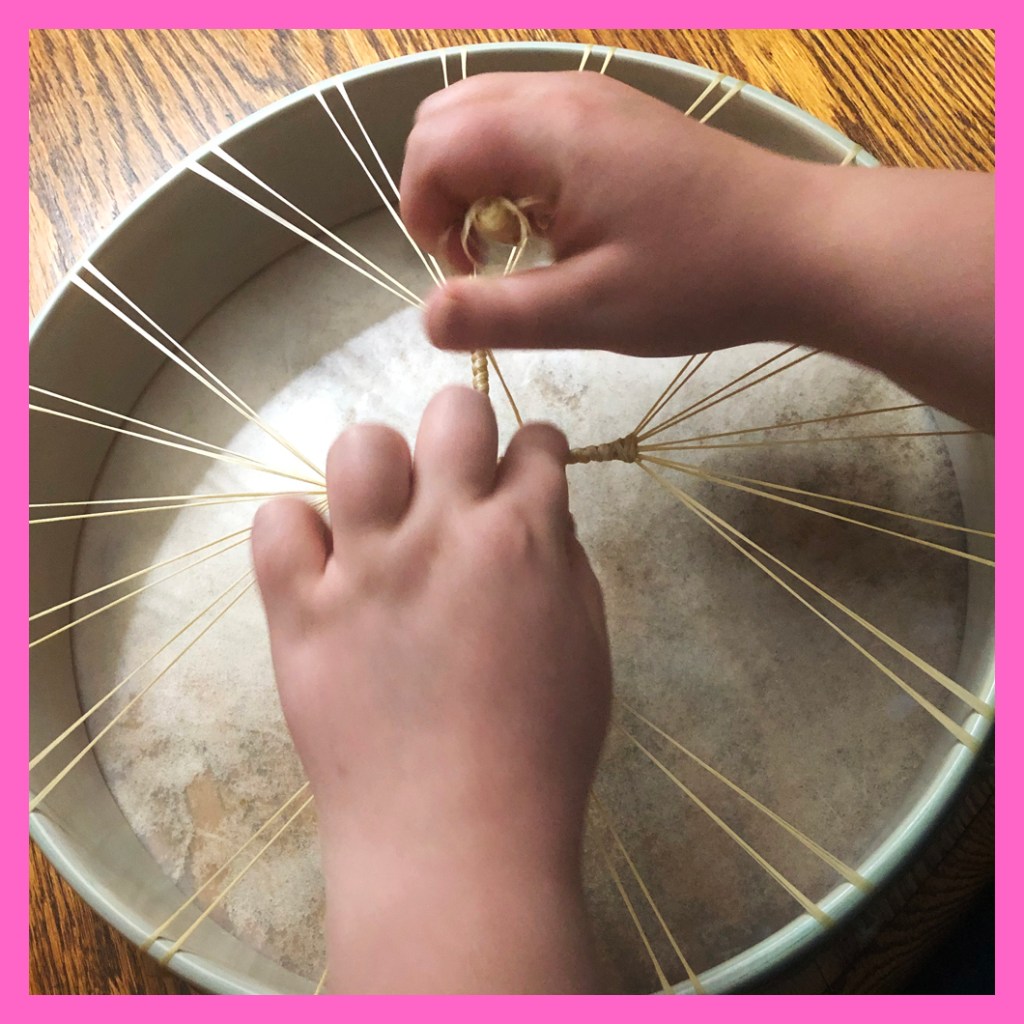
Before I begin with this step, take a look at how the pleats look after the rawhide has been stretched and strung. By stringing through the frame side of the pleats, a uniform pleating is created and the pulled holes are firm and uniform. If you want to make a premium drum, you will need to master this step with this method of drum stringing. Now onto the spokes. From what I can tell, in various traditions, the spokes are formed by wrapping cord, sinew, or deer hide. Locally, they are formed and wrapped using split deer hide. I prefer using the continuous synthetic sinew because it is strong and I prefer the appearance. So what I do is, I wrap the sinew around multiple pleat (forming) strings. As you can see in the photo, I am wrapping 10 strings (5 pleats’ worth) together. I wrap them as far up as I want to achieve the desired tightness of hide. When I reach the furthest point desired, I weave the sinew through the individual strings 3 or 4 times. This creates a basket weave appearance. I do this to anchor the spoke so that it won’t slide out of place. When the weaving is complete, I wind the sinew back down the spoke. Once the centre knot of the strings is reached, I wrap the centre knot a few times and pull it tightly. Then I proceed to create another spoke. Once all 4 spokes have been created, I knot off the string behind the main centre knot. At this point, the drum is complete. I then sit the drum in a dryish (50% humidity) location with good ventilation above and below the drum. In just a few days the drum is ready to be drummed.

Materials you need:
– scissors ($10-$50)
– darning needle ($2)
– pencil ($1)
– paper and tape ($10)
– hole puncher ($30)
– finished drum frame ($100-$300)
– soaked rawhide ($300-$700)
– synthetic sinew ($30)
– patience (priceless)

← Back

Contact Email Confirmation

Hi, Po here! Thanks for sending me an email. I will get back to you within a few days. Have a beautiful day!

How Po Makes Hand Drums, Portia Chapman, Uncategorized

How to Choose the Best Hardwoods for Making Drum Frames by Kingston Artist Portia Po Chapman

Po: “Selecting Hardwood is a Hard Task”

Hi, I am Portia “Po” Chapman from Kingston Ontario. I am an artist who hand makes unique frame drums. On this post, I will show you how to pick the best hardwood pieces for single-ply, steam bent drum frames. You’d think that it is easy, but it is not. Follow these steps and you will improve your chances of success.

Po Returning from Lumber Supplier

What Types of Wood are Best for Bending Drum Frames

My top 3 woods to use are: red oak, maple, cherry. I have not had much luck using white oak or walnut. All the research I have done, says that white ash is the best, but I cannot find a white ash supplier and the white ash drum frames that I have purchased from other suppliers have been economy grade. So for this article, I will address my preferred 3 woods mentioned above.

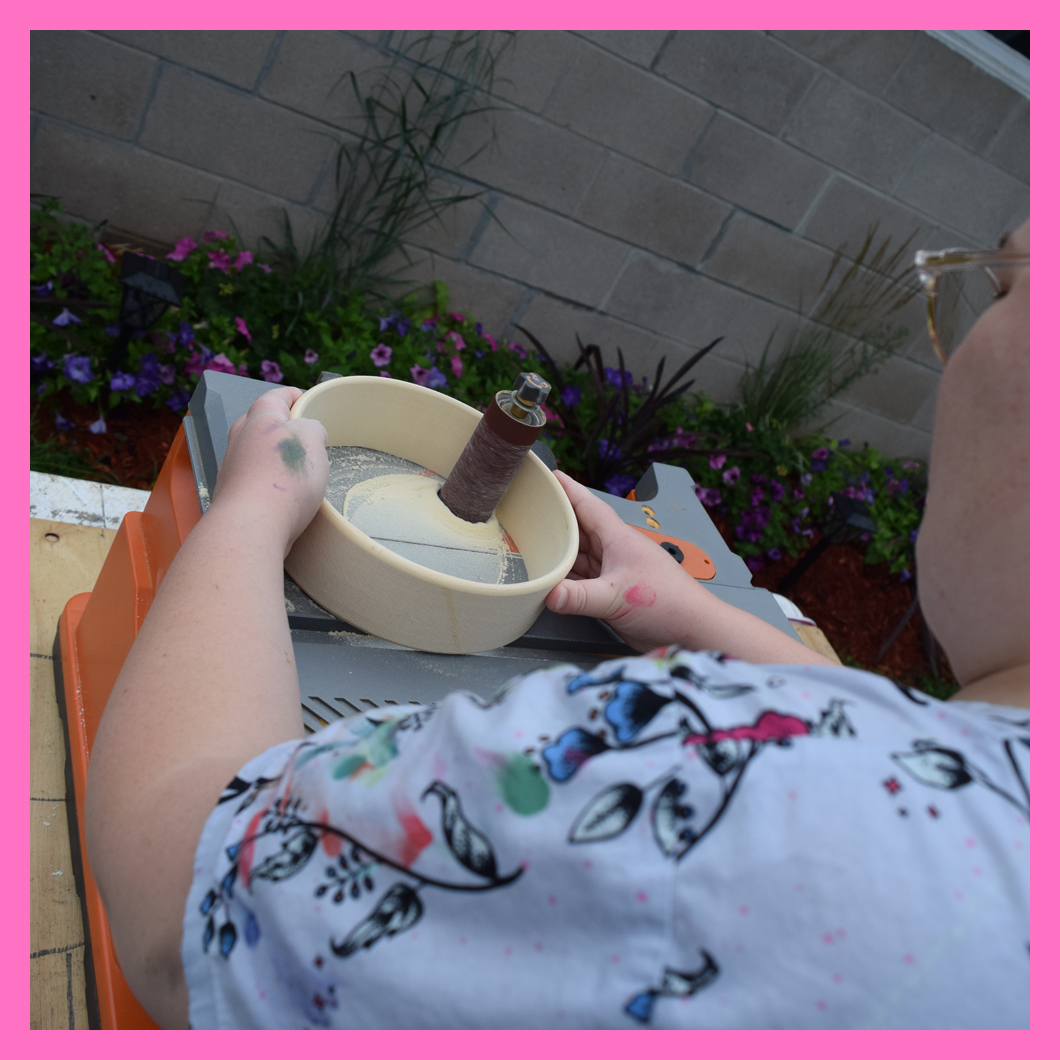
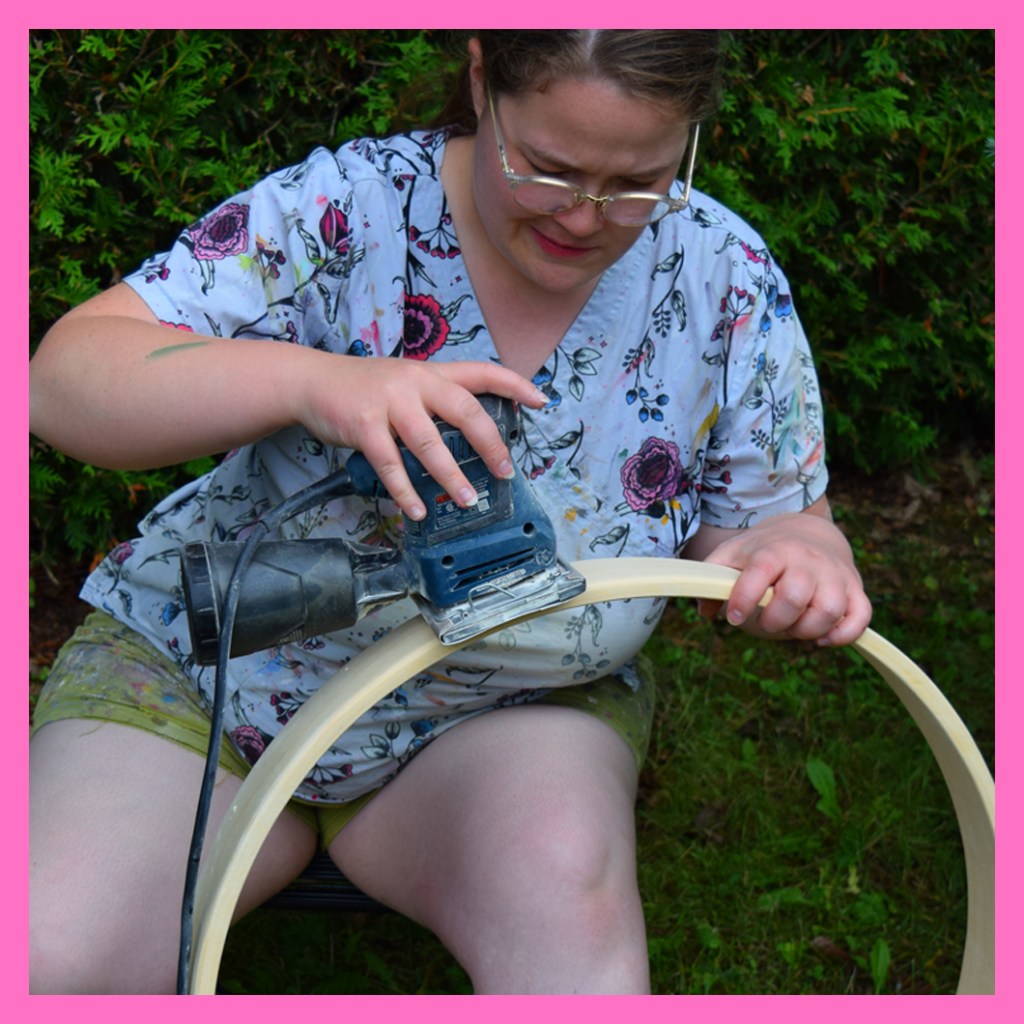
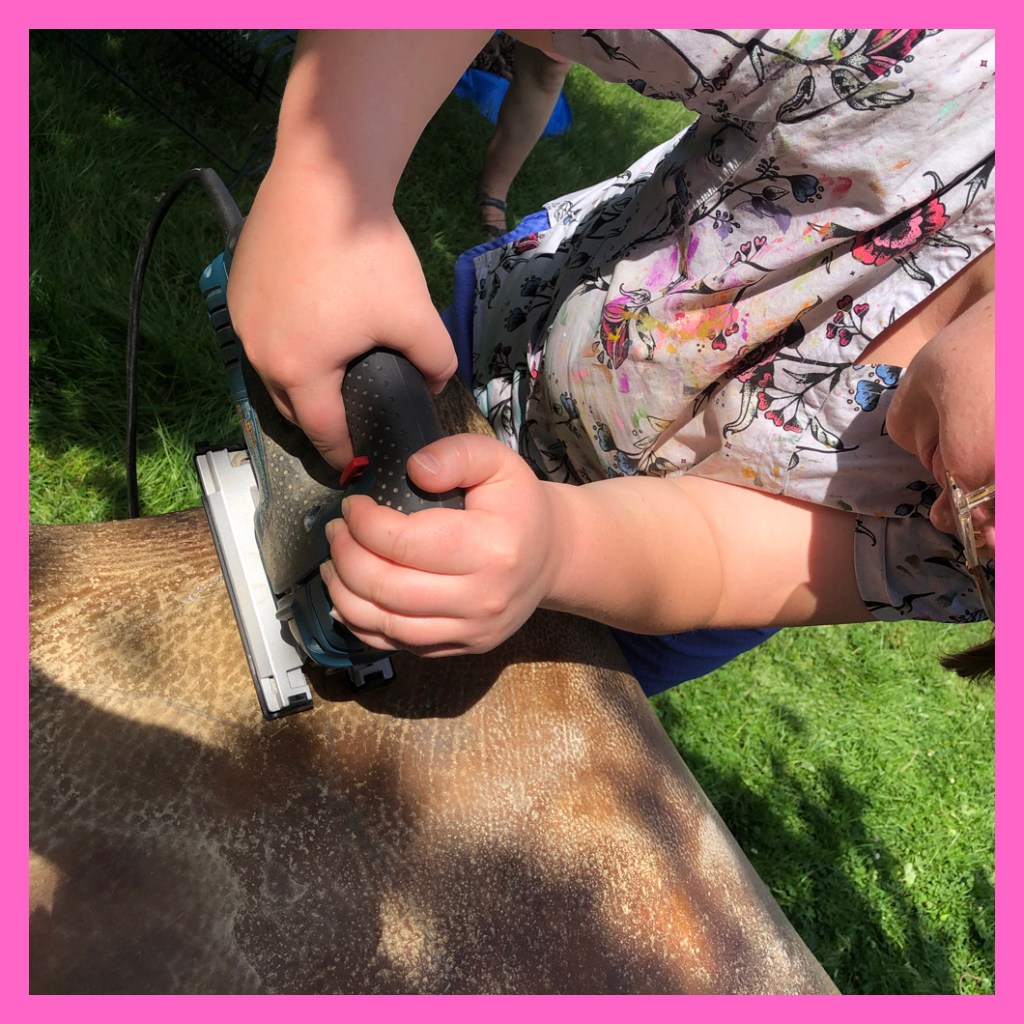
Po Sanding End Wedge of Red Oak Board
Before Steaming and Bending.
Notice the Long Grain Without Knots.

How to Choose Wood for Drum Frames

When selecting the lumber at the yard, be sure to choose wood without knots, splits, or swirling/wandering grains. All three of these characteristics will result in drum frames that crack and break while bending them into a drum shape. You want to pick long straight grains that do not drift off to the edges of the board. It will take you some time to find the ideal ones. Note: you pay the same price if they are in the same pile, so take your time to choose the most suitable ones.

What Size of Lumber to Buy for Drum Frames

The next thing with which to concern yourself is the board length and width. Most frame drums / hand drums range from 12″-16″ in diameter. To create drums frames of these diameters, you will require boards between 4′-6′ long. If you can afford it, however, purchase boards 7′-8′ long to assure that you can make drum frames after potential splitting during the bending process.

Notice How the White Oak has Snapped. In this Photo, Po’s Assistant is Compressing the Drum Frame to be Marked for Cutting. Be Sure to Have Enough Wood to Accommodate for Splits and Breaks During the Milling, Steaming and Bending Phases of
Frame Drum Making.

Recap – How to Choose Wood for Steam Bending Drum Frames

I choose Red Oak, Maple, or Cherry woods that have long straight grains and have no knots. My preferred stock is 1″ thick, 7′ long and 4″-6″ wide. In Kingston, these boards will run between $50 and $100 each. In short, making steam-bent hardwood drum frames is not a cheap art in which to dabble. At my private art studio in Kingston, I make rawhide drums from 8″-23″ in diameter and range in price from $200-$2000.


Art News, Portia Chapman, Portia's Adventures, Uncategorized

Portia Po Chapman – Mural Installation Artist – Kingston, Ontario – 2024

Day in the Life of Portia Po Chapman by the Toronto Guardian, November 13, 2024 was Published in Response to Kingston’s Portia “Po” Chapman Mural Competition Win for Strong Enterprises in Belleville.

The Toronto Guardian headline states that Po is a Toronto artist. Although she is a Muralist trying to break into the GTA art market, Po is based in Kingston, Ontario. Other than that edit, the following “Day in the Life” article was an accurate telling of Po’s story in 2024.

Article link

I want to thank Emilea Semancik for doing a smashing job on this article.

As an emerging contemporary artist in Ontario, Canada, it has been an exciting month, November 2024 and we are only 13 days in. I received two public features and one day-in-the-life article. I presented my drums and educated the public about drumming and the beauty of the drum making process. Plus my “Sharing Wisdom: Tending to Nature’s Little Ones,” drum was featured in the entrance of the Kingston City Hall gallery in the inaugural show: Kingston Artists’ Showcase. Many more exciting things too. You’ll just have to wait to find out.

Links to all 3 articles are on my ABOUT page. Here is the link.

Portia Chapman

Portia Po Chapman Reveals Drum Bag Collection at The Maker’s Hand

Portia Po Chapman Reveals Drum Bag Collection at The Maker’s Hand

This is my first year exhibiting at the juried craft show, The Maker’s Hand. As a drum maker, I am often asked if I sell drum bags. Well… up until now, the answer was, “NO.” I have been working on the drum bag design since March Break 2024. I attempted 3 prototypes and without the appropriate leather, sewing machine and hand threading equipment, the bags just didn’t stand up to my creative vision. Those 3 bag designs, in other words, are on hold for now. But in desperation to produce a bag so close to the show date, my creativity engine kicked into high gear. I had been overthinking it. So, knowing what worked and did not work with my previous attempts, I figured out this amazing bag. I’m sure that you’ll love it as much as I do. Below is a sample of the bags that I will be selling at The Maker’s Hand in Wellington, Ontario on November 8-10, 2024.

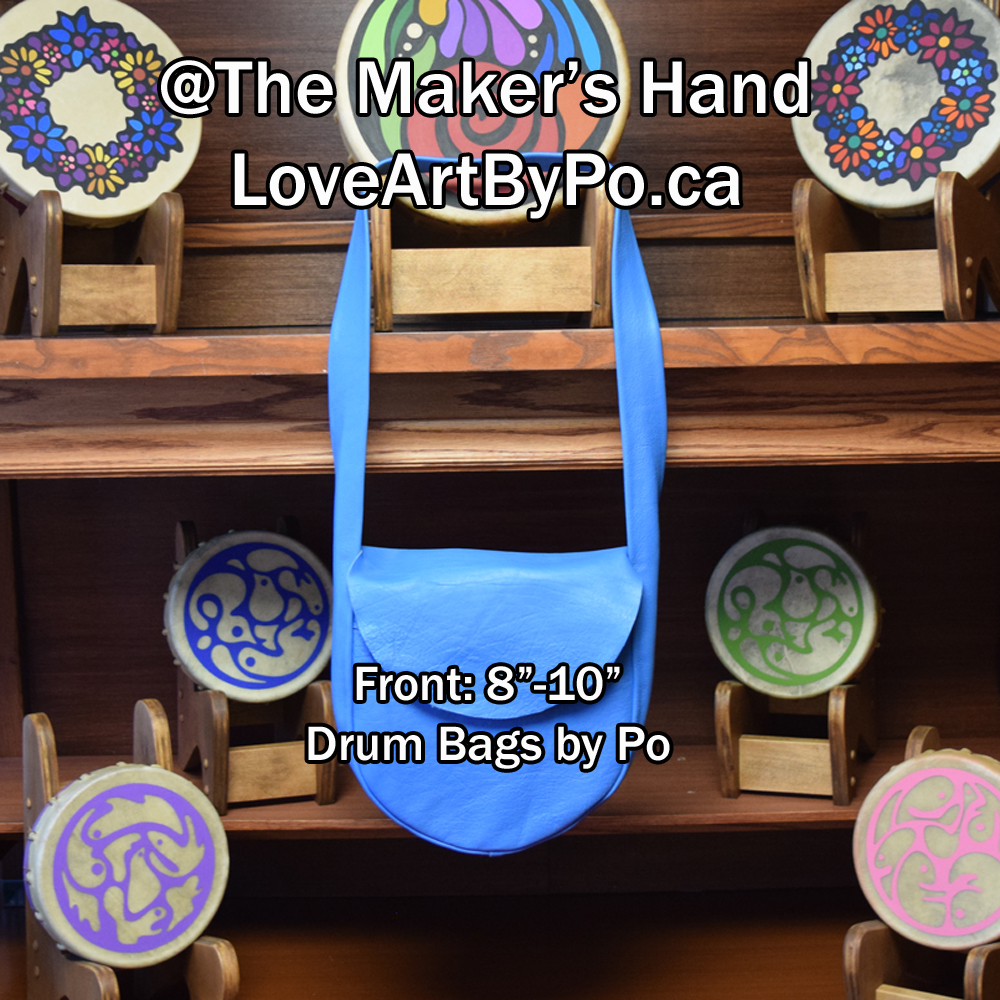
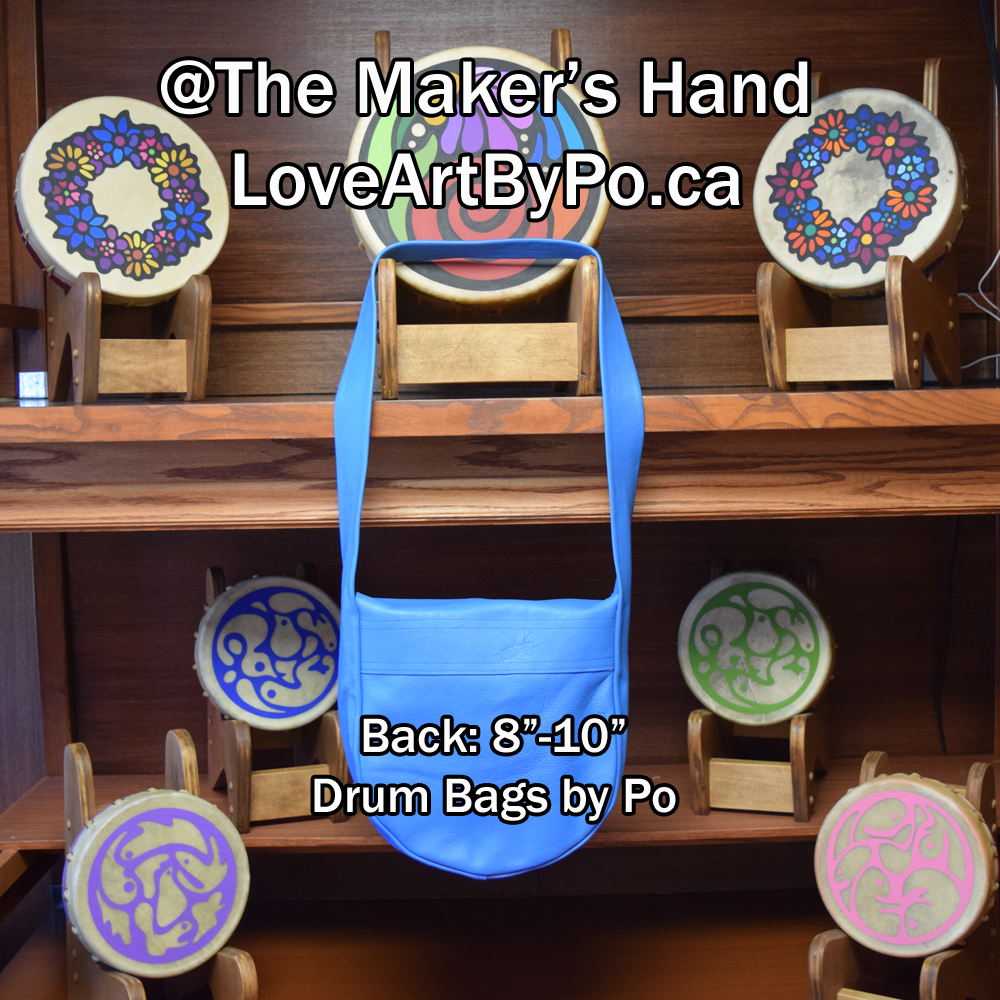
Portia Po Chapman created blue leather drum bag front.  To be sold at The Maker's Hand in Wellington on November 8-10, 2024.
Portia Po Chapman created blue leather drum bag front. To be sold at The Maker’s Hand in Wellington on November 8-10, 2024.
Portia Po Chapman created blue leather drum bag back.  To be sold at The Maker's Hand in Wellington on November 8-10, 2024.
Portia Po Chapman created blue leather drum bag back. To be sold at The Maker’s Hand in Wellington on November 8-10, 2024.

The above images are of the blue small drum bag that I have created. It fits an 8″ or a 10″ drum.

At The Maker’s Hand, I will be featuring for sale 2 sizes: Small (8″-10″ drum size) and Medium (12″-14″ drum size).

Colours available will be: Blue, Pink, White and Metallic Copper.

All of the leather is genuine cow-hide from Calgary. The leather is the same chaps leather that is used at the Calgary Stampede. It is supple and snuggle worthy while being strong and rugged enough to take to drum circles.

In this collection, I integrated a drum stick pocket at the front which makes it convenient to travel with your drum stick securely stored without hitting the drum while travelling.

Also no hardware, buttons, latches, etc. are on the drum bags – this means that your drum can be carried / stored without the worry of your drum bag scratching or denting the face of your LoveArtByPo.ca drum.

See you at The Maker’s Hand on November 8-10 in Wellington, On.

How Po Makes Hand Drums, Portia Chapman, Uncategorized

Photos of Portia Po Chapman Making Hand Drums During 2021-2023

Photos of Portia Po Chapman Making Hand Drums During 2021-2023

In the winter of 2024, Po began making hand-bent oak drum frames and in the summer she began making maple drum frames as well. All three, current (July 2024) drum frames available for hand drums have their own character, tone and resonance. Rawhide options include: 3 types of Deer, Moose, Elk, and Bison from across Canada.

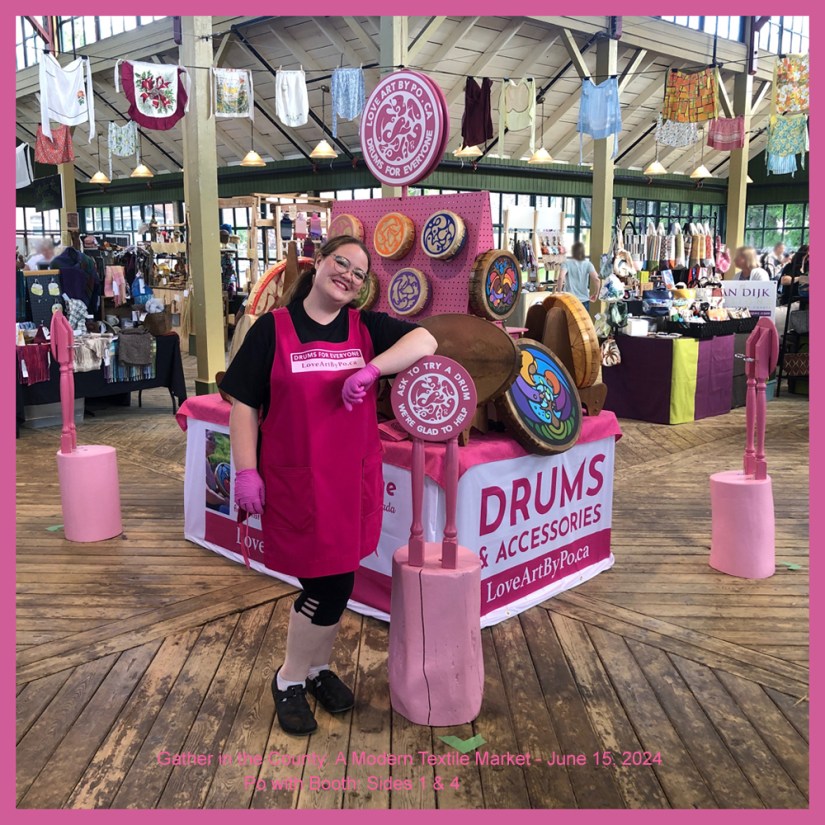
Po unveiled some new drums at the 2024
Gather in the County: Modern Textile Market
in Picton ON on June 15, 2024

Po is currently producing a few how-to make hand drum videos using her special techniques. In the mean time, Po has created 3 blog posts that list the steps of making the drum frames, stretching the raw hide, and painting the faces of the drums. Drums made by Po are considered “PREMIUM.”

The hand drums in the 2023 collection were meticulously handmade by Po using the following method:

The end result is both a beautiful piece of art that you can display and one that you can use. Some skins are more suitable for drumming and others more suitable for display. This depends on a variety of factors. Po recommends choosing the one you love. If you need further assistance choosing your drum, someone will be happy to assist you.

All drum sales are final and without exchange or refund.

Po presented an Artist Talk about this Collection and Greeted Guests Gallery
on October 26, 2023 at 6:30pm-7:30pm

One Guest Commented: “It was a great pleasure to listen to Portia “Po” Chapman (@loveartbypo) talk about her art currently on display at Parrott Gallery. Po’s inspiration comes from her close relationship with nature and her beautiful family!”

Another Guest Commented: “It was such a wonderfully positive talk about a positive art collection. Very informative and truly enjoyable.”