
by Portia “Po” Chapman (BFAH, BEd), Drum Maker, Kingston, Ontario
A Personal Note from Po:
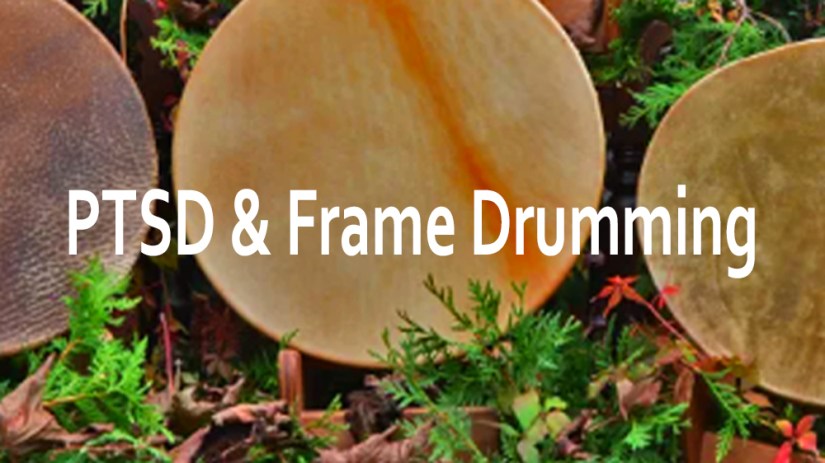
My father was diagnosed with PTSD in 1993, before I was born, and spent decades navigating its weight. During the mid-2000s, we noticed that sitting in the woods and drumming his hands on fallen logs alongside the sounds of ruffed grouse brought him visible peace. Ten years ago, we gifted him a moose-hide drum from a local First Nation community, and drumming brought that same sense of calm, even in urban settings. Later, when I began making frame drums, I crafted him a bison rawhide drum painted with a purple ruffed grouse, a gift he received with tears in his eyes.
The transformation has been extraordinary. Even after weekly specialized talk therapy (1993–1995), PTSD continued to have an enormous impact on his daily life. In our own way of describing it, we would have estimated that PTSD controlled roughly 90% of his daily life at that time, which was an improvement over what it had been before therapy. Over the years, that impact gradually decreased, and by the time he began drumming regularly in 2016, we would have described it as being closer to 80%. By 2024, after years of regular drumming, we estimated that PTSD’s impact had decreased to about 20%.
These percentages are not the results of a clinical assessment or controlled study. They are our personal way of expressing the dramatic change we witnessed in his day-to-day experience over the years.
My dad credits the combination of specialized talk therapy, time, and frame drumming with saving his life, allowing him to feel joy, sometimes embrace hugs again, and share his story of hope with others.
How could frame drumming have assisted him in this way? To us, at first, it seemed to happen by chance. But that didn’t sit well with me. There had to be some science behind it. So, I began to do some research and found a few tangible connections, as outlined in the following article.
Understanding PTSD and “Bottom-Up” Somatic Healing
Post-Traumatic Stress Disorder (PTSD) is frequently described by clinicians not as a mere disorder of memory, but as a total physiological “stuckness.”¹ For those surviving trauma, the autonomic nervous system becomes trapped in a chronic loop of hyperarousal or dissociative numbing.² In this state, the “speechless terror” of the amygdala overrides the rational, linguistic processing of the prefrontal cortex, making traditional talk therapies potentially insufficient on their own for many survivors.³
In the clinical quest for “bottom-up” interventions, therapies that regulate the body and sensory systems before engaging the cognitive mind, the frame drum has emerged as a vital tool in neuropsychological rehabilitation.⁴ Spanning global traditions from the Persian daf and Irish bodhrán to North American frame drums, these instruments provide a tactile, rhythmic, and vibrational intervention that speaks directly to the traumatized brain.⁵ By harnessing rhythmic entrainment, bilateral hemispheric integration, vagal stimulation, and non-verbal social synchrony, the frame drum serves as a somatic bridge back to physiological safety and personal agency.⁶
The Neurobiology of Trauma: Why Talk Isn’t Always Enough
To understand why a handheld drum is effective for PTSD, one must examine how trauma alters neural architecture. In an uninjured brain, the thalamus acts as a sensory “cook,” integrating sights, sounds, and bodily sensations into a coherent, chronological narrative.⁷ In a traumatized brain, thalamic integration breaks down. The brain’s “smoke detector” (the amygdala) remains hyper-reactive, while its “watchtower” (the medial prefrontal cortex) goes offline, leaving the survivor unable to distinguish past danger from present safety.⁸
Because trauma imprints itself on subcortical structures and the viscera, cognitive insight alone rarely resolves the physiological threat response.⁹ Clinical trials confirm this limitation: in a randomized controlled trial of patients with persistent PTSD who failed to respond to standard Cognitive Behavioural Therapy (CBT), ten weeks of active group music and percussion therapy produced statistically significant reductions in PTSD symptom severity.¹⁰ The frame drum offers a non-verbal, sensory-rich input that bypasses the impaired prefrontal “watchtower” and communicates directly with the limbic system.¹¹ Striking the rawhide head provides an immediate proprioceptive anchor—a distinct physical sensation that forces the nervous system to register the “here and now,” interrupting flashbacks and grounding the survivor in their body.¹²
Rhythmic Entrainment and the Regulation of Hyper-arousal
A hallmark of PTSD is autonomic dysregulation, wherein survivors oscillate between sympathetic “high-tone” states (hypervigilance, rage, panic) and dorsal vagal “low-tone” states (depression, collapse, emotional shutdown).¹³ Frame drumming counteracts this volatility through rhythmic entrainment, the neurobiological tendency for internal physiological rhythms to synchronize with an external, periodic pulse.¹⁴
When a survivor plays or entrains to a steady, low-frequency tempo (typically 60 to 80 beats per minute, mirroring a resting human heart rate), cardiorespiratory rhythms begin to mirror the drum.¹⁵ Experimental research comparing active rhythmic music-making with passive listening demonstrates that active rhythmic engagement directly modulates sympathetic nervous system arousal and improves mood.¹⁶ Furthermore, clinical protocols utilizing repetitive, pulse-driven drumming patterns (such as Short-Term Music Therapy Attention and Arousal Regulation Treatment) have demonstrated measurable reductions in PTSD hyperarousal symptoms alongside improvements in sustained attention.¹⁷
“Rhythm is a natural regulator. For a person whose internal world is chaotic, the external, predictable pulse of the drum provides a scaffolding upon which the nervous system can begin to rebuild its own sense of order.” — The Neuropsychology of Rhythm
By engaging with a steady pulse, survivors practice “dosing” their nervous system with predictable, manageable sensory stimulation. This gradual regulation expands the Window of Tolerance, the optimal zone of arousal in which a person can process emotions and stimuli without becoming overwhelmed or shutting down.¹⁸
Vagal Tone and the Power of Direct Vibration
Unlike larger percussion instruments played exclusively with sticks or mallets, the frame drum is engineered for direct hand-to-skin contact and close bodily proximity. This physical design carries distinct significance for the vagus nerve, the primary conduit of the parasympathetic nervous system, wandering from the brainstem through the throat, heart, lungs, and abdomen.¹⁹
| Feature of Frame Drumming | Neuropsychological Mechanism | Therapeutic Benefit for PTSD |
| Tactile Hand-to-Hide Input | Stimulates mechanoreceptors and somatosensory cortex | Provides immediate physical grounding; reduces dissociation |
| Low-Frequency Resonance | Mechanically vibrates thoracic cavity; stimulates vagal afferents | Downregulates sympathetic arousal; lowers stress biomarkers |
| Predictable Tempo (60–80 BPM) | Facilitates neural and cardiorespiratory entrainment | Stabilizes heart rate variability (HRV) and slows respiration |
| Bilateral Hand Alternation | Activates interhemispheric transfer via the corpus callosum | Integrates fragmented sensory memories into coherent narrative |
| Group Rhythmic Synchrony | Engages the ventral vagal Social Engagement System | Rebuilds interpersonal trust without requiring verbal disclosure |
When a frame drum is held against the torso or played close to the chest, low-frequency acoustic vibrations resonate directly through the ribcage and solar plexus.²⁰ These tactile vibrations stimulate afferent fibres of the vagus nerve, transmitting bottom-up safety cues to the brainstem.²¹ Strengthening this “vagal tone” helps inhibit the hypothalamic-pituitary-adrenal (HPA) stress axis, shifting the body out of defensive survival states and reducing stress-related physiological inflammation.²²
Hemispheric Integration: Moving Beyond the Fragment
Traumatic memories are rarely encoded as linear stories; instead, they persist as fragmented sensory imprints, isolated visual flashes, smells, sounds, or visceral tension.²³ Neuroimaging reveals that during traumatic recall, Broca’s area (responsible for speech production) and left-hemisphere analytical networks show decreased activation, while right-hemisphere emotional and sensory regions remain hyperactive.²⁴
Playing a frame drum traditionally requires coordinated bilateral movement, alternating left and right hands in rhythmic strokes across the drumhead.²⁵ This cross-lateral motor activity stimulates interhemispheric communication across the corpus callosum, bridging emotional-sensory processing with sequential motor planning.²⁶ Clinically, this bilateral engagement parallels mechanisms utilized in Eye Movement Desensitization and Reprocessing (EMDR).²⁷ As the survivor maintains an alternating rhythm, they simultaneously engage emotional awareness and structured physical execution, helping the brain integrate fragmented sensory imprints and file the trauma as a completed past event.²⁸
Group Drumming and the Social Engagement System
Chronic trauma is profoundly isolating, severing an individual’s capacity for safe human connection.²⁹ According to Dr. Stephen Porges’s Polyvagal Theory, when the nervous system perceives chronic threat, the ventral vagal “Social Engagement System” goes offline.³⁰ Facial muscles lose expressivity, middle-ear muscles tune out the frequencies of the human voice to listen for low-frequency predator sounds, and social interaction feels inherently dangerous.³¹
Group frame drumming circles create a structured, low-stakes environment to gently reactivate this social circuitry.³² In a drum circle, participants are liberated from the pressure of sustained eye contact or verbal self-disclosure; connection occurs entirely through shared rhythm.³³ Research with combat veterans living with chronic PTSD found that group hand-drumming fostered rapid group cohesion, provided a safe physical outlet for repressed rage and hyperarousal, and enabled non-intimidating access to traumatic memories.³⁴
Longitudinal primary studies further confirm that group drumming significantly increases social resilience, reduces anxiety and depression, and shifts immune profiles away from chronic inflammation in mental health service users.³⁵ Qualitative investigations into how group drumming mediates recovery highlight three core mechanisms: non-verbal communication, physical grounding through rhythm, and mutual empowerment through shared learning.³⁶ Within the drum circle, survivors experience interpersonal synchrony, moving “in time” with others, allowing the nervous system to rebuild neural pathways for trust and community safety.³⁷
Mastery and the Rebirth of Agency
Finally, frame drumming directly counters the “learned helplessness” that frequently accompanies prolonged trauma.³⁸ Trauma strips individuals of bodily autonomy and self-efficacy, the fundamental conviction that one’s actions can meaningfully influence one’s environment.³⁹
Learning to coax resonant tones from a frame drum is a tangible, immediate exercise in personal agency. Each time a survivor strikes the hide and produces a clear, vibrating sound, they receive instantaneous auditory and tactile feedback confirming cause and effect.⁴⁰ In neurorehabilitation, transitioning from a passive recipient of threat to an active creator of sound represents a decisive psychological shift.⁴¹ Rather than remaining trapped in silent reactivity, the survivor uses the drum as an instrument of structured self-regulation, externalizing internal chaos and transforming it into controlled, resonant rhythm.⁴²
Conclusion
Integrating frame drumming into trauma-informed care bridges ancient communal wisdom with contemporary affective neuroscience.⁴³ By addressing the body’s physiological “stuckness” through low-frequency vibration, rhythmic entrainment, bilateral coordination, and non-verbal synchrony, the frame drum accesses subcortical healing pathways that verbal therapies alone cannot reach.⁴⁴ For individuals navigating the long recovery from PTSD, the frame drum offers more than musical expression, it provides a steady, somatic pulse that guides a dysregulated nervous system out of survival mode and back into connection with life.
Notes
- Physiological “Stuckness”: Van der Kolk details how trauma causes the body to continue defending against a threat that belongs to the past, keeping somatic stress responses chronically engaged (Van der Kolk 53–55).
- Autonomic Loops: Porges describes how neuroception—the nervous system’s subconscious detection of safety or danger—can become biased toward threat in trauma survivors, locking them into sympathetic mobilization or dorsal vagal immobilization (Porges 11–19).
- Amygdala vs. Prefrontal Cortex: Neuroimaging studies summarized by Van der Kolk show heightened amygdala activation paired with decreased medial prefrontal cortex activity during trauma recall, impairing top-down emotional regulation (Van der Kolk 62–64).
- Bottom-Up Processing: Bottom-up therapies target brainstem, autonomic, and somatosensory pathways first, helping stabilize physiological arousal before cognitive narrative work is attempted (Van der Kolk 63–65).
- Global Frame Drum Traditions: Frame drums—defined organologically as drums whose head diameter exceeds their shell depth—appear across diverse cultures (including the daf, bodhrán, tar, and Indigenous frame drums) and have been utilized globally for thousands of years in communal and regulatory practices (Winkelman 180–183).
- Multimodal Mechanisms: Winkelman outlines how rhythmic drumming integrates auditory driving, motor synchronization, and emotional regulation across cortical and subcortical brain regions (Winkelman 184–192).
- Thalamic Sensory Integration: The thalamus relays sensory data to both the amygdala (fast, unconscious pathway) and the prefrontal cortex (slow, conscious pathway); trauma disrupts this sensory synthesis (Van der Kolk 60–62).
- Smoke Detector and Watchtower Metaphor: Van der Kolk uses “smoke detector” for the amygdala and “watchtower” for the medial prefrontal cortex to illustrate how trauma disables conscious threat appraisal (Van der Kolk 62).
- Subcortical Trauma Storage: Implicit, somatic trauma memories are encoded in subcortical and autonomic circuits rather than explicit autobiographical memory systems (Van der Kolk 176–181).
- Clinical Efficacy Beyond CBT: Carr et al. conducted an exploratory randomized controlled trial with PTSD patients who had not responded to CBT, finding that 10 weeks of active group music therapy significantly reduced PTSD symptoms on the Impact of Event Scale-Revised compared to controls (Carr et al. 187–194).
- Bypassing Verbal Defenses: Non-verbal rhythmic expression allows survivors to engage with emotional states without triggering the linguistic shutdown often seen in standard talk therapy (Bensimon et al. 41–43).
- Proprioceptive Grounding: Tactile and kinesthetic feedback from striking a drum anchors attention in present-moment bodily sensation, counteracting dissociative detachment (Perkins et al. 8–10).
- High-Tone and Low-Tone Oscillation: Trauma survivors frequently swing between sympathetic hyperarousal (“high-tone”) and parasympathetic collapse/numbing (“low-tone”) (Porges 34–39; Van der Kolk 76–80).
- Rhythmic Entrainment: Entrainment occurs when neural oscillations and autonomic rhythms (such as respiration and heart rate) phase-lock to an external rhythmic stimulus (Winkelman 185–188).
- Tempo and Cardiorespiratory Coupling: Steady, slow-to-moderate tempi encourage respiratory sinus arrhythmia and stabilized heart rate variability, supporting autonomic balance (McPherson et al. 242–245; Winkelman 186).
- Active vs. Passive Rhythmic Interventions: McPherson et al. found that active rhythmic music-making differentially modulates sympathetic nervous system biomarkers (including salivary alpha-amylase) and enhances positive affect compared to passive listening (McPherson et al. 252–258).
- Arousal and Attention Regulation: Macfarlane et al. evaluated Short-Term Music Therapy Attention and Arousal Regulation Treatment (SMAART), showing that structured, repetitive rhythmic drumming significantly reduced PTSD hyperarousal and improved attention regulation (Macfarlane et al. 383–388).
- Window of Tolerance: Originally coined by Dr. Dan Siegel and expanded in trauma literature by Van der Kolk, the Window of Tolerance describes the optimal arousal zone for emotional and cognitive integration (Van der Kolk 205–208).
- Vagal Nerve Anatomy: The tenth cranial nerve (vagus) carries bidirectional signals between the viscera and brainstem, with roughly 80% of its fibers being afferent (sensory), carrying information from the body to the brain (Porges 23–28).
- Somatic Acoustic Resonance: Holding a resonant frame drum against the body transmits low-frequency mechanical vibrations directly into thoracic tissues and mechanoreceptors (Winkelman 185–187).
- Vagal Afferent Stimulation: Sensory stimulation of thoracic and visceral pathways recruits myelinated ventral vagal circuits, signaling physiological safety to the central nervous system (Porges 28–33).
- HPA Axis and Inflammatory Reduction: Recreational music-making and group drumming have been shown to reverse stress-induced neuroendocrine and immune dysregulation, lowering cortisol and pro-inflammatory cytokines (Bittman et al. 8–12; Fancourt et al. 6–10).
- Fragmented Memory Encoding: Traumatic experiences disrupt hippocampal integration, leaving memories stored as unintegrated sensory and affective fragments (Van der Kolk 175–178).
- Broca’s Area Deactivation: PET scans of trauma survivors experiencing flashbacks show marked deactivation in Broca’s area (left inferior frontal gyrus) alongside right-hemisphere limbic activation (Van der Kolk 43–45).
- Bilateral Coordination: Alternating right- and left-hand drumming patterns require continuous cross-midline motor planning and sensory feedback (Winkelman 188–190).
- Corpus Callosum Integration: Bilateral rhythmic movement promotes functional connectivity between right-hemisphere emotional processing and left-hemisphere executive organization (Winkelman 188–191).
- Parallels to EMDR: Bilateral sensory-motor stimulation is a foundational mechanism in EMDR for facilitating adaptive memory processing and reducing emotional vividness (Van der Kolk 250–256).
- Narrative Integration: Integrating bilateral motor engagement with emotional recall helps transform timeless sensory fragments into contextualized past memories (Van der Kolk 254–258).
- Social Isolation in PTSD: Avoidance, emotional numbing, and hypervigilance erode interpersonal relationships and community belonging in PTSD survivors (Bensimon et al. 35–36; Fancourt et al. 2).
- Polyvagal Social Engagement System: Porges defines the Social Engagement System as the neural network linking the ventral vagal complex with striated muscles of the face, head, and middle ear to support safe social communication (Porges 41–49).
- Auditory Hypersensitivity in Trauma: When defensive sympathetic circuits dominate, middle-ear stapedius muscle tone shifts, prioritizing low-frequency background threat cues over human vocal frequencies (Porges 45–48).
- Low-Stakes Social Environments: Group drumming establishes predictable rhythmic boundaries that lower interpersonal anxiety and facilitate gradual social re-engagement (Perkins et al. 7–11).
- Non-Verbal Connection: Shared musical pulse provides an immediate medium for intimacy and mutual support without requiring survivors to recount traumatic narratives aloud (Carr et al. 195–197; Perkins et al. 9–10).
- Combat Veterans and Group Drumming: Bensimon et al. observed that group drumming with traumatized soldiers promoted togetherness, allowed controlled expression of anger, and reduced PTSD avoidance and intrusion symptoms (Bensimon et al. 39–45).
- Immune and Resilience Outcomes: Fancourt et al. demonstrated that 10 weeks of group drumming significantly improved depression, anxiety, and social resilience while shifting cytokine profiles from pro-inflammatory to anti-inflammatory states (Fancourt et al. 5–11).
- Qualitative Recovery Mechanisms: Perkins et al. identified embodied grounding, non-verbal connection, and collective empowerment as primary pathways through which group drumming supports mental health recovery (Perkins et al. 6–13).
- Interpersonal Synchrony: Moving and drumming in temporal synchrony reinforces social bonding and co-regulation through shared sensory-motor predictability (Bittman et al. 11–13; Perkins et al. 9–11).
- Learned Helplessness: Chronic exposure to inescapable trauma conditions passivity and diminishes perceived control over internal states and external events (Van der Kolk 29–33).
- Loss of Agency: Restoring physical agency—the ability to take effective, self-directed action—is essential for resolving traumatic helplessness (Van der Kolk 214–218).
- Immediate Sensory-Motor Feedback: Producing rhythmic sound provides clear, contingent feedback linking intentional physical movement to an audible, resonant result (Perkins et al. 11–12).
- From Passive Victim to Active Creator: Musical improvisation and rhythmic mastery allow trauma survivors to reclaim authorship over their bodily states and emotional expression (Bensimon et al. 43–45; Carr et al. 196–198).
- Externalizing Internal States: Drumming channels chaotic internal arousal into structured aesthetic form, reinforcing self-efficacy and emotional regulation (Bittman et al. 10–13; Macfarlane et al. 386–388).
- Synthesis of Tradition and Neuroscience: Modern neurobiological research increasingly validates the physiological mechanisms underlying traditional rhythmic healing practices (Winkelman 193–198).
- Subcortical Healing Pathways: Combining tactile, rhythmic, vagal, and social regulation makes frame drumming a comprehensive somatic adjunct to clinical PTSD treatment (Van der Kolk 332–338).
Works Cited
Bensimon, Moshe, Dorit Amir, and Yuval Wolf. “Drumming through Trauma: Music Therapy with Post-Traumatic Soldiers.” The Arts in Psychotherapy, vol. 35, no. 1, 2008, pp. 34–48. https://doi.org/10.1016/j.aip.2007.09.002.
Bittman, Barry, et al. “Recreational Music-making: A Cost-effective Group Interdisciplinary Strategy for Reducing Burnout and Improving Mood.” Advances in Mind-Body Medicine, vol. 19, no. 3/4, 2003, pp. 4–15. https://pubmed.ncbi.nlm.nih.gov/14611201/.
Carr, Catherine, et al. “Group Music Therapy for Patients with Persistent Post-Traumatic Stress Disorder – An Exploratory Randomized Controlled Trial with Mixed Methods Evaluation.” Psychology and Psychotherapy: Theory, Research and Practice, vol. 85, no. 2, 2012, pp. 179–202. https://doi.org/10.1111/j.2044-8341.2011.02026.x.
Fancourt, Daisy, et al. “Effects of Group Drumming Interventions on Anxiety, Depression, Social Resilience and Inflammatory Immune Response among Mental Health Service Users.” PLOS ONE, vol. 11, no. 3, 2016, e0151136. https://journals.plos.org/plosone/article?id=10.1371/journal.pone.0151136.
Macfarlane, Clare, Erik Masthoff, and Laurien Hakvoort. “Short-Term Music Therapy Attention and Arousal Regulation Treatment (SMAART) for Prisoners with Posttraumatic Stress Disorder: A Feasibility Study.” Journal of Forensic Psychology Research and Practice, vol. 19, no. 5, 2019, pp. 376–392. https://doi.org/10.1080/24732850.2019.1670023.
McPherson, Trevor, et al. “Active and Passive Rhythmic Music Therapy Interventions Differentially Modulate Sympathetic Autonomic Nervous System Activity.” Journal of Music Therapy, vol. 56, no. 3, 2019, pp. 240–264. https://doi.org/10.1093/jmt/thz007.
Perkins, Rosie, et al. “Making Music for Mental Health: How Group Drumming Mediates Recovery.” Psychology of Well-Being, vol. 6, no. 1, 2016, article 11. https://doi.org/10.1186/s13612-016-0048-0.
Porges, Stephen W. The Polyvagal Theory: Neurophysiological Foundations of Emotions, Attachment, Communication, and Self-regulation. W. W. Norton & Company, 2011. https://www.stephenporges.com/books.
Van der Kolk, Bessel. The Body Keeps the Score: Brain, Mind, and Body in the Healing of Trauma. Viking, 2014. https://www.besselvanderkolk.com/resources/the-body-keeps-the-score.
Winkelman, Michael. “Shamanic Drumming as Cognitive-Emotional Rehabilitation.” Journal of Consciousness Studies, vol. 17, no. 7–8, 2010, pp. 179–202. https://www.ingentaconnect.com/content/imp/jcs/2010/00000017/f0020007/art00010.
Note: This article was created with the aid of Ai. For scholarly citations and academic reference, it is advised that you confirm primary sources to confirm accuracy of information.


