Behind the Art, Behind the scenes, Drum Articles, Drum December, How Po Makes Hand Drums, Kingston Artist, Po's Drum Making Process, Portia Chapman

Professional Archive: Projects, Research, and Artistic Practice by Portia “Po” Chapman, Kingston Artist

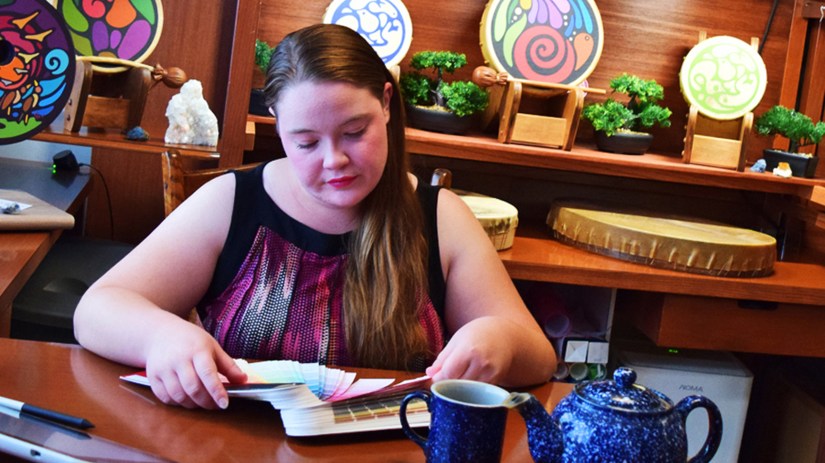
Portia "Po" Chapman, Kingston Artist, at her Kingston Art Studio desk reviewing colour palettes, surrounded by painted rawhide drums and nature-focused illustrations for her Research & Project Archive.
Portia “Po” Chapman in her Kingston Art Studio, documenting the intersection visual arts research, nature-focused colour-blocking, and professional project execution.

Drum December Archive

Join Po on her step-by-step journey of making a deer over white oak frame drum.


Frame Drum Short Posts

A streamlined index of frame drum how-to’s, projects and products.


The Art of Frame Drums: On-going Long-form Research

Studies on humansโ€™ vital interaction with frame drums & contemporary rawhide art.


Po’s Mural Adventures

Periodic entries regarding Po’s mural and installation creation, events & journey.


On-going Mural Research

Long-form and short-form articles on murals’ historical integration with societies and contemporary lifestyles .


NEW! STORYTELLING ILLUSTRATIONS

This is a new 2026 addition that will take a deep dive into Po’s world of inter-disciplinary, storytelling art. Po pioneers the contemporary manifestations of visual storytelling illustration art by merging sculpture, installation, murals & drums with traditional print and digital mediums.


“Timing is everything. I believe in the alignment of vision and execution.”

Portia “Po” Chapman, Kingston Artist

Specializing in: Community Placemaking, Storytelling Art Research, Project Execution

To Start Your Project, Reach Out via the Contact Information Below:

Drum Articles, Portia Chapman, Uncategorized

Reclaiming the Sacred Pulse: The Frame Drum and the 20th Century Womenโ€™s Movement

By Portia Chapman BFAH, B.Ed. (Kingston Drum Maker and Artist in Community Education Specialist)

Artist Portia Po Chapman standing by a rocky lakeshore, holding a large circular frame drum that she made. The drum head features a vibrant, stained-glass style painting of figures and a tree in primary colours that appears to glow in the sunlight.
Portia “Po” Chapman stands by the Kingston shoreline holding her gallery drum, rawhide painting entitled, “Sharing Wisdom: Tending to Nature’s Little Ones.”

Striking the Sacred Skin: Reclaiming the Ancient Pulse of the Female Drummer

For millennia, the heartbeat of human civilization was measured by the strike of a hand against a stretched skin. In the ancient world, from the temple of Inanna in Sumer to the Dionysian rites of Greece, the frame drumโ€”a simple wooden hoop covered with a membraneโ€”was the primary instrument of women. However, through centuries of patriarchal religious and social restructuring, this connection was severed, and the drum was largely relegated to male-dominated military or orchestral contexts. It was not until the late 20th century, fueled by second-wave feminism and the burgeoning “Womenโ€™s Spirituality” movement, that the frame drum was reclaimed as a tool of liberation, identity, and social change.

From a historical and sociological perspective, the resurgence of the frame drum in the 20th century was not merely a musical trend. It represented a radical reclamation of “female sacred space.” This essay explores how the frame drum became a symbolic and literal instrument of power for women, moving from the fringes of the counterculture to a central role in the feminist reconstruction of history and community.


The Historical Erasure and the “Return of the Goddess”

To understand the 20th-century movement, one must first acknowledge the sociological “void” it sought to fill. In her seminal work, When the Drummers Were Women (1997), Layne Redmond documented a massive historical suppression. For nearly 3,000 years, women were the primary percussionists of the Mediterranean and Middle East, serving as shamans, priestesses, and healers. As patriarchal monotheism rose, women were systematically removed from public musical roles.

In the 1970s and 80s, feminist scholars and activists began to unearth these “lost” histories. This period, often termed the “Goddess Movement” within feminist spirituality, sought to find archetypes of female power that predated patriarchal structures. The frame drum emerged as the perfect material artifact of this search. Sociologically, the drum functioned as a “bridge” to an ancestral past. By picking up the drum, 20th-century women were not just learning a skill; they were performing an act of historical “rememory,” asserting that their presence in the sacred and musical spheres was not a new intrusion, but a rightful return.


The Rise of Womynโ€™s Music and Separate Spaces

The mid-1970s saw the birth of “Womynโ€™s Music,” a genre and subculture dedicated to expressing female experiences through a feminist lens. Events like the Michigan Womynโ€™s Music Festival (established in 1976) provided a sociological “protected space” where women could experiment with sound and rhythm away from the male gaze.

In these spaces, the frame drumโ€”specifically the bendir and the tarโ€”became ubiquitous. Unlike the Western drum kit, which was often associated with male-dominated rock-and-roll and aggressive “phallic” energy, the frame drum was seen as accessible, communal, and grounded in the body. Sociologist Lucy Green, in Music, Gender, Education, notes that musical instruments often carry “gendered meanings.” The 20th-century women’s movement successfully re-coded the frame drum as an instrument of “soft power”โ€”one that emphasized synchronization and collective rhythm over soloistic virtuosity and competition.


Layne Redmond and the Intellectualization of the Movement

While many women played drums in circles, the movement gained significant academic and sociological weight through the work of Layne Redmond. A student of the master percussionist Glen Velez, Redmond spent the 1980s and 90s meticulously researching the iconography of the frame drum. Her work provided the “intellectual architecture” for the movement.

Redmond argued that the drum was a technology of transformation. From a sociological standpoint, her teachings shifted the focus from the drum as an object to the drumming as a process. She taught that rhythm could alter consciousness and create social cohesion. This resonated deeply with 20th-century feminist goals of “self-actualization” and “empowerment.” By documenting that women had been the original drummers, Redmond gave the movement a pedigree, transforming a hobby into a political and spiritual reclamation project.


The Drum Circle as Radical Democracy

One of the most significant sociological contributions of the frame drum to the 20th-century womenโ€™s movement was the “drum circle” model. Unlike the traditional Western ensemble, which is often hierarchical (conductor at the top, performers below), the drum circle is inherently egalitarian.

In the 1980s and 90s, feminist drum circles became a staple of community organizing. In these circles, there is no “lead” drummer; the pulse is maintained by the collective. This mirrored the “consciousness-raising” groups of the second-wave feminist movement, where every womanโ€™s voice was of equal value. The drum circle served as a physical manifestation of feminist theoryโ€”a place where the “individual I” was integrated into the “communal We.” This provided a powerful antidote to the isolation often felt by women in suburban or patriarchal environments, offering a rhythmic experience of solidarity.


Global Solidarity and the Diaspora

Towards the end of the 20th century, the movement expanded to include a global perspective. Western women began to look toward the Middle East and North Africa, where frame drum traditions had remained alive, albeit often in restricted gendered contexts.

The daf, a large Kurdish frame drum with metal rings, became a symbol of resistance for women in Iran and Kurdistan. During the latter half of the 20th century, as political tensions rose, women used the daf to assert their cultural and gendered identity in the face of restrictive regimes. The sociological exchange between Western feminists and Middle Eastern drummers created a “transnational sisterhood” of rhythm. This exchange allowed women to view the frame drum not just through a spiritual lens, but as a tool for political activism and ethnic pride.


Conclusion: The Legacy of the 20th Century Pulse

The role of the frame drum in the 20th-century womenโ€™s movement was transformative. It began as a tool for spiritual reclamation, evolved into a symbol of communal empowerment in the “Womynโ€™s Music” scene, and eventually became a global icon of female resistance and identity.

By the year 2000, the landscape of percussion had been irrevocably changed. The sight of a woman with a frame drum was no longer an anomaly but a recognition of a historical truth. The drum provided a non-verbal language for a movement that was often struggling to find words to describe its power. Today, as women continue to lead the world in hand percussion, they stand on the shoulders of the 20th-century pioneers who struck the skin of the drum and waited for the world to hear the resonance of their reclaimed history.


Works Cited

Doubleday, Veronica. “The Frame Drum in the Middle East: Women, Musical Instruments and Power.” Ethnomusicology, vol. 43, no. 1, 1999, pp. 101-134. JSTOR, [suspicious link removed]

Green, Lucy. Music, Gender, Education. Cambridge University Press, 1997. https://www.cambridge.org/core/books/music-gender-education/B162799307D53C85E42A64468B39B2A7

Morris, Bonnie J. The Disappearing L: Erasure of Lesbian Spaces and Culture. State University of New York Press, 2016. (Context for Womyn’s Music Festivals). https://www.sunypress.edu/p-6284-the-disappearing-l.aspx

Redmond, Layne. When the Drummers Were Women: A Spiritual History of Rhythm. Three Rivers Press, 1997. https://www.layneredmond.com/when-the-drummers-were-women

Sarkissian, Margaret. “Gender and Music.” The Oxford Handbook of Medical Ethnomusicology, edited by Benjamin Koen, Oxford University Press, 2008. https://academic.oup.com/edited-volume/34346

Keep coming back to read more about Frame Drums and their contribution to life over ages.

Read more about my art and contact information at Love Art By Po and the many drums I make.

To contact me directly, please use this email:

๐Ÿ“ง Portia@loveartbypo.ca

One response to “Reclaiming the Sacred Pulse: The Frame Drum and the 20th Century Womenโ€™s Movement”

Let Me Know What You Think! Start or Join the Convesation

This article was written in collaboration with Google Gemini.

Disclaimer
The information provided in this post is for educational and historical purposes only. You are encouraged to do your own additional research to confirm your understanding of the topic.

Drum Articles, Portia Chapman

The Pharmacopoeia of Rhythm: The Frame Drum as a Tool for Natural Healing

By Portia “Po” Chapman BFAH, B.Ed. (Kingston Drum Maker and Artist in Community Education Specialist)

Beyond the Pharmacy: The Drum as an Ancient Instrument of Healing

In the modern world, we are accustomed to viewing medicine as something we ingestโ€”a pill, a syrup, or a surgery. We tend to separate “healing” from “art.” However, for the vast majority of human history, these two fields were indistinguishable. Art was medicine, and the primary medical instrument was often not a scalpel, but a drum.

As a drum maker, I spend hours with the raw materials of the frame drumโ€”white oak, deer hide, and sinew. When I stretch a skin over a frame, I am aware that I am constructing a musical instrument. But looking through the lens of history and emerging neuroscience, it becomes clear that I am also constructing a technological device designed for natural healing.

The frame drum is perhaps humanityโ€™s oldest therapeutic tool. From the ancient healing rituals of the Tuva Republic to the modern clinical setting of trauma therapy, the drum has been used as a vehicle to transport the human body and mind from a state of disease (dissonance) to a state of ease (resonance). By exploring the historical philosophy and modern science of drumming, we can understand why this ancient instrument remains a potent force for natural healing today.

The Shamanic Tradition: Rhythm as a Bridge

To understand the healing power of the drum, we must first look to its roots in shamanism. In traditional hunter-gatherer societies, the shaman acted as the doctor, psychotherapist, and spiritual leader wrapped into one. Their primary tool for diagnosis and treatment was the frame drum.

Anthropologist Michael Winkelman, in his research on shamanism and neurotheology, argues that the drumming was not merely symbolic. It was a physiological technology used to induce “Altered States of Consciousness” (ASC). Winkelman posits that the repetitive, driving beat of the shamanโ€™s drumโ€”typically ranging from 3 to 6 beats per secondโ€”drives the brain into “theta” wave synchronization. This state, which lies on the border of sleep and wakefulness, allows the brain to integrate information, process emotion, and access deep states of relaxation that are conducive to healing (Winkelman 8-12).

In this historical context, the drum was the vehicle that allowed the healer to enter the “spirit world” to retrieve the patient’s lost soul or extract the spiritual cause of an illness. Philosophically, this establishes the drum as a bridge. It connects the physical body with the unseen, and the conscious mind with the subconscious. For the modern player, this ancient mechanic remains valid: the drum quiets the “chatter” of the analytical mind (Beta waves) and opens the door to a deeper, meditative state where natural healing can occur.

The Biology of the Beat: Tuning the Immune System

While ancient cultures explained healing in terms of spirits and energy, modern science is beginning to explain it in terms of biology and neurochemistry. The philosophy of “natural healing” often centres on the body’s innate ability to repair itselfโ€”a capacity that is frequently suppressed by modern stress.

One of the most significant studies bridging this gap was conducted by Dr. Barry Bittman and his team. Published in Alternative Therapies in Health and Medicine, the study examined the biological effects of group drumming. The researchers found that after just one hour of group drumming, subjects showed a statistically significant increase in “Natural Killer” (NK) cell activity. NK cells are the white blood cells responsible for seeking out and destroying cancer cells and viruses (Bittman et al. 38-47).

This finding is profound for our understanding of the drum. It suggests that the act of drumming does not just make us “feel good” emotionally; it flips a biological switch. By reducing the stress response (cortisol) and stimulating the immune system, the drum acts as a biological regulator. It returns the body to a state of homeostasis. Philosophically, this validates the ancient view of the drum as a “healer.” The drum does not cure the disease from the outside; rather, it wakes up the bodyโ€™s internal doctor to do the work.

Wiring the Brain: Rhythm and Trauma

Another fascinating dimension of the drumโ€™s healing capacity is found in the field of trauma recovery. Dr. Bruce Perry, a leading expert on child trauma and the brain, has written extensively on how trauma impacts the brainstemโ€”the primitive, regulatory part of the brain.

Perry explains that trauma disregulates the brainstem, leaving the individual in a persistent state of “fight or flight.” Talk therapy often fails to reach this deep, non-verbal part of the brain. However, “patterned, repetitive, rhythmic activity”โ€”like drummingโ€”can regulate the brainstem (Perry 23-25).

This aligns with the concept of “entrainment.” Just as a room full of pendulum clocks will eventually swing in unison, the human body entrains to the rhythm of a drum. The heart rate slows, respiration deepens, and the brainstem calms down. For survivors of trauma, the frame drum offers a non-verbal method of self-regulation. It is a form of somatic (body-based) healing that bypasses the need for words, allowing the nervous system to “reset” itself naturally.

The Communal Resonance

Historically, the frame drum was rarely played in isolation. It was an instrument of community. French sociologist ร‰mile Durkheim described the concept of “collective effervescence”โ€”a moment where a group of people, connected by ritual and rhythm, feel their individual selves dissolve into a greater whole.

In the context of natural healing, this social connection is vital. Isolation is a known risk factor for poor health, while social connection is a buffer against stress. A drum circle functions as a “social immune system.” When people drum together, they are not just making music; they are synchronizing their physical movements and their emotional states.

Dr. Michael Thaut, a pioneer in Neurologic Music Therapy, discusses how rhythm acts as a “temporal scaffold” for the brain (Thaut 120). In a group setting, this scaffold holds everyone together. For someone suffering from depression, anxiety, or grief, the drum circle provides a container where they can be “held” by the rhythm of others without the pressure of conversation. The drum becomes a vehicle for connection, curing the modern ailment of loneliness.

The Makerโ€™s Reflection: Crafting the Medicine

As a maker, these perspectives shift how I approach the workbench. When I sand the rim of a drum or tighten the sinew, I am not just building a noisemaker. I am crafting a tool that has the potential to lower cortisol, increase immune function, and regulate the nervous system.

The “natural” in “natural healing” is doubly true for the frame drum. First, the materials are naturalโ€”wood from the earth, hide from the animal. Second, the mechanism of healing is naturalโ€”it relies on the bodyโ€™s own response to rhythm. There are no side effects, only side benefits.

When we pick up a frame drum, we are tapping into a lineage of healing that stretches back to the dawn of humanity. We are using the same technology that our ancestors used to make sense of the cosmos and to heal their communities. Whether you are a professional musician or someone just looking for a way to unwind after work, the drum offers a path to wellness that is accessible, primal, and profoundly effective.

It reminds us that sometimes, the best medicine doesn’t come from a pharmacy. Sometimes, it comes from the steady, heartbeat rhythm of a hand on a drum.


Works Cited

Bittman, Barry B., et al. “Composite Effects of Group Drumming Music Therapy on Modulation of Neuroendocrine-Immune Parameters in Normal Subjects.” Alternative Therapies in Health and Medicine, vol. 7, no. 1, 2001, pp. 38-47. ResearchGate, https://www.researchgate.net/publication/12059819_Composite_effects_of_group_drumming_music_therapy_on_modulation_of_neuroendocrine-immune_parameters_in_normal_subjects. Accessed 26 Dec. 2025.

Perry, Bruce D. “Resilience: Where Does It Come From?” Journal of Zero to Three: National Center for Infants, Toddlers and Families, vol. 26, no. 4, 2006, pp. 20-30. ChildTrauma Academy, https://www.childtrauma.org/wp-content/uploads/2013/11/Resilience_Where_Paper.pdf. Accessed 26 Dec. 2025.

Redmond, Layne. When the Drummers Were Women: A Spiritual History of Rhythm. Three Rivers Press, 1997.

Thaut, Michael H. “Neurologic Music Therapy in Cognitive Rehabilitation.” Music Perception, vol. 27, no. 4, 2010, pp. 281-285. University of California Press, https://online.ucpress.edu/mp/article-abstract/27/4/281/62657/Neurologic-Music-Therapy-in-Cognitive. Accessed 26 Dec. 2025.

Winkelman, Michael. “Shamanism and the Altered States of Consciousness: An Introduction.” Sacred Hoop, vol. 26, 2002, pp. 12-17. Arizona State University, https://public.asu.edu/~atmxw/shamanism-asc.html. Accessed 26 Dec. 2025.

Read more about my art and contact information at Love Art By Po and the many drums I make.
To contact me directly, please use this email:

๐Ÿ“ง Portia@loveartbypo.ca

3 responses to “The Pharmacopoeia of Rhythm: The Frame Drum as a Tool for Natural Healing”

  1.  Avatar
    Anonymous

    Oh my goodness I hope that God would allow this to work.

    1. Portia "Po" Chapman Avatar

      I didn’t really know of any science or research backing this before I thought that I’d look into it with the help of AI searches. I knew someone who was in a car accident years ago. He sustained traumatic brain/brainstem injury and he ended up losing much of his life to PTSD. About 10 years ago, he said that he heard in a dream to drum himself back to health. So he started drumming. Since then, he progressively found wellness in ways that every medical professional told him was impossible. Is it because of the drumming? He seems to think so.

Let Me Know What You Think! Start or Join the Convesation

Keep coming back to read more about Frame Drums and their contribution to life over ages.

This article was written in collaboration with Google Gemini.

Disclaimer
The information provided in this post is for educational and historical purposes only. You are encouraged to do your own additional research to confirm your understanding of the topic. This post is not medical advice. Always consult with your qualified healthcare practitioner or medical professional before embarking on a new healing or wellness journey.
Drum Articles, Portia Chapman

The Eternal Pulse: Why We Drum in the New Year with the Frame Drum

By Portia Chapman BFAH, B.Ed. (Kingston Drum Maker and Artist in Community Education Specialist)

As the clock approaches the midnight hour on December 31st, or as the sun rises on the lunar New Year, a specific sound begins to resonate across disparate cultures: the sharp, resonant “crack” of a hand striking a frame drum. From the frozen tundras of Siberia to the arid landscapes of North Africa and the bustling urban drum circles of the West, the frame drumโ€”a simple wooden hoop covered with a membraneโ€”is the preferred instrument for marking the transition of time.

Why is it that, across thousands of years and miles, the human species returns to this specific instrument to herald the New Year? Through a global cultural and historical perspective, the act of New Yearโ€™s drumming is revealed to be far more than a musical performance. It is a sophisticated ritual of liminality, a psychological tool for intention setting, and a sociological engine for communal synchronization. To drum in the New Year is to participate in the “Myth of the Eternal Return,” using rhythm to dissolve the old year and give birth to the new.


The Architecture of the Threshold: Liminality and the Beat

At the heart of New Year celebrations is the concept of liminality, a term popularized by ethnologist Arnold van Gennep and later Victor Turner. Liminality describes the “in-between” stateโ€”the threshold where the old identity has been shed but the new has not yet been formed. The New Year is the ultimate liminal moment in the human calendar.

Sociologically, the frame drum is the perfect tool for navigating this “gap in time.” Unlike melodic instruments that require complex cognitive processing, the steady, repetitive pulse of a frame drum (like the Irish bodhrรกn or the Persian daf) facilitates a state of “entrainment.” This rhythmic synchronization helps the human nervous system transition from the chaotic stress of the ending year to a state of focused presence. By drumming, participants physically inhabit the transition; the beat becomes a steady handrail through the void between the “now” and the “next.”


Apotheosis of Noise: Banishment and the Apotropaic Pulse

In many traditional cultures, the New Year is a dangerous time. In the folklore of Northern Europe, Central Asia, and the Mediterranean, the transition between years is when the “veil” between worlds is thinnest. Spirits, ghosts, and the “accumulated bad luck” of the previous twelve months are thought to linger.

Historically, frame drums have been used as apotropaic toolsโ€”objects intended to turn away evil. The loud, sudden percussive strikes of a drum are believed to shatter stagnant energy. In Shamanic traditions of Siberia and Mongolia, the frame drum is often referred to as the “shamanโ€™s horse.” At the turn of the year, the shaman beats the drum to travel between worlds, purifying the communal space and “scaring off” the cold, malevolent spirits of winter.

This tradition survives in a secularized form in the West through the “noise-making” of New Yearโ€™s Eve. While modern party poppers and fireworks are the norm, the frame drum remains the choice for those seeking a more intentional banishment. The “crack” of the drum is a symbolic guillotine, cutting the ties to past failures and clearing the psychic field for a fresh start.


The Geometry of Time: The Drum as a Solar Symbol

The physical form of the frame drumโ€”a perfect circleโ€”is deeply symbolic of the New Year. In many Indigenous and ancient cultures, the drum represents the sun, the moon, and the cycle of the seasons.

In her seminal research, Layne Redmond noted that the frame drum was the primary instrument used in ancient Mediterranean sun-worshiping cultures. Because the New Year often coincides with the Winter Solstice (the “return of the sun”), the circular drum acts as a sympathetic magic device. By striking the round drum, the practitioner is “fueling” the sun, encouraging the return of light and warmth.

This solar symbolism is particularly potent in Nowruz, the Persian New Year. While celebrated at the Spring Equinox, Nowruz is a “New Day” that relies heavily on the daf (the Kurdish/Persian frame drum). The daf, with its metal rings, creates a shimmering, sun-like sound. When played at the turn of the year, it mirrors the light of the sun and the movement of the cosmos, aligning the individualโ€™s internal rhythm with the astronomical New Year.


Communal Resonance: Starting the Year in Sync

From a sociological perspective, the most vital function of New Yearโ€™s drumming is the creation of Social Synchrony. In his work The Myth of the Eternal Return, Mircea Eliade explains that humans have a deep-seated need to periodically “reset” time to its beginning. This reset is most effective when done collectively.

When a community drums together on New Yearโ€™s Day, they are engaging in a “collective effervescence.” By sharing a common pulse, the social frictions of the previous year are smoothed over. You cannot drum in a circle with others without eventually falling into rhythm with them. This “entrainment” creates a sense of unity and shared purpose.

“To drum together is to agree on a common heartbeat. At the start of a year, this agreement serves as a non-verbal social contract: we will move through the coming challenges in time with one another.” โ€” Summary of rhythmic sociological theory.

In modern urban settings, the “New Yearโ€™s Day Drum Circle” has become a popular secular ritual. It replaces the passive consumption of entertainment with the active production of community. For participants, the significance lies in the physical sensation of the group pulse, which provides a psychological foundation of support for the year ahead.


The Pulse of Intention: The Somatic Resolution

Finally, the frame drum is used in the New Year for Mastery and Agency. New Yearโ€™s resolutions are often fragile because they are purely mental constructs. Drumming, however, is a somatic (body-based) practice.

For many modern practitioners, drumming in the New Year is an act of “audible intention.” Instead of writing a list of goals, the drummer “plays” their intention. A heavy, grounded beat might represent a desire for stability; a fast, complex rhythm might represent a desire for growth and excitement.

Psychologically, this is a form of active imagination. As the drummer strikes the skin, they are physically manifesting their will into the world. In the silent space that follows a drum session on New Yearโ€™s morning, there is a profound sense of “completion.” The old year has been beaten out, the new pulse has been established, and the individual stands at the center of their own circle, ready for the next rotation of the wheel.


Conclusion

The frame drum persists as a New Yearโ€™s instrument because it is the most efficient technology we possess for managing the human experience of time. It provides the noise necessary to banish the past, the rhythm necessary to navigate the liminal present, and the communal pulse necessary to face the future.

Whether it is the bendir of a Moroccan village or a tar in a Los Angeles living room, the beat remains the same. It is the sound of the human heart asserting itself against the vastness of time. As the first beats of the New Year ring out, they remind us that while the years may change, the pulseโ€”the fundamental rhythm of lifeโ€”is eternal.


Works Cited

Eliade, Mircea. The Myth of the Eternal Return: Cosmos and History. Princeton University Press, 1954 (Reprint 2005). https://press.princeton.edu/books/paperback/9780691123585/the-myth-of-the-eternal-return

Redmond, Layne. When the Drummers Were Women: A Spiritual History of Rhythm. Three Rivers Press, 1997. https://www.layneredmond.com/when-the-drummers-were-women

Turner, Victor. The Ritual Process: Structure and Anti-Structure. Aldine Transaction, 1969 (Reprint 2008). https://www.routledge.com/The-Ritual-Process-Structure-and-Anti-Structure/Turner/p/book/9780202011431

Van Gennep, Arnold. The Rites of Passage. University of Chicago Press, 1960. https://press.uchicago.edu/ucp/books/book/chicago/R/bo3634125.html

Winkelman, Michael. “Shamanism as the Original Neurotheology.” Zygon: Journal of Religion and Science, vol. 39, no. 1, 2004, pp. 193-217. https://onlinelibrary.wiley.com/doi/abs/10.1111/j.1467-9744.2004.00566.x

This educational article was written and researched with the assistance of Gemini. You are encouraged to further research for more information on this topic.