Behind the Art, Behind the scenes, Drum December, Drum Works, How Po Makes Hand Drums, Indigenous Art, Kingston Artist, Po's Drum Making Process, Portia Chapman, Real-Time Crafting, Studio Process, Uncategorized

Drum December Day 19 – Preparing to Stretch the Deer Rawhide

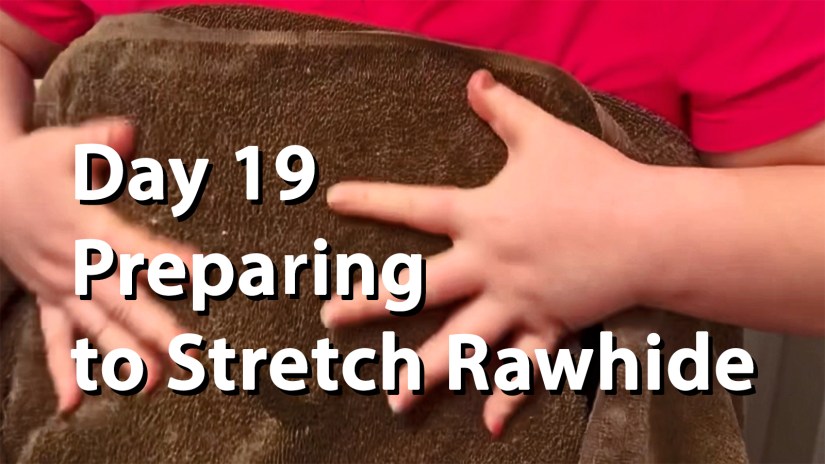
A close-up of Kingston artist Portia Po Chapman’s hands pressing down on a brown towel that is covering soaked rawhide to remove excess moisture. Bold white text in the center reads "Day 19 Preparing to Stretch Rawhide."
Removing the excess: Preparing the soaked deer rawhide for stringing and stretching on Day 20 of Drum December.

The Art of the Template

Preparation is the silent partner of success. Before we lift the rawhide from its sacred soak, we must ensure every measurement is exact. Thin rawhide, like the deer skin we are using for our White Oak frame, can dry out remarkably fast. If the hide becomes too dry during the stringing process, you risk the sinew ripping right through the skin—a setback we avoid by being “safe rather than sorry.”

Engineering the Perfect Fit

To protect the hide and ensure the beautiful wood of the frame remains visible, I begin by creating a precise template.

The Measurement: I cut a paper guide measuring roughly 1.5″ in length. This ensures the rawhide wraps perfectly, leaving about 0.75″ of space between the stringing holes and the edge.

Digital Precision: After sketching the rough pattern, I move into the digital space. I photograph the pattern and use Photoshop to precisely space the stringing holes.

The Cut: Using my Cricut Maker, I turn that digital file into a physical pattern. This machine truly makes light work of creating an accurate, repeatable guide.

Retrieving and “Swaddling” the Hide

Lifting the rawhide from its bath is a delicate, two-person job. As I hold up a fresh towel, my assistant carefully removes the quartz and geode anchors.

The hide is gently pulled from the water and placed into the towel. The process of wiping it dry feels remarkably like drying a baby after a bath—it requires a gentle, caring touch to move the moisture away while keeping the hide supple.

Once “swaddled,” I move it to a festive workspace and lay it upon a fresh, dry towel to keep it from slipping.

Tracing and Punching: The Final Prep

With the template held firmly against the damp rawhide, I trace the perimeter and every single stringing hole with a pencil.

Steady Hands: It is vital that the template does not shift during this process; a slip here could be disastrous for the drum’s final tension.

The Cut: I move gently but swiftly with tin-snip scissors, following the traced line to trim the hide to its final shape.

The Holes: Using a leather hole puncher set to a medium size (approximately 2.5 mm), I punch out the marks for the sinew.

Real-Time Update: On Schedule for the New Year

As of 10:00 PM on December 27, 2025, I am thrilled to report that we are officially on schedule! To have this drum ready for New Year’s Eve, it had to be strung by midnight on the 27th to allow for a full three days of drying in a 50% humidity-controlled environment. We hit the deadline! The heartbeat of the New Year is officially within our reach.

Join us tomorrow for Drum December Day 20, where we move into the powerful work of stretching and stringing. The drum is almost ready to find its voice.

Read more about my art and contact information at Love Art By Po and the many drums I make.


To contact me directly, please use this email:

📧 Portia@loveartbypo.ca

Let Me Know What You Think! Start or Join the Convesation

Behind the Art, Behind the scenes, Drum December, Drum Works, How Po Makes Hand Drums, Indigenous Art, Po's Drum Making Process, Portia Chapman, Real-Time Crafting, Studio Process, Uncategorized

Drum December Day 17 – How To Varnish a Drum Frame

Close-up of a white oak drum frame stained in Black Cherry, resting on wooden risers for the varnishing stage of Drum December Day 17 at Portia Po Chapman’s studio.
Moving from the deep stain of Day 16 to the protective glow of Day 17: Preparing to varnish the white oak drum frame.

Making the Drum Frame Shine

Varnishing is rarely a single-day task; it is a meticulous 2–3 day process that requires patience, a steady hand, and a keen ear for the wood’s texture. While the varnish gets harder the longer it dries—which is our ultimate goal for a durable instrument—this hardness can make it difficult for the next layer to bond. To ensure a professional, glass-like finish, we must navigate the delicate balance of drying times and sanding.

Choosing the Right Finish: Water-Based vs. Spar Varnish

For drums intended for rugged, outdoor drum circles, I typically use a natural spar varnish. It applies thickly and offers heavy-duty protection, though it requires significant drying time.

However, for this white oak frame, I chose a clear, non-yellowing water-based Varathane finish.

  • The Benefit: It dries much faster than oil-based alternatives.
  • The Challenge: The coats are much thinner, meaning the wood grain often “raises” after the first application.

In the video below, you can actually hear the raised grain as I sweep my hand across the dry surface. This texture must be smoothed before we can move forward.

The Secret to Sanding First Coats

Sanding the first coat of dry varnish is easier than it looks, provided you have the right technique. Because I am on a strict timeline—with the goal of stringing this drum on Day 19 (December 27, 2025)—I chose to sand after just one coat.

Pro Tip for Sanding:

  1. Wet the surface: Lubricating the varnish prevents the sandpaper from “grabbing” too aggressively.
  2. The Paper: Use 400-grit wet/dry sandpaper.
  3. The Motion: Lightly draw the paper along the surface, always following the direction of the grain.

Note: If you are using a very thin acrylic “varnish,” it is often safer to wait until the 3rd coat to sand.

Once sanded, the frame must be wiped down and dried. Always use a tack cloth as your final step to remove every microscopic speck of dust before the next coat of varnish touches the wood.

Controlling the Environment

Timing is everything. I applied the first coat roughly eight hours ago, but the humidity outside was climbing. To ensure the frame dried in time for the second coat, I moved it into my humidity-controlled drum painting studio, which I keep strictly between 45% and 50% humidity. This controlled environment is essential for a consistent cure.

Efficiency on the Turntable: The Game Changer

The way you physically handle the drum during varnishing dictates the final look. I prefer to use a lazy-susan (turntable) painting surface equipped with risen bars.

Why use a turntable?

  • Continuous Motion: It allows for long, fluid brush strokes that follow the grain without the artist having to change positions.
  • Self-Leveling: Fewer brush strokes mean the varnish has a better chance to self-level, resulting in a smoother finish.
  • Drip Management: If excess varnish begins to pool at the bottom edge, you can easily catch and wipe it with just the tips of your bristles as the frame spins.

Using a turntable was a complete game changer for my craft, and it is the secret behind the flawless finish on this white oak frame.

Come back tomorrow when we cut the rawhide and put in the water to soak.

See you on Day 18!

Read more about my art and contact information at Love Art By Po and the many drums I make.
To contact me directly, please use this email:

📧 Portia@loveartbypo.ca

Let Me Know What You Think! Start or Join the Convesation

Behind the Art, Behind the scenes, Drum December, Drum Works, How Po Makes Hand Drums, Indigenous Art, Kingston Artist, Po's Drum Making Process, Portia Chapman, Real-Time Crafting, Studio Process

Drum December Day 15 – Sanding Smooth the Drum Frame

Close-up of Portia Po Chapman’s hands guiding a white oak drum frame on an oscillating drum sander for Day 15 of Drum December.
The final sanding stages begin in the woodshop for Day 15.

Levelling the Joint: Precision Sanding in the Winter Workshop

Welcome back to the workshop! Today is all about the “Great Sanding.” The dust is flying as we move into the first and most critical stage of finishing: leveling that joint.

In today’s video, I’m at the drum sander, pink shop apron on, getting to work on the white oak frame. You’ll see me focusing on the seam where the wood overlaps.

“We are sanding the sharp edges off of the seam. We are using a RIDGID Oscillating Edge/Belt Spindle Sander so that the seam is really nice and even. Some of my competitors leave this inside edge. But you won’t find that here at Love Art By Po.”

The “Po” Difference

For me, the inside of the drum is just as important as the outside. By using the drum sander to level those sharp edges, I ensure the frame feels like one continuous, seamless piece of wood. It’s a small detail, but it’s what makes a Love Art By Po drum a professional piece of art.

The Holiday Schedule

We are moving fast to hit our December 27th stringing deadline! Here is what the next few days look like:

  • Day 16 (Tomorrow, Dec 24): I’ll be finishing the hand-sanding and moving straight into the custom staining process.
  • Christmas Day (Dec 25): The studio will be closed. I’ll be taking the day to celebrate with family while the first layers of our work cure.
  • Day 17 (Boxing Day, Dec 26): We hit the ground running with the first coats of varnish in the painting studio.

Come back tomorrow for Day 16 to see these frames finally get their colour!

See You Tomorrow for Day 16

Read more about my art and contact information at Love Art By Po and the many drums I make.
To contact me directly, please use this email:

📧 Portia@loveartbypo.ca

One response to “Drum December Day 15 – Sanding Smooth the Drum Frame”

  1. Drum December Day 16 – How to Stain a Drum Frame – Love Art by Po Avatar

    […] our Day 15 video, we tackled the critical task of erasing the overlap seam. Using a portable spindle sander, I […]

Let Me Know What You Think! Start or Join the Convesation

Find Love Art by Po’s Portia “Po” Chapman Kingston Art studio on Google Maps at this link.

Behind the Art, Behind the scenes, Drum December, Drum Works, How Po Makes Hand Drums, Indigenous Art, Kingston Artist, Po's Drum Making Process, Portia Chapman, Portia Po Chapman Frames and Stretchers, Real-Time Crafting, Studio Process, Uncategorized

Drum December Day 13 – Beyond the Clamps: Wrapping the Summer Bend for a Winter Reveal

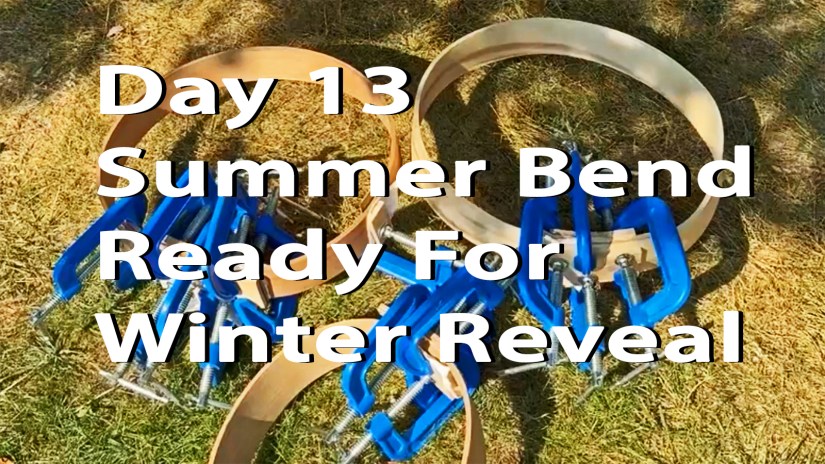
Close-up of a wood drum frame with blue C-clamps attached, sitting on grass, from the "Drum December Day 13 Summer Bend Ready For Winter Reveal" blog post by Portia Po Chapman.
Clamped wood drum frames from the summer bending sessions, ready to be finished in the winter studio.

Beyond the Clamps: Wrapping the Summer Bend for a Winter Reveal

We have reached Day 13 of Drum December. Using my innovative dry-bend technique and the disciplined 6-clamp method for freehand organic formation, the drum frames are now set. They have been glued and secured into their unique shapes and sizes—now, we must give them the gift of time.

The Art of the Cure

In the heat of the summer, I prefer to hang the clamped frames in the maple tree at the Love Art By Po studio. I’ve found that the blazing summer sun and a hot woodshop can be too aggressive; the glue and wood need to work their magic at their own pace. This stage cannot be rushed.

Whether they are hanging in the cool shade of a tree or resting in my humidity-controlled studio, the environment must be just right. To ensure the wood “remembers” its new shape without stress, I maintain these optimal conditions:

  • Temperature Range: 18–27°C (65–80°F)
  • Humidity: 55%
  • Lighting: Reduced UV exposure with dappled, indirect sunlight

More Than Craft: The Living Drum

Once dry, the frames move into my controlled environment for about 30 days. But this isn’t just storage—it is an introduction. I bring them into a living space filled with family conversation, singing, and music. I introduce them to their “sister drums” by playing the finished drums that surround them.

Some might think of drum making as simple carpentry, like crafting a coffee table, but the wood tells a different story. If you do not acknowledge their living nature, they rebel. For years, I heard stories of drums as family members who “talk” in their own ways. I never truly comprehended how that was possible until I began making them myself. Now, I know the truth: Drum making, most assuredly, becomes LIFE.

The Pivot: Moving to Real-Time

Today is December 21, 2025. Our summer-bent frames have dried, been unclamped, and are fully conditioned to the spirit of my studio. Starting tomorrow, Day 14, we leave the archives behind and move into real-time.

We are officially on a countdown to New Year’s Eve. To drum in 2026 with a newly finished piece, I must have the rawhide strung by December 27. Rawhide requires three days to dry in perfect conditions, and with the shifting winter weather outside my stringing studio, this will be a true nail-biter.

Nature will do as Nature does, and the drum is a part of that natural world. Join me tomorrow for Day 14 as we step into the workshop to begin the sanding and finishing.

See you in the studio!

See you tomorrow for Day 14!

Read more about my art at Love Art By Po and the many drums I make.

To contact me directly, please use this email:

📧 Portia@loveartbypo.ca

Let Me Know What You Think! Start or Join the Convesation

Find Love Art by Po’s Portia “Po” Chapman Kingston Art studio on Google Maps at this link.