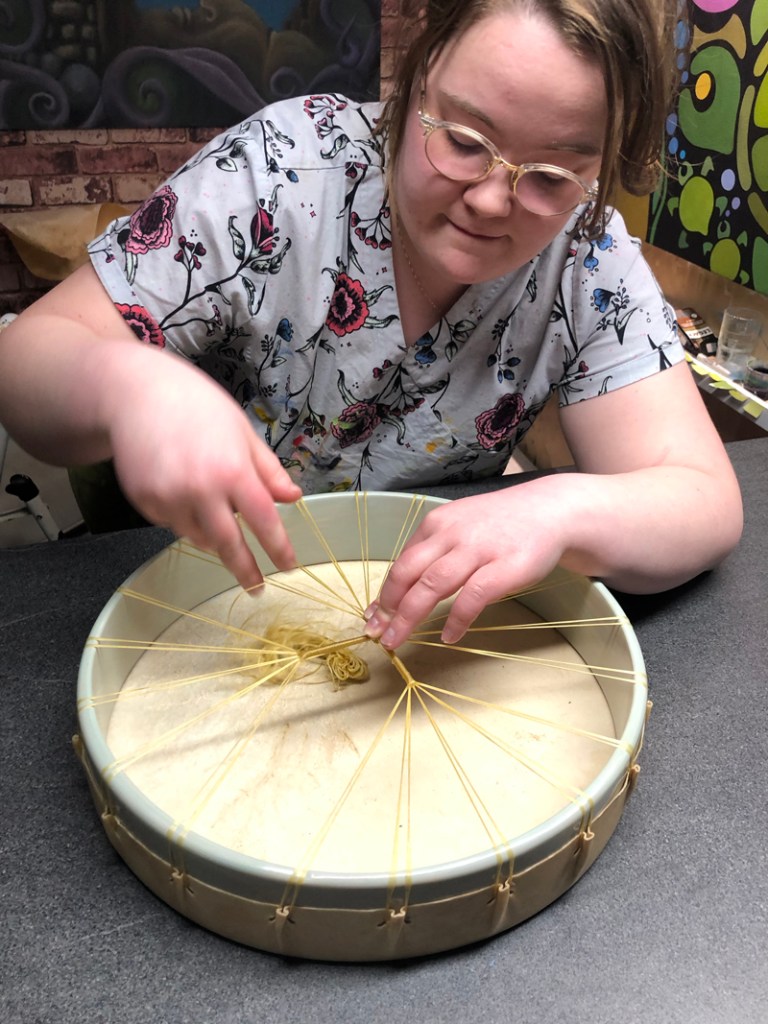
Behind the Art, Behind the scenes, Drum December, Drum Works, How Po Makes Hand Drums, Kingston Artist, Po's Drum Making Process, Portia Chapman, Uncategorized

Drum December Day 8 – Compressing and Marking the Drum Frame

On Day 8 of Drum December, at the Love Art By Po Kingston Art Studio, Po's assistant compresses the bent oak drum frame while Po marks the board where she will cut it on Day 9.
On Day 8 of Drum December, Po’s assistant compresses the bent oak while Po marks the board where she will cut it on Day 9.

Thank you for watching along as we engage on this drum making adventure. This is the first time that I have made a white oak drum frame and as you can see, it has been an adventure.

On Day 8 of Drum December, my assistant and I prepare the steam-bent white oak which is to be cut off in order to create my preferred drum diameter. The reason I mark the wood this way is because the best sounding drums have the least glue. So by marking it with both ends overlapping, I can judge how large the completed joint will become. I aim for a 2″ drum frame joint when the drum is complete.

For more information about Love Art by Po drums see here.

The Art of Compression Without Snapping the Frame

The process of compression without snapping the frame is exceptionally nuanced and requires much attention. This is the reason why I prefer dry-bending the final bend. The stunning personality of every piece of milled and bent timbre is felt as the compression reaches its limit. I have tried mechanical bending methods but those methods remove the connection with the fibres, and this process needs to be gentle and understanding.

Hugging Drums is Like Hugging Trees

Just because a tree is cut down and made into lumber, it never stops being a tree. I grew up listening to trees. For 18 years of my life, they sheltered me, comforted me, and taught me ancient lessons of beauty and strength. I met my ancestors as they stooped down, inviting me to sing as their branches drummed a beat for me to follow. In my second year of my BFA, the apple tree, that I used to climb as a child, died and began falling to the ground. In a way, I felt to blame for its loss of health.

You see, I left it in the field when I went away to University. So for my first large sculpture installation, I gave it back its voice by sculpting it back to its life giving form – even with birds nests and robin eggs. I could once agin hear it whisper. In the spring, when I returned to the field, the apple tree, at the very top, was growing leaves reaching to the sky. Today, as I make frame drums, it is my way of giving back to the trees – to hear their voices sing again. For me, I feel blessed to be a drum maker. It is a calling. It is LIFE! When shaping drum frames, I hug them just like I hug trees still able to stand. Every drum frame is realized out of love and respect.

To read more about Indigenous relationships with trees, follow this link. But please come back.

Gentleness Guided the Bend

For the compression, you will notice in the video, my assistant has rested the white oak on his lap. By doing so, he makes full contact with both sides of the new drum frame shape. He can feel the oak tighten and relax. He makes it look so easy after many years of woodworking, but this critical step truly requires inner stillness. After all, I learned to hug trees because of him. As he bends it, he can hear the oak say when it has coiled enough. Just as it reaches its chosen limit, I can sense it too.

This white oak, has required understanding more than the other hardwoods. But, when it reached its bend limit, instead of screaming out, it gave a relaxed sigh of relief, like it said: “Finally back home.”

Marking the Board

Due to the length of the video, it is unclear where I marked the piece. In this case, I marked it in two locations. Often, I do one continuous mark across both edges. Again, this is not a science. I wish that I could give a clear instruction, but it really is again about… Knowing the right spot(s).

To read more about my art practise, please click this link:

When I set out to write this post about this seemingly simple bend and mark, it was not my intention to share the spiritual, soulful relationship of bending drum frames. I guess, the ancestors thought that it was a good time to remind us that drum frames and drums are just as much part of this life as they were as trees. Please know that when you buy (adopt) one of the drums that I make, your drum has been nurtured into existence with care.

Come back tomorrow for Day 9 – the painful moment of cutting the frame to size.

See you tomorrow!

๐Ÿ“ง Portia@loveartbypo.ca

3 responses to “Drum December Day 8 – Compressing and Marking the Drum Frame”

  1. Drum December Day 10 | How to Glue Before Clamping Drum Frame – Love Art by Po Avatar

    […] To solve this, I developed a proprietary dry-bending technique. The wood is pre-bent and shaped before the glue is ever applied. You can see the foundation of this technique in my previous posts: Day 5, Day 7, and Day 8. […]

  2. Drum December Day 9 | Trimming the Drum Frame to Size – Love Art by Po Avatar

    […] day 8, my trusty assistant compressed the dry bent oak to the size that I wanted for the finished drum to […]
Let Me Know What You Think! Start or Join the Convesation

Behind the Art, Behind the scenes, Drum December, Drum Works, How Po Makes Hand Drums, Kingston Artist, Po's Drum Making Process, Portia Chapman, Studio Process, Uncategorized

Drum December Day 7 โ€” Releasing the Clamps on the White Oak Frame

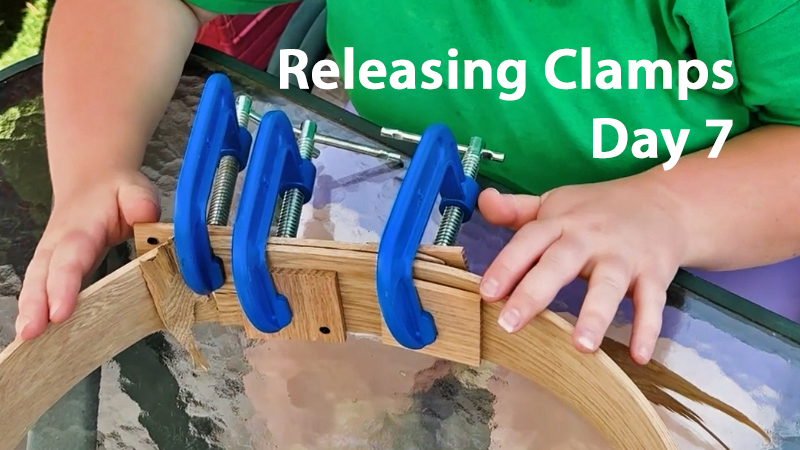
Portia โ€œPoโ€ Chapman carefully releasing three blue clamps from a bent white oak drum frame during Day 7 of Drum December. The frame gently opens as Po tests the success of the first bend.
Day 7: Po releases the clamps on the white oak drum frame โ€” the moment of truth in the Drum December bending sequence.

Drum December, Day 7’s update brings you right into one of my favourite moments in the drum-making process โ€” releasing the clamps after a full overnight bend (in this case, it took 48 hours to dry). Thereโ€™s always a little suspense in the air: did the frame hold its curve? Did yesterdayโ€™s small white oak split stay contained? OR… Would I just get slapped in the face?

If youโ€™re new to Drum December, Iโ€™m Portia โ€œPoโ€ Chapman โ€” the artist behind these handmade drum frames. You can learn more about my artwork and workshops on my About & Contact page.

Checking the Strength and Integrity of the First Bend

With slow hands and hopeful curiosity, I began removing the clamps one by one. The wood felt settled and responsive, and despite yesterdayโ€™s unfortunate split, the frame held together beautifully. The bend set cleanly and the character of the wood showed itself the way only white oak could; it was strong and unpredictable.

This is one of the reasons I love teaching you about the process of drum-making. Every piece of wood has its own story; some bend effortlessly, while others challenge you and reveal their limits as you work. Day 7 reminds me that, some days, drum frame making is as much about bravery as it is about skill.

Come back tomorrow when we will compress the white oak to the size of drum that I want and proceed to draw the cut marks for length.

See you tomorrow!

๐Ÿ“ง Portia@loveartbypo.ca

4 responses to “Drum December Day 7 โ€” Releasing the Clamps on the White Oak Frame”

  1. Drum December Day 10 | How to Glue Before Clamping Drum Frame – Love Art by Po Avatar

    […] the glue is ever applied. You can see the foundation of this technique in my previous posts: Day 5, Day 7, and Day […]

  2.  Avatar
    Anonymous

    I love seeing how you work,

    1. Portia "Po" Chapman Avatar

      Thanks. It is quite the process, isn’t it?! I just love it.

Let Me Know What You Think! Start or Join the Convesation

To go to Google Maps / Business Platform

Behind the Art, Behind the scenes, Drum December, Drum Works, How Po Makes Hand Drums, Kingston Artist, Po's Drum Making Process, Portia Chapman, Uncategorized, woodworking

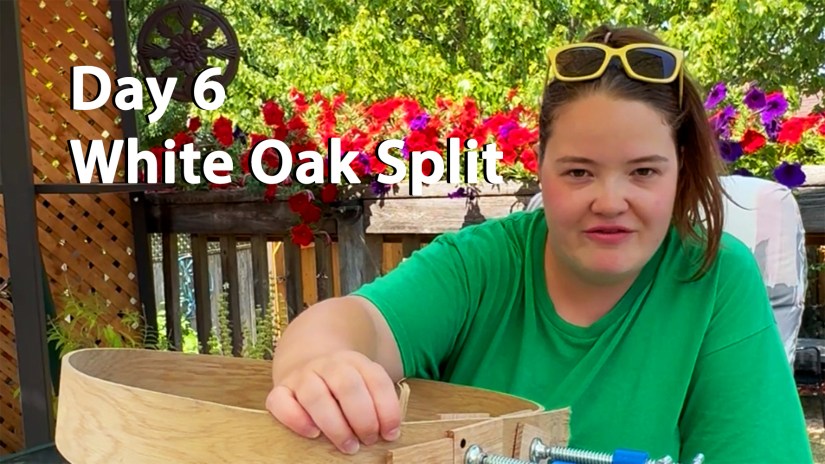
Drum December Day 6 โ€” A Small Split, But a Successful First Bend

A close-up of Portia โ€œPoโ€ Chapman examining a freshly bent white oak drum frame outdoors, pointing to a small split formed during the tight first bend, with bright flowers and summer greenery behind her.
Day 6: A small white oak split appears after the first bend โ€” an expected part of pushing hardwood to its limits.

Today marks the moment of truth for the first bend of the white oak drum frame. After spending the night under clamps, the wood finally revealed how it responded to yesterdayโ€™s bending session โ€” and as always, the material had a story to tell.

If youโ€™re new here and want to learn more about who I am and the work I do, you can visit my About & Contact page.

When I brought the frame into the studio this morning, the very first thing I did was check the inside curve. And there it was:
a small split along the tightest part of the bend.

For many people, that might feel alarming. But for me, this isnโ€™t unusual at all โ€” especially with a dense hardwood like white oak. Pushing any wood to the minimum bend radius it can tolerate means youโ€™re working right at the threshold where the fibres must stretch, compress, and adapt. Sometimes, a small split appears as part of that process.


What a Split Really Means in Drum Making

A split doesnโ€™t automatically mean failure.

Itโ€™s a diagnostic clue.

It tells me:

  • how far the wood was willing to travel,
  • how much internal tension remains in the frame,
  • and whether the second bend โ€” the glued dry-bend โ€” will seat properly.

In this case, the split is shallow and controlled. That tells me the clamps did exactly what they were supposed to do:
prevent the fibres from opening too far while still allowing the bend to hold.

This is why clamp placement is a true art form in drum making. You donโ€™t just tighten clamps to tighten clamps. You tighten them in anticipation of how the wood is likely to react.

If youโ€™d like to explore my handmade drums, see past builds, or learn about upcoming workshops, visit my Drum Page here.

White oak is expressive โ€” and today, it expressed itself in a way that still sets us up for a strong final frame. As well, the location of the minor breakage will be cut off before gluing the final bend. I don’t sweat these things now, but when I first started bending drum frames, I was totally panicked when the first breakage happened. It was a learning experience – that is for sure!


Reading Tension, Relaxation, and โ€œFeelโ€

Every wood species responds differently during the first bend.
White oak? Well…It hums with a very particular kind of density.

When I picked up the bent frame today, I could feel subtle tension still living inside the curve. Thatโ€™s not unexpected โ€” in fact, with white oak, itโ€™s quite normal. White oak, unlike red oak, doesn’t particularly like being bent.

The key for Day 6 is simply evaluating:

  • Did the bend hold its overall shape?
  • Is the curve even?
  • Is the split stable and non-progressive?
  • Does the wood want to spring open dramatically or gently?

All signs today point to a solid first bend. It was a success. PHEW!!!


Come back tomorrow, Day 7, to watch and read about the what happened when I released the clamps.

The next step โ€” which comes tomorrow โ€” is the careful release of the clamps. Thatโ€™s where I discover how much reflex the wood has stored and whether it settles into the intended diameter or pushes back aggressively.

For now, the job is simply to observe, interpret, and prepare.

White oak may be challenging, but todayโ€™s results show that this drum frame is very much on track.

See you tomorrow for Day 7 of Drum December!

โ€” Po

๐Ÿ“ง Portia@loveartbypo.ca

One response to “Drum December Day 6 โ€” A Small Split, But a Successful First Bend”

Let Me Know What You Think! Start or Join the Convesation

To go to Google Maps / Business Platform

Artist Portia Po Chapman Mural, Portia Chapman, Uncategorized

What Is a Mural? โ€” Kingston Mural Guide & Commissions | Love Art by Po

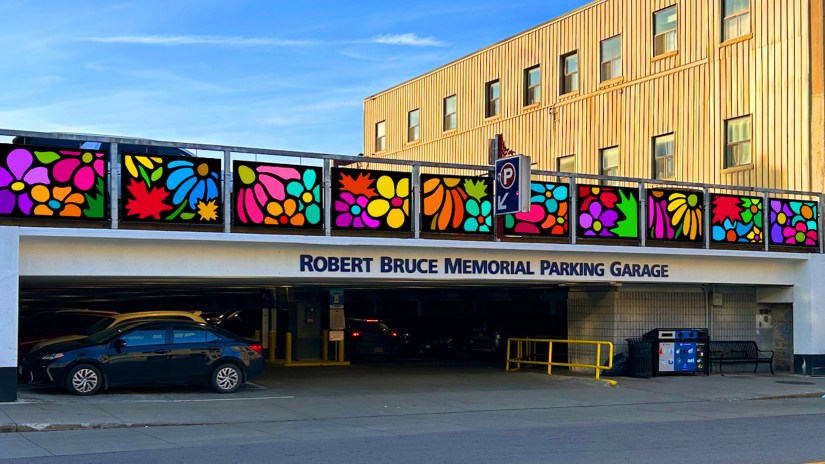
Large colourful mural design by Kingston artist Portia โ€˜Poโ€™ Chapman created as a shortlisted proposal for the Robert Bruce Memorial Parking Garage, featuring bold contemporary floral shapes in bright modern colours.
Shortlisted mural proposal by Kingston artist Portia โ€œPoโ€ Chapman for the Robert Bruce Memorial Parking Garage.

What Is a Mural? A Simple Definition

A mural is a large-scale artwork painted or applied directly onto a wall or architectural surface โ€” indoors or outdoors. Murals often transform plain walls into powerful visual stories and can serve cultural, community, decorative, or branding purposes.

Where Are Murals Typically Found?

Murals are among the oldest forms of human expression. Prehistoric communities painted animals and symbols inside the caves of Lascaux and Altamira, creating one of the earliest records of human imagination and daily life.

Over time, murals appeared in:

  • Egyptian tombs
  • Roman villas
  • Byzantine churches
  • Renaissance cathedrals
  • royal courts
  • civic buildings

These early murals documented history, mythology, religion, social order, local life, and cultural values.

Unlike portable canvases, murals were integrated directly into the spaces where people lived and gathered โ€” making art part of everyday life rather than a luxury object.

Murals as Social Voice and Public Expression

In the 20th century, murals became powerful tools for social storytelling and cultural empowerment.

The Mexican Mural Movement

Artists like Diego Rivera, Josรฉ Clemente Orozco, and David Alfaro Siqueiros used murals to:

  • depict working-class lives
  • celebrate Indigenous heritage
  • critique colonialism and oppression
  • advocate social change

Murals became visual public conversation.

Community & Identity

In many places โ€” including Ireland, South America, and North America โ€” murals have been used to:

  • assert identity
  • preserve memory
  • inspire civic pride
  • spark dialogue

Murals allow communities to see themselves reflected in public space.

Modern Murals โ€” Transforming Urban Environments

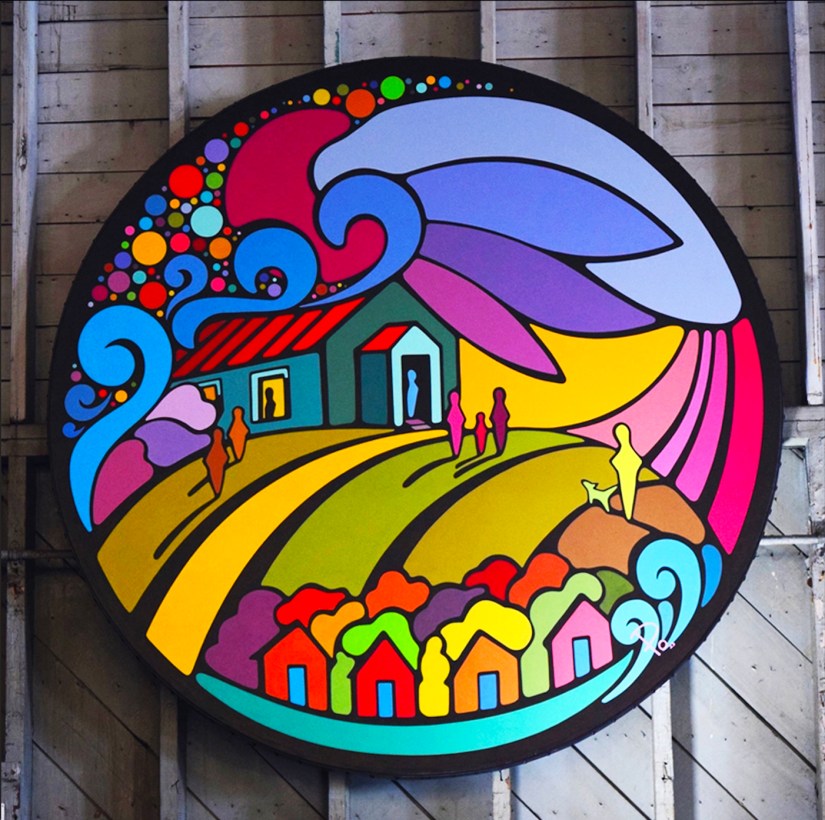
Circular mural design by Kingston artist Portia โ€˜Poโ€™ Chapman for Base31 in Picton, Ontario, depicting the historic hilltop barracks, Lake Ontario waves, drone light show dots, powerful eagle-shaped clouds, and community members walking together to celebrate the siteโ€™s WWII flight school heritage and renewed cultural life.
โ€˜Building a Bright Futureโ€™ โ€” a circular mural by Kingston artist Portia โ€˜Poโ€™ Chapman created for Base31 in Picton, celebrating the siteโ€™s historic past and its new cultural identity.

Today, murals are commissioned for:

  • homes
  • offices
  • cafรฉs
  • cultural centers
  • schools
  • playgrounds
  • public buildings
  • city walls

They add character, colour, and emotional connection to environments that might otherwise be plain or anonymous.

A mural can:
โœ” make a neighbourhood feel cared for
โœ” help a business stand out
โœ” brighten a public walkway
โœ” create community engagement
โœ” become a local landmark

Murals invite people to pause, look, and feel.

Murals as Transformative Elements in Modern Spaces

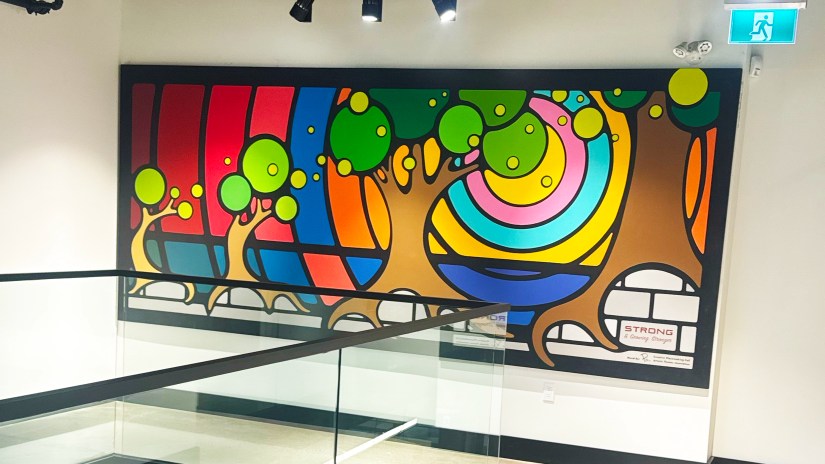
One powerful example of this is Poโ€™s large-scale custom mural created for Strong Enterprises in Belleville, Ontario. Designed specifically for a contemporary open-concept headquarters, the mural functions not just as artwork, but as an architectural feature woven into the identity of the space. With its Bauhaus-inspired forms, generational story, and colours that echo the landscape seen through the buildingโ€™s floor-to-ceiling windows, the mural becomes both a visual anchor and a narrative centrepiece โ€” a living expression of the companyโ€™s values, past, and future.

Large contemporary mural by Kingston artist Portia โ€˜Poโ€™ Chapman installed at Strong Enterprises headquarters in Belleville, Ontario, featuring bold Bauhaus-inspired trees, circular light motifs, and vibrant colour-blocking that reflects themes of growth, family legacy, and architectural harmony.
โ€œStrong and Growing Strongerโ€ โ€” a custom mural by Kingston artist Po Chapman for Strong Enterprises headquarters, celebrating four generations of family legacy and growth.

Mural Techniques โ€” From Classical Fresco to Contemporary Methods

Portia โ€˜Poโ€™ Chapman painting final touch-ups on her circular โ€˜Exploring the Sensesโ€™ mural at Base31โ€™s childrenโ€™s Sensory Garden, showing her precise freehand technique and colour-blocking style.
Po painting final details on her โ€˜Exploring the Sensesโ€™ mural at Base31โ€™s Sensory Garden.

Modern mural artists use many techniques, including:

  • Fresco โ€” pigment applied to wet plaster
  • Acrylic painting โ€” durable and colour-strong
  • Oil on mounted canvas โ€” later installed on walls
  • Spray paint & aerosol art
  • Projection-based layout
  • Digital-to-wall transfer
  • Mixed media & textural methods

Today, murals are both an art form and a technical craft โ€” requiring knowledge of materials, architecture, weather resistance, and scale.

For examples of Poโ€™s hand-painted techniques, you can explore her custom mural services.

Why Murals Matter

Murals bring art to everyone โ€” not just those who visit galleries or museums.

They are:

  • accessible
  • democratic
  • collaborative
  • culturally meaningful

Murals change how people feel about their city, their workplace, their community โ€” and themselves.

They are landmarks, memory-anchors, and emotional colour in physical space.

Murals in Kingston & the Surrounding Region

Poโ€™s murals in Kingston connect contemporary colour-blocking and modern visual storytelling to the fabric of the city. Each mural is designed in conversation with:

  • the space
  • the community
  • the history
  • the clientโ€™s vision

Whether for a home interior, a business storefront, or a community space, a mural by Po brings:

โœ” warmth
โœ” identity
โœ” energy
โœ” meaning
โœ” visual harmony

Young girl looking up at a colourful circular mural by Kingston artist Portia โ€˜Poโ€™ Chapman in a childrenโ€™s playroom, featuring bright purples, pinks, greens, and blues in Poโ€™s signature colour-blocking style.
Example of Poโ€™s colourful mural designs in a childrenโ€™s playroom.

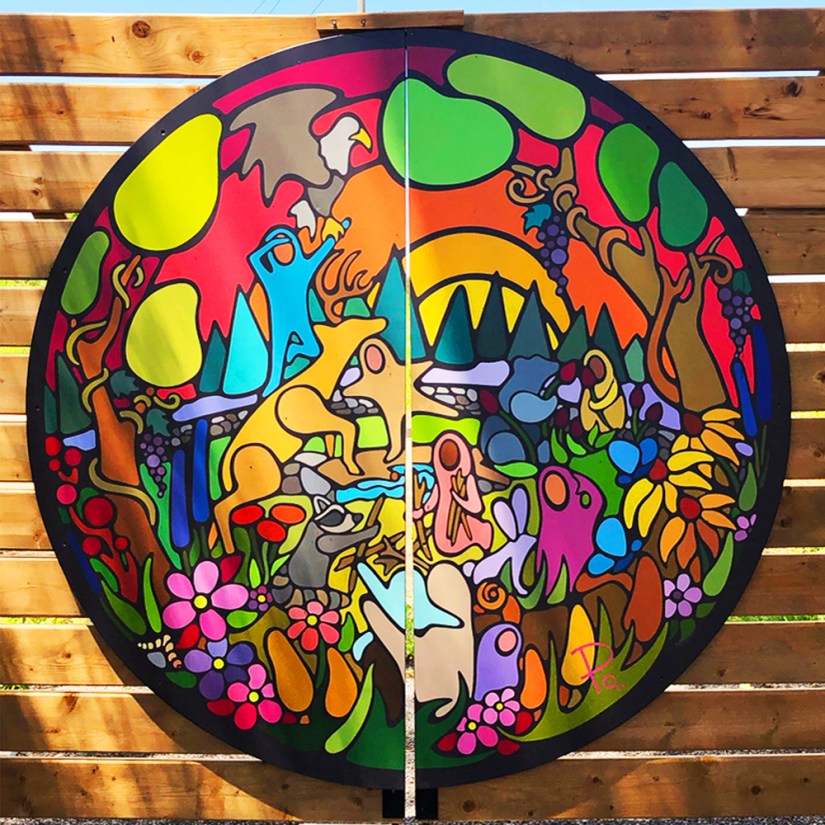
While Po is based in Kingston, many of her mural and installation projects extend throughout the surrounding region โ€” including Prince Edward County and other Eastern Ontario communities. One of the most beloved examples is โ€œExploring the Senses,โ€ a large interactive mural created for Base31โ€™s Sensory Garden in Picton.

โ€˜Exploring the Sensesโ€™ mural by Kingston artist Portia โ€˜Poโ€™ Chapman installed at Base31โ€™s Sensory Garden in Picton, featuring animals, children, and nature elements guiding visitors through interactive sensory stations.
Poโ€™s โ€˜Exploring the Sensesโ€™ mural installed at Base31โ€™s Sensory Garden in Picton, Ontario.

Commissioning a Mural โ€” The Process

Working with a professional mural artist typically involves:

  1. Initial conversation & intention
  2. Site visit & measurements
  3. Concept sketches
  4. Colour & mood selection
  5. Timeline & technical planning
  6. Execution of the mural
  7. Protective finishing

If you’re considering a mural for your home, business, or community space, visit Poโ€™s Mural Commissions Page for details.

How to Choose the Right Wall for a Mural

Consider:

  • Lighting
  • Visibility
  • Surface texture
  • Environmental exposure
  • Audience & purpose
  • Long-term durability
  • Indoor vs outdoor application

Custom Murals by Love Art by Po

Great spaces donโ€™t happen by accident โ€” they are shaped with intention. Whether youโ€™re creating a place for families, communities, students, or a growing business, a mural becomes a statement about the environment youโ€™re building. It communicates care, identity, and the desire to shape an experience that people genuinely feel.

And when youโ€™ve poured vision, effort, and heart into what youโ€™re creating, you deserve a space that reflects that same level of purpose and pride.

Po offers:

  • interior murals for homes
  • business & office murals
  • restaurant & cafรฉ murals
  • childrenโ€™s room murals
  • faith-space and reflective murals
  • public / exterior murals for community areas

Po works out of Kingston and serves clients across the wider region, from Toronto to Ottawa.

Bring Your Story to Life Through Mural Art

Art has a way of meeting people exactly where they are.
Whether youโ€™re building a home that feels magical, shaping a space where children learn and explore, revitalizing a community environment, or leading a business with a story worth telling โ€” a custom mural changes how people experience a place.

Poโ€™s murals are created for families, founders, educators, dreamers, doers, community builders, and anyone who wants a space to feel alive with meaning and colour. Every project โ€” big or small, playful or powerful โ€” begins with a conversation about your story.

If youโ€™re ready for a mural that reflects who you are, what you value, and what youโ€™re building for the future, Po would love to create something unforgettable for you.

Letโ€™s start your mural.

๐Ÿ“ง Email Po

โ€” Artwork and murals by Portia โ€œPoโ€ Chapman, Love Art by Po

One response to “What Is a Mural? โ€” Kingston Mural Guide & Commissions | Love Art by Po”

Let Me Know What You Think! Start or Join the Convesation

How Po Makes Hand Drums, Portia Chapman, Uncategorized

The Sacred History of Frame Drums and the Empowerment of Women Across Cultures

The Sacred History of Frame Drums and the Empowerment of Women Across Cultures

By Po โ€“ Woman Drum Maker & Drum Artist, Kingston ON
https://loveartbypo.wordpress.com/product-painted-hand-drums-kingston-artist-portia-po-chapman/

For thousands of years, long before written histories, the heartbeat of the frame drum echoed through ceremonies, celebrations, healing practices, and spiritual rituals around the world. What many people donโ€™t know is that the frame drumโ€”one of the oldest known instrumentsโ€”has an especially profound and empowering connection to women.

Across continents, cultures, and centuries, women were the primary keepers of rhythm, voice, and ceremony. The frame drum was not only an instrument; it was a symbol of feminine power, intuition, and the ability to bridge the physical and spiritual worlds.

As a contemporary woman frame drum maker and artist in Kingston, Ontario, Iโ€™m deeply inspired by this lineage. This article explores the rich, global history of the frame drum and its long-standing relationship with women’s empowerment.


Ancient Mesopotamia: Drumming as Divine Feminine Power

One of the earliest depictions of women drumming comes from ancient Mesopotamia, where priestesses of the goddess Inanna/Ishtar were shown holding frame drums in temple rituals. These women were spiritual leaders, healers, and cultural guides.

The drum, here, symbolized:

  • Womenโ€™s connection to sacred cycles
  • Their authority in ceremonial life
  • The rhythmic energy of creation itself

The frame drum wasnโ€™t just an instrumentโ€”it was a tool of spiritual and social leadership.


The Middle East & Mediterranean: Priestesses, Midwives, and Healers

In cultures across Turkey, Egypt, Greece, and Rome, women were the primary drummers during rites of fertility, healing, birth, and death.

In ancient Egypt, women used frame drums in temple rituals dedicated to Hathor and Sekhmetโ€”goddesses connected to feminine strength, intuition, and protection.

In Greece, the tambourine-like tympanon was played almost exclusively by women affiliated with goddess cults, such as those of Cybele and Dionysus.

In the Levant, women drummed during birth rituals, blessing the arrival of new life with rhythm.

Here, drumming represented the cyclical rhythm of womanhoodโ€”birth, transformation, creativity, mourning, and celebration.


Indigenous North American Traditions: Drums as Carriers of Story, Spirit, and Identity

Across many Indigenous cultures in North America, women traditionally played drums for:

  • Ceremony
  • Storytelling
  • Healing
  • Community leadership

The drum is often seen as the heartbeat of Mother Earth, carrying prayers and intention. While each Nation has its own practices, women have long held vital roles as singers, drummers, and creators of hand drumsโ€”especially in matrilineal societies.

Today, Indigenous women continue to reclaim and revitalize drum teachings, reinforcing cultural strength and identity. This reclamation is a powerful act of resilience and empowerment.


Northern & Eastern Europe: Women as Ritual Drummers and Seers

Archaeological and oral histories from Ireland, Scandinavia, the Baltics, and Siberia show that women used frame drums in shamanic and divination practices. The drum was believed to open pathways to the unseen world.

Women drummers were often:

  • Healers
  • Midwives
  • Ritual leaders
  • Carriers of ancestral knowledge

In Sรกmi culture, both men and women used ceremonial drums, but women were often recognized as strong intuitive leadersโ€”those who could โ€œhearโ€ what rhythm was saying.

https://jwa.org/sites/default/files/mediaobjects/women_and_hand_drums_terracotta.jpg

Central Asia & the Middle East: The Daf and Womenโ€™s Healing Circles

For centuries, the daf, a large frame drum, has been central to womenโ€™s gatherings in Iran, Kurdistan, and surrounding regions.

Women used the drum to:

  • Celebrate weddings
  • Mark rites of passage
  • Perform healing dances
  • Build community solidarity

The daf carries a deeply spiritual vibration, and in Sufi tradition, women daf players continue to lead devotional music that uplifts and transforms.


When Womenโ€™s Drumming Was Suppressedโ€”And When It Returned

As patriarchal systems grew across many cultures, womenโ€™s roles as drummers, spiritual leaders, and healers were gradually diminished or erased. Some places even banned women from drumming entirely.

But the beat never disappeared.
Women held onto drumming quietly in:

  • Kitchen gatherings
  • Birth rituals
  • Folk celebrations
  • Personal spiritual practice

By the late 20th and early 21st centuries, a global revival began. Women around the world started reclaiming the frame drumโ€”remembering an ancient calling.


The Modern Revival: Drumming as Healing, Empowerment, and Reconnection

Today, the frame drum has re-emerged as a powerful symbol of women’s empowerment. Women are:

  • Making their own drums
  • Leading drum circles
  • Reconnecting with ancestral rhythms
  • Using drumming for trauma healing
  • Teaching drumming as a form of voice reclamation
  • Celebrating identity and community through rhythm

Contemporary female artists and makersโ€”like myselfโ€”are part of a global movement restoring the drumโ€™s original connection to feminine strength.

The frame drum reminds us:
We are rhythmic beings.
We are carriers of story.
We are creators.
We are connected.


Why I Make Drums as a Woman Artist

As a drum maker, painter, and musician in Kingston, ON, I create frame drums not only as instruments, but as carriers of meaning – a living storytelling art.

Each drum I paint or make by hand honours:

  • The strength of women
  • The historic lineage of feminine drumming
  • The healing vibration of sound
  • The power of personal storytelling
  • The beauty of Creation

Explore my hand-painted drums here:
๐Ÿ‘‰ https://loveartbypo.wordpress.com/product-painted-hand-drums-kingston-artist-portia-po-chapman/

Every drum is nurtured – Every drum made with LOVE.

I look forward to making a custom drum for you!

Contact me to book your complimentary e-consultation and we can collaborate a drum design that reflects your voice, your journey, and tells your story.

Request a Custom Project Quote

One response to “The Sacred History of Frame Drums and the Empowerment of Women Across Cultures”

Let Me Know What You Think! Start or Join the Convesation


Artist Portia Po Chapman Mural, Portia Chapman, Uncategorized

The Rich History of Hand-Painted Kitchen Murals: From Ancient Hearths to Modern Homes

Contemporary Kitchen Mural

History of Hand-Painted Kitchen Murals

Hand-painted kitchen murals may feel like a recent design trend, but their history stretches back thousands of years. As long as humans have gathered around food and fire, we have decorated the spaces where we cook, eat, and connect. These murals reflect cultural values, artistic innovation, and the evolution of the kitchen itself. (See the original sample kitchen without mural.)

Below is a journey through time exploring how kitchen murals began, how they changed, and why they continue to flourish today.

Ancient Beginnings: Art Around the HearthFrom Cave Paintings to Early Communal Kitchens

Long before contemporary kitchens existed, early humans adorned the walls of communal living spaces with painted symbols and scenes. The spaces where people prepared food were often decorated with images of animals, hunts, and daily life.

These early images did more than beautify spaces, they told stories, marked traditions, and connected communities.

Egyptian and Roman Domestic Art

In ancient Egypt, homes of wealthy families featured painted walls depicting food, agriculture, and abundance. These symbols reflected the householdโ€™s prosperity and honoured deities connected to nourishment.

The Romans pushed wall painting even further. In Pompeii and Herculaneum, frescoes decorated kitchens, pantries, and dining areas with images of fruits, fish, wines, and market scenes.

Medieval and Renaissance Kitchens: Function First, Decoration Later

During the Middle Ages, kitchens were utilitarian, smoky, and often separate from the main living quarters. Decoration was limited due to soot and open flames. Still, some monasteries and noble estates painted devotional symbols near hearths as blessings for safety and abundance.

With the Renaissance came a renewed interest in beauty within the home. Frescoes began appearing in dining halls and hearth rooms, including scenes of feasts, harvests, and nature. These early murals set the precedent for connecting kitchens and dining spaces with artistic expression.

The 17thโ€“19th Centuries: Folk Art and Cultural Identity

As homes became cleaner and better ventilated, painted kitchen walls became more common, especially in rural communities.

European Folk Art Traditions

Regions such as:

  • Bavaria (Germany)
  • Scandinavia
  • Eastern Europe
    became known for bright, hand-painted kitchen motifs: flowers, birds, vines, and symbolic patterns.

These murals were typically done by local artisans or homeowners, making the designs deeply personal. They celebrated family heritage, religious beliefs, and seasonal cycles.

Colonial North America

Early North American settlers brought European traditions with them. Hand-painted stencils, sweeping floral garlands, and pastoral scenes decorated hearth rooms and kitchens. Many of these murals doubled as storytelling tools to record harvests, travels, or family events.

The Early 20th Century: Murals Meet Modern Design

As kitchens became more central to the home as gathering spaces, rather than just practical spaces, kitchen murals experienced a revival.

Arts & Crafts Movement

This movement celebrated craftsmanship and natural motifs. Hand-painted tiles and wall panels featuring fruits, flowers, and farm life became common, particularly in English and American kitchens.

Art Deco & Art Nouveau Eras

Sleek, stylized murals with geometric or botanical themes brought elegance to kitchens, often blending artistic flair with the eraโ€™s growing interest in beautifying the home.

Post-War Boom: Murals as Cheerful Homemaking

The 1950s and 1960s brought bright colors, optimism, and a quickly growing home dรฉcor industry.

Popular Themes Included:

  • Fruit baskets
  • Vineyards
  • Roosters and country motifs
  • Cheerful kitchen scenes
  • Checkerboard patterns
  • Decorative borders

Hand-painted murals and stencilling kits became widely available, allowing everyday people to personalize their kitchens for the first time.

Late 20th Century to Today: Custom Art for Modern Lifestyles

The contemporary kitchen is a social space, and murals have reemerged as a sophisticated and creative form of self-expression. Todayโ€™s hand-painted kitchen murals combine historical inspiration with contemporary design and technique.

Current Trends Reflect:

  • Nature and botanicals โ€” a nod to earlier folk traditions
  • Food and wine themes โ€” inspired by Roman and Tuscan frescoes
  • Minimalist line art โ€” echoing modern aesthetics
  • Cultural motifs โ€” celebrating heritage
  • Large-scale abstract murals โ€” turning kitchens into art installations

Artisans now use durable paints, sealants, and washable surfaces, allowing murals to stand up to heat, moisture, and daily use.

Why Hand-Painted Kitchen Murals Remain Desired

Across centuries, cultures, and artistic movements, kitchen murals have persisted because they provide:

  • A personal story: They connect the homeowner to heritage, memory, and meaning.
  • A sense of warmth: Art transforms a utilitarian space into a welcoming space.
  • A celebration of food and community: Murals reinforce the kitchenโ€™s emotional significance.
  • Timeless craftsmanship: Hand painting creates authenticity that printed murals canโ€™t fully replicate.

Final Thoughts

The history of hand-painted kitchen murals is a history of home, family, and creativity. From ancient frescoes to contemporary custom artwork, these murals have always served as more than decoration; they are symbols of nourishment, heritage, family, and the beauty of everyday life.

Contact Po, if youโ€™re ready to create a mural that sets your kitchen apart from your friends and families’ kitchens with a bold, contemporary, and hand-painted mural. Book your complimentary e-consultation and you can collaborate to design a wall that leaves a lasting impression and tells your story.

Request a Custom Project Quote

One response to “The Rich History of Hand-Painted Kitchen Murals: From Ancient Hearths to Modern Homes”

Let Me Know What You Think! Start or Join the Convesation

Artist Portia Po Chapman Mural, Portia Chapman, Uncategorized

Transform Your Kingston Business With a Hand-Painted Mural

Kingston Mural Artist Po hand painted mural in corporate office building
Kingston artist Portia Po Chapman’s mural, “Strong and Growing Stronger” mounted on the second floor of the new Strong Enterprises Headquarters building in Belleville, Ontario. 2025

Kingston Business Murals | Hand-Painted, Original, Vivid Wall Art by Po

Your Kingston business deserves more than generic dรฉcor. A hand-painted mural does more than fill a wall โ€” it communicates your brand, energizes the space, and creates a lasting impression.

Unlike digital prints or spray-painted walls, my murals are entirely hand-painted with vivid, crisp organic colour blocking. Every line, edge, and colour is intentional, resulting in murals that feel alive and unmistakably original.

Benefits for your business:

  • Brand identity: Your mural tells your story visually.
  • Customer experience: Clients spend more time in spaces that are engaging and beautiful.
  • Social impact: A striking mural encourages sharing and word-of-mouth marketing.
  • Employee inspiration: Vibrant art energizes your team and workplace atmosphere.

From cafรฉs and studios to offices and public spaces, Kingston businesses have embraced hand-painted murals because they combine art, branding, and space transformation in one unforgettable experience.

More about Po’s Murals

If youโ€™re ready to create a mural that sets your business apart โ€” bold, contemporary, and hand-painted โ€” letโ€™s collaborate to design a wall that leaves a lasting impression.

Request a Custom Project Quote

3 responses to “Transform Your Kingston Business With a Hand-Painted Mural”

  1. Linda Chapman Avatar
    Linda Chapman

    They are truly beautiful Po.

    1. Portia "Po" Chapman Avatar

      Ahhh. Thank you. I love what I do.

Let Me Know What You Think! Start or Join the Convesation

Artist Portia Po Chapman Mural, Portia Chapman, Uncategorized

Why Organic Colour Blocking Is Perfect for Kingston Homes

Colour Blocking in Kingston Hand Brushed Mural painted by Portia Po Chapman
Po painting a 6’D mural with a brush in Kingston.

Organic Colour-Blocking Murals in Kingston | Contemporary Hand-Painted Art by Po

Kingston homeowners are increasingly choosing original, hand-painted murals over traditional prints or wallpaper. Why? Contemporary interior design trends incorporate murals because they are more than decoration โ€” they are living, breathing elements of your home.

My style,ย organic colour blocking, uses precise brushwork to create vivid, flowing shapes and razor-sharp edges. Itโ€™s contemporary, sophisticated, and impossible to replicate digitally or with spray cans. Each mural interacts with the light, architecture, and atmosphere of your room.

Not sure what colour blocking is? See: History of Colour Blocking

Benefits of organic colour-block murals for Kingston homes:

  • Custom fit for your space: Every curve and colour is tailored to your room, wall, and lifestyle.
  • Adds personality: Your mural reflects your taste, energy, and story.
  • Timeless impact: Hand-painted murals remain striking for years, unlike printed designs that can fade or feel flat.

A mural in your foyer, living room, bedroom, or studio is more than art โ€” itโ€™s a statement. It changes how you feel in the room, how you move through the space, and how visitors experience your home.

Colour Blocking Hand Brush Painted Mural Kingston Residence
Colour Blocked Mural over Fireplace by Po in Kingston

Using a brush when painting a mural featuring colour blocking achieves crisp, opaque lines and shapes. It takes a painter many years of practice to produce sumptuous, flowing edges that are crisp and fluid. My own technique produces “flat” brush strokes that appear almost textureless.


The power of the murals I paint is the seamless connection with the viewer and the space – only achieved through exactness. The mind and soul immediately understand the imagery because without blurred edges, one need not interpret – just enjoy.

If youโ€™re ready to bring contemporary, hand-painted mural energy into your Kingston home, I can help design and create a space that feels alive, intentional, and completely unique.

Request a Custom Project Quote

One response to “Why Organic Colour Blocking Is Perfect for Kingston Homes”

Let Me Know What You Think! Start or Join the Convesation

Artist Portia Po Chapman Mural, Portia Chapman, Uncategorized

Kingstonโ€™s Hand-Painted Murals: Why Originals Beat Digital Prints

Kingston brush painted mural art
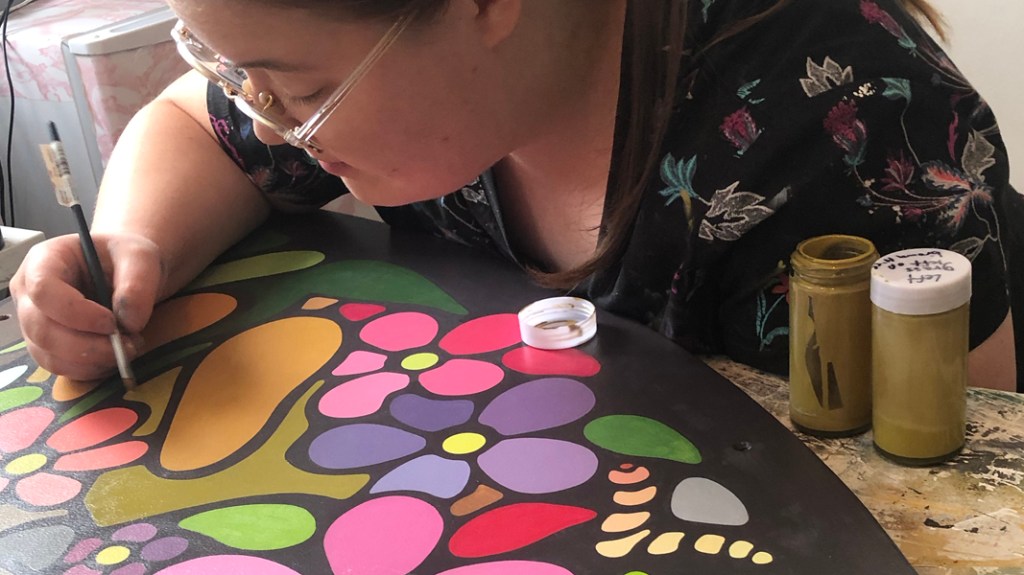
Kingston Mural Artist Portia “Po” Chapman Painting Outlines with a Small Brush using Specialty Exterior Acrylic Paint

Kingston Hand-Painted Murals by Po | Original, Vivid, Organic Colour Blocking

From cozy cafรฉs to modern offices, Kingston is home to incredible spaces. I am sure that we can all agree that every incredible space deserves magnificent artwork. Of any art, nothing transforms a wall like a hand-painted mural. While digital prints or projector-based murals are quick and convenient, they lack the energy, precision, and human touch that a true hand-painted mural delivers.

My work uses organic colour blocking, a contemporary technique I developed that produces razor-sharp edges, fluid forms, and sumptuous colours that seem to breathe. Unlike spray cans or mechanical reproductions, every brush stroke is intentional, every edge precise, every colour alive, every shape beloved.

Why choose a hand-painted mural for your Kingston space?

  • Presence: Hand-painted murals carry the signature of the artist. They are tactile, alive, and impossible to duplicate digitally.
  • Custom fit: Each mural is designed for your space, wall dimensions, and the energy you want to create.
  • Emotional impact: Organic colour blocking resonates on a subconscious level, making rooms feel calm, energized, or expansive โ€” depending on the design.

Clients across the Kingston, Picton and Belleville region have told me that stepping into a room with one of my murals is like stepping into a new world โ€” vibrant, contemporary, and unmistakably personal.

Original hand-painted mural transforming a Belleville office
Kingston artist Portia Po Chapman’s mural.
“Strong and Growing Stronger” is Installed at the Strong Enterprises Headquarters Office Building in Belleville, Ontario. 2025

If youโ€™re ready to make your space unforgettable, a hand-painted mural is the ultimate investment in art, atmosphere, and identity. To start your mural process, contact me today – e-consultations and quotes are complimentary.

Request a Custom Project Quote

3 responses to “Kingstonโ€™s Hand-Painted Murals: Why Originals Beat Digital Prints”

  1.  Avatar
    Anonymous

    I agree! Hand painted murals are amazing and so unique. You do amazing work, Po!

    1. Portia "Po" Chapman Avatar

      Thanks for your comment. Hand painted murals take longer, but I think that the care it takes to paint them is worth it.

Let Me Know What You Think! Start or Join the Convesation

How Po Makes Hand Drums, Portia Chapman, Uncategorized

Step-by-Step Guide to Stringing a Rawhide Drum with Portia “Po” Chapman, Kingston

A Photo Reference – Your Step-by-Step Guide

Po Stringing the Spokes of a 14″ Rawhide Drum
Po has Drawn on Shape and String Holes
and is Ready to Cut the Rawhide

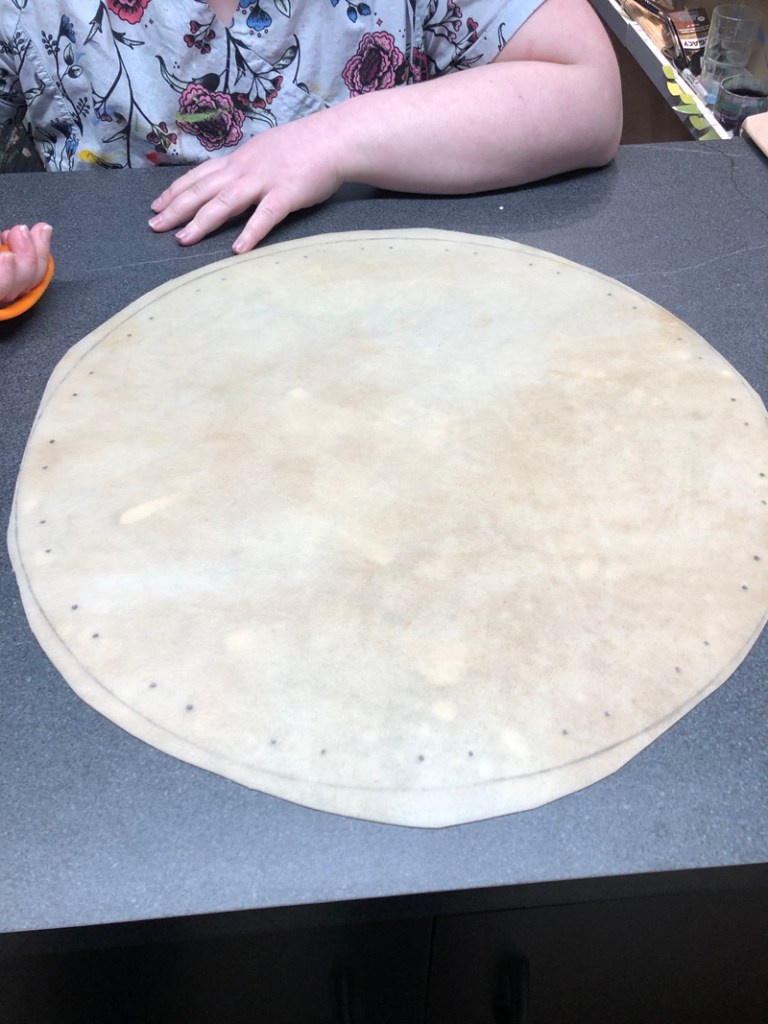
In order to cut the shape, I first draw on the pattern. In order to do this, I lay the drum frame on the soaked rawhide and draw the shape with an HB pencil that is not very sharp. The size that I draw on is usually about 2-1/2″ larger all the way around the frame. So for a 14″D frame, I draw on a 19″D shape that is the same shape of the frame. After I do this, I mark the string pleating holes, to be punched out later. This can be a very frustrating step, so I create a paper template and fold the paper to assure that the pleat holes are perfectly symmetrical. I will be posting another how-to concerning this step, but basically the two holes close together are for the pleat and the wider space is where the hide will lay flat against the frame when dry. The number one thing to remember is, the pleats must be evenly spaced and even in number, such as 8, 12, 16 pleats and so on. Keep the string holes about 3/4″ from the edge, all the way around. Premium drums have 16+ pleats. But to begin, I would only use 8 or 12 pleats.

Po Cutting Soaked Rawhide to be Stretched Over
the Drum Frame

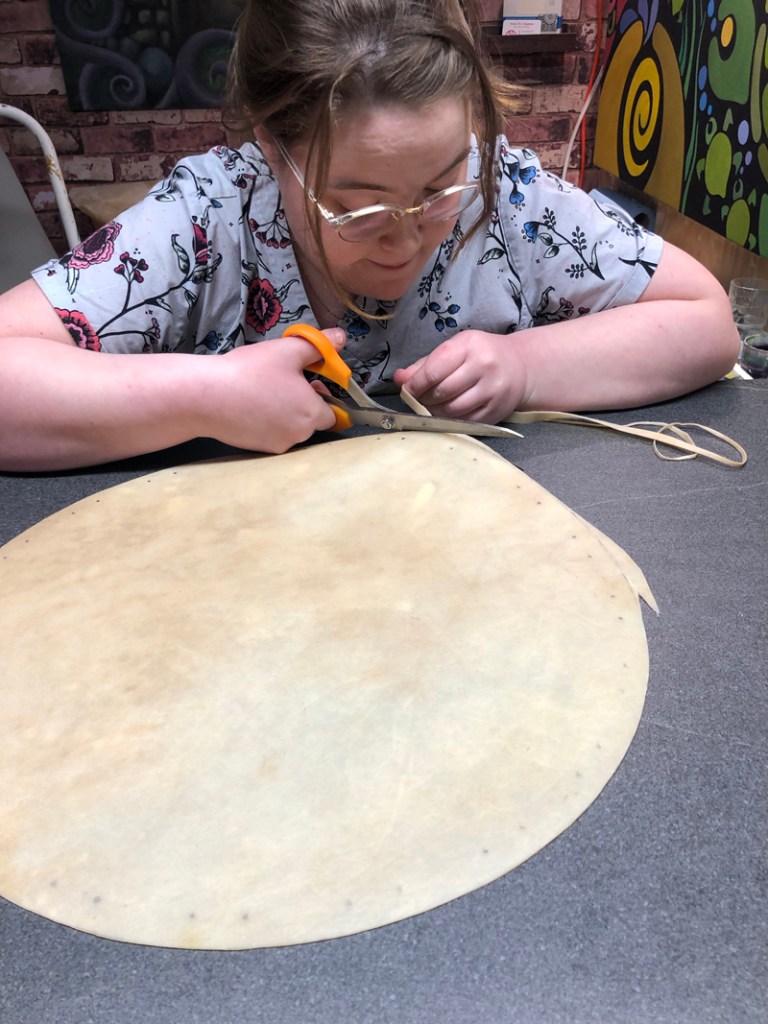
Cutting rawhide is fairly easy to do if the hide is thin. In this step-by-step guide, I am using opaque elk because this drum head will be painted. Elk and deer are from the same family. Deer is typically the more thin of the two. I will be posting another guide concerning the different rawhides, but for now a rule of thumb is: 14″D and smaller drums use deer or elk. In the photo at the top of this post, I am stringing a 14″ D drum with a coiled white cedar frame that I have painted. In order to cut thin elk, I find that using kitchen sheers or fabric scissors does a good job.

Po Punching Hole in Rawhide for Stringing the Frame Drum

This step is quite simple, once you have the hole spacing figured out. After I mark on the dots for stringing the drum skin pleats, I use a leather hole punch. There are two hole punches that are readily available to purchase at craft and building supplies stores, they are: ones that work like scissors (as in the photo above), and punches that resemble awls that you hammer through the rawhide. The former is usually strong enough for deer and elk, but the latter may need to be used when punching moose and bison. Punching holes through rawhide is not like punching holes through note paper. Rawhide is fibrous, almost stringy. When it is soaked, it becomes thick and rubbery too. In other words, every hole punches differently from each other.

Po Placing Drum Frame in Centre of Cut Rawhide

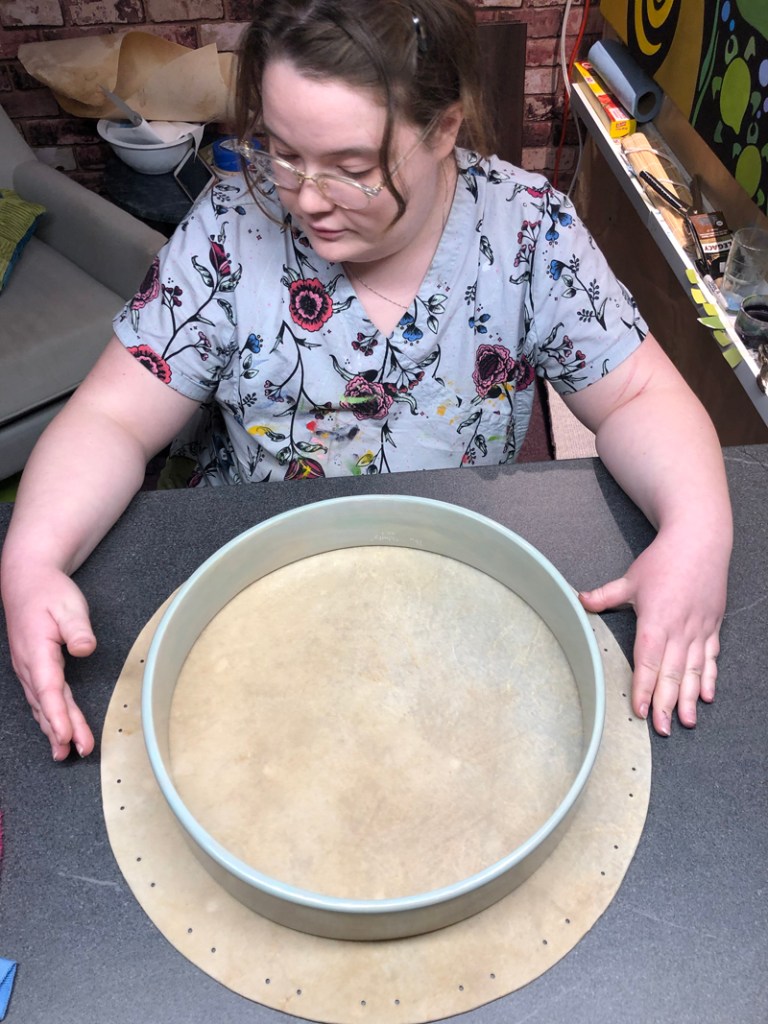
Before stringing, I check to make sure that everything fits and is evenly spaced. I place the finished drum frame in the centre of the cut and punched rawhide. To assure that it fits the way I want it to fit, I use a ruler and measure the distances between the frame and the edge. All the way around, there should be the same amount of rawhide outside the drum frame.

Po Stringing Through First Punched Hole
After Measuring Out Sinew String/Lace

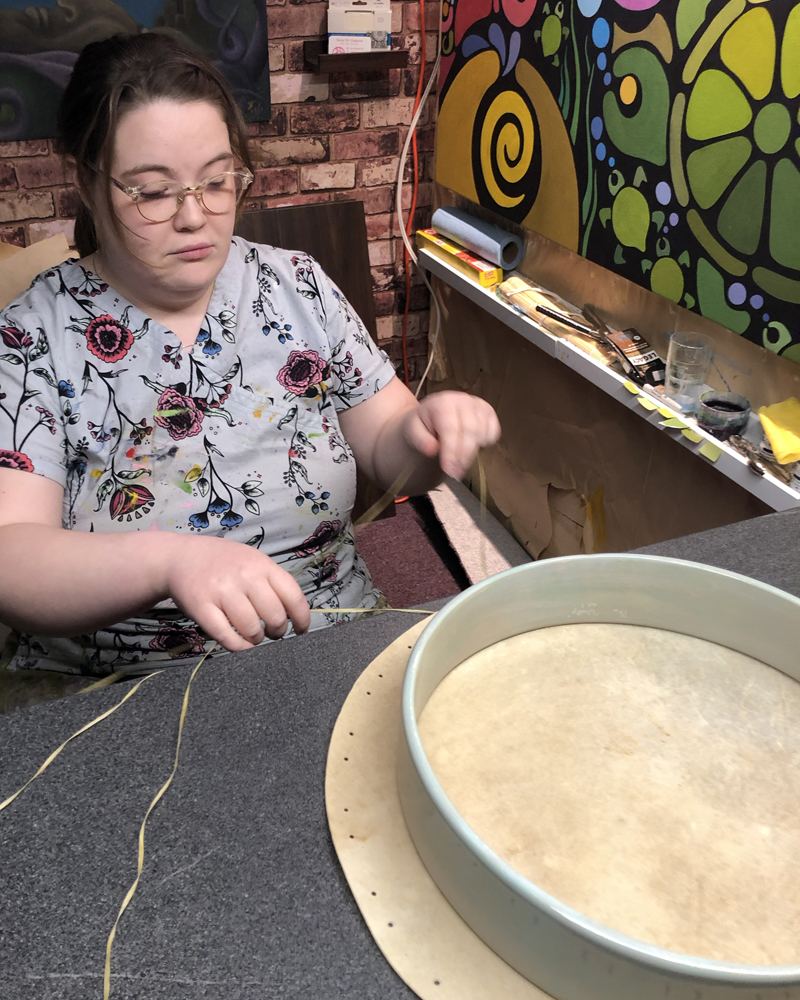
I use synthetic sinew for stringing. Some people call the sinew, “string,” and other people call it, “lace.” There are 4 types of string/lace, that are commonly used, they are: sinew (from a deer’s Achilles Tendon), synthetic sinew (buy by the spool), rawhide (thin strips that are cut from the perimeter of a soaked piece of rawhide), and rope for large moose, double headed, pow-wow drums. Measuring out the sinew is a tricky, nerve wrecking procedure. The length you need, needs to be one continuous strip. I measure about 5′ of string for every 1″ of drum frame diameter. So for a 14″D drum, I measure out 70′ of sinew. For a 24″ drum, I measure out 120′ of sinew. Also, just to be safe, I measure out another 20′ of sinew. I ran short once. I never want that to happen again. So now I wheel off extra! “Better safe than sorry,” as they say. This is the number 1 reason I use synthetic sinew. It is the best choice to use 120′ of continuous string.

While Stringing the Drum, Po Measures the Edges
to Assure that the Drum Frame
has Remained in Place

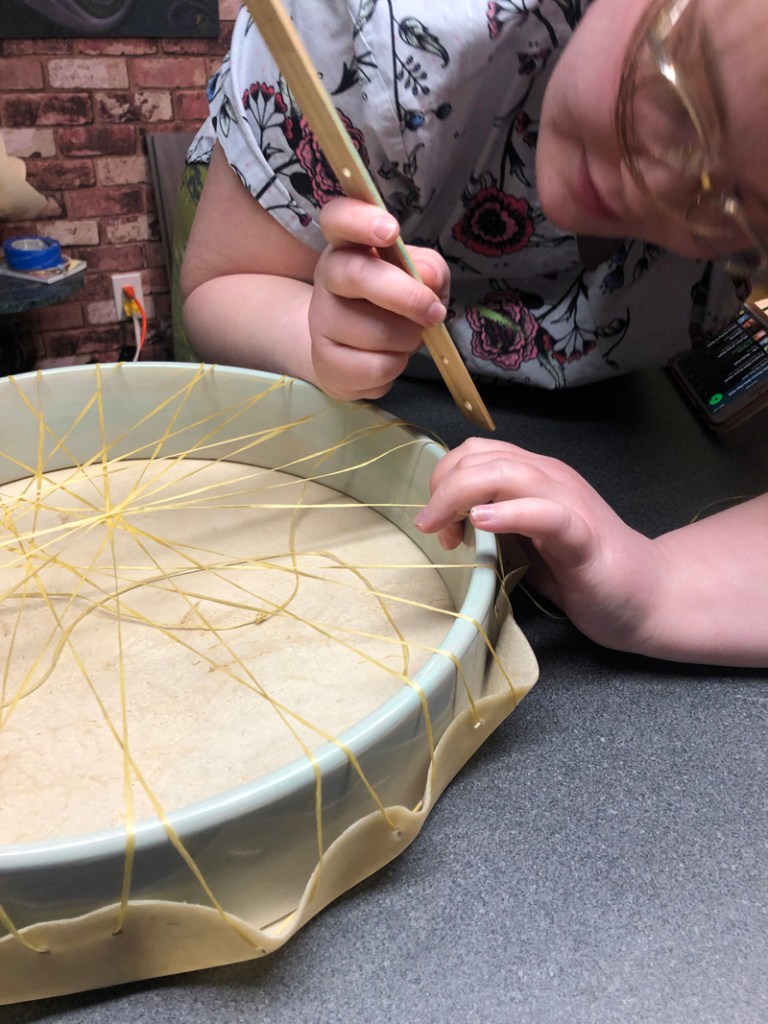
To string a drum, I pull one end of the string through one hole and then through the hole on the exact opposite side. Please note, I pull the entire strand through both holes, leaving about 2′ hanging outside the first hole. Then I continue to do the same, all the way around the drum, crossing the strings through the centre. In the image immediately above, notice that the string passes through the frame-side of the pleats (the two closest hole pairs). This allows for an attractive, elegant pleating of the hide. So when stringing, pass your needle through the outside of the hide, across the inside, and then through the inside to the outside. You’ll catch on. The practical reason I do this is due to physics. By pleating through two holes, rather than one, creates a stronger hold while applying less pulling on the individual holes. If you use one hole, you stand a pretty good chance that the rawhide will rip through. Believe me when I say: “YOU DO NOT WANT THAT!” Please note that I am creating a video to illustrate this more clearly and will be posting in the near future.

After Stringing, Po Creates Spokes to Hang Onto While Drumming

Before I begin with this step, take a look at how the pleats look after the rawhide has been stretched and strung. By stringing through the frame side of the pleats, a uniform pleating is created and the pulled holes are firm and uniform. If you want to make a premium drum, you will need to master this step with this method of drum stringing. Now onto the spokes. From what I can tell, in various traditions, the spokes are formed by wrapping cord, sinew, or deer hide. Locally, they are formed and wrapped using split deer hide. I prefer using the continuous synthetic sinew because it is strong and I prefer the appearance. So what I do is, I wrap the sinew around multiple pleat (forming) strings. As you can see in the photo, I am wrapping 10 strings (5 pleats’ worth) together. I wrap them as far up as I want to achieve the desired tightness of hide. When I reach the furthest point desired, I weave the sinew through the individual strings 3 or 4 times. This creates a basket weave appearance. I do this to anchor the spoke so that it won’t slide out of place. When the weaving is complete, I wind the sinew back down the spoke. Once the centre knot of the strings is reached, I wrap the centre knot a few times and pull it tightly. Then I proceed to create another spoke. Once all 4 spokes have been created, I knot off the string behind the main centre knot. At this point, the drum is complete. I then sit the drum in a dryish (50% humidity) location with good ventilation above and below the drum. In just a few days the drum is ready to be drummed.

Materials you need:
– scissors ($10-$50)
– darning needle ($2)
– pencil ($1)
– paper and tape ($10)
– hole puncher ($30)
– finished drum frame ($100-$300)
– soaked rawhide ($300-$700)
– synthetic sinew ($30)
– patience (priceless)

โ† Back

Contact Email Confirmation

Hi, Po here! Thanks for sending me an email. I will get back to you within a few days. Have a beautiful day!