Behind the Art, Behind the scenes, Drum December, Drum Works, How Po Makes Hand Drums, Indigenous Art, Kingston Artist, Po's Drum Making Process, Portia Chapman, Real-Time Crafting, Studio Process, Uncategorized

Drum December Day 19 – Preparing to Stretch the Deer Rawhide

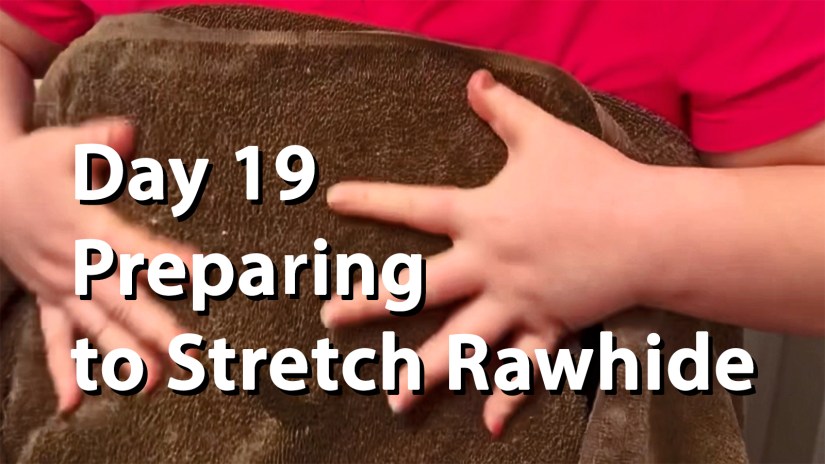
A close-up of Kingston artist Portia Po Chapmanโ€™s hands pressing down on a brown towel that is covering soaked rawhide to remove excess moisture. Bold white text in the center reads "Day 19 Preparing to Stretch Rawhide."
Removing the excess: Preparing the soaked deer rawhide for stringing and stretching on Day 20 of Drum December.

The Art of the Template

Preparation is the silent partner of success. Before we lift the rawhide from its sacred soak, we must ensure every measurement is exact. Thin rawhide, like the deer skin we are using for our White Oak frame, can dry out remarkably fast. If the hide becomes too dry during the stringing process, you risk the sinew ripping right through the skinโ€”a setback we avoid by being “safe rather than sorry.”

Engineering the Perfect Fit

To protect the hide and ensure the beautiful wood of the frame remains visible, I begin by creating a precise template.

The Measurement: I cut a paper guide measuring roughly 1.5″ in length. This ensures the rawhide wraps perfectly, leaving about 0.75″ of space between the stringing holes and the edge.

Digital Precision: After sketching the rough pattern, I move into the digital space. I photograph the pattern and use Photoshop to precisely space the stringing holes.

The Cut: Using my Cricut Maker, I turn that digital file into a physical pattern. This machine truly makes light work of creating an accurate, repeatable guide.

Retrieving and “Swaddling” the Hide

Lifting the rawhide from its bath is a delicate, two-person job. As I hold up a fresh towel, my assistant carefully removes the quartz and geode anchors.

The hide is gently pulled from the water and placed into the towel. The process of wiping it dry feels remarkably like drying a baby after a bathโ€”it requires a gentle, caring touch to move the moisture away while keeping the hide supple.

Once “swaddled,” I move it to a festive workspace and lay it upon a fresh, dry towel to keep it from slipping.

Tracing and Punching: The Final Prep

With the template held firmly against the damp rawhide, I trace the perimeter and every single stringing hole with a pencil.

Steady Hands: It is vital that the template does not shift during this process; a slip here could be disastrous for the drum’s final tension.

The Cut: I move gently but swiftly with tin-snip scissors, following the traced line to trim the hide to its final shape.

The Holes: Using a leather hole puncher set to a medium size (approximately 2.5 mm), I punch out the marks for the sinew.

Real-Time Update: On Schedule for the New Year

As of 10:00 PM on December 27, 2025, I am thrilled to report that we are officially on schedule! To have this drum ready for New Yearโ€™s Eve, it had to be strung by midnight on the 27th to allow for a full three days of drying in a 50% humidity-controlled environment. We hit the deadline! The heartbeat of the New Year is officially within our reach.

Join us tomorrow for Drum December Day 20, where we move into the powerful work of stretching and stringing. The drum is almost ready to find its voice.

Read more about my art and contact information at Love Art By Po and the many drums I make.


To contact me directly, please use this email:

๐Ÿ“ง Portia@loveartbypo.ca

Let Me Know What You Think! Start or Join the Convesation

Behind the Art, Behind the scenes, Drum December, How Po Makes Hand Drums, Indigenous Art, Kingston Artist, Portia Chapman

Drum December Day 18 – How to Soak Deer Rawhide Before Stringing the Drum

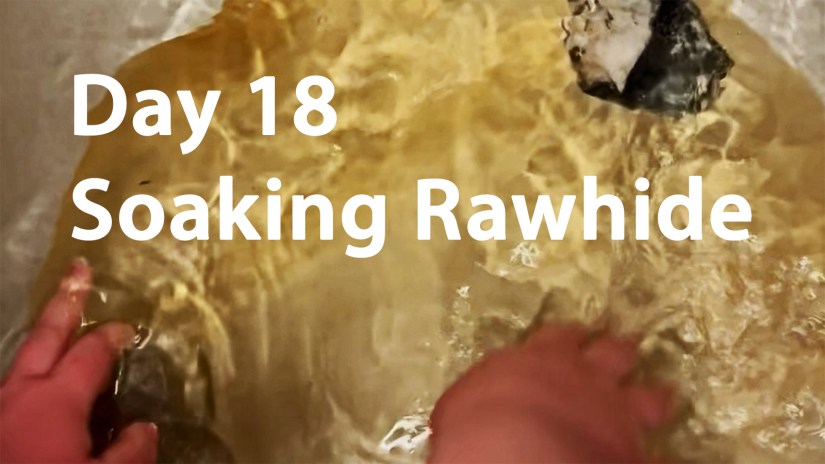
A top-down view of translucent deer rawhide submerged in a water bath, with an artist's hands guiding the skin and a large dark rock used as an anchor to keep the hide from floating.
The “Sacred Soak” begins. On Day 18, we prepare the deer skin for the white oak frame. This stage requires patience, clean water, and natural earth anchors like quartz or geodes to hold the hide beneath the surface for a full 24 hours.

Preparing the Rawhide is as Much About Honour as it is Technique

Preparing the rawhide on Day 18, we step away from the woodshop and begin the patient process of rehydrating the rawhide. This is a slow, quiet transformation that requires respect for the animal and an understanding of the specific needs of the skin.


Step 1: Choosing the Voice of the Drum

I source my rawhide from across Canada, and Iโ€™ve learned that even within the same species, every hide has its own unique quality. In my workshop, I work with deer, elk, moose, and bison.

  • The Rule of Thumb: Generally, the larger the drum, the larger the species of rawhide required.
  • The Scale: Deer is typically the thinnest and smallest, while moose and bison are the thickest and largest. Moose is so substantial that I often purchase it in quarter-sections.
  • Todayโ€™s Choice: Because our White Oak frame is on the smaller side, I am using a beautiful, translucent deer rawhide.

Step 2: The Rough-Cut

Before the water touches the skin, we must define its shape. I lay the drum frame directly onto the rawhide and cut a piece that extends about 2 inches beyond the frame all the way around.

  • Tools of the Trade: For deer and elk, a pair of tin-snip scissors works perfectly. For the heavy moose or bison, I switch to a jigsaw.
  • A Maker’s Hint: Trim off any sharp points or jagged edges during this stage. This prevents the rawhide from marking or scratching itself during the soaking and stretching process.

Step 3: Entering the Water

Soaking is about preservation. It is essential to use a clean vessel that is entirely free of soap residue, as we want to preserve the natural oils within the skin.

  • The Vessel: In the summer, I love using a galvanized wash tub filled with fresh rainwater. In the winter, I move to the laundry tub and use distilled water.
  • The Anchor: When the hide first enters the room-temperature water, it often wants to float. To keep it fully submerged, I weigh it down with rocksโ€”specifically geodes and quartz. I canโ€™t explain the science behind it; it simply feels right to anchor the animal skin with the bones of the earth.

Step 4: The Patient Wait

The rawhide needs time to remember its suppleness. I typically leave it to soak for 24 hours, though thicker hides like moose may need a little longer.

How do you know itโ€™s ready? You will feel a change in the texture. The rawhide will feel thick in your hands and the color will transition into a soft, opaque white.


Join us tomorrow for Day 19 (December 27, 2025). We will lift the rawhide from its bath and begin the powerful work of stretching it over our White Oak frame.

Read more about my art and contact information at Love Art By Po and the many drums I make.


To contact me directly, please use this email:

๐Ÿ“ง Portia@loveartbypo.ca

Let Me Know What You Think! Start or Join the Convesation