Behind the Art, Behind the scenes, Drum December, Drum Works, How Po Makes Hand Drums, Indigenous Art, Kingston Artist, Po's Drum Making Process, Portia Chapman, Real-Time Crafting, Studio Process, Uncategorized

Drum December Day 19 – Preparing to Stretch the Deer Rawhide

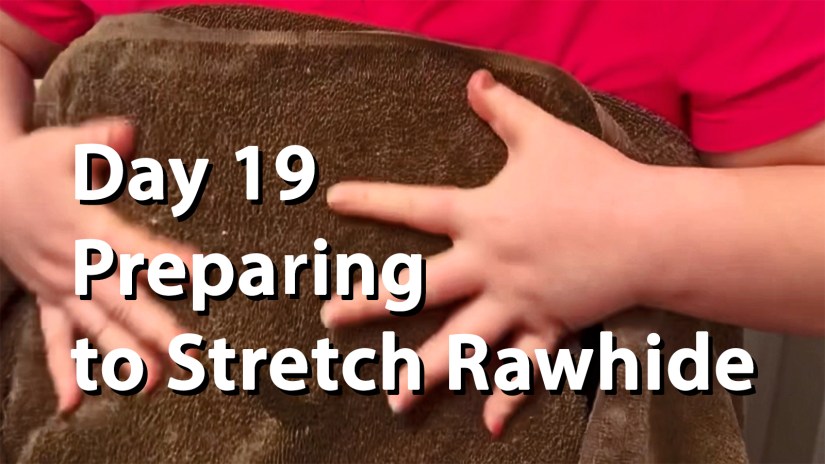
A close-up of Kingston artist Portia Po Chapmanโ€™s hands pressing down on a brown towel that is covering soaked rawhide to remove excess moisture. Bold white text in the center reads "Day 19 Preparing to Stretch Rawhide."
Removing the excess: Preparing the soaked deer rawhide for stringing and stretching on Day 20 of Drum December.

The Art of the Template

Preparation is the silent partner of success. Before we lift the rawhide from its sacred soak, we must ensure every measurement is exact. Thin rawhide, like the deer skin we are using for our White Oak frame, can dry out remarkably fast. If the hide becomes too dry during the stringing process, you risk the sinew ripping right through the skinโ€”a setback we avoid by being “safe rather than sorry.”

Engineering the Perfect Fit

To protect the hide and ensure the beautiful wood of the frame remains visible, I begin by creating a precise template.

The Measurement: I cut a paper guide measuring roughly 1.5″ in length. This ensures the rawhide wraps perfectly, leaving about 0.75″ of space between the stringing holes and the edge.

Digital Precision: After sketching the rough pattern, I move into the digital space. I photograph the pattern and use Photoshop to precisely space the stringing holes.

The Cut: Using my Cricut Maker, I turn that digital file into a physical pattern. This machine truly makes light work of creating an accurate, repeatable guide.

Retrieving and “Swaddling” the Hide

Lifting the rawhide from its bath is a delicate, two-person job. As I hold up a fresh towel, my assistant carefully removes the quartz and geode anchors.

The hide is gently pulled from the water and placed into the towel. The process of wiping it dry feels remarkably like drying a baby after a bathโ€”it requires a gentle, caring touch to move the moisture away while keeping the hide supple.

Once “swaddled,” I move it to a festive workspace and lay it upon a fresh, dry towel to keep it from slipping.

Tracing and Punching: The Final Prep

With the template held firmly against the damp rawhide, I trace the perimeter and every single stringing hole with a pencil.

Steady Hands: It is vital that the template does not shift during this process; a slip here could be disastrous for the drum’s final tension.

The Cut: I move gently but swiftly with tin-snip scissors, following the traced line to trim the hide to its final shape.

The Holes: Using a leather hole puncher set to a medium size (approximately 2.5 mm), I punch out the marks for the sinew.

Real-Time Update: On Schedule for the New Year

As of 10:00 PM on December 27, 2025, I am thrilled to report that we are officially on schedule! To have this drum ready for New Yearโ€™s Eve, it had to be strung by midnight on the 27th to allow for a full three days of drying in a 50% humidity-controlled environment. We hit the deadline! The heartbeat of the New Year is officially within our reach.

Join us tomorrow for Drum December Day 20, where we move into the powerful work of stretching and stringing. The drum is almost ready to find its voice.

Read more about my art and contact information at Love Art By Po and the many drums I make.


To contact me directly, please use this email:

๐Ÿ“ง Portia@loveartbypo.ca

One response to “Drum December Day 19 – Preparing to Stretch the Deer Rawhide”

Let Me Know What You Think! Start or Join the Convesation

Behind the Art, Behind the scenes, Drum December, How Po Makes Hand Drums, Indigenous Art, Kingston Artist, Portia Chapman

Drum December Day 18 – How to Soak Deer Rawhide Before Stringing the Drum

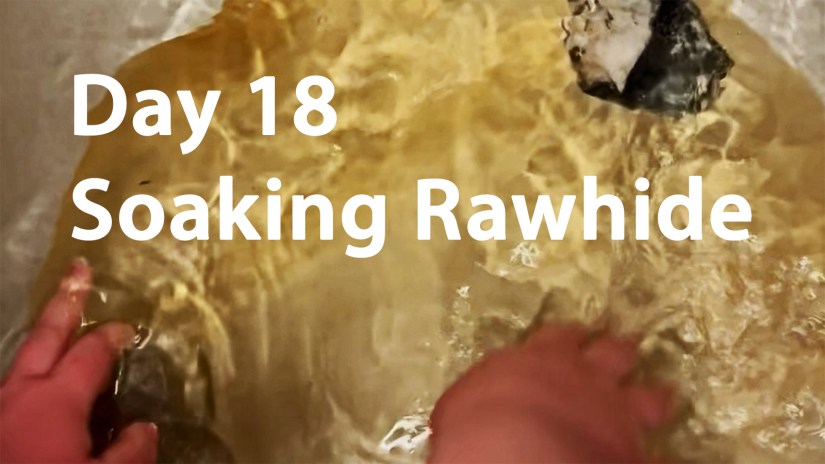
A top-down view of translucent deer rawhide submerged in a water bath, with an artist's hands guiding the skin and a large dark rock used as an anchor to keep the hide from floating.
The “Sacred Soak” begins. On Day 18, we prepare the deer skin for the white oak frame. This stage requires patience, clean water, and natural earth anchors like quartz or geodes to hold the hide beneath the surface for a full 24 hours.

Preparing the Rawhide is as Much About Honour as it is Technique

Preparing the rawhide on Day 18, we step away from the woodshop and begin the patient process of rehydrating the rawhide. This is a slow, quiet transformation that requires respect for the animal and an understanding of the specific needs of the skin.


Step 1: Choosing the Voice of the Drum

I source my rawhide from across Canada, and Iโ€™ve learned that even within the same species, every hide has its own unique quality. In my workshop, I work with deer, elk, moose, and bison.

  • The Rule of Thumb: Generally, the larger the drum, the larger the species of rawhide required.
  • The Scale: Deer is typically the thinnest and smallest, while moose and bison are the thickest and largest. Moose is so substantial that I often purchase it in quarter-sections.
  • Todayโ€™s Choice: Because our White Oak frame is on the smaller side, I am using a beautiful, translucent deer rawhide.

Step 2: The Rough-Cut

Before the water touches the skin, we must define its shape. I lay the drum frame directly onto the rawhide and cut a piece that extends about 2 inches beyond the frame all the way around.

  • Tools of the Trade: For deer and elk, a pair of tin-snip scissors works perfectly. For the heavy moose or bison, I switch to a jigsaw.
  • A Maker’s Hint: Trim off any sharp points or jagged edges during this stage. This prevents the rawhide from marking or scratching itself during the soaking and stretching process.

Step 3: Entering the Water

Soaking is about preservation. It is essential to use a clean vessel that is entirely free of soap residue, as we want to preserve the natural oils within the skin.

  • The Vessel: In the summer, I love using a galvanized wash tub filled with fresh rainwater. In the winter, I move to the laundry tub and use distilled water.
  • The Anchor: When the hide first enters the room-temperature water, it often wants to float. To keep it fully submerged, I weigh it down with rocksโ€”specifically geodes and quartz. I canโ€™t explain the science behind it; it simply feels right to anchor the animal skin with the bones of the earth.

Step 4: The Patient Wait

The rawhide needs time to remember its suppleness. I typically leave it to soak for 24 hours, though thicker hides like moose may need a little longer.

How do you know itโ€™s ready? You will feel a change in the texture. The rawhide will feel thick in your hands and the color will transition into a soft, opaque white.


Join us tomorrow for Day 19 (December 27, 2025). We will lift the rawhide from its bath and begin the powerful work of stretching it over our White Oak frame.

Read more about my art and contact information at Love Art By Po and the many drums I make.


To contact me directly, please use this email:

๐Ÿ“ง Portia@loveartbypo.ca

One response to “Drum December Day 18 – How to Soak Deer Rawhide Before Stringing the Drum”

Let Me Know What You Think! Start or Join the Convesation

Behind the Art, Behind the scenes, Drum December, Drum Works, How Po Makes Hand Drums, Indigenous Art, Po's Drum Making Process, Portia Chapman, Real-Time Crafting, Studio Process, Uncategorized

Drum December Day 17 – How To Varnish a Drum Frame

Close-up of a white oak drum frame stained in Black Cherry, resting on wooden risers for the varnishing stage of Drum December Day 17 at Portia Po Chapmanโ€™s studio.
Moving from the deep stain of Day 16 to the protective glow of Day 17: Preparing to varnish the white oak drum frame.

Making the Drum Frame Shine

Varnishing is rarely a single-day task; it is a meticulous 2โ€“3 day process that requires patience, a steady hand, and a keen ear for the woodโ€™s texture. While the varnish gets harder the longer it driesโ€”which is our ultimate goal for a durable instrumentโ€”this hardness can make it difficult for the next layer to bond. To ensure a professional, glass-like finish, we must navigate the delicate balance of drying times and sanding.

Choosing the Right Finish: Water-Based vs. Spar Varnish

For drums intended for rugged, outdoor drum circles, I typically use a natural spar varnish. It applies thickly and offers heavy-duty protection, though it requires significant drying time.

However, for this white oak frame, I chose a clear, non-yellowing water-based Varathane finish.

  • The Benefit: It dries much faster than oil-based alternatives.
  • The Challenge: The coats are much thinner, meaning the wood grain often “raises” after the first application.

In the video below, you can actually hear the raised grain as I sweep my hand across the dry surface. This texture must be smoothed before we can move forward.

The Secret to Sanding First Coats

Sanding the first coat of dry varnish is easier than it looks, provided you have the right technique. Because I am on a strict timelineโ€”with the goal of stringing this drum on Day 19 (December 27, 2025)โ€”I chose to sand after just one coat.

Pro Tip for Sanding:

  1. Wet the surface: Lubricating the varnish prevents the sandpaper from “grabbing” too aggressively.
  2. The Paper: Use 400-grit wet/dry sandpaper.
  3. The Motion: Lightly draw the paper along the surface, always following the direction of the grain.

Note: If you are using a very thin acrylic “varnish,” it is often safer to wait until the 3rd coat to sand.

Once sanded, the frame must be wiped down and dried. Always use a tack cloth as your final step to remove every microscopic speck of dust before the next coat of varnish touches the wood.

Controlling the Environment

Timing is everything. I applied the first coat roughly eight hours ago, but the humidity outside was climbing. To ensure the frame dried in time for the second coat, I moved it into my humidity-controlled drum painting studio, which I keep strictly between 45% and 50% humidity. This controlled environment is essential for a consistent cure.

Efficiency on the Turntable: The Game Changer

The way you physically handle the drum during varnishing dictates the final look. I prefer to use a lazy-susan (turntable) painting surface equipped with risen bars.

Why use a turntable?

  • Continuous Motion: It allows for long, fluid brush strokes that follow the grain without the artist having to change positions.
  • Self-Leveling: Fewer brush strokes mean the varnish has a better chance to self-level, resulting in a smoother finish.
  • Drip Management: If excess varnish begins to pool at the bottom edge, you can easily catch and wipe it with just the tips of your bristles as the frame spins.

Using a turntable was a complete game changer for my craft, and it is the secret behind the flawless finish on this white oak frame.

Come back tomorrow when we cut the rawhide and put in the water to soak.

See you on Day 18!

Read more about my art and contact information at Love Art By Po and the many drums I make.
To contact me directly, please use this email:

๐Ÿ“ง Portia@loveartbypo.ca

One response to “Drum December Day 17 – How To Varnish a Drum Frame”

Let Me Know What You Think! Start or Join the Convesation

Drum Articles, Portia Chapman

The Pharmacopoeia of Rhythm: The Frame Drum as a Tool for Natural Healing

By Portia “Po” Chapman BFAH, B.Ed. (Kingston Drum Maker and Artist in Community Education Specialist)

Beyond the Pharmacy: The Drum as an Ancient Instrument of Healing

In the modern world, we are accustomed to viewing medicine as something we ingestโ€”a pill, a syrup, or a surgery. We tend to separate “healing” from “art.” However, for the vast majority of human history, these two fields were indistinguishable. Art was medicine, and the primary medical instrument was often not a scalpel, but a drum.

As a drum maker, I spend hours with the raw materials of the frame drumโ€”white oak, deer hide, and sinew. When I stretch a skin over a frame, I am aware that I am constructing a musical instrument. But looking through the lens of history and emerging neuroscience, it becomes clear that I am also constructing a technological device designed for natural healing.

The frame drum is perhaps humanityโ€™s oldest therapeutic tool. From the ancient healing rituals of the Tuva Republic to the modern clinical setting of trauma therapy, the drum has been used as a vehicle to transport the human body and mind from a state of disease (dissonance) to a state of ease (resonance). By exploring the historical philosophy and modern science of drumming, we can understand why this ancient instrument remains a potent force for natural healing today.

The Shamanic Tradition: Rhythm as a Bridge

To understand the healing power of the drum, we must first look to its roots in shamanism. In traditional hunter-gatherer societies, the shaman acted as the doctor, psychotherapist, and spiritual leader wrapped into one. Their primary tool for diagnosis and treatment was the frame drum.

Anthropologist Michael Winkelman, in his research on shamanism and neurotheology, argues that the drumming was not merely symbolic. It was a physiological technology used to induce “Altered States of Consciousness” (ASC). Winkelman posits that the repetitive, driving beat of the shamanโ€™s drumโ€”typically ranging from 3 to 6 beats per secondโ€”drives the brain into “theta” wave synchronization. This state, which lies on the border of sleep and wakefulness, allows the brain to integrate information, process emotion, and access deep states of relaxation that are conducive to healing (Winkelman 8-12).

In this historical context, the drum was the vehicle that allowed the healer to enter the “spirit world” to retrieve the patient’s lost soul or extract the spiritual cause of an illness. Philosophically, this establishes the drum as a bridge. It connects the physical body with the unseen, and the conscious mind with the subconscious. For the modern player, this ancient mechanic remains valid: the drum quiets the “chatter” of the analytical mind (Beta waves) and opens the door to a deeper, meditative state where natural healing can occur.

The Biology of the Beat: Tuning the Immune System

While ancient cultures explained healing in terms of spirits and energy, modern science is beginning to explain it in terms of biology and neurochemistry. The philosophy of “natural healing” often centres on the body’s innate ability to repair itselfโ€”a capacity that is frequently suppressed by modern stress.

One of the most significant studies bridging this gap was conducted by Dr. Barry Bittman and his team. Published in Alternative Therapies in Health and Medicine, the study examined the biological effects of group drumming. The researchers found that after just one hour of group drumming, subjects showed a statistically significant increase in “Natural Killer” (NK) cell activity. NK cells are the white blood cells responsible for seeking out and destroying cancer cells and viruses (Bittman et al. 38-47).

This finding is profound for our understanding of the drum. It suggests that the act of drumming does not just make us “feel good” emotionally; it flips a biological switch. By reducing the stress response (cortisol) and stimulating the immune system, the drum acts as a biological regulator. It returns the body to a state of homeostasis. Philosophically, this validates the ancient view of the drum as a “healer.” The drum does not cure the disease from the outside; rather, it wakes up the bodyโ€™s internal doctor to do the work.

Wiring the Brain: Rhythm and Trauma

Another fascinating dimension of the drumโ€™s healing capacity is found in the field of trauma recovery. Dr. Bruce Perry, a leading expert on child trauma and the brain, has written extensively on how trauma impacts the brainstemโ€”the primitive, regulatory part of the brain.

Perry explains that trauma disregulates the brainstem, leaving the individual in a persistent state of “fight or flight.” Talk therapy often fails to reach this deep, non-verbal part of the brain. However, “patterned, repetitive, rhythmic activity”โ€”like drummingโ€”can regulate the brainstem (Perry 23-25).

This aligns with the concept of “entrainment.” Just as a room full of pendulum clocks will eventually swing in unison, the human body entrains to the rhythm of a drum. The heart rate slows, respiration deepens, and the brainstem calms down. For survivors of trauma, the frame drum offers a non-verbal method of self-regulation. It is a form of somatic (body-based) healing that bypasses the need for words, allowing the nervous system to “reset” itself naturally.

The Communal Resonance

Historically, the frame drum was rarely played in isolation. It was an instrument of community. French sociologist ร‰mile Durkheim described the concept of “collective effervescence”โ€”a moment where a group of people, connected by ritual and rhythm, feel their individual selves dissolve into a greater whole.

In the context of natural healing, this social connection is vital. Isolation is a known risk factor for poor health, while social connection is a buffer against stress. A drum circle functions as a “social immune system.” When people drum together, they are not just making music; they are synchronizing their physical movements and their emotional states.

Dr. Michael Thaut, a pioneer in Neurologic Music Therapy, discusses how rhythm acts as a “temporal scaffold” for the brain (Thaut 120). In a group setting, this scaffold holds everyone together. For someone suffering from depression, anxiety, or grief, the drum circle provides a container where they can be “held” by the rhythm of others without the pressure of conversation. The drum becomes a vehicle for connection, curing the modern ailment of loneliness.

The Makerโ€™s Reflection: Crafting the Medicine

As a maker, these perspectives shift how I approach the workbench. When I sand the rim of a drum or tighten the sinew, I am not just building a noisemaker. I am crafting a tool that has the potential to lower cortisol, increase immune function, and regulate the nervous system.

The “natural” in “natural healing” is doubly true for the frame drum. First, the materials are naturalโ€”wood from the earth, hide from the animal. Second, the mechanism of healing is naturalโ€”it relies on the bodyโ€™s own response to rhythm. There are no side effects, only side benefits.

When we pick up a frame drum, we are tapping into a lineage of healing that stretches back to the dawn of humanity. We are using the same technology that our ancestors used to make sense of the cosmos and to heal their communities. Whether you are a professional musician or someone just looking for a way to unwind after work, the drum offers a path to wellness that is accessible, primal, and profoundly effective.

It reminds us that sometimes, the best medicine doesn’t come from a pharmacy. Sometimes, it comes from the steady, heartbeat rhythm of a hand on a drum.


Works Cited

Bittman, Barry B., et al. “Composite Effects of Group Drumming Music Therapy on Modulation of Neuroendocrine-Immune Parameters in Normal Subjects.” Alternative Therapies in Health and Medicine, vol. 7, no. 1, 2001, pp. 38-47. ResearchGate, https://www.researchgate.net/publication/12059819_Composite_effects_of_group_drumming_music_therapy_on_modulation_of_neuroendocrine-immune_parameters_in_normal_subjects. Accessed 26 Dec. 2025.

Perry, Bruce D. “Resilience: Where Does It Come From?” Journal of Zero to Three: National Center for Infants, Toddlers and Families, vol. 26, no. 4, 2006, pp. 20-30. ChildTrauma Academy, https://www.childtrauma.org/wp-content/uploads/2013/11/Resilience_Where_Paper.pdf. Accessed 26 Dec. 2025.

Redmond, Layne. When the Drummers Were Women: A Spiritual History of Rhythm. Three Rivers Press, 1997.

Thaut, Michael H. “Neurologic Music Therapy in Cognitive Rehabilitation.” Music Perception, vol. 27, no. 4, 2010, pp. 281-285. University of California Press, https://online.ucpress.edu/mp/article-abstract/27/4/281/62657/Neurologic-Music-Therapy-in-Cognitive. Accessed 26 Dec. 2025.

Winkelman, Michael. “Shamanism and the Altered States of Consciousness: An Introduction.” Sacred Hoop, vol. 26, 2002, pp. 12-17. Arizona State University, https://public.asu.edu/~atmxw/shamanism-asc.html. Accessed 26 Dec. 2025.

Read more about my art and contact information at Love Art By Po and the many drums I make.
To contact me directly, please use this email:

๐Ÿ“ง Portia@loveartbypo.ca

3 responses to “The Pharmacopoeia of Rhythm: The Frame Drum as a Tool for Natural Healing”

  1.  Avatar
    Anonymous

    Oh my goodness I hope that God would allow this to work.

    1. Portia "Po" Chapman Avatar

      I didn’t really know of any science or research backing this before I thought that I’d look into it with the help of AI searches. I knew someone who was in a car accident years ago. He sustained traumatic brain/brainstem injury and he ended up losing much of his life to PTSD. About 10 years ago, he said that he heard in a dream to drum himself back to health. So he started drumming. Since then, he progressively found wellness in ways that every medical professional told him was impossible. Is it because of the drumming? He seems to think so.

Let Me Know What You Think! Start or Join the Convesation

Keep coming back to read more about Frame Drums and their contribution to life over ages.

This article was written in collaboration with Google Gemini.

Disclaimer
The information provided in this post is for educational and historical purposes only. You are encouraged to do your own additional research to confirm your understanding of the topic. This post is not medical advice. Always consult with your qualified healthcare practitioner or medical professional before embarking on a new healing or wellness journey.

Behind the Art, Behind the scenes, Drum December, Drum Works, How Po Makes Hand Drums, Indigenous Art, Kingston Artist, Po's Drum Making Process, Portia Chapman

Drum December Day 16 – How to Stain a Drum Frame

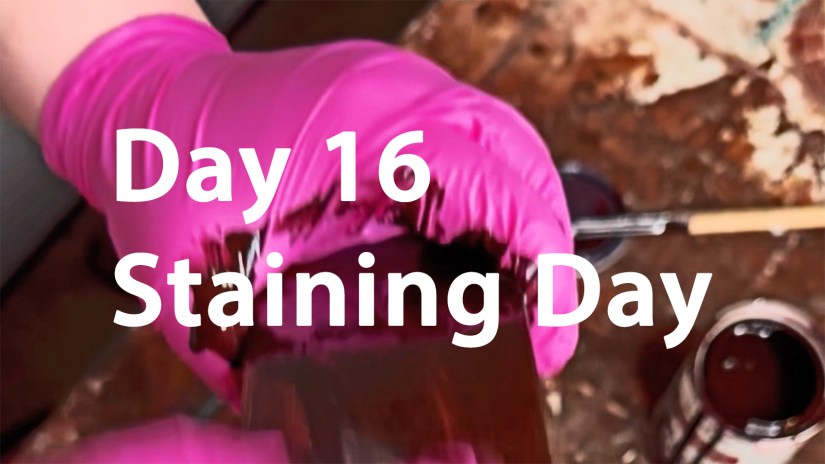
Close-up of Portia Po Chapmanโ€™s hands in pink gloves applying a dark mahogany stain to a hardwood drum frame component at Kingston Art Studio for Drum December Day 16.
Transitioning from the smooth finish of Day 15 to the deep, rich tones of Day 16: Applying the first layer of stain to the hardwood drum frame.

The Race to Drum in New Year – 2026

The rhythm of the season is building toward a crescendo. While many were tucked away with holiday films on Christmas Eve, I was in the workshop, continuing our journey toward a finished instrument. To drum in the New Year with a voice that is both resonant and beautiful, we must follow the proper order of operations: sand, stain, varnish, and finally, string.

Reflecting on the Foundation

In our Day 15 video, we tackled the critical task of erasing the overlap seam. Using a portable spindle sander, I smoothed the transition until the wood felt like a single, continuous loop. As you can see in todayโ€™s introduction, that seam has completely vanished, leaving us with a flawless canvas for our colour.

Engineering the Workspace: The Staining Station

Success in finishing starts with a stable environment. Whether it is a sunny summer afternoon outside or a brisk winter day in the shop, I rely on a portable, heavy-duty folding table that has weathered years of artistic projects.

Building Your Staining “Cradle”: To ensure the frame is evenly coated without sticking to the work surface, I create a temporary riser system.

  • The Materials: I used trimmings of red oak from my table saw bucket, though bamboo garden stakes work wonderfully in the summer.
  • The Technique: Break your wood trimmings to length so they span the width of your frame.
  • Pro Tip: Use green painter’s tape to secure your sticks to the table. This prevents them from shifting while you work and allows for effortless cleanup, as the stain won’t bond to the tape.

The Art of the Application: “Black Cherry” on White Oak

White oak is a legendary hardwood, prized for its pronounced grain and historical use in antiques. However, its density makes it a challenging student in the workshop. To properly stain a wood with such deep pores, you cannot simply wipe the color on; you must work it into the fibres.

The Staining Process:

Saturate: Use a lint-free cloth soaked in Varathane “Black Cherry” stain.

Rub Across the Grain: This force-feeds the pigment into the deep, open pores of the white oak.

Wipe Along the Grain: A final pass in the direction of the wood’s growth removes excess liquid and creates a uniform, professional finish.

A Christmas Eve Revelation

The timeline for a New Year’s drum is strict: to have the hide stretched and dried by midnight on December 31st, the frame must be strung by December 27th. This meant the staining had to be completed by the 24th to allow for proper curing.

Adding this workshop session to my Christmas Eve festivitiesโ€”slipping away between wrapping gifts to check on the woodโ€”added a special layer of joy to the holiday. When the stain hit the wood, the result was breathtaking. My shop assistant, the cameraperson, and I were all stunned by the revealed grain. It became clear in that moment why white oak was the choice for the heirlooms I have admired all my life.

White oak has been an adventureโ€”it is stubborn, heavy, and demandingโ€”but seeing this “Black Cherry” finish reveal its hidden patterns has made every hour of labor worth it.

The frame is ready. Join us for Day 17 as we move into the varnishing phase!

See You Tomorrow for Day 17

Read more about my art and contact information at Love Art By Po and the many drums I make.
To contact me directly, please use this email:

๐Ÿ“ง Portia@loveartbypo.ca

One response to “Drum December Day 16 – How to Stain a Drum Frame”

Let Me Know What You Think! Start or Join the Convesation

Behind the Art, Behind the scenes, Drum December, Drum Works, How Po Makes Hand Drums, Indigenous Art, Kingston Artist, Po's Drum Making Process, Portia Chapman, Real-Time Crafting, Studio Process

Drum December Day 15 – Sanding Smooth the Drum Frame

Close-up of Portia Po Chapmanโ€™s hands guiding a white oak drum frame on an oscillating drum sander for Day 15 of Drum December.
The final sanding stages begin in the woodshop for Day 15.

Levelling the Joint: Precision Sanding in the Winter Workshop

Welcome back to the workshop! Today is all about the “Great Sanding.” The dust is flying as we move into the first and most critical stage of finishing: leveling that joint.

In todayโ€™s video, Iโ€™m at the drum sander, pink shop apron on, getting to work on the white oak frame. Youโ€™ll see me focusing on the seam where the wood overlaps.

“We are sanding the sharp edges off of the seam. We are using a RIDGIDย Oscillating Edge/Belt Spindle Sander so that the seam is really nice and even. Some of my competitors leave this inside edge. But you wonโ€™t find that here at Love Art By Po.”

The “Po” Difference

For me, the inside of the drum is just as important as the outside. By using the drum sander to level those sharp edges, I ensure the frame feels like one continuous, seamless piece of wood. Itโ€™s a small detail, but itโ€™s what makes a Love Art By Po drum a professional piece of art.

The Holiday Schedule

We are moving fast to hit our December 27th stringing deadline! Here is what the next few days look like:

  • Day 16 (Tomorrow, Dec 24): Iโ€™ll be finishing the hand-sanding and moving straight into the custom staining process.
  • Christmas Day (Dec 25): The studio will be closed. Iโ€™ll be taking the day to celebrate with family while the first layers of our work cure.
  • Day 17 (Boxing Day, Dec 26): We hit the ground running with the first coats of varnish in the painting studio.

Come back tomorrow for Day 16 to see these frames finally get their colour!

See You Tomorrow for Day 16

Read more about my art and contact information at Love Art By Po and the many drums I make.
To contact me directly, please use this email:

๐Ÿ“ง Portia@loveartbypo.ca

2 responses to “Drum December Day 15 – Sanding Smooth the Drum Frame”

  1. Drum December Day 16 – How to Stain a Drum Frame – Love Art by Po Avatar

    […] our Day 15 video, we tackled the critical task of erasing the overlap seam. Using a portable spindle sander, I […]

Let Me Know What You Think! Start or Join the Convesation

Find Love Art by Po’s Portia “Po” Chapman Kingston Art studio on Google Maps at this link.

Behind the Art, Behind the scenes, Drum December, Drum Works, How Po Makes Hand Drums, Indigenous Art, Kingston Artist, Po's Drum Making Process, Portia Chapman

Drum December Day 14: Stepping Into the Winter Workshop

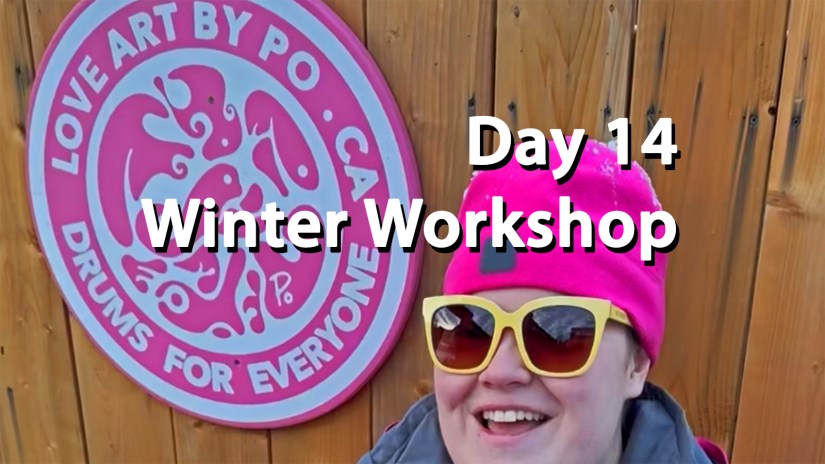
Portia Po Chapman in a pink beanie and sunglasses smiling in front of the Love Art By Po studio sign for Drum December Day 14 Winter Workshop reveal.
Stepping into the winter workshop for Day 14! The real-time race to New Year’s Eve begins.

From Summer Bends to New Yearโ€™s Song: The Real-Time Race to December 27

Welcome to Day 14! The seasons have shifted, and it is officially winter here at the Love Art By Po studio. As I toss this fresh Kingston snow into the air, I am inviting you to step out of the summer archives and follow along with the Drum December real-time videos from inside my workshop, where it is warm.

We have finally moved back into the winter wood shop to finish the frames that we have been working on throughout the first thirteen days of Drum December. Sitting here at my bench, surrounded by some of the cherry, maple white oak frames I crafted in the heat of the summer, the journey ahead feels both exciting and urgent. On New Year’s Eve, I plan to drum a drum made from one of these hardwood dry-bent drum frames.

It is December 22nd, and we are now in real-time. My goal is to transform this raw white oak frame into a finished work of artโ€”much like this sanded, green-stained, and varnished maple frame beside me (featured in the video below).

The clock is ticking toward my December 27th deadline. We must have the frame ready to string by then so the rawhide has the time it needs to dry, allowing us to drum in the New Year together.

Between Christmas celebrations and family gatherings over the next four days, I will be balancing holiday joy with shop discipline. To transform these raw summer hoops into a finished masterpiece, I need to follow these specific steps:

The 8-Step Sprint to Stringing

  1. Level the Joint: Using a drum sander, Iโ€™ll sand the joint edges. The goal is to make the overlapped ends appear as one continuous, seamless hoop.
  2. Progressive Sanding: Iโ€™ll sand the entire frame using 80, 120, and then 220 grit papers. It is vital to start coarse and transition progressively to the finest grit.
  3. Detail Work: Using a “mouse,” palm sander, or oscillating sander, I will delicately sand every inch until the wood is perfectly smooth and all scratch marks vanish.
  4. The Hand-Finished Touch: Iโ€™ll complete the final sanding by hand for total control.PRO-TIP: Do NOT use 400+ grit sandpaper. If the wood is too “polished,” the stain cannot penetrate effectively to reveal the beautiful, natural woodgrain.
  5. Custom Color: Iโ€™ll hand-mix a custom stain and apply it to the wood with a cloth to bring out its unique personality.
  6. The First Coat: The frame moves to the painting studio for its first layer of varnish.
  7. Refining the Finish: Once dry, Iโ€™ll lightly sand the varnished frame and wipe it down with a tack cloth to ensure it is dust-free.
  8. The Final Glow: Iโ€™ll apply the remaining coats. While I hope for two, sometimes it takes three or four to reach the perfect luster.

Why the Frame Matters

I treat my drum frames like a standalone piece of art because I choose not to fully cover the outside edge with the rawhide. I want the wood to highlight and accent the rawhide head, not just support it.

Come back tomorrow for Day 15 for the full drum sanding tutorial. It is truly amazing how rough, unfinished wood can be transformed to look like opaque stained glass.

See you tomorrow for Day 15!


Read more about my art and contact information at Love Art By Po and the many drums I make.

To contact me directly, please use this email:

๐Ÿ“ง Portia@loveartbypo.ca

One response to “Drum December Day 14: Stepping Into the Winter Workshop”

Let Me Know What You Think! Start or Join the Convesation

Find Love Art by Po’s Portia “Po” Chapman Kingston Art studio on Google Maps at this link.

Behind the Art, Behind the scenes, Drum December, Drum Works, How Po Makes Hand Drums, Kingston Artist, Po's Drum Making Process, Portia Chapman, Portia Po Chapman Frames and Stretchers, Studio Process, Uncategorized, woodworking

Drum December Day 12 – How to Make a Drum Frame Using 6 Clamps

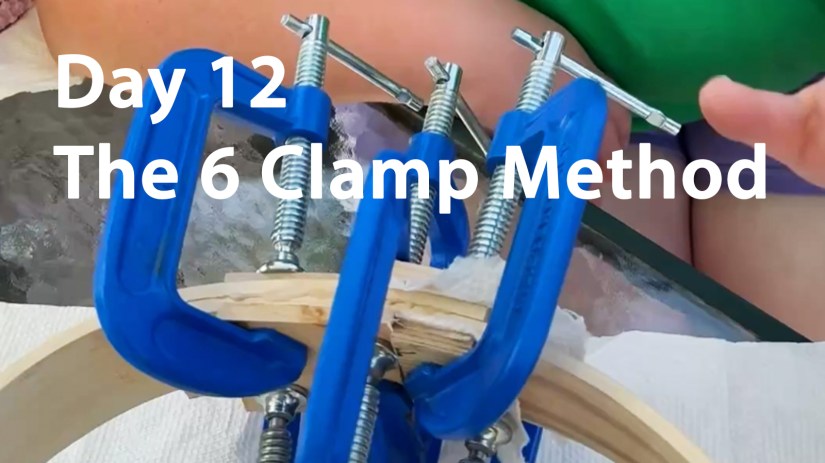
Close-up of several blue C-clamps tightly securing a glued joint on a wooden drum frame using the 6-clamp method, Day 12 tutorial by Portia Po Chapman.
Mastering the “6 Clamp Method” to ensure a secure, even bond on the dry-bent drum frame.

Drum December Day 12: Mastering the 6-Clamp Method

Welcome to Day 12 of Drum December! Today is the day we tackle dry-bending and clamping head-on. In this tutorial, youโ€™ll learn the vital “what-to-dos” (and the painful “what-not-to-dos”) of securing your frame.

Clamping hardwood is a bit like attending your grandmotherโ€™s third wedding and being asked to dance by a gentleman who took lessons from Chubby Checker. Just like a dancer from the ’60s, the wood keeps trying to “Twist.” By following my innovative 6-Clamp Method, youโ€™ll have no problem taking the lead in this clamping dance.


The Anatomy of the Dance: Twist and Circularity

When making drum frames, there are two primary style considerations you must face:

  1. The Twist: How much natural “sport” or torsion your finished frame will carry.
  2. The Shape: How perfectly circular or organic you want your finished drum to be.

Both of these decisions are finalized during the clamping stage. This is exactly why I developed the 6-Clamp Methodโ€”to give the maker total control over the woodโ€™s final expression.

Avoiding the Tangled Clamp: The Staggering Method

In Day 11, I explained how the shape changes depending on which end overlaps on the outside. Today, we focus on the direction of the clamps.

Because you are using six heavy-duty C-clamps in very close proximity, the handles can easily get stuck against each other. It can be a deeply frustrating process! Below is a video of my own experience trying to turn clamp handles that weren’t staggered. If you find it painful to watch, just imagine being the one trying to turn them under pressure!

To solve this, we stagger the clampsโ€”top and bottomโ€”in a disciplined sequence. This allows us to intricately pull the seam together while “reading” the bend and twist of the frame.

The 6-Clamp Sequence: A Step-by-Step Guide

I have created this incremental schematic to show you the exact order of operations. Note how each clamp is placed to manage the tension of the 3″ to 5″ glued seam:

  1. Clamp #1: Placed on the top, dead-center of the seam.
  2. Clamp #2: Placed directly beneath the first, but facing the opposite direction.
  3. Clamps #3 & #4: Placed on the side of the center clamps closest to the inner board end.
  4. Clamps #5 & #6: Placed on the remaining opposite side.

Shaping with Baffles: Controlling the Curve

In the schematic video above, I omitted the cutoff baffles (the hardwood blocks that protect your frame) for clarity. However, you must use them!

The size of the baffle on the inside of the frame actually alters the drum’s final shape.

  • The Standard: I typically use a 1″ x 3″ piece of oak.
  • The Adjustment: If you want to flatten a side or create an egg-shaped drum, you do this by widening the inner baffle. The wider the baffle, the flatter that section of the frame becomes.
  • The Rule of Thumb: I generally use a 1″ wide piece on the inside and a 2″ wide piece on the outside, adjusting the spacing as I feel the wood react.

The Goldilocks Grip: Just Enough Pressure

By alternating your clamps, you aren’t just preventing a handle jamโ€”you are managing the twist. When the first clamp goes on, you can adjust the shift and slide of the frame. The second clamp adds stability, and clamps three through six do the heavy lifting.

Tighten them as firmly as your hand can turnโ€”no need for tools. You are looking for the glue to “squeeze out” evenly along the seam. Be careful not to over-tighten! If you squeeze out too much glue, youโ€™ll create a “starved” joint. This results in a fragile frame that may snap when the powerful tension of the rawhide eventually pulls it into its final form.

Looking Ahead

If you think a tree has a long memory, just wait until you see the nature of rawhide. Keep following the Drum December series to see how we work with animal skins in the coming days.

Even if you never pick up a clamp yourself, I hope youโ€™ve learned how to straighten out “The Twist.” Just start in the middle of the floor and lead your partnerโ€”side-stepping and swaying until the song is done and you both become one with the true drumbeat of life.

See you tomorrow for Day 13!

Read more about my art at Love Art By Po and the many drums I make.

๐Ÿ“ง Portia@loveartbypo.ca

One response to “Drum December Day 12 – How to Make a Drum Frame Using 6 Clamps”

Let Me Know What You Think! Start or Join the Convesation

Find Love Art by Po’s Portia “Po” Chapman Kingston Art studio on Google Maps at this link.

Behind the scenes, Drum December, Drum Works, How Po Makes Hand Drums, Kingston Artist, Po's Drum Making Process, Portia Chapman, Portia Po Chapman Frames and Stretchers, Portia's Adventures, Studio Process, Uncategorized

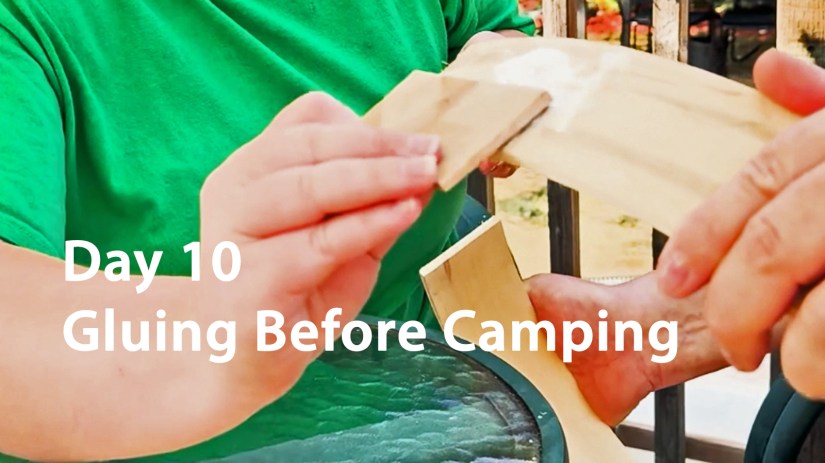
Drum December Day 10 | How to Glue Before Clamping Drum Frame

On day 10 of Drum December, Po spreads glue on the white oak before clamping the drum frame to dry. Her assistant holds the frame firmly still at the Love Art By Po Kingston Art Studio
Drum December Day 10 – Po Glues the White Drum Frame Before Clamping the Dry-Bend

Choosing the Right Glue for Handcrafted Drum Frames | Drum December Day 10

At the Love Art by Po studio in Kingston, I believe that building a professional-grade drum frame is as much about the type of glue as it is the technique used to apply it.

Different moisture levels in wood require different chemical bonds. Whether you are working with freshly steamed “green” wood or seasoned dry wood, choosing the wrong adhesive can compromise the sound of your instrument. In todayโ€™s update, Iโ€™ll explain how to pick the right glue at your local hardware store to ensure a lifetime of pure sound.


The Challenge: Gluing Damp vs. Dry Wood

The first hurdle every drum maker faces is moisture. If you are bending steamed red oak, the wood is naturally damp.

Early in my practice as an installation artist, I treated drum frames like standard carpentryโ€”LePage Pro Carpenterโ€™s Glue. However, standard wood glue and damp, steamed wood do not mix. I would return to my shop table the next morning to find the joint “slimy” and uncured on the inside.

The Polyurethane Solution

To glue damp wood effectively, you need a moisture-activated adhesive like Original Gorilla Glue. This polyurethane glue uses the moisture in the wood to “activate” the bond. It bonds damp frames like a dream, but it comes with a significant trade-off: The Foam.


The Science of Sound: Why “Foaming” Glue Causes Rattle

If you want a pure, resonance-free tone, you must understand how glue affects vibration. Polyurethane glue expands into a foam, creating tiny air pockets within the joint.

Are Drum Frames Meant to Rattle?

  • The Rattle: If you enjoy a “smooth rattle” or mechanical reverberation, foaming glue is your best friend.
  • The Pure Tone: If you want a clean strike, never use foaming glue. The drum frame produces sound just as much as the rawhide. If your glue joint contains air pockets, the vibration of the drum strike can cause a “seam rattle” deep within the wood.

How to avoid the rattle:

  1. Glue the frame only when the wood is fully dry.
  2. Use a non-foaming moisture-resistant glue like Gorilla Glue Clear. (Note: “Non-foaming” glues can be slippery, making clamping a damp frame more difficult.)

Three Steps to a Rattle-Free Steamed Frame

If you are new to drum making, remember that hitting a drum with “enthusiastic force” will eventually shake loose any weak or brittle bonds. To ensure your steamed frame remains silent and solid, follow these three steps:

  1. Cooling Time: Let the wood cool until it is no longer steaming, but is still slightly damp before applying glue.
  2. Even Spread: Use a non-foaming polyurethane glue spread evenly across the entire joint.
  3. Pressure: Use 6+ C-clamps, applied two at a time on opposite sides to ensure even compression.

Innovating with Dry Wood Bending

For my premium drums, I prefer to glue the wood when it is fully dry. This produces a beautiful, rattle-free instrument. However, dry hardwood doesn’t like to bendโ€”it behaves like a floor plank!

To solve this, I developed a proprietary dry-bending technique. The wood is pre-bent and shaped before the glue is ever applied. You can see the foundation of this technique in my previous posts: Day 5, Day 7, and Day 8.

My Go-To Choice: Titebond III

For dry, single-layer frames, I recommend Titebond III Ultimate.

  • Why? It offers a longer working time, becomes “tacky” quickly for better clamping, and is rated for both interior and exterior use.
  • The Secret: Let the wood and glue “perform their magic” for at least 24 hours before sanding or knocking the frame.

The “Drum Making Golden Rule”

Frame drums are built for lifeโ€”they go from drizzling rain at a community circle to the dry heat of a bonfire. Because they are exposed to moisture, heat, and travel, your glue must be waterproof.

The Golden Rule:

No matter the purpose of the drum, ALWAYS use a high-strength, waterproof glue that produces zero (or nearly zero) bubbles.


Coming Tomorrow: Join me for Drum December Day 11, where Iโ€™ll share a deep-dive tutorial on Professional Clamping. I’ll show you the “tricks of the trade” to ensure your frame is perfectly circular and structurally sound.


See you tomorrow!

More information about Love Art by Po Drums

๐Ÿ“ง Portia@loveartbypo.ca

2 responses to “Drum December Day 10 | How to Glue Before Clamping Drum Frame”

  1. Drum December Day 11 – How to Clamp a Drum Frame – Love Art by Po Avatar

    […] Welcome back to Drum December! Today, we are diving into one of the most transformative stages of the process: using my innovative dry-bending technique to compress and clamp the drum frame. This method is born from my preference for non-polyurethane glues, which we explored in our Day 10 tutorial. […]

Let Me Know What You Think! Start or Join the Convesation

๐Ÿ“ Visit the Studio:Find Love Art by Po on Google Maps


Behind the Art, Behind the scenes, Drum December, Drum Works, How Po Makes Hand Drums, Kingston Artist, Po's Drum Making Process, Portia Chapman, Uncategorized, woodworking

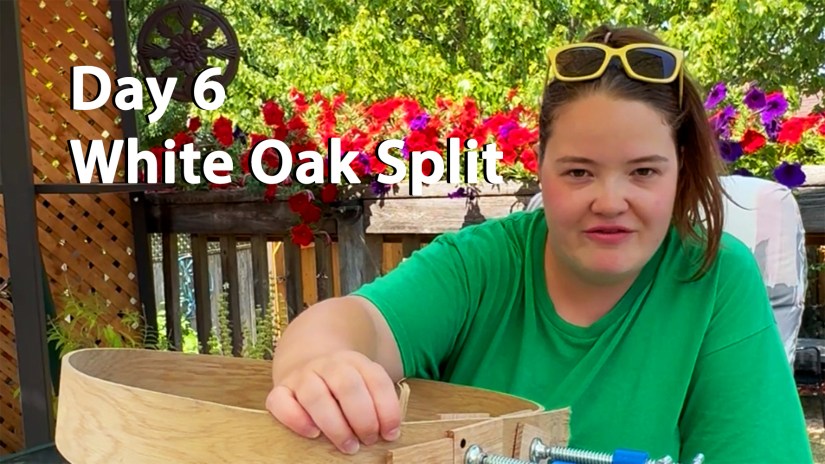
Drum December Day 6 โ€” A Small Split, But a Successful First Bend

A close-up of Portia โ€œPoโ€ Chapman examining a freshly bent white oak drum frame outdoors, pointing to a small split formed during the tight first bend, with bright flowers and summer greenery behind her.
Day 6: A small white oak split appears after the first bend โ€” an expected part of pushing hardwood to its limits.

Today marks the moment of truth for the first bend of the white oak drum frame. After spending the night under clamps, the wood finally revealed how it responded to yesterdayโ€™s bending session โ€” and as always, the material had a story to tell.

If youโ€™re new here and want to learn more about who I am and the work I do, you can visit my About & Contact page.

When I brought the frame into the studio this morning, the very first thing I did was check the inside curve. And there it was:
a small split along the tightest part of the bend.

For many people, that might feel alarming. But for me, this isnโ€™t unusual at all โ€” especially with a dense hardwood like white oak. Pushing any wood to the minimum bend radius it can tolerate means youโ€™re working right at the threshold where the fibres must stretch, compress, and adapt. Sometimes, a small split appears as part of that process.


What a Split Really Means in Drum Making

A split doesnโ€™t automatically mean failure.

Itโ€™s a diagnostic clue.

It tells me:

  • how far the wood was willing to travel,
  • how much internal tension remains in the frame,
  • and whether the second bend โ€” the glued dry-bend โ€” will seat properly.

In this case, the split is shallow and controlled. That tells me the clamps did exactly what they were supposed to do:
prevent the fibres from opening too far while still allowing the bend to hold.

This is why clamp placement is a true art form in drum making. You donโ€™t just tighten clamps to tighten clamps. You tighten them in anticipation of how the wood is likely to react.

If youโ€™d like to explore my handmade drums, see past builds, or learn about upcoming workshops, visit my Drum Page here.

White oak is expressive โ€” and today, it expressed itself in a way that still sets us up for a strong final frame. As well, the location of the minor breakage will be cut off before gluing the final bend. I don’t sweat these things now, but when I first started bending drum frames, I was totally panicked when the first breakage happened. It was a learning experience – that is for sure!


Reading Tension, Relaxation, and โ€œFeelโ€

Every wood species responds differently during the first bend.
White oak? Well…It hums with a very particular kind of density.

When I picked up the bent frame today, I could feel subtle tension still living inside the curve. Thatโ€™s not unexpected โ€” in fact, with white oak, itโ€™s quite normal. White oak, unlike red oak, doesn’t particularly like being bent.

The key for Day 6 is simply evaluating:

  • Did the bend hold its overall shape?
  • Is the curve even?
  • Is the split stable and non-progressive?
  • Does the wood want to spring open dramatically or gently?

All signs today point to a solid first bend. It was a success. PHEW!!!


Come back tomorrow, Day 7, to watch and read about the what happened when I released the clamps.

The next step โ€” which comes tomorrow โ€” is the careful release of the clamps. Thatโ€™s where I discover how much reflex the wood has stored and whether it settles into the intended diameter or pushes back aggressively.

For now, the job is simply to observe, interpret, and prepare.

White oak may be challenging, but todayโ€™s results show that this drum frame is very much on track.

See you tomorrow for Day 7 of Drum December!

โ€” Po

๐Ÿ“ง Portia@loveartbypo.ca

One response to “Drum December Day 6 โ€” A Small Split, But a Successful First Bend”

Let Me Know What You Think! Start or Join the Convesation

To go to Google Maps / Business Platform