

Drum December Day 11: Mastering the Compression and Clamping of Your Drum Frame
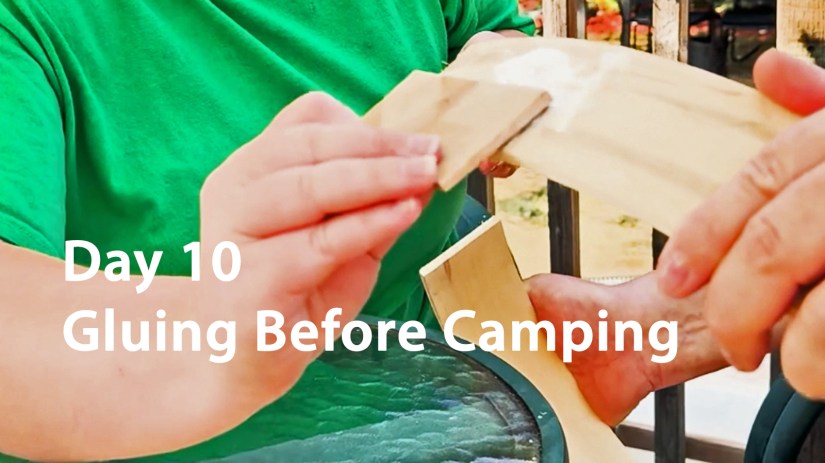
Welcome back to Drum December! Today, we are diving into one of the most transformative stages of the process: using my innovative dry-bending technique to compress and clamp the drum frame. This method is born from my preference for non-polyurethane glues, which we explored in our Day 10 tutorial.
By utilizing sun-steamed wood that has been “trained” during the pre-bending phase, we gain incredible creative flexibility when it comes time for the final clamp. If you missed the early stages of this journey, you can catch up on Day 5 and Drum December Begins to see how we prepare the wood to be shaped.
The “impossible” C-Shape
After trimming the frame on Day 9, you are left with a piece of wood that has a massive 16-inch gap between the ends. It looks like a giant letter “C,” and honestly, it looks impossible to close. But this is where the magic happens.
Choosing Your Bending Method
There are two primary ways to bring those ends together:
- Mechanical Bending: Using a dedicated jig or form to force the wood into a circle.
- Freehand Bending: Bending the wood by hand and clamping the ends using only hardwood cutoffs as buffers.
I personally prefer the freehand dry-bending method. My clients love it because it results in a more organic, natural shape and a superior sound.
The Critical Decision: Inside or Outside?
Before you apply a single clamp, you must decide which end of the wood will overlap on the outside. This might seem minor, but it is vital:
- The choice of which end goes on the outside literally alters the final shape and resonance of the drum.
- The inner end experiences a much tighter curve than the outer end.
- Even with identical ends, swapping the overlap order can create a completely different hoop shape.
The Miracle of Elasticity
The most remarkable part of this technique is the elastic response of the hardwood. Because of the sun-steaming and pre-bending, the wood becomes incredibly flexible. In my demonstrations, you can see a cherry wood frame compressed over 16 inches with ease.
I view myself as a facilitator for the tree. When you encourage the wood to bend naturally, it “sings”. If you force it, the wood rebels, cracks, and the sound becomes muted. A drum maker’s job is to unlock that voice, not silence it.
Letting the Tree Sing: The Philosophy of the Bend
It is truly a remarkable thing to witness, and I often wonder why this method isn’t the gold standard. When we dry-bend, the results are simply superior to clamping freshly steamed wood—especially when crafting those challenging, small-radius frames.
Using this technique feels less like “construction” and more like an act of listening. In the forest, trees are designed to dance; their limbs are built to bend when the wind caresses them. In my workshop, I see myself as a facilitator of that natural expression.
When you allow the wood to bend on its own terms, it sings. When you force it, the wood rebels; it cracks, it groans, and its spirit becomes muted. As a drum maker, my calling is to encourage the drum to find its voice, not to silence it through force.
The “Vet Visit”: Understanding Wood’s Resistance
Once the wood has agreed to take its shape and the decisions of Day 10 are behind us, we move into the physical intensity of the clamping stage.
Even a willing tree has its limits. Wood has a memory and a will of its own, and it behaves much like a dog on the way to the veterinarian. The pup is perfectly calm in the car until you turn that final corner—the moment she realizes what’s happening, she “flips out.”
The drum frame does the same. It will rest quietly in your hands until the moment you bring the glue bottle near. It is the strangest, most miraculous sensation: you can feel the frame shift from a gentle yield to a spirited push-back against the compression. To navigate this, you need a sturdy vice and quick clamps within arm’s reach—or a very strong, steady assistant to help you hold the tension.
The Trick of the Trade: Precision and Protection
Because the wood is alive and moving, using C-clamps is a high-stakes, time-sensitive dance. The second the clamp touches the wood, everything wants to slide and shift. I used to panic during this stage, but I eventually learned the secret: The One-Inch Rule.
- Keep it Tight: Ensure your C-clamp is open less than an inch. This allows you to turn the handle and lock it down before the wood has a chance to escape.
- The Safety Net: If you can’t turn the handle fast enough, snap a couple of quick clamps on either side of the joint. They will hold the frame long enough for you to seat your heavy-duty C-clamps properly.
- Honor the Surface: Never let metal touch the frame directly. A C-clamp is a powerful tool that can easily dent the wood. Always use hardwood cutoffs as a barrier between the clamp and the frame. Even with light-duty clamps, these barriers are essential for protecting the integrity of the wood.
In the video below, you can see this “C-clamp dance” in action as we bring the ends together for the final time.
Pro-Tips for Successful Clamping – A Summary for You to Remember
Keep these clamping tips in mind:
- Speed is Key: If using C-clamps, keep them open less than an inch so you can tighten the handle quickly before the wood shifts.
- Use Backups: If you can’t move fast enough, use quick clamps on either side of the joint to hold the position while you set your C-clamps.
- Always Use Barriers: Never put a C-clamp directly on the frame; it will dent the wood. Always use hardwood cutoffs as a barrier between the clamp and the drum.
- Clamping Numbers: Use at least six clamps to secure the joint while it dries.
Barrier Dimensions: Use wood cutoffs approximately 1″ x 3″ for the inside of the frame, and 2″ x 3″ for the outside.
What’s Next? Tomorrow, on Day 12, I’ll show you exactly how to arrange those six clamps so they don’t get tangled or interfere with the curve of the frame. It’s a bit like a puzzle, but I’ll walk you through it!
Love Art by Po creates 3 grades of frame drums: Drum Circle, Instrumental and Gallery. Also, Po makes 10″ drum, DIY drum kits. Go to the Drum page to read more about the grades and how to purchase them. Here is the link.
See you tomorrow!
📧 Portia@loveartbypo.ca2 responses to “Drum December Day 11 – How to Clamp a Drum Frame”
-

[…] Day 11: How to Clamp […]
-
[…] Day 11, I explained how the shape changes depending on which end overlaps on the outside. Today, we focus […]
Find Love Art by Po’s Portia “Po” Chapman Kingston Art studio on Google Maps at this link.
 Love Art by Po
Let Me Know What You Think! Start or Join the Convesation