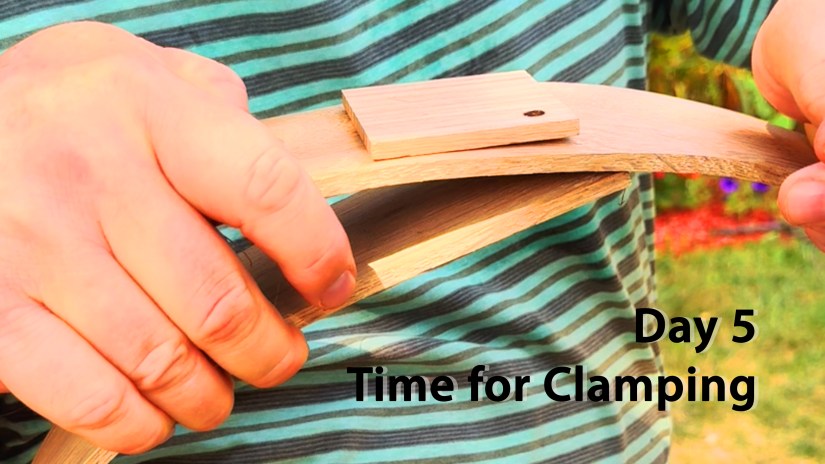
Po prepares the sun-steamed red oak board for its first clamp — the moment the drum’s circular form begins.
Today marks a major turning point in Po’s sun-steamed red oak experiment — the moment when softened hardwood, warm from the solar tubes, is guided into its first held shape. After days of heating, coaxing, and patiently encouraging the wood fibres to relax, it’s finally time for the clamp.
Freehand bending is never a one-person job. With red oak especially — two sets of hands are essential. One pair holds the ends together, and the other manages the clamps with steady confidence.
As the camera rolls, Po’s assistant lifts one end of the oak over the other. You can see immediately that the top end doesn’t lie flat; instead, it sticks out stubbornly, like a child refusing bedtime. This is normal. In every bend, no matter the length, one end refuses to behave. The wood always tries to return to straightness — its original memory.
To protect the tender, freshly steamed wood, Po uses two small oak offcuts as buffers. The cut-offs keep the clamp from denting the softened wood, which is especially vulnerable before it dries.
The First Clamp: Where Courage Meets Making
Po tightens the lower piece first, then holds the top piece and slowly turns the clamp. With each rotation, the ends of the red oak pull closer together. This is the first of two clamping stages in Po’s innovative dry-bending technique — a method she has refined through experimentation, intuition, and respect for the material.
This first loop must dry with the clamps on for about two days. Only then will the wood be ready to release, be cut to size, glued, and clamped again into its final drum frame shape.
What the video doesn’t show is just how lively the wood can be. Even at this stage, red oak is strong and springy. If it suddenly opens, the clamp can fly across the room — a heavy steel reminder that wood is a living material. Some drum makers use ratcheting straps to control this, but Po avoids this method. The hooks and pressure points don’t sit flush, and can scar the damp wood just before it snaps back.
Instead, Po trusts the method shown here — a method that gives her control, precision, and the markings she demands from her handcrafted drum frames.
Freehand bending sun-steamed wood may look simple, but it takes courage, strength, intuition, and sometimes… a little prayer.
And today, with hands steady and clamps in place, Po brings her drum loop one step closer to becoming the finished frame that will hold the heartbeat of future songs.
Check back for Day 6 to see how the bend holds — and what surprises the wood reveals next.
[…] comes time for the final clamp. If you missed the early stages of this journey, you can catch up on Day 5 and Drum December Begins to see how we prepare the wood to be […]
Po and her assistant share a moment of nervous laughter.
Today, Po takes the next brave step in her sun-steaming white oak experiment — the moment when softened hardwood meets human hands for its very first bend. And this time, the studio was full of laughter, nerves, and a little bit of chaos.
Preparing for the First Bend
After three days of solar steaming and fibre relaxation, the white oak was finally ready to move toward its circular drum shape. But white oak is known for being stubborn — unlike red oak or cherry, which tend to cooperate more easily. This was Po’s very first time attempting to bend white oak, and the air carried that charged mix of excitement and hesitation.
Because the frame pieces were long, Po called in an assistant during this stage. Today, she chose DAD.
Before the camera was rolling, Po looked at her assistant with a theatrical seriousness and joked:
“If it breaks, you can be the one to blame! I don’t want to be the one who snaps it.”
That set the tone. The wood was ready. We… were getting there.
The Moment Before the Bend
As her assistant stood there, holding one end of the hot, hopefully flexible, board trying to work up the courage for the first bend, Po stepped beside her trusty assistant to offer support — and then they immediately broke into laughter. She tucked herself halfway behind his arm, peeking out like someone about to watch a suspenseful scene in a movie.
The cameraperson had already begun losing patience with how long it was taking and insisted that they stop laughing and get serious. She wanted to get the shot. Then she started laughing.
This is the real life of drum frame bending at Po’s Kingston Art Studio — part process, part comedy, all family, ALL ART. Drum making is a beautiful, love-filled-art, and this short video illustrates the joy that cheers out with exuberance of Love Art By Po.
Nervous Laughter, Real Art
In today’s short video, you can witness the exact moment when nervous laughter gives way to determination. Po, her assistant and cameraperson take their positions, breathe through the tension, and finally begin the first coaxing bend of the white oak.
It’s only a small curve — a gentle start — but it marks the beginning of the transformation, from plank to drum. And as simple as it looks, this step matters: the first bend dictates how the wood will behave when the full circular frame is shaped and clamped.
A Family Moment in the Making of a Drum
What the video doesn’t capture — but what filled the studio — is the feeling of teamwork. Making drums in this space has always been infused with love, humour, and family togetherness. Today was no exception.
Drum-making is not simply about shaping wood at Love Art By Po; it’s about beautiful, shaping moments — that make everyone stronger.
Making drums has taught Po an incredible life lesson – a circle of wood is like a circle of loved-ones, when you push on them – they get stronger as they find their harmonious tune.
Join us again for Day 5, where Po continues shaping the wood — and the shared moments — that make every drum a circle of strength and love.
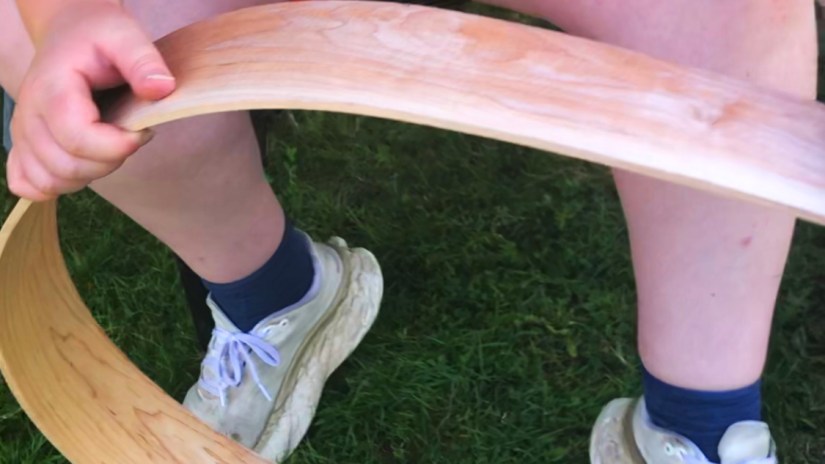
The Bendy Test — Po checks the flexibility of her sun-steamed hardwood before shaping it into a drum frame.
Today, Po reveals the next step in her innovative sun-steaming process — the moment when three days of sunlight, water, and patient preparation finally transform kiln-dried hardwood into a material that is ready to bend.
Testing the Wood After Three Days of Sun-Steaming
Today marks the moment when Po checks the results of the full three-day sun-steaming cycle. In yesterday’s post, we watched her begin this method by sliding the hardwood into the long ridged tube and filling it with water to let the sun do the work. By this morning, the fibres within the wood had warmed, expanded, and begun to relax. Now it was time to see whether the wood had softened enough to become flexible — or whether it needed more time in the sun.
After pouring out the steaming water, Po slid the hardwood out of the tube and laid it gently on the grass. The board emerges from the tube hot, ridged, and stiff — the opposite of what you might expect from a piece of wood that will soon become a circular drum frame. But this is where Po’s ingenuity comes in.
Still too hot to handle with bare hands, Po begins a technique she discovered through experimentation: walking on the wood. Wearing proper shoes, she carefully steps along the length of the board, back and forth, allowing her weight to massage the fibres into motion. The grass protects the surface from dents and provides the perfect soft foundation for the wood to ease into its new flexibility.
For about five minutes, she continues this rhythmic movement — a sculptor’s touch expressed through her feet rather than her hands. And then comes the test.
With one foot still grounding the board, Po gently lifts the opposite end.
In today’s video, you can see the moment the wood answers.
It bends — cleanly, smoothly, willingly.
This once rigid hardwood is now supple enough to be shaped into the elegant circular frame of a drum. What seemed impossible only days before becomes possible through Po’s blend of patience, innovation, and the natural power of the sun.
Tomorrow, Po will continue the transformation as she prepares the wood for its first bends toward the circle it is destined to become.
Drum December unfolds one authentic, beautiful step at a time.
[…] how beautiful the Drum December drum turned out. This where we started with Drum December. You can learn exactly how we crafted this instrument by visiting the previous 20 days of the […]
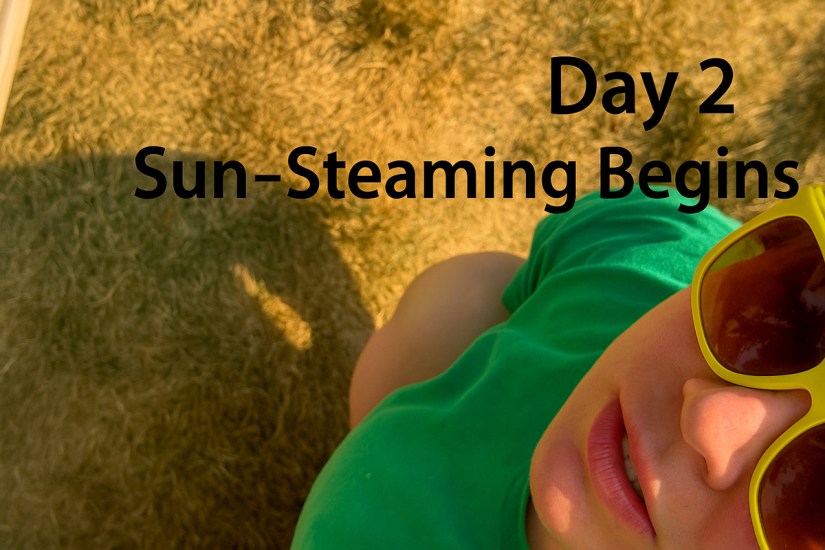
Day 2: Po begins her sun-steaming process for crafting hardwood drum frames.
Welcome to Day 2 of Drum December!
Today, Po begins the very first step in her innovative sun-steaming method — a sustainable process she personally developed to prepare kiln-dried hardwood for her premium drum frames and exposed stretchers.
Sun-steaming is a technique that Po pioneered to reduce the environmental impact of traditional wood steaming. Instead of soaking the kiln-dried wood for two days and then heating it with electricity, Po slides the carefully milled hardwood into a long black tube with ridges along its interior.
The ridges guide the wood as it slides in, producing a distinctive sound — the beginning of the transformation.
Once the hardwood is inside the tube, Po fills it with water and lets the sun do all the work. For three full days, the water naturally heats within the sealed tube, allowing the wood fibres to relax and prepare for bending.
An Energy-Conscious Method for Steaming the Wood:
Removes the two-day soaking stage
Uses no electricity
Reduces water consumption
Produces a more responsive bend
Creates the smooth, elite-quality curves Po’s drum frames are known for
This is where Po’s craftsmanship begins — with innovation, patience, and the sun itself.
Tomorrow, we’ll continue documenting this process as Drum December unfolds, one beautifully authentic step at a time.
Tomorrow, Po continues the transformation as she assesses the wood to see whether it has relaxed enough to become bendy and ready for shaping.
Shaping the curve of a drum frame — one of the first steps in Po’s rhythm-making process.
Today marks the beginning of Drum December, a month-long glimpse into the rhythm and process inside Po’s Studio. Instead of presenting finished pieces, this series brings you into the quiet, hypnotic motions that form the foundation of Po’s drum works.
The first video is just five seconds long — a looping moment that feels like it could play forever. Simple. Repetitive. Almost meditative. It captures a small piece of the energy that moves through Po’s creative process: the balance of sound, gesture, material, and breath.
Po has always worked from rhythm. Whether she’s painting, shaping rawhide, or exploring new concepts for future installations, there’s a pulse beneath everything she creates. Drum December is a way to share that pulse with you — not through explanation, but through small, visual experiences.
Throughout the month, you’ll see short clips from the studio: textures, movements, tools, surfaces, patterns, and the making behind upcoming work. Some loops will be raw; some will be visually polished. All of them come from Po’s hands and her way of seeing.
This series also sets the stage for the work she is developing for her upcoming installation, where drums and light will play an important role. Think of Drum December as the first heartbeat of that larger project.
Thank you for stepping inside her studio. More rhythm, more movement, and more behind-the-scenes moments will arrive soon.
[…] for the final clamp. If you missed the early stages of this journey, you can catch up on Day 5 and Drum December Begins to see how we prepare the wood to be […]
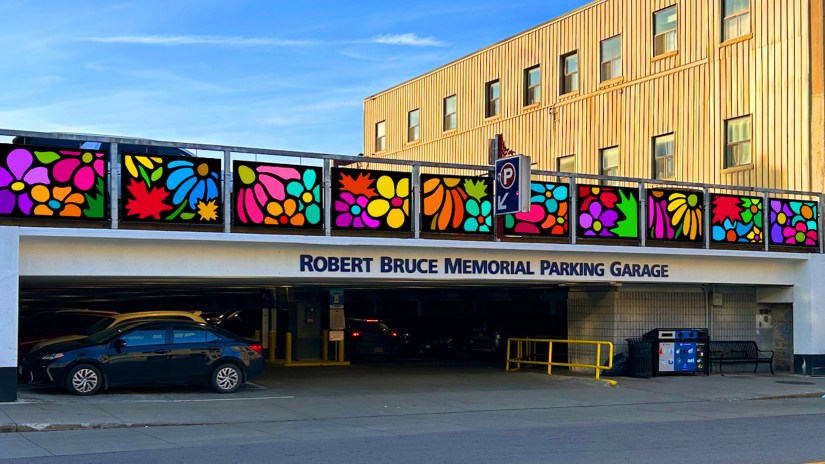
Shortlisted mural proposal by Kingston artist Portia “Po” Chapman for the Robert Bruce Memorial Parking Garage.
What Is a Mural? A Simple Definition
A mural is a large-scale artwork painted or applied directly onto a wall or architectural surface — indoors or outdoors. Murals often transform plain walls into powerful visual stories and can serve cultural, community, decorative, or branding purposes.
Where Are Murals Typically Found?
Murals are among the oldest forms of human expression. Prehistoric communities painted animals and symbols inside the caves of Lascaux and Altamira, creating one of the earliest records of human imagination and daily life.
Over time, murals appeared in:
Egyptian tombs
Roman villas
Byzantine churches
Renaissance cathedrals
royal courts
civic buildings
These early murals documented history, mythology, religion, social order, local life, and cultural values.
Unlike portable canvases, murals were integrated directly into the spaces where people lived and gathered — making art part of everyday life rather than a luxury object.
Murals as Social Voice and Public Expression
In the 20th century, murals became powerful tools for social storytelling and cultural empowerment.
The Mexican Mural Movement
Artists like Diego Rivera, José Clemente Orozco, and David Alfaro Siqueiros used murals to:
depict working-class lives
celebrate Indigenous heritage
critique colonialism and oppression
advocate social change
Murals became visual public conversation.
Community & Identity
In many places — including Ireland, South America, and North America — murals have been used to:
assert identity
preserve memory
inspire civic pride
spark dialogue
Murals allow communities to see themselves reflected in public space.
Modern Murals — Transforming Urban Environments
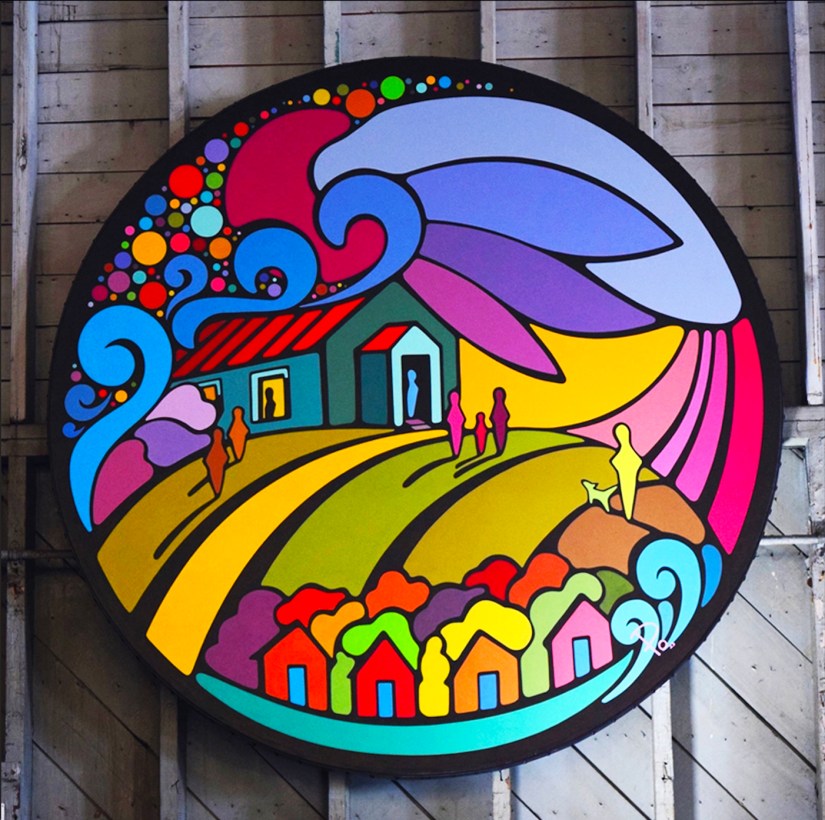
‘Building a Bright Future’ — a circular mural by Kingston artist Portia ‘Po’ Chapman created for Base31 in Picton, celebrating the site’s historic past and its new cultural identity.
Today, murals are commissioned for:
homes
offices
cafés
cultural centers
schools
playgrounds
public buildings
city walls
They add character, colour, and emotional connection to environments that might otherwise be plain or anonymous.
A mural can: ✔ make a neighbourhood feel cared for ✔ help a business stand out ✔ brighten a public walkway ✔ create community engagement ✔ become a local landmark
Murals invite people to pause, look, and feel.
Murals as Transformative Elements in Modern Spaces
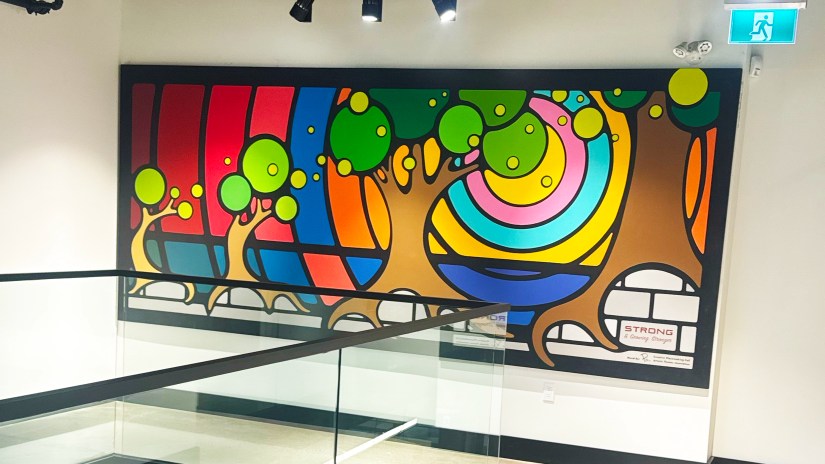
One powerful example of this is Po’s large-scale custom mural created for Strong Enterprises in Belleville, Ontario. Designed specifically for a contemporary open-concept headquarters, the mural functions not just as artwork, but as an architectural feature woven into the identity of the space. With its Bauhaus-inspired forms, generational story, and colours that echo the landscape seen through the building’s floor-to-ceiling windows, the mural becomes both a visual anchor and a narrative centrepiece — a living expression of the company’s values, past, and future.
“Strong and Growing Stronger” — a custom mural by Kingston artist Po Chapman for Strong Enterprises headquarters, celebrating four generations of family legacy and growth.
Mural Techniques — From Classical Fresco to Contemporary Methods
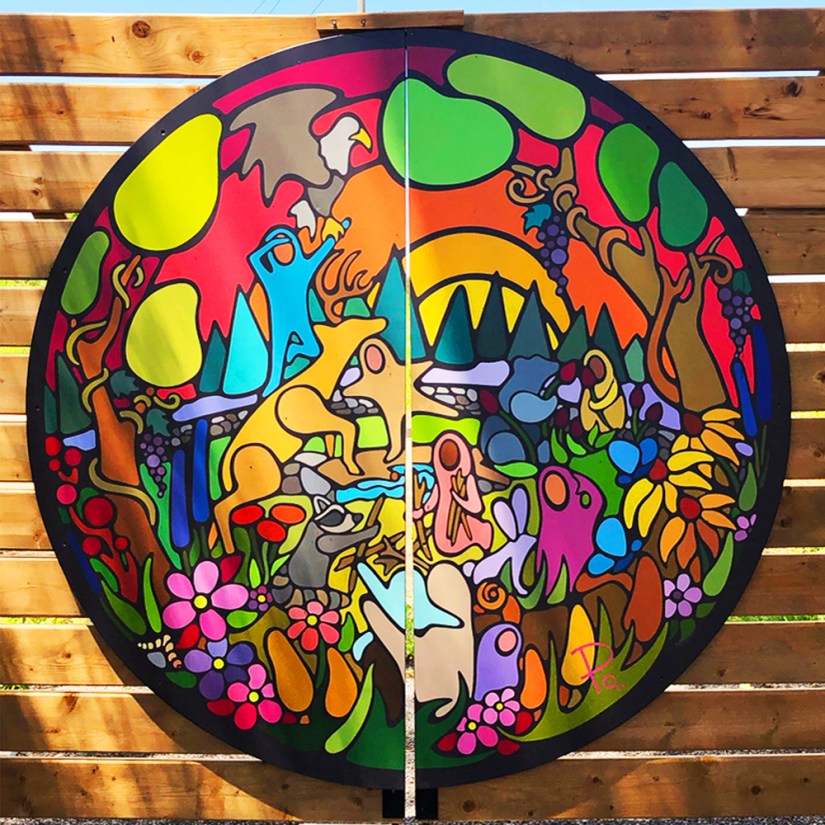
Po painting final details on her ‘Exploring the Senses’ mural at Base31’s Sensory Garden.
Modern mural artists use many techniques, including:
Fresco — pigment applied to wet plaster
Acrylic painting — durable and colour-strong
Oil on mounted canvas — later installed on walls
Spray paint & aerosol art
Projection-based layout
Digital-to-wall transfer
Mixed media & textural methods
Today, murals are both an art form and a technical craft — requiring knowledge of materials, architecture, weather resistance, and scale.
For examples of Po’s hand-painted techniques, you can explore her custom mural services.
Why Murals Matter
Murals bring art to everyone — not just those who visit galleries or museums.
They are:
accessible
democratic
collaborative
culturally meaningful
Murals change how people feel about their city, their workplace, their community — and themselves.
They are landmarks, memory-anchors, and emotional colour in physical space.
Murals in Kingston & the Surrounding Region
Po’s murals in Kingston connect contemporary colour-blocking and modern visual storytelling to the fabric of the city. Each mural is designed in conversation with:
the space
the community
the history
the client’s vision
Whether for a home interior, a business storefront, or a community space, a mural by Po brings:
✔ warmth ✔ identity ✔ energy ✔ meaning ✔ visual harmony
Example of Po’s colourful mural designs in a children’s playroom.
While Po is based in Kingston, many of her mural and installation projects extend throughout the surrounding region — including Prince Edward County and other Eastern Ontario communities. One of the most beloved examples is “Exploring the Senses,” a large interactive mural created for Base31’s Sensory Garden in Picton.
Po’s ‘Exploring the Senses’ mural installed at Base31’s Sensory Garden in Picton, Ontario.
Commissioning a Mural — The Process
Working with a professional mural artist typically involves:
Initial conversation & intention
Site visit & measurements
Concept sketches
Colour & mood selection
Timeline & technical planning
Execution of the mural
Protective finishing
If you’re considering a mural for your home, business, or community space, visit Po’s Mural Commissions Page for details.
How to Choose the Right Wall for a Mural
Consider:
Lighting
Visibility
Surface texture
Environmental exposure
Audience & purpose
Long-term durability
Indoor vs outdoor application
Custom Murals by Love Art by Po
Great spaces don’t happen by accident — they are shaped with intention. Whether you’re creating a place for families, communities, students, or a growing business, a mural becomes a statement about the environment you’re building. It communicates care, identity, and the desire to shape an experience that people genuinely feel.
And when you’ve poured vision, effort, and heart into what you’re creating, you deserve a space that reflects that same level of purpose and pride.
Po offers:
interior murals for homes
business & office murals
restaurant & café murals
children’s room murals
faith-space and reflective murals
public / exterior murals for community areas
Po works out of Kingston and serves clients across the wider region, from Toronto to Ottawa.
Bring Your Story to Life Through Mural Art
Art has a way of meeting people exactly where they are. Whether you’re building a home that feels magical, shaping a space where children learn and explore, revitalizing a community environment, or leading a business with a story worth telling — a custom mural changes how people experience a place.
Po’s murals are created for families, founders, educators, dreamers, doers, community builders, and anyone who wants a space to feel alive with meaning and colour. Every project — big or small, playful or powerful — begins with a conversation about your story.
If you’re ready for a mural that reflects who you are, what you value, and what you’re building for the future, Po would love to create something unforgettable for you.
For thousands of years, long before written histories, the heartbeat of the frame drum echoed through ceremonies, celebrations, healing practices, and spiritual rituals around the world. What many people don’t know is that the frame drum—one of the oldest known instruments—has an especially profound and empowering connection to women.
Across continents, cultures, and centuries, women were the primary keepers of rhythm, voice, and ceremony. The frame drum was not only an instrument; it was a symbol of feminine power, intuition, and the ability to bridge the physical and spiritual worlds.
As a contemporary woman frame drum maker and artist in Kingston, Ontario, I’m deeply inspired by this lineage. This article explores the rich, global history of the frame drum and its long-standing relationship with women’s empowerment.
Ancient Mesopotamia: Drumming as Divine Feminine Power
One of the earliest depictions of women drumming comes from ancient Mesopotamia, where priestesses of the goddess Inanna/Ishtar were shown holding frame drums in temple rituals. These women were spiritual leaders, healers, and cultural guides.
The drum, here, symbolized:
Women’s connection to sacred cycles
Their authority in ceremonial life
The rhythmic energy of creation itself
The frame drum wasn’t just an instrument—it was a tool of spiritual and social leadership.
The Middle East & Mediterranean: Priestesses, Midwives, and Healers
In cultures across Turkey, Egypt, Greece, and Rome, women were the primary drummers during rites of fertility, healing, birth, and death.
In ancient Egypt, women used frame drums in temple rituals dedicated to Hathor and Sekhmet—goddesses connected to feminine strength, intuition, and protection.
In Greece, the tambourine-like tympanon was played almost exclusively by women affiliated with goddess cults, such as those of Cybele and Dionysus.
In the Levant, women drummed during birth rituals, blessing the arrival of new life with rhythm.
Here, drumming represented the cyclical rhythm of womanhood—birth, transformation, creativity, mourning, and celebration.
Indigenous North American Traditions: Drums as Carriers of Story, Spirit, and Identity
Across many Indigenous cultures in North America, women traditionally played drums for:
Ceremony
Storytelling
Healing
Community leadership
The drum is often seen as the heartbeat of Mother Earth, carrying prayers and intention. While each Nation has its own practices, women have long held vital roles as singers, drummers, and creators of hand drums—especially in matrilineal societies.
Today, Indigenous women continue to reclaim and revitalize drum teachings, reinforcing cultural strength and identity. This reclamation is a powerful act of resilience and empowerment.
Northern & Eastern Europe: Women as Ritual Drummers and Seers
Archaeological and oral histories from Ireland, Scandinavia, the Baltics, and Siberia show that women used frame drums in shamanic and divination practices. The drum was believed to open pathways to the unseen world.
Women drummers were often:
Healers
Midwives
Ritual leaders
Carriers of ancestral knowledge
In Sámi culture, both men and women used ceremonial drums, but women were often recognized as strong intuitive leaders—those who could “hear” what rhythm was saying.
Central Asia & the Middle East: The Daf and Women’s Healing Circles
For centuries, the daf, a large frame drum, has been central to women’s gatherings in Iran, Kurdistan, and surrounding regions.
Women used the drum to:
Celebrate weddings
Mark rites of passage
Perform healing dances
Build community solidarity
The daf carries a deeply spiritual vibration, and in Sufi tradition, women daf players continue to lead devotional music that uplifts and transforms.
When Women’s Drumming Was Suppressed—And When It Returned
As patriarchal systems grew across many cultures, women’s roles as drummers, spiritual leaders, and healers were gradually diminished or erased. Some places even banned women from drumming entirely.
But the beat never disappeared. Women held onto drumming quietly in:
Kitchen gatherings
Birth rituals
Folk celebrations
Personal spiritual practice
By the late 20th and early 21st centuries, a global revival began. Women around the world started reclaiming the frame drum—remembering an ancient calling.
The Modern Revival: Drumming as Healing, Empowerment, and Reconnection
Today, the frame drum has re-emerged as a powerful symbol of women’s empowerment. Women are:
Making their own drums
Leading drum circles
Reconnecting with ancestral rhythms
Using drumming for trauma healing
Teaching drumming as a form of voice reclamation
Celebrating identity and community through rhythm
Contemporary female artists and makers—like myself—are part of a global movement restoring the drum’s original connection to feminine strength.
The frame drum reminds us: We are rhythmic beings. We are carriers of story. We are creators. We are connected.
Why I Make Drums as a Woman Artist
As a drum maker, painter, and musician in Kingston, ON, I create frame drums not only as instruments, but as carriers of meaning – a living storytelling art.
Every drum is nurtured – Every drum made with LOVE.
I look forward to making a custom drum for you!
Contact me to book your complimentary e-consultation and we can collaborate a drum design that reflects your voice, your journey, and tells your story.
Hand-painted kitchen murals may feel like a recent design trend, but their history stretches back thousands of years. As long as humans have gathered around food and fire, we have decorated the spaces where we cook, eat, and connect. These murals reflect cultural values, artistic innovation, and the evolution of the kitchen itself. (See the original sample kitchen without mural.)
Below is a journey through time exploring how kitchen murals began, how they changed, and why they continue to flourish today.
Ancient Beginnings: Art Around the Hearth – FromCave Paintings to Early Communal Kitchens
Long before contemporary kitchens existed, early humans adorned the walls of communal living spaces with painted symbols and scenes. The spaces where people prepared food were often decorated with images of animals, hunts, and daily life.
These early images did more than beautify spaces, they told stories, marked traditions, and connected communities.
Egyptian and Roman Domestic Art
In ancient Egypt, homes of wealthy families featured painted walls depicting food, agriculture, and abundance. These symbols reflected the household’s prosperity and honoured deities connected to nourishment.
The Romans pushed wall painting even further. In Pompeii and Herculaneum, frescoes decorated kitchens, pantries, and dining areas with images of fruits, fish, wines, and market scenes.
Medieval and Renaissance Kitchens: Function First, Decoration Later
During the Middle Ages, kitchens were utilitarian, smoky, and often separate from the main living quarters. Decoration was limited due to soot and open flames. Still, some monasteries and noble estates painted devotional symbols near hearths as blessings for safety and abundance.
With the Renaissance came a renewed interest in beauty within the home. Frescoes began appearing in dining halls and hearth rooms, including scenes of feasts, harvests, and nature. These early murals set the precedent for connecting kitchens and dining spaces with artistic expression.
The 17th–19th Centuries: Folk Art and Cultural Identity
As homes became cleaner and better ventilated, painted kitchen walls became more common, especially in rural communities.
European Folk Art Traditions
Regions such as:
Bavaria (Germany)
Scandinavia
Eastern Europe became known for bright, hand-painted kitchen motifs: flowers, birds, vines, and symbolic patterns.
These murals were typically done by local artisans or homeowners, making the designs deeply personal. They celebrated family heritage, religious beliefs, and seasonal cycles.
Colonial North America
Early North American settlers brought European traditions with them. Hand-painted stencils, sweeping floral garlands, and pastoral scenes decorated hearth rooms and kitchens. Many of these murals doubled as storytelling tools to record harvests, travels, or family events.
The Early 20th Century: Murals Meet Modern Design
As kitchens became more central to the home as gathering spaces, rather than just practical spaces, kitchen murals experienced a revival.
Arts & Crafts Movement
This movement celebrated craftsmanship and natural motifs. Hand-painted tiles and wall panels featuring fruits, flowers, and farm life became common, particularly in English and American kitchens.
Art Deco & Art Nouveau Eras
Sleek, stylized murals with geometric or botanical themes brought elegance to kitchens, often blending artistic flair with the era’s growing interest in beautifying the home.
Post-War Boom: Murals as Cheerful Homemaking
The 1950s and 1960s brought bright colors, optimism, and a quickly growing home décor industry.
Popular Themes Included:
Fruit baskets
Vineyards
Roosters and country motifs
Cheerful kitchen scenes
Checkerboard patterns
Decorative borders
Hand-painted murals and stencilling kits became widely available, allowing everyday people to personalize their kitchens for the first time.
Late 20th Century to Today: Custom Art for Modern Lifestyles
The contemporary kitchen is a social space, and murals have reemerged as a sophisticated and creative form of self-expression. Today’s hand-painted kitchen murals combine historical inspiration with contemporary design and technique.
Current Trends Reflect:
Nature and botanicals — a nod to earlier folk traditions
Food and wine themes — inspired by Roman and Tuscan frescoes
Minimalist line art — echoing modern aesthetics
Cultural motifs — celebrating heritage
Large-scale abstract murals — turning kitchens into art installations
Artisans now use durable paints, sealants, and washable surfaces, allowing murals to stand up to heat, moisture, and daily use.
Why Hand-Painted Kitchen Murals Remain Desired
Across centuries, cultures, and artistic movements, kitchen murals have persisted because they provide:
A personal story: They connect the homeowner to heritage, memory, and meaning.
A sense of warmth: Art transforms a utilitarian space into a welcoming space.
A celebration of food and community: Murals reinforce the kitchen’s emotional significance.
Timeless craftsmanship: Hand painting creates authenticity that printed murals can’t fully replicate.
Final Thoughts
The history of hand-painted kitchen murals is a history of home, family, and creativity. From ancient frescoes to contemporary custom artwork, these murals have always served as more than decoration; they are symbols of nourishment, heritage, family, and the beauty of everyday life.
Contact Po, if you’re ready to create a mural that sets your kitchen apart from your friends and families’ kitchens with a bold, contemporary, and hand-painted mural. Book your complimentary e-consultation and you can collaborate to design a wall that leaves a lasting impression and tells your story.
Kingston artist Portia Po Chapman’s mural, “Strong and Growing Stronger” mounted on the second floor of the new Strong Enterprises Headquarters building in Belleville, Ontario. 2025
Kingston Business Murals | Hand-Painted, Original, Vivid Wall Art by Po
Your Kingston business deserves more than generic décor. A hand-painted mural does more than fill a wall — it communicates your brand, energizes the space, and creates a lasting impression.
Unlike digital prints or spray-painted walls, my murals are entirely hand-painted with vivid, crisp organic colour blocking. Every line, edge, and colour is intentional, resulting in murals that feel alive and unmistakably original.
Benefits for your business:
Brand identity: Your mural tells your story visually.
Customer experience: Clients spend more time in spaces that are engaging and beautiful.
Social impact: A striking mural encourages sharing and word-of-mouth marketing.
Employee inspiration: Vibrant art energizes your team and workplace atmosphere.
From cafés and studios to offices and public spaces, Kingston businesses have embraced hand-painted murals because they combine art, branding, and space transformation in one unforgettable experience.
If you’re ready to create a mural that sets your business apart — bold, contemporary, and hand-painted — let’s collaborate to design a wall that leaves a lasting impression.
Organic Colour-Blocking Murals in Kingston | Contemporary Hand-Painted Art by Po
Kingston homeowners are increasingly choosing original, hand-painted murals over traditional prints or wallpaper. Why? Contemporary interior design trends incorporate murals because they are more than decoration — they are living, breathing elements of your home.
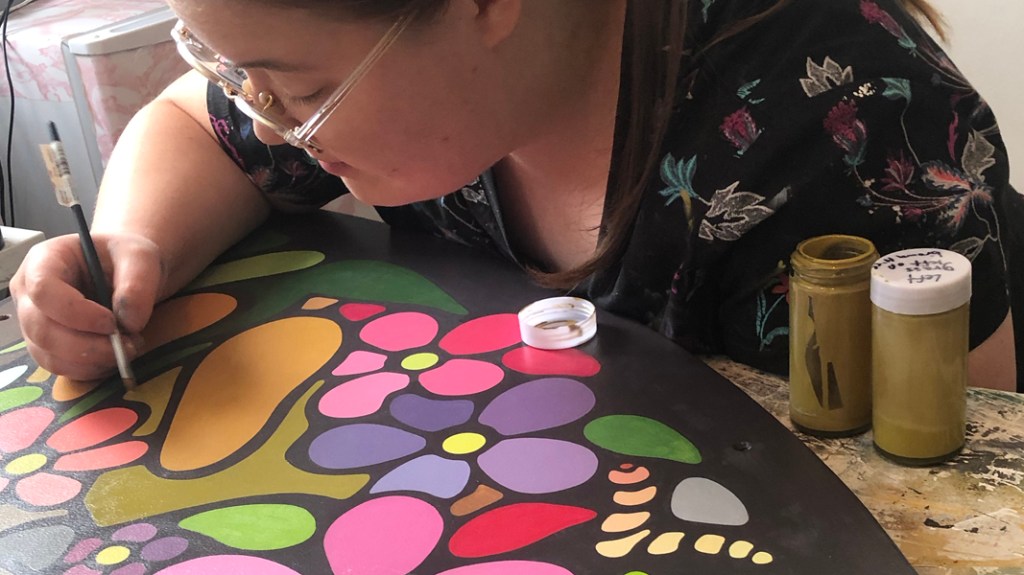
My style, organic colour blocking, uses precise brushwork to create vivid, flowing shapes and razor-sharp edges. It’s contemporary, sophisticated, and impossible to replicate digitally or with spray cans. Each mural interacts with the light, architecture, and atmosphere of your room.
Benefits of organic colour-block murals for Kingston homes:
Custom fit for your space: Every curve and colour is tailored to your room, wall, and lifestyle.
Adds personality: Your mural reflects your taste, energy, and story.
Timeless impact: Hand-painted murals remain striking for years, unlike printed designs that can fade or feel flat.
A mural in your foyer, living room, bedroom, or studio is more than art — it’s a statement. It changes how you feel in the room, how you move through the space, and how visitors experience your home.
Colour Blocked Mural over Fireplace by Po in Kingston
Using a brush when painting a mural featuring colour blocking achieves crisp, opaque lines and shapes. It takes a painter many years of practice to produce sumptuous, flowing edges that are crisp and fluid. My own technique produces “flat” brush strokes that appear almost textureless.
The power of the murals I paint is the seamless connection with the viewer and the space – only achieved through exactness. The mind and soul immediately understand the imagery because without blurred edges, one need not interpret – just enjoy.
If you’re ready to bring contemporary, hand-painted mural energy into your Kingston home, I can help design and create a space that feels alive, intentional, and completely unique.









 Love Art by Po
Let Me Know What You Think! Start or Join the Convesation