Behind the Art, Behind the scenes, Drum December, Drum Works, How Po Makes Hand Drums, Kingston Artist, Po's Drum Making Process, Portia Chapman, Studio Process, Sustainable Craft, Uncategorized, woodworking

Drum December Day 11 – How to Clamp a Drum Frame

Portia Po Chapman and an assistant carefully applying a blue metal clamp to a glued drum frame in a sunlit Kingston art studio.
Day 11: Applying high-pressure clamps to the glued frame is the final step to ensuring a rattle-free, resonant instrument.

Drum December Day 11: Mastering the Compression and Clamping of Your Drum Frame

Welcome back to Drum December! Today, we are diving into one of the most transformative stages of the process: using my innovative dry-bending technique to compress and clamp the drum frame. This method is born from my preference for non-polyurethane glues, which we explored in our Day 10 tutorial.

By utilizing sun-steamed wood that has been “trained” during the pre-bending phase, we gain incredible creative flexibility when it comes time for the final clamp. If you missed the early stages of this journey, you can catch up on Day 5 and Drum December Begins to see how we prepare the wood to be shaped.


The “impossible” C-Shape

After trimming the frame on Day 9, you are left with a piece of wood that has a massive 16-inch gap between the ends. It looks like a giant letter “C,” and honestly, it looks impossible to close. But this is where the magic happens.

Choosing Your Bending Method

There are two primary ways to bring those ends together:

  1. Mechanical Bending: Using a dedicated jig or form to force the wood into a circle.
  2. Freehand Bending: Bending the wood by hand and clamping the ends using only hardwood cutoffs as buffers.

I personally prefer the freehand dry-bending method. My clients love it because it results in a more organic, natural shape and a superior sound.

The Critical Decision: Inside or Outside?

Before you apply a single clamp, you must decide which end of the wood will overlap on the outside. This might seem minor, but it is vital:

  • The choice of which end goes on the outside literally alters the final shape and resonance of the drum.
  • The inner end experiences a much tighter curve than the outer end.
  • Even with identical ends, swapping the overlap order can create a completely different hoop shape.

The Miracle of Elasticity

The most remarkable part of this technique is the elastic response of the hardwood. Because of the sun-steaming and pre-bending, the wood becomes incredibly flexible. In my demonstrations, you can see a cherry wood frame compressed over 16 inches with ease.

I view myself as a facilitator for the tree. When you encourage the wood to bend naturally, it “sings”. If you force it, the wood rebels, cracks, and the sound becomes muted. A drum makerโ€™s job is to unlock that voice, not silence it.

Letting the Tree Sing: The Philosophy of the Bend

It is truly a remarkable thing to witness, and I often wonder why this method isn’t the gold standard. When we dry-bend, the results are simply superior to clamping freshly steamed woodโ€”especially when crafting those challenging, small-radius frames.

Using this technique feels less like “construction” and more like an act of listening. In the forest, trees are designed to dance; their limbs are built to bend when the wind caresses them. In my workshop, I see myself as a facilitator of that natural expression.

When you allow the wood to bend on its own terms, it sings. When you force it, the wood rebels; it cracks, it groans, and its spirit becomes muted. As a drum maker, my calling is to encourage the drum to find its voice, not to silence it through force.

The “Vet Visit”: Understanding Woodโ€™s Resistance

Once the wood has agreed to take its shape and the decisions of Day 10 are behind us, we move into the physical intensity of the clamping stage.

Even a willing tree has its limits. Wood has a memory and a will of its own, and it behaves much like a dog on the way to the veterinarian. The pup is perfectly calm in the car until you turn that final cornerโ€”the moment she realizes whatโ€™s happening, she “flips out.”

The drum frame does the same. It will rest quietly in your hands until the moment you bring the glue bottle near. It is the strangest, most miraculous sensation: you can feel the frame shift from a gentle yield to a spirited push-back against the compression. To navigate this, you need a sturdy vice and quick clamps within arm’s reachโ€”or a very strong, steady assistant to help you hold the tension.

The Trick of the Trade: Precision and Protection

Because the wood is alive and moving, using C-clamps is a high-stakes, time-sensitive dance. The second the clamp touches the wood, everything wants to slide and shift. I used to panic during this stage, but I eventually learned the secret: The One-Inch Rule.

  • Keep it Tight: Ensure your C-clamp is open less than an inch. This allows you to turn the handle and lock it down before the wood has a chance to escape.
  • The Safety Net: If you canโ€™t turn the handle fast enough, snap a couple of quick clamps on either side of the joint. They will hold the frame long enough for you to seat your heavy-duty C-clamps properly.
  • Honor the Surface: Never let metal touch the frame directly. A C-clamp is a powerful tool that can easily dent the wood. Always use hardwood cutoffs as a barrier between the clamp and the frame. Even with light-duty clamps, these barriers are essential for protecting the integrity of the wood.

In the video below, you can see this “C-clamp dance” in action as we bring the ends together for the final time.

Pro-Tips for Successful ClampingA Summary for You to Remember

Keep these clamping tips in mind:

  • Speed is Key: If using C-clamps, keep them open less than an inch so you can tighten the handle quickly before the wood shifts.
  • Use Backups: If you can’t move fast enough, use quick clamps on either side of the joint to hold the position while you set your C-clamps.
  • Always Use Barriers: Never put a C-clamp directly on the frame; it will dent the wood. Always use hardwood cutoffs as a barrier between the clamp and the drum.
  • Clamping Numbers: Use at least six clamps to secure the joint while it dries.

Barrier Dimensions: Use wood cutoffs approximately 1″ x 3″ for the inside of the frame, and 2″ x 3″ for the outside.

Whatโ€™s Next? Tomorrow, on Day 12, Iโ€™ll show you exactly how to arrange those six clamps so they donโ€™t get tangled or interfere with the curve of the frame. Itโ€™s a bit like a puzzle, but Iโ€™ll walk you through it!

Love Art by Po creates 3 grades of frame drums: Drum Circle, Instrumental and Gallery. Also, Po makes 10″ drum, DIY drum kits. Go to the Drum page to read more about the grades and how to purchase them. Here is the link.

See you tomorrow!

๐Ÿ“ง Portia@loveartbypo.ca

2 responses to “Drum December Day 11 – How to Clamp a Drum Frame”

  1. Drum December Day 12 – How to Make a Drum Frame Using 6 Clamps – Love Art by Po Avatar

    […] Day 11, I explained how the shape changes depending on which end overlaps on the outside. Today, we focus […]

Let Me Know What You Think! Start or Join the Convesation

Find Love Art by Po’s Portia “Po” Chapman Kingston Art studio on Google Maps at this link.
Behind the Art, Behind the scenes, Drum December, Drum Works, How Po Makes Hand Drums, Kingston Artist, Po's Drum Making Process, Portia Chapman, Uncategorized, woodworking

Drum December Day 6 โ€” A Small Split, But a Successful First Bend

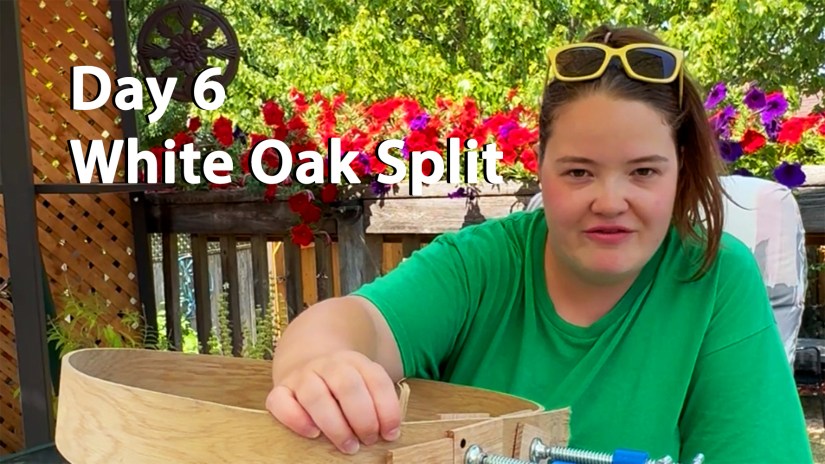
A close-up of Portia โ€œPoโ€ Chapman examining a freshly bent white oak drum frame outdoors, pointing to a small split formed during the tight first bend, with bright flowers and summer greenery behind her.
Day 6: A small white oak split appears after the first bend โ€” an expected part of pushing hardwood to its limits.

Today marks the moment of truth for the first bend of the white oak drum frame. After spending the night under clamps, the wood finally revealed how it responded to yesterdayโ€™s bending session โ€” and as always, the material had a story to tell.

If youโ€™re new here and want to learn more about who I am and the work I do, you can visit my About & Contact page.

When I brought the frame into the studio this morning, the very first thing I did was check the inside curve. And there it was:
a small split along the tightest part of the bend.

For many people, that might feel alarming. But for me, this isnโ€™t unusual at all โ€” especially with a dense hardwood like white oak. Pushing any wood to the minimum bend radius it can tolerate means youโ€™re working right at the threshold where the fibres must stretch, compress, and adapt. Sometimes, a small split appears as part of that process.


What a Split Really Means in Drum Making

A split doesnโ€™t automatically mean failure.

Itโ€™s a diagnostic clue.

It tells me:

  • how far the wood was willing to travel,
  • how much internal tension remains in the frame,
  • and whether the second bend โ€” the glued dry-bend โ€” will seat properly.

In this case, the split is shallow and controlled. That tells me the clamps did exactly what they were supposed to do:
prevent the fibres from opening too far while still allowing the bend to hold.

This is why clamp placement is a true art form in drum making. You donโ€™t just tighten clamps to tighten clamps. You tighten them in anticipation of how the wood is likely to react.

If youโ€™d like to explore my handmade drums, see past builds, or learn about upcoming workshops, visit my Drum Page here.

White oak is expressive โ€” and today, it expressed itself in a way that still sets us up for a strong final frame. As well, the location of the minor breakage will be cut off before gluing the final bend. I don’t sweat these things now, but when I first started bending drum frames, I was totally panicked when the first breakage happened. It was a learning experience – that is for sure!


Reading Tension, Relaxation, and โ€œFeelโ€

Every wood species responds differently during the first bend.
White oak? Well…It hums with a very particular kind of density.

When I picked up the bent frame today, I could feel subtle tension still living inside the curve. Thatโ€™s not unexpected โ€” in fact, with white oak, itโ€™s quite normal. White oak, unlike red oak, doesn’t particularly like being bent.

The key for Day 6 is simply evaluating:

  • Did the bend hold its overall shape?
  • Is the curve even?
  • Is the split stable and non-progressive?
  • Does the wood want to spring open dramatically or gently?

All signs today point to a solid first bend. It was a success. PHEW!!!


Come back tomorrow, Day 7, to watch and read about the what happened when I released the clamps.

The next step โ€” which comes tomorrow โ€” is the careful release of the clamps. Thatโ€™s where I discover how much reflex the wood has stored and whether it settles into the intended diameter or pushes back aggressively.

For now, the job is simply to observe, interpret, and prepare.

White oak may be challenging, but todayโ€™s results show that this drum frame is very much on track.

See you tomorrow for Day 7 of Drum December!

โ€” Po

๐Ÿ“ง Portia@loveartbypo.ca

One response to “Drum December Day 6 โ€” A Small Split, But a Successful First Bend”

Let Me Know What You Think! Start or Join the Convesation

To go to Google Maps / Business Platform

Portia Chapman

Drum December โ€“ Day 5: Time for Clamping

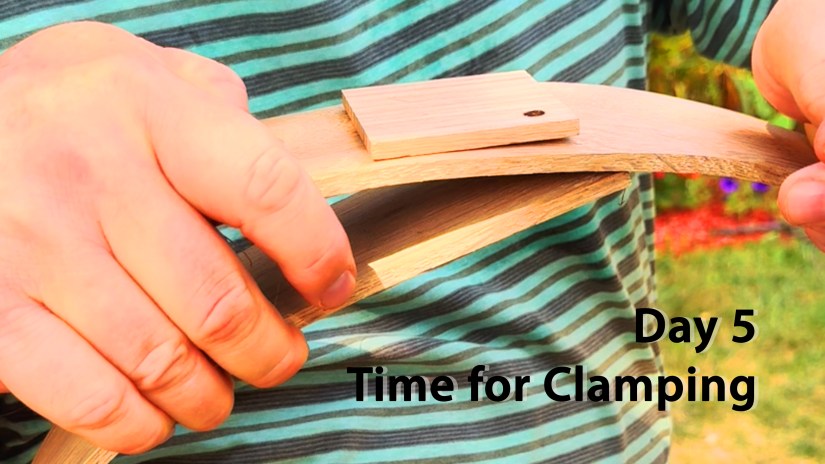
Close-up of hands holding the softened red oak board after sun-steaming, preparing the ends for clamping during Poโ€™s frame drum-making process on Drum December Day 5.
Po prepares the sun-steamed red oak board for its first clamp โ€” the moment the drumโ€™s circular form begins.

Today marks a major turning point in Poโ€™s sun-steamed red oak experiment โ€” the moment when softened hardwood, warm from the solar tubes, is guided into its first held shape. After days of heating, coaxing, and patiently encouraging the wood fibres to relax, itโ€™s finally time for the clamp.

Freehand bending is never a one-person job. With red oak especially โ€” two sets of hands are essential. One pair holds the ends together, and the other manages the clamps with steady confidence.

As the camera rolls, Poโ€™s assistant lifts one end of the oak over the other. You can see immediately that the top end doesnโ€™t lie flat; instead, it sticks out stubbornly, like a child refusing bedtime. This is normal. In every bend, no matter the length, one end refuses to behave. The wood always tries to return to straightness โ€” its original memory.

To protect the tender, freshly steamed wood, Po uses two small oak offcuts as buffers. The cut-offs keep the clamp from denting the softened wood, which is especially vulnerable before it dries.

The First Clamp: Where Courage Meets Making

Po tightens the lower piece first, then holds the top piece and slowly turns the clamp. With each rotation, the ends of the red oak pull closer together. This is the first of two clamping stages in Poโ€™s innovative dry-bending technique โ€” a method she has refined through experimentation, intuition, and respect for the material.

This first loop must dry with the clamps on for about two days.
Only then will the wood be ready to release, be cut to size, glued, and clamped again into its final drum frame shape.

What the video doesnโ€™t show is just how lively the wood can be. Even at this stage, red oak is strong and springy. If it suddenly opens, the clamp can fly across the room โ€” a heavy steel reminder that wood is a living material. Some drum makers use ratcheting straps to control this, but Po avoids this method. The hooks and pressure points donโ€™t sit flush, and can scar the damp wood just before it snaps back.

Instead, Po trusts the method shown here โ€” a method that gives her control, precision, and the markings she demands from her handcrafted drum frames.

Freehand bending sun-steamed wood may look simple, but it takes courage, strength, intuition, and sometimesโ€ฆ a little prayer.

And today, with hands steady and clamps in place, Po brings her drum loop one step closer to becoming the finished frame that will hold the heartbeat of future songs.


Check back for Day 6 to see how the bend holds โ€” and what surprises the wood reveals next.

๐Ÿ“ง Portia@loveartbypo.ca

3 responses to “Drum December โ€“ Day 5: Time for Clamping”

  1. Drum December Day 11 – How to Clamp a Drum Frame – Love Art by Po Avatar

    […] comes time for the final clamp. If you missed the early stages of this journey, you can catch up on Day 5 and Drum December Begins to see how we prepare the wood to be […]

  2. Drum December Day 10 | How to Glue Before Clamping Drum Frame – Love Art by Po Avatar

    […] before the glue is ever applied. You can see the foundation of this technique in my previous posts: Day 5, Day 7, and Day […]

Let Me Know What You Think! Start or Join the Convesation

Behind the Art, Behind the scenes, Drum December, Drum Works, How Po Makes Hand Drums, Kingston Artist, Po's Drum Making Process, Portia Chapman, woodworking

Drum December Day 4 | Finding the Nerve to Bend

Po and her assistant sharing a moment of nervous laughter while preparing to bend sun-steamed white oak for a drum frame during Drum December Day 4 at Poโ€™s Kingston Art Studio.
Po and her assistant share a moment of nervous laughter.

Today, Po takes the next brave step in her sun-steaming white oak experiment โ€” the moment when softened hardwood meets human hands for its very first bend. And this time, the studio was full of laughter, nerves, and a little bit of chaos.

Preparing for the First Bend

After three days of solar steaming and fibre relaxation, the white oak was finally ready to move toward its circular drum shape. But white oak is known for being stubborn โ€” unlike red oak or cherry, which tend to cooperate more easily. This was Poโ€™s very first time attempting to bend white oak, and the air carried that charged mix of excitement and hesitation.

Because the frame pieces were long, Po called in an assistant during this stage. Today, she chose DAD.

Before the camera was rolling, Po looked at her assistant with a theatrical seriousness and joked:

โ€œIf it breaks, you can be the one to blame!
I donโ€™t want to be the one who snaps it.โ€

That set the tone.
The wood was ready.
Weโ€ฆ were getting there.

The Moment Before the Bend

As her assistant stood there, holding one end of the hot, hopefully flexible, board trying to work up the courage for the first bend, Po stepped beside her trusty assistant to offer support โ€” and then they immediately broke into laughter. She tucked herself halfway behind his arm, peeking out like someone about to watch a suspenseful scene in a movie.

The cameraperson had already begun losing patience with how long it was taking and insisted that they stop laughing and get serious. She wanted to get the shot. Then she started laughing.

This is the real life of drum frame bending at Poโ€™s Kingston Art Studio โ€” part process, part comedy, all family, ALL ART. Drum making is a beautiful, love-filled-art, and this short video illustrates the joy that cheers out with exuberance of Love Art By Po.

Nervous Laughter, Real Art

In todayโ€™s short video, you can witness the exact moment when nervous laughter gives way to determination. Po, her assistant and cameraperson take their positions, breathe through the tension, and finally begin the first coaxing bend of the white oak.

Itโ€™s only a small curve โ€” a gentle start โ€” but it marks the beginning of the transformation, from plank to drum. And as simple as it looks, this step matters: the first bend dictates how the wood will behave when the full circular frame is shaped and clamped.

A Family Moment in the Making of a Drum

What the video doesnโ€™t capture โ€” but what filled the studio โ€” is the feeling of teamwork.
Making drums in this space has always been infused with love, humour, and family togetherness. Today was no exception.

Drum-making is not simply about shaping wood at Love Art By Po;
itโ€™s about beautiful, shaping moments โ€” that make everyone stronger.

Making drums has taught Po an incredible life lesson – a circle of wood is like a circle of loved-ones, when you push on them – they get stronger as they find their harmonious tune.

Join us again for Day 5, where Po continues shaping the wood โ€” and the shared moments โ€” that make every drum a circle of strength and love.

๐Ÿ“ง Portia@loveartbypo.ca

One response to “Drum December Day 4 | Finding the Nerve to Bend”

Let Me Know What You Think! Start or Join the Convesation


Behind the scenes, Drum December, Drum Works, Kingston Artist, Po's Drum Making Process, Portia Chapman, Sustainable Craft, woodworking

Drum December Day 2: Poโ€™s Sun-Steaming Method Begins

Po Chapman lying in the sun wearing yellow sunglasses and a green shirt, beginning Day 2 of her sun-steaming drum-making process.
Day 2: Po begins her sun-steaming process for crafting hardwood drum frames.

Welcome to Day 2 of Drum December!

Today, Po begins the very first step in her innovative sun-steaming method โ€” a sustainable process she personally developed to prepare kiln-dried hardwood for her premium drum frames and exposed stretchers.

Sun-steaming is a technique that Po pioneered to reduce the environmental impact of traditional wood steaming. Instead of soaking the kiln-dried wood for two days and then heating it with electricity, Po slides the carefully milled hardwood into a long black tube with ridges along its interior.

The ridges guide the wood as it slides in, producing a distinctive sound โ€” the beginning of the transformation.

Once the hardwood is inside the tube, Po fills it with water and lets the sun do all the work. For three full days, the water naturally heats within the sealed tube, allowing the wood fibres to relax and prepare for bending.

An Energy-Conscious Method for Steaming the Wood:

  • Removes the two-day soaking stage
  • Uses no electricity
  • Reduces water consumption
  • Produces a more responsive bend
  • Creates the smooth, elite-quality curves Poโ€™s drum frames are known for

This is where Poโ€™s craftsmanship begins โ€” with innovation, patience, and the sun itself.

Tomorrow, weโ€™ll continue documenting this process as Drum December unfolds, one beautifully authentic step at a time.

Tomorrow, Po continues the transformation as she assesses the wood to see whether it has relaxed enough to become bendy and ready for shaping.

Stay tuned for Day 3!

๐Ÿ“ง Portia@loveartbypo.ca

One response to “Drum December Day 2: Poโ€™s Sun-Steaming Method Begins”

Let Me Know What You Think! Start or Join the Convesation

Behind the Art, Drum Works, How Po Makes Hand Drums, Portia Chapman, Studio Process

Drum December Begins at Poโ€™s Studio

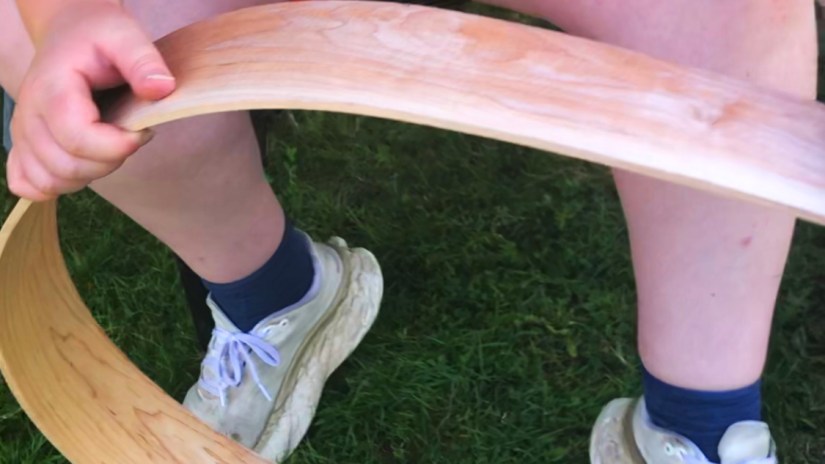
Hands bending a wooden drum frame over the knees of a person seated on grass.
Shaping the curve of a drum frame โ€” one of the first steps in Poโ€™s rhythm-making process.

Today marks the beginning of Drum December, a month-long glimpse into the rhythm and process inside Poโ€™s Studio. Instead of presenting finished pieces, this series brings you into the quiet, hypnotic motions that form the foundation of Poโ€™s drum works.

The first video is just five seconds long โ€” a looping moment that feels like it could play forever. Simple. Repetitive. Almost meditative. It captures a small piece of the energy that moves through Poโ€™s creative process: the balance of sound, gesture, material, and breath.

Po has always worked from rhythm. Whether sheโ€™s painting, shaping rawhide, or exploring new concepts for future installations, thereโ€™s a pulse beneath everything she creates. Drum December is a way to share that pulse with you โ€” not through explanation, but through small, visual experiences.

Throughout the month, youโ€™ll see short clips from the studio: textures, movements, tools, surfaces, patterns, and the making behind upcoming work. Some loops will be raw; some will be visually polished. All of them come from Poโ€™s hands and her way of seeing.

This series also sets the stage for the work she is developing for her upcoming installation, where drums and light will play an important role. Think of Drum December as the first heartbeat of that larger project.

Thank you for stepping inside her studio.
More rhythm, more movement, and more behind-the-scenes moments will arrive soon.

Have a question about Drum December or Poโ€™s Studio? Email Poโ€™s Studio

โ€” Artwork and murals by Portia โ€œPoโ€ Chapman, Love Art by Po

2 responses to “Drum December Begins at Poโ€™s Studio”

  1. Drum December Day 11 – How to Clamp a Drum Frame – Love Art by Po Avatar

    […] for the final clamp. If you missed the early stages of this journey, you can catch up on Day 5 and Drum December Begins to see how we prepare the wood to be […]

Let Me Know What You Think! Start or Join the Convesation