When visual artist Portia “Po” Chapman set out to build Being Seen: when Being Seen… we glow at the Kingston Arts Council (KAC) Pocket Gallery inside the Tett Centre for Creativity and Learning, every element was designed to honour material purity, spatial harmony, and high-level craftsmanship. While the interactive Glow Chamber with illuminated rawhide vessels anchored the centre of the room, the gallery’s title wall served as the visitor’s threshold—a vital first contact point setting the tone for the entire exhibition.
To evoke the glowing feeling of being seen, Po found it to be essentially important for the public to build a relationship with other beings. The glow emitted by the drums and vessels was due to backlit rawhide – rawhide that was once lived real animal hide. To celebrate the raw beauty and organic warmth of the being, Po originally envisioned mounting a massive, full bison rawhide across the main entry wall. However, during early site visits and spatial measurements, it became clear that the wall’s dimensions would not accommodate even an elk rawhide.
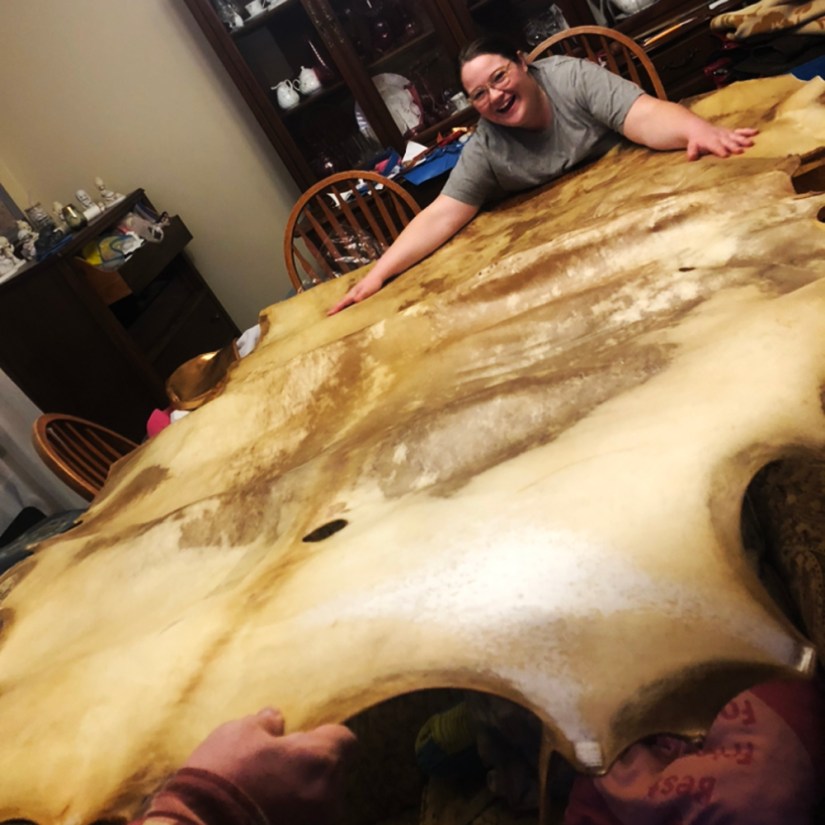
Po pivoted to her studio collection, carefully selecting a pristine natural deer rawhide whose proportions aligned perfectly with the spatial constraints and didactic museography.
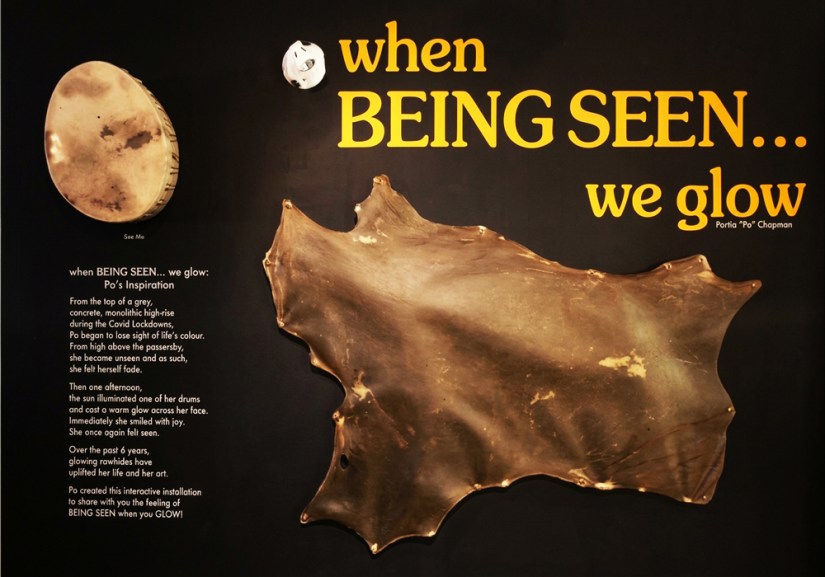
What followed was a multi-stage process of material preparation, mounting experimentation, protective transport, and meticulous gallery installation.
Stage 1: Studio Rehydration and Perimeter Framing
Rawhide arrives from suppliers tightly rolled, stiff, and unyielding. Before a hide can be assessed for dimensional layout or circular drum cutting, it must be carefully unrolled and flattened on a large, smooth work surface.
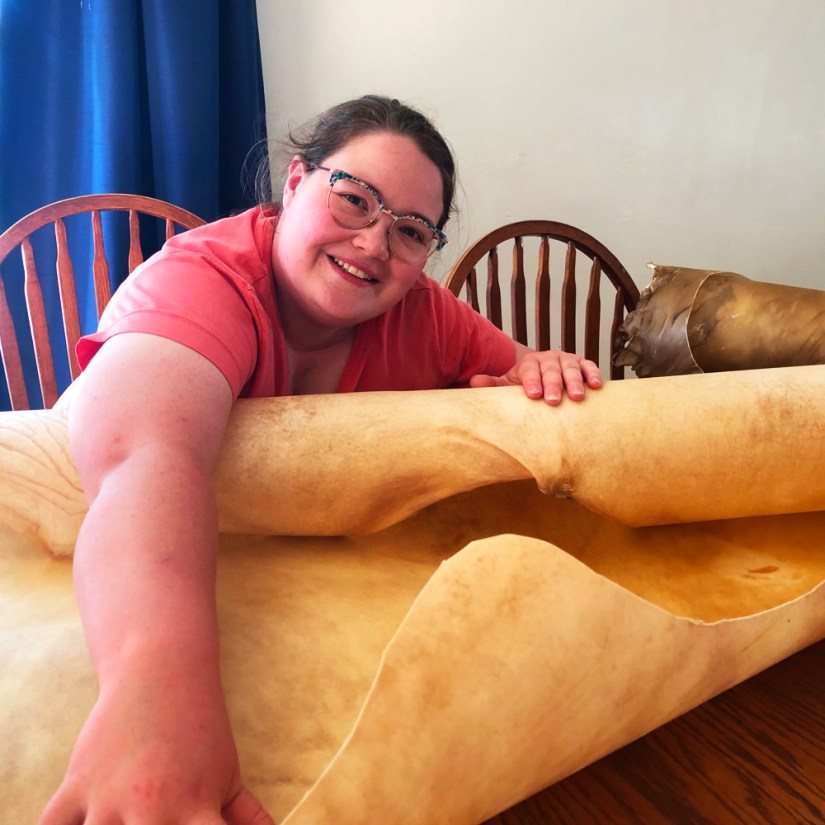
To transform the rigid deer rawhide into a flat, gallery-ready canvas:
- Sanitization and Hydration: Po meticulously washed and sanitized a soaking tub to eliminate any residual detergent, soap, or oils that could discolour or mar the thin, organic skin. Once filled with clean water, the roll of deer rawhide was submerged. As it absorbed moisture, the skin gradually unrolled and relaxed until completely pliable. Once malleable, the hide remained submerged for the remainder of 24 hours.
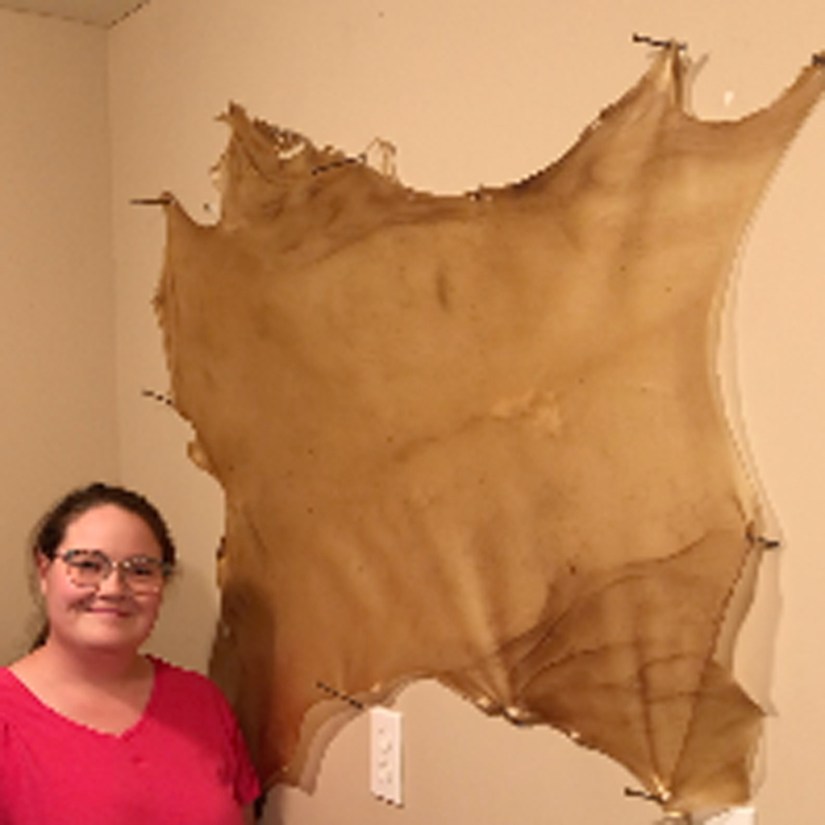
- Wall-Stretching: The wet, fully hydrated hide was transferred to a studio gallery wall, stretched smooth, and nailed flat around its perimeter. Allowing the hide to dry under tension ensured a natural, flat plane—essential for a clean, relaxed presentation against the gallery drywall.
Stage 2: Hardware to Enhance Beauty while AssuringVisitor Safety
Once fully dry and rigid, the rawhide underwent a series of technical modifications designed for both structural stability and guest safety:
- Edge Finishing: Because natural rawhide dries with firm, glass-sharp edges, Po hand-trimmed the perimeter with dedicated tinsnips. This step eliminated snags, ensuring guests walking past the title wall could move freely without catching clothing or brushing against sharp corners.
- Pre-Drilled Mounting Points: Pilot holes were measured and drilled directly into the corners and strategic, structural anchor points of the hide.
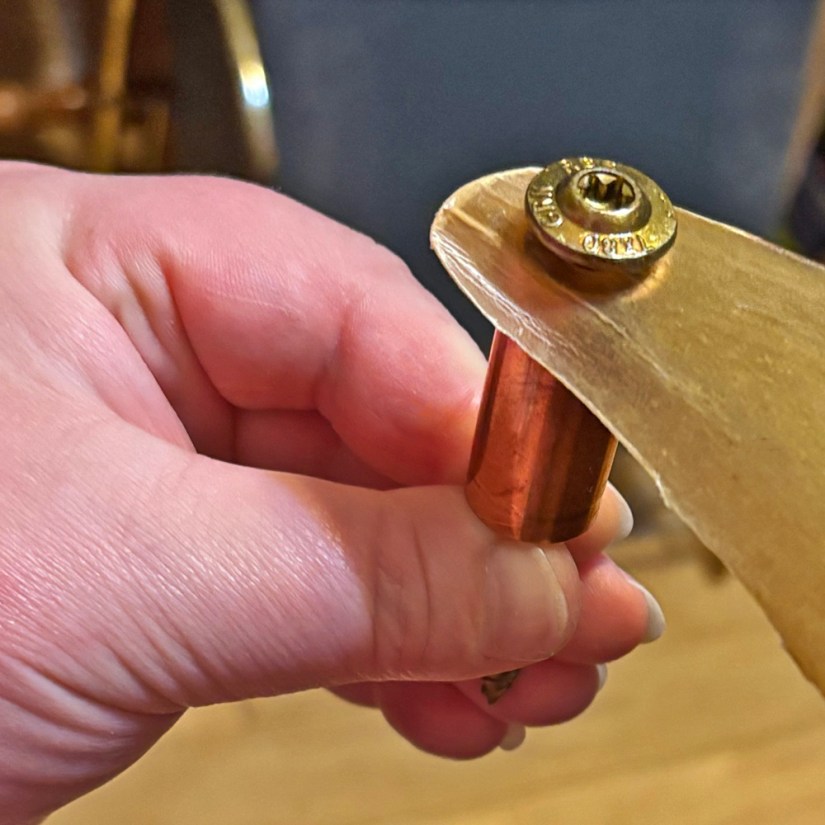
- Custom Copper Pipe Spacers: To prevent the hide from resting flat and lifeless against title wall’s drywall, Po innovated a floating mount using custom-cut copper pipe spacers paired with brass star-headed screws. This spatial offset allowed light to pass behind the translucent skin, casting deep, dramatic drop shadows and creating the illusion that the hide was floating effortlessly off the wall.
Stage 3: Protected Transit Logistics
Transporting a large, rigid, non-foldable rawhide sheet from the studio to the KAC Pocket Gallery required careful vehicle packing to prevent creasing or surface damage:
- Sub-Floor Stability: The boxed, illuminated rawhide vessels were loaded first into the rear of Po’s vehicle, creating a firm, flat sub-floor across the trunk bed.
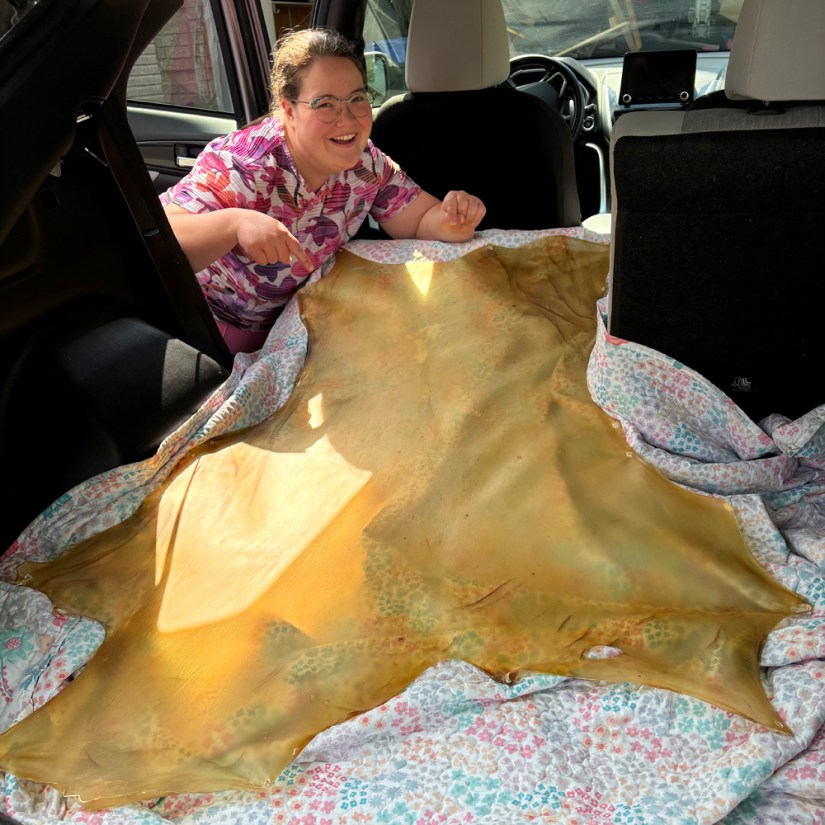
- Layered Cushioning: Heavy protective blankets were laid smooth over the boxes – providing a steady but cushioned surface that was ideal for the deer rawhide to rest.
- Flat Transit: The flattened deer rawhide was placed atop the blankets, resting flat across their entire surface, during transit without risk of folding or stress marks. To assure that the rawhide did not lift upwards like a kite in the breeze, another blanket was place on top of the hide and the windows remained shut while being transported to the gallery.
Stage 4: Mounting the Deer Rawhide onto the Title Wall
Upon arriving at the side entrance to the Tett Centre, Po and her studio assistants carried the flat hide into the Pocket Gallery to begin the final installation:
- Pilot Transfer: The team held the hide in place against the dark gallery wall while marking each pre-drilled screw position directly onto the wall surface.
- Anchor Installation: The hide was set safely aside on a protective floor blanket while drywall anchors were set into the marked locations.
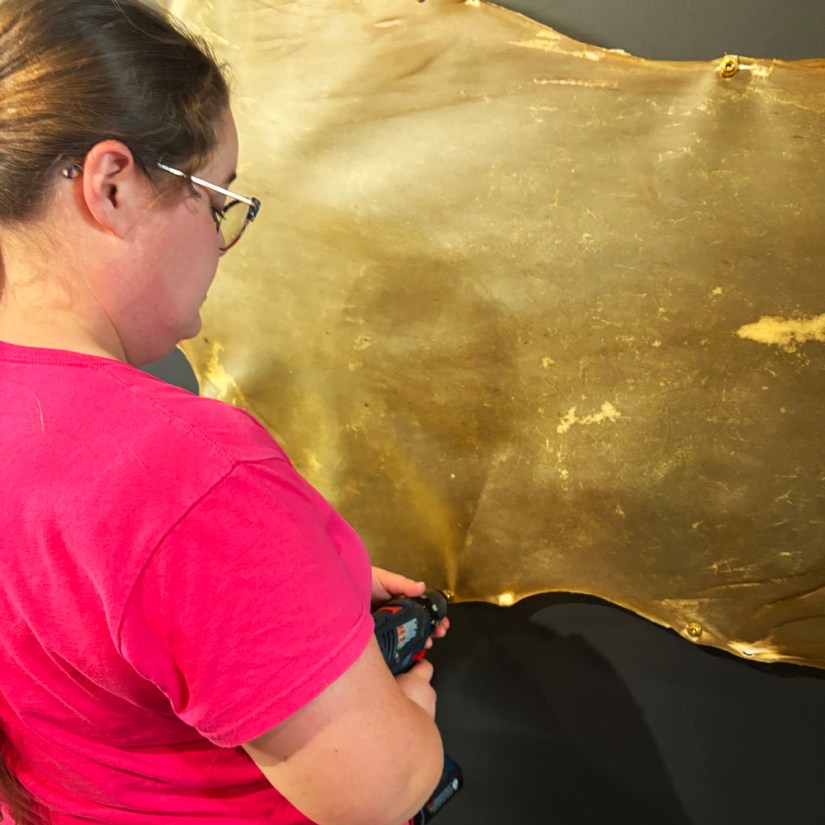
- Team-Assisted Driver Mounting: With two assistants holding the rawhide in precise alignment, Po used her cordless impact driver to secure the brass star screws and copper pipe spacers into the wall anchors.
The Final Reveal: Floating Rawhide and Didactic Harmony
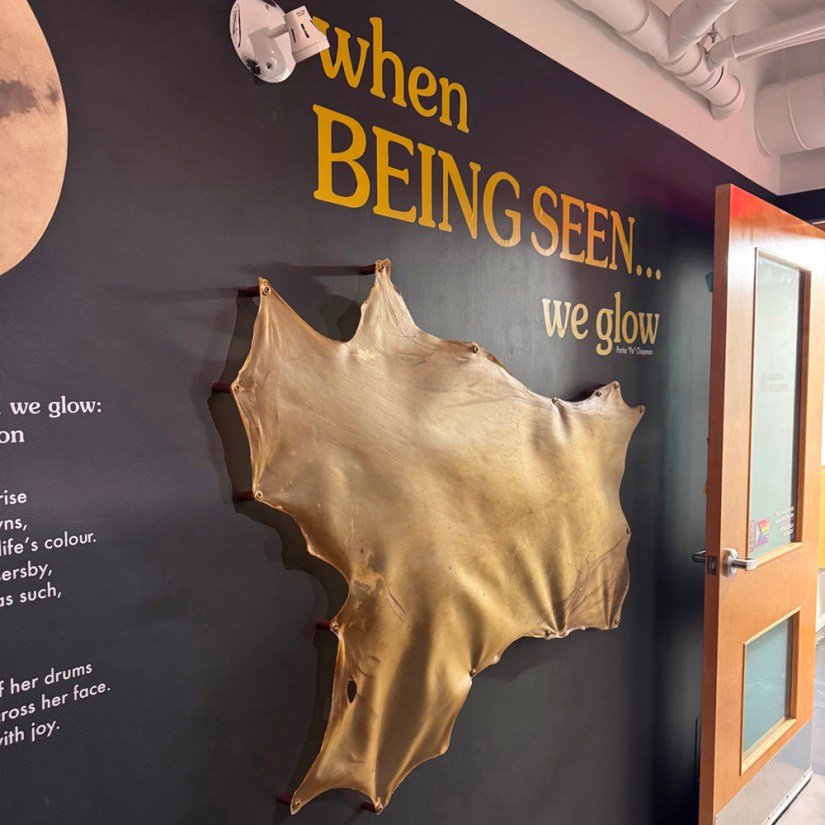
Mounted beneath the gold vinyl title lettering reading “when BEING SEEN… we glow,” the finished deer rawhide stands as a testament to the intersection of artisanal tradition and studio precision. The copper spacers lift the hide off the dark background, capturing and reflecting gallery spotlighting to highlight the organic grain, translucent golden tones, and rich spatial shadows of the hide.
By treating the title wall not merely as an informational backdrop, but as a fully realized, three-dimensional sculpture element, Being Seen invited visitors to pause, look closely, and step into an environment where nature and community glow together.
About the Artist
Portia “Po” Chapman is a Kingston-based multidisciplinary visual artist, muralist, and certified educator (BFAH, B.Ed, OCT) celebrated for her site-specific Storytelling Art. Honoured with the Queen’s University Medal in Visual Art, Po merges traditional craftsmanship—from wet-soaked natural rawhides and steam-bent hardwood to custom spatial engineering—with bold color-blocking and digital media. Her interactive installations transform gallery spaces into warm, welcoming environments where human experience and natural beauty connect. Discover her public murals, gallery exhibitions, and creative practice at loveartbypo.ca.
Contact Po Using Form Below


Portia “Po” Chapman, Kingston Artist
Serving Kingston, Ontario & Across Canada
Contact Po
Email: Portia@LoveArtByPo.ca
Instagram:
Love Art by Po
Facebook:
Love Art by Po Profile
Location
Private Art Studio:
Auden Park Kingston, ON
Google Business Profile:
Professional Listing


Let Me Know What You Think! Start or Join the Convesation