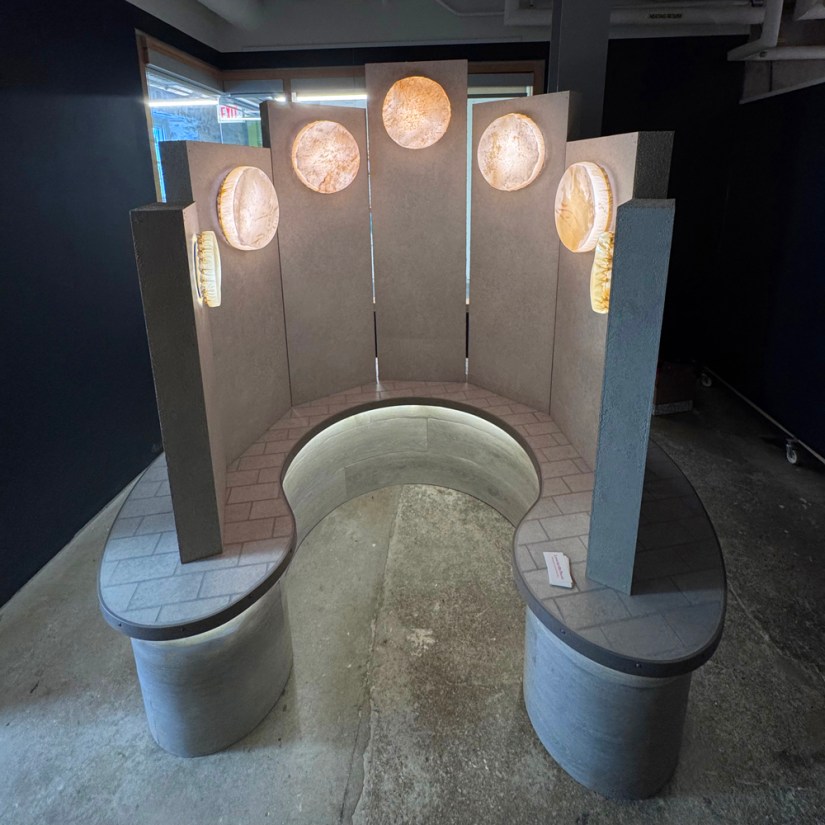
On the surface, an interactive sculptural installation like the Glow Chamber, the glowing, emotive centrepiece, showstopper of Portia “Po” Chapman’s solo exhibition Being Seen: when Being Seen… we glow at the Kingston Arts Council (KAC) Pocket Gallery in the Tett Centre for Creativity and Learning, may look effortless. Visitors experienced an immersive, radiant golden environment that felt organic and seamless. However, behind that warmth lay six months of intensive physical research, engineering forethought, and intricate logistical problem-solving.
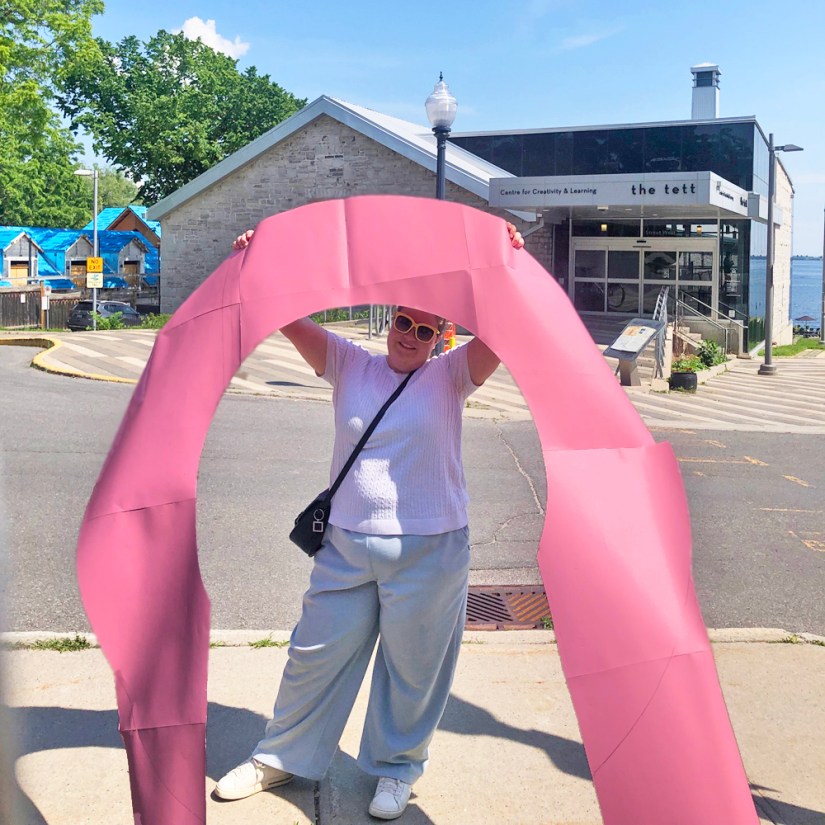
If Chapman could not safely transport the pieces down the hall, fit them through doorways, access gallery power, or protect delicate natural hides, there would be no exhibition. Every single facet of the Glow Chamber was purposefully designed with its move and assembly in mind.
Designing for Transit and Thresholds
Long before loading day, every detail of the structure was calculated against real-world physical constraints:
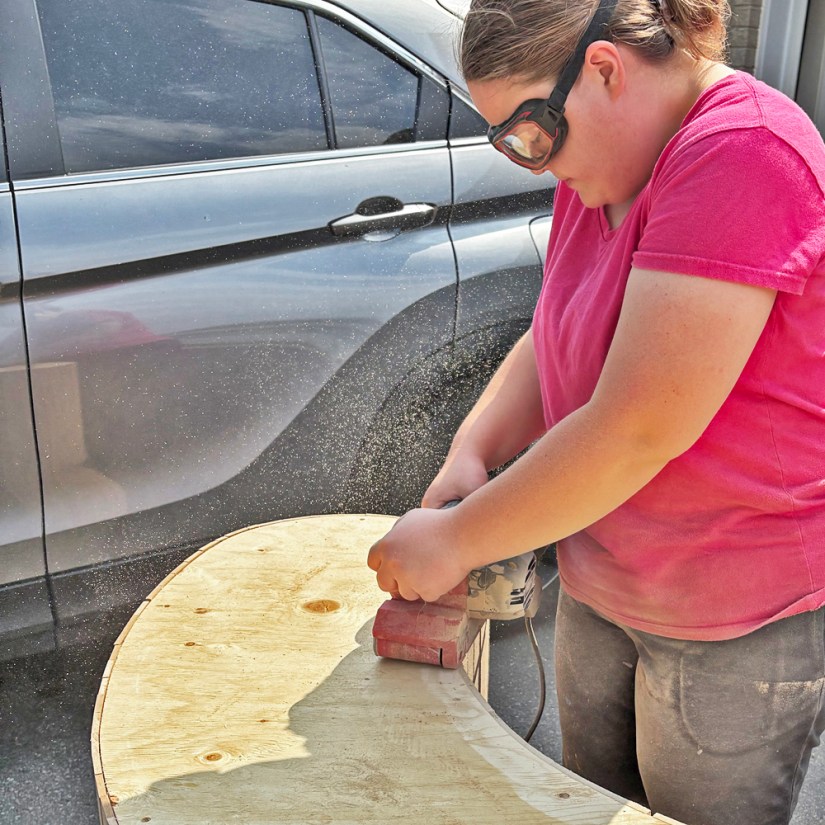
- The Levelling Foundation: To ensure the Glow Chamber’s integrated plinth base laid completely flat and wobble-free on the gallery’s concrete floor, while adding an extra layer of public safety, Chapman, while awaiting the arrival of the moving van outside her studio, flipped the base upside down and sanded the bottom level and flat using her belt sander.
- Doorframe Clearances: The distance from the bottom of the base to the top of the internal monolith support pillars was strictly measured to clear the metal door frames of the Tett Centre.
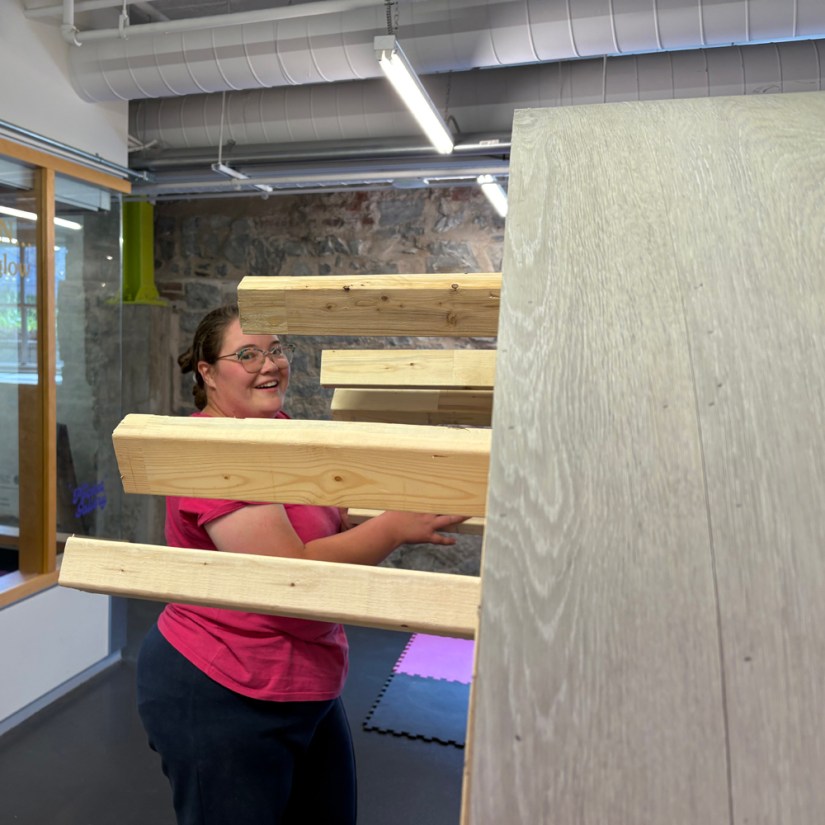
- The Slippery Slide: To make the heavy base easy to maneuver across the corridor without damaging floors or the Glow Chamber, the exterior was wrapped in durable, slippery, grey oak-look vinyl designed to glide effortlessly over interlocking foam floor tiles.
The Choreography of Gallery Assembly
Transporting and assembling the installation required a strict, logistical sequence to prevent any damage:
- Transportation Order and Location: In the back of the 20′ Uhaul moving van, the monoliths were placed up near the cab and the Glow Chamber base with tiled top was placed near the back hatch. The rawhide and rawhide vessels were transported separately in Chapman’s company vehicle. By first arranging the shipping order, Chapman created a less stressful time unloading, moving, and assembling the Glow Chamber.
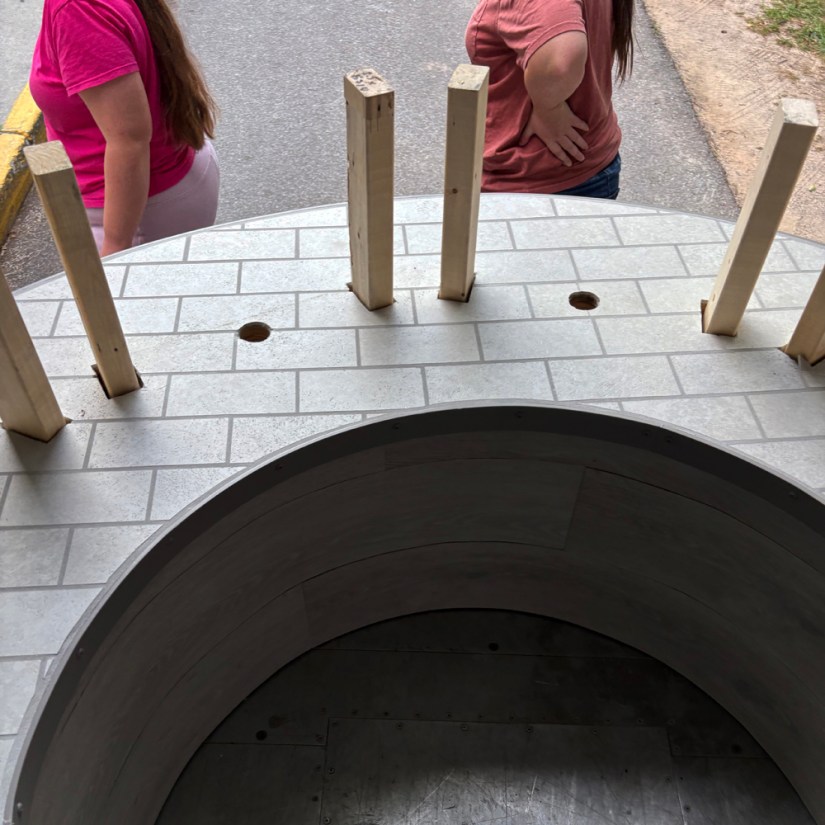
- Unloading the Top First: Before bringing in the heavy base, Chapman and her assistant carried the circular, tiled plinth top from the rental cube van and leaned it safely against the Pocket Gallery wall, revealing its engineered underside complete with pre-wired LED perimeter tape lighting.
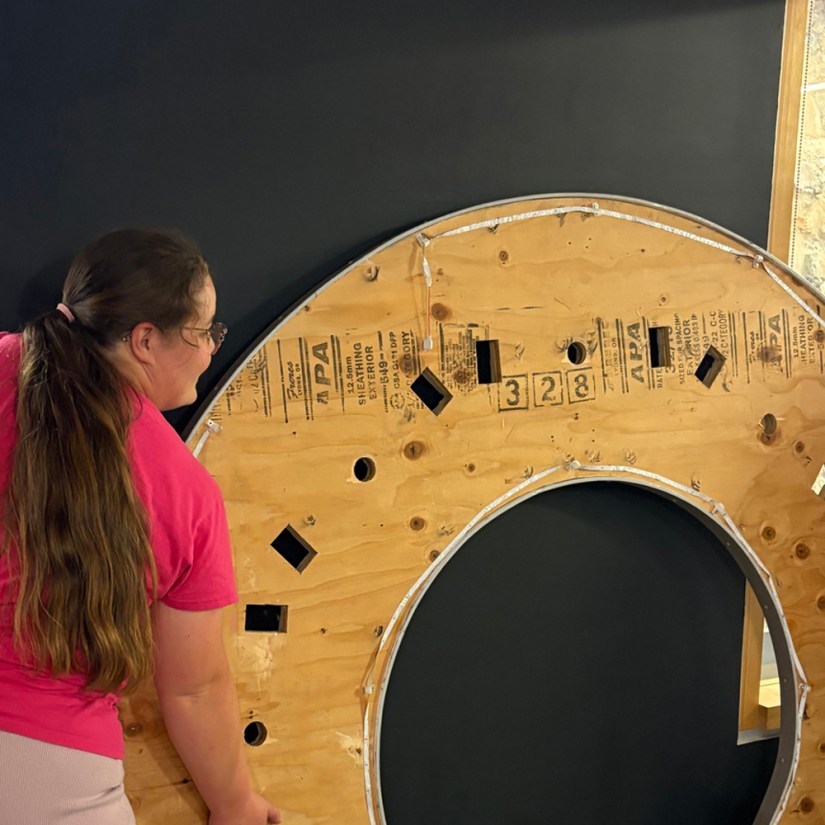
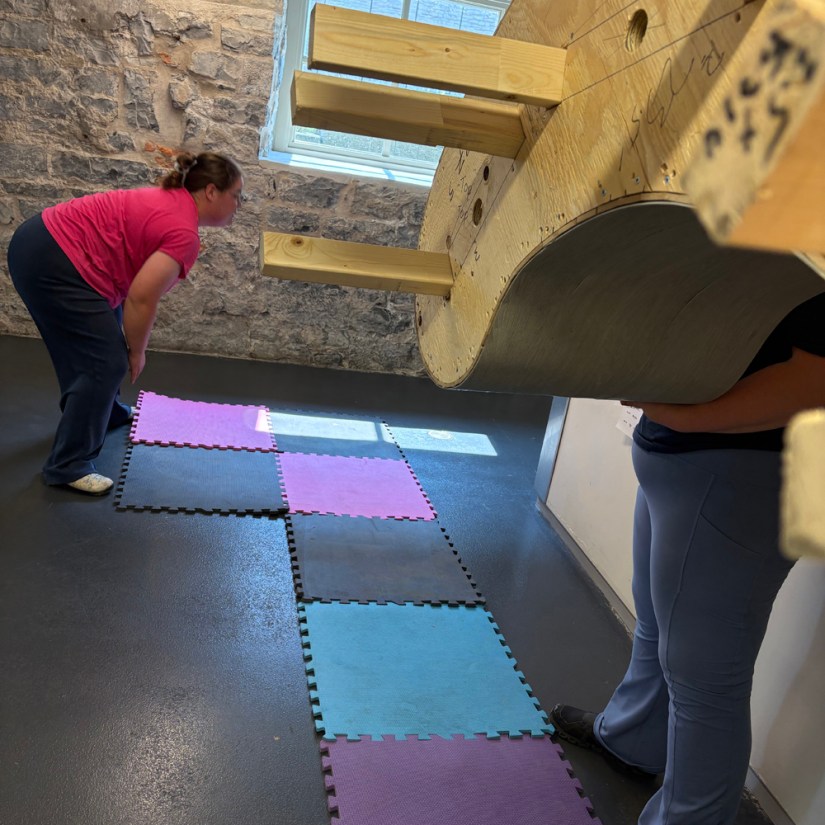
- Navigating the Hallway: They slid the wrapped base through the first floor side entrance doorway, carefully laying down colourful interlocking foam tiles around exterior corners while monitoring for public foot traffic before pivoting toward the gallery entry.
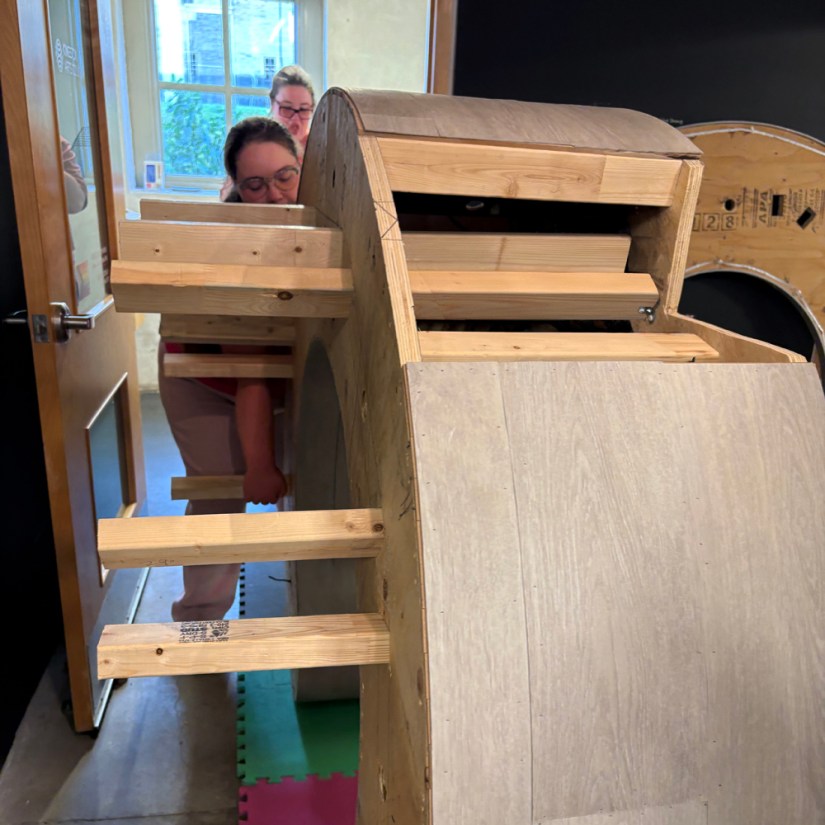
- Pillar Integration: Once inside the gallery, the base was spun into position and interlocked around the gallery’s structural metal pillar. Chapman’s strategic notch placement both locked the structure in place and provided direct access to the gallery’s electrical source.
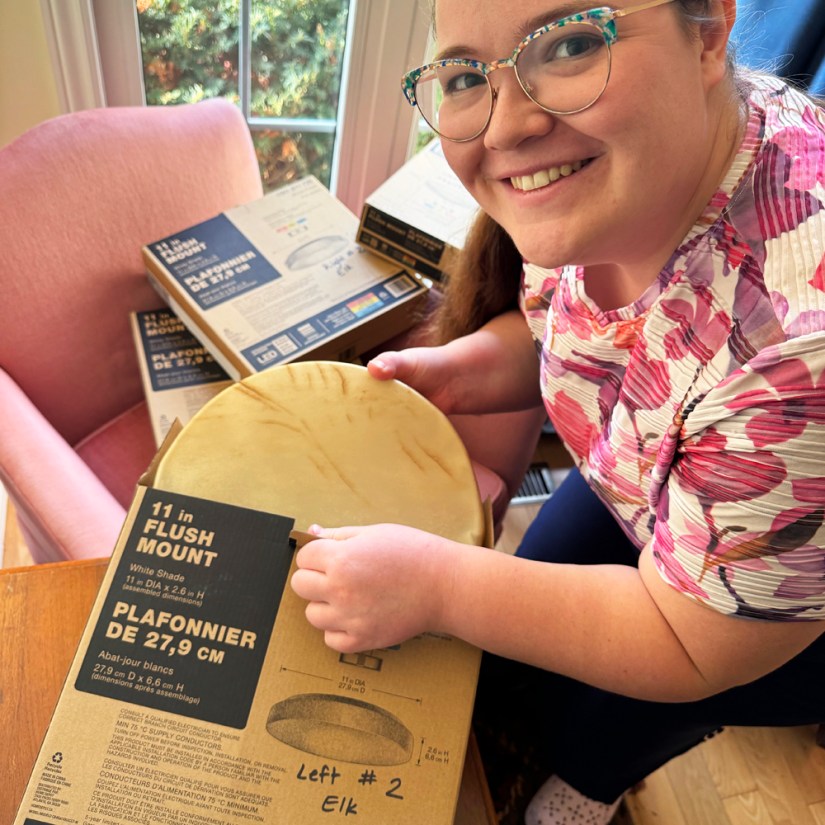
- Protecting Delicate Rawhide Vessels: While heavy structural components traveled securely in the cube van, the fragile rawhide vessels and lighting receptacles were too delicate to bounce alongside the wood and stone elements. Chapman packed them flat into individually labeled boxes, marked precisely for positions like “Center Bison” and “Left #2 Elk,” cushioned them with heavy blankets in her company vehicle trunk, and layered the flattened title wall deer rawhide safely on top.
Structural Integrity Meets Tactile Wonder
With the base and tiled top secured, the seven textured monoliths were brought in individually from the cube van cab, where they were packed snugly on foam tiles and moving blankets, starting with the tallest central monolith and alternating outwards.
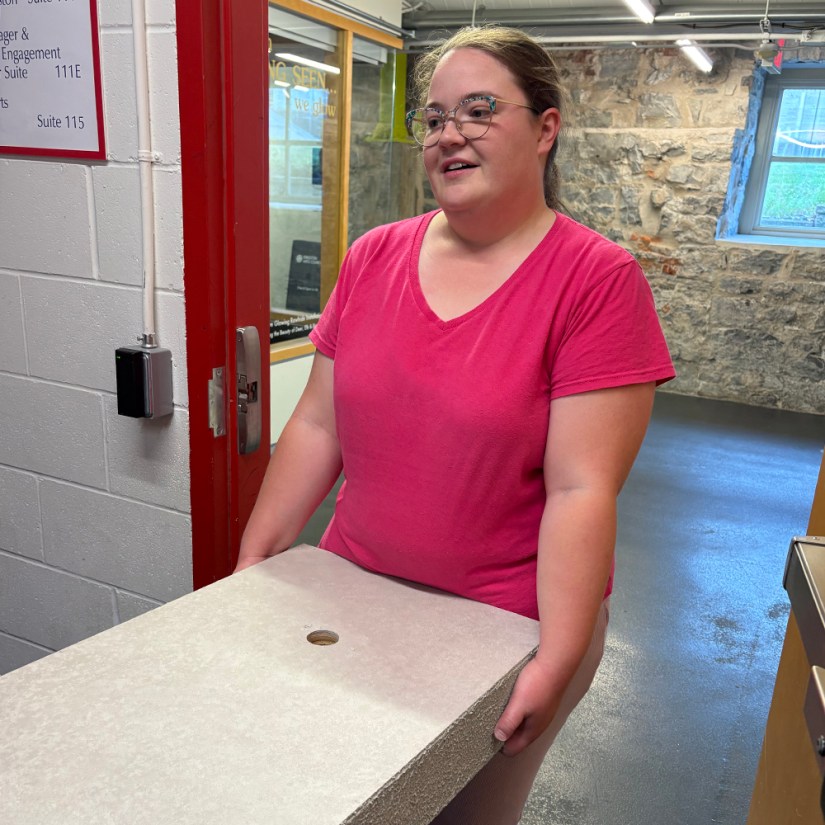
Each monolith featured top wiring pass-through holes and internal labels corresponding to pre-drilled lighting fixtures. Furthermore, while the monolith sides were designed to simulate rugged, chipped stone, Chapman utilized a specialized flexible foam-plaster paint medium so the surfaces remained soft, tactile, comfortable carrying, and safe for public touch.
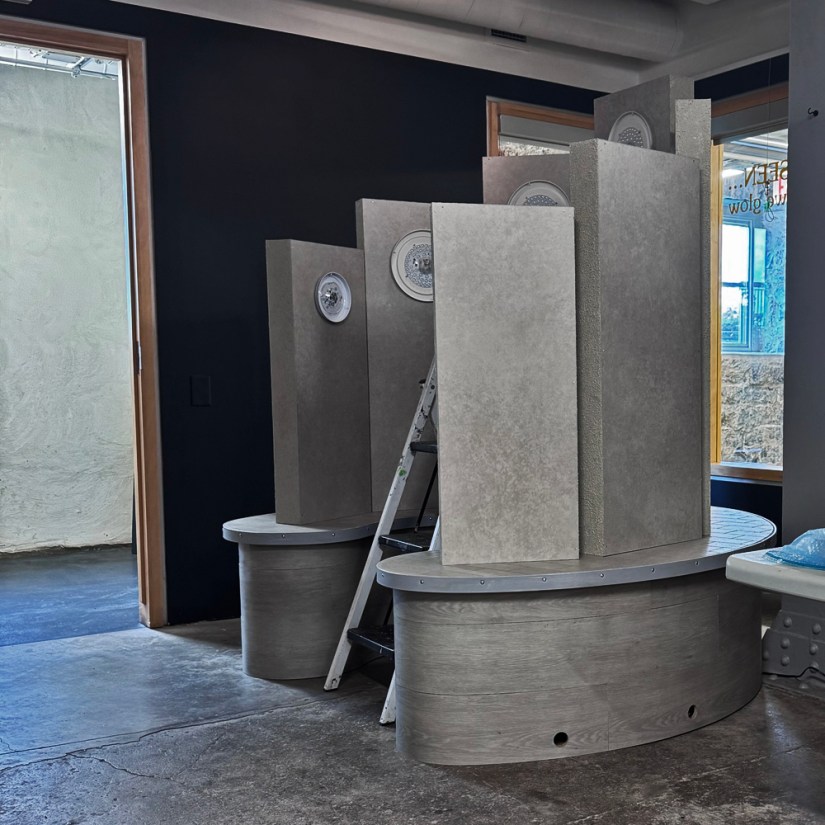
Using a stepladder, Chapman mounted the backlighting fixtures, threaded the cords down through the monoliths and plinth top, and fished all seven lighting plugs with the aid of pre-drilled access holes in the base to connect directly with the power bar and dimmer box hidden near the metal pillar. Once plugged in, she removed the ladder and tuned the dimmers to achieve the ideal golden radiance.
Reflecting on the Journey
This project allowed Chapman to flex her training and installation artist muscles. Combining her Honours Bachelor of Fine Arts in Studio Sculpture and Installation (and receiving the 2019 Queen’s Medal in Visual Art) with years of professional studio evolution, Being Seen proved that rigorous pre-planning and artistic vision go hand in hand.
Chapman remains deeply grateful to the Kingston Arts Council for hosting this exhibition at the Pocket Gallery. Without this opportunity, she could not have brought all these technical and conceptual elements together to pave the way for future immersive, interactive art experiences.
About the Artist
Portia “Po” Chapman is a Kingston-based multidisciplinary visual artist, muralist, and certified educator (BFAH, B.Ed, OCT) celebrated for her site-specific Storytelling Art. Awarded the Queen’s University Medal in Visual Art, Po combines university-honed studio sculpture discipline with specialized craftsmanship—integrating physical research, structural load planning, and precise spatial logistics alongside natural rawhide art and bold color-blocking. In creating the Being Seen exhibition centerpiece, she drew upon years of installation expertise to engineer a massive, interactive sculpture designed specifically for seamless transport, narrow threshold clearances, and site-specific gallery power integration. Discover her public murals, gallery exhibitions, and creative practice at loveartbypo.ca.
Contact Po Using Form Below


Portia “Po” Chapman, Kingston Artist
Serving Kingston, Ontario & Across Canada
Contact Po
Email: Portia@LoveArtByPo.ca
Instagram:
Love Art by Po
Facebook:
Love Art by Po Profile
Location
Private Art Studio:
Auden Park Kingston, ON
Google Business Profile:
Professional Listing


Let Me Know What You Think! Start or Join the Convesation