As a multidisciplinary Kingston artist, Portia “Po” Chapman is widely recognized for her nature-focused storytelling art and the high-contrast paintings that adorn her artisanal frame drums. What is less known about her rawhide art, however, is a very deliberate choice she makes: Po does not paint the faces, eyes, or skin of the characters in her images. Instead, she leaves them unpainted so that the natural rawhide becomes the skin of her figures, creating inherently inclusive content. The strategy reveals itself in the light—when noonday sunlight shines through the back of a painted drum, the figures come alive, with their faces, eyes, and skin literally glowing.
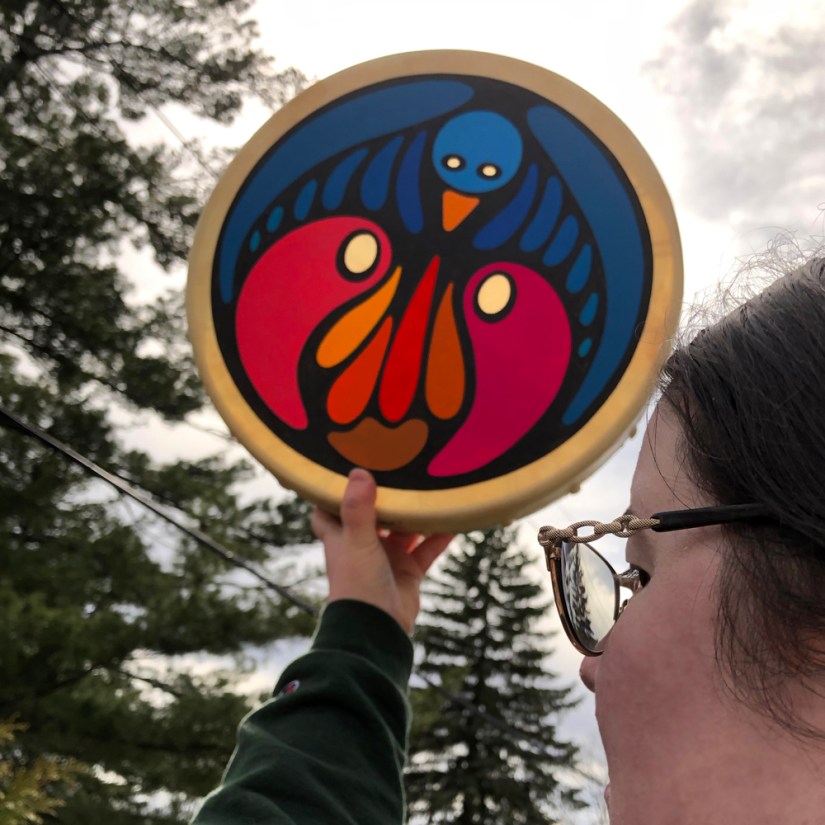
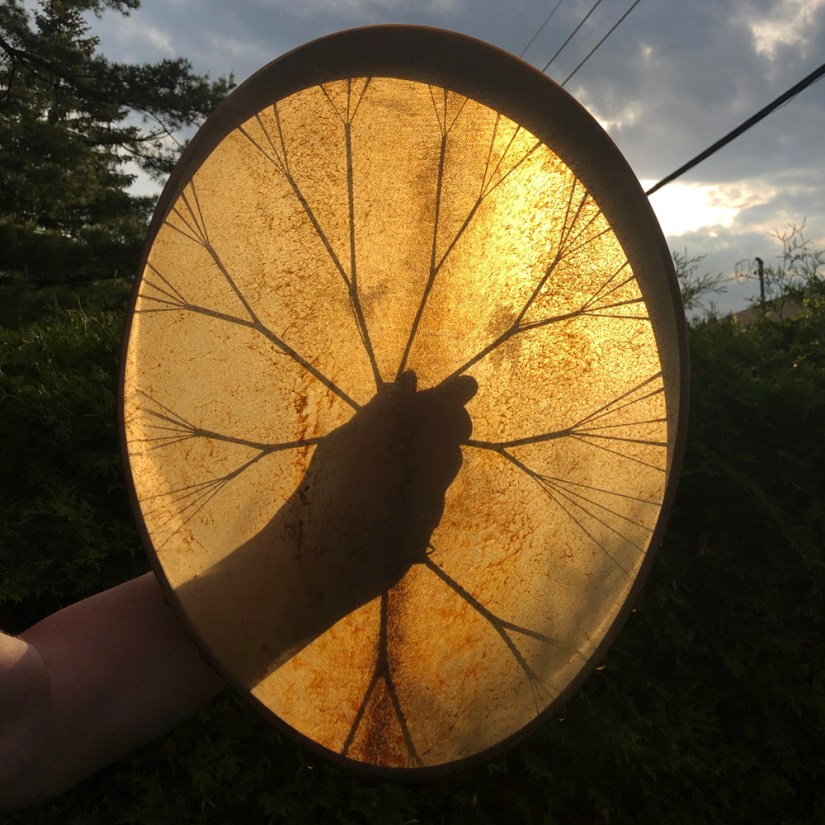
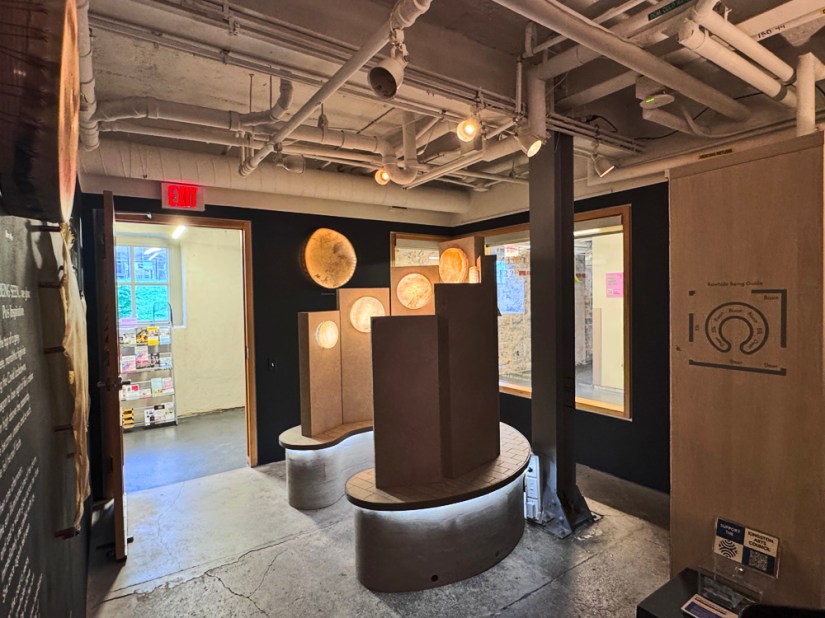
It was the golden, sunlit radiance that inspired the glow for Po’s immersive, interactive art installation, Being Seen: when Being Seen… we glow, hosted at the Kingston Arts Council (KAC) Pocket Gallery in Kingston, Ontario’s Tett Centre for Creativity and Learning from July 27 to September 18, 2026. To bring this installation to life, she set out to engineer a way, using artificial electrical backlighting, to simulate the natural essence of sunlit rawhide.
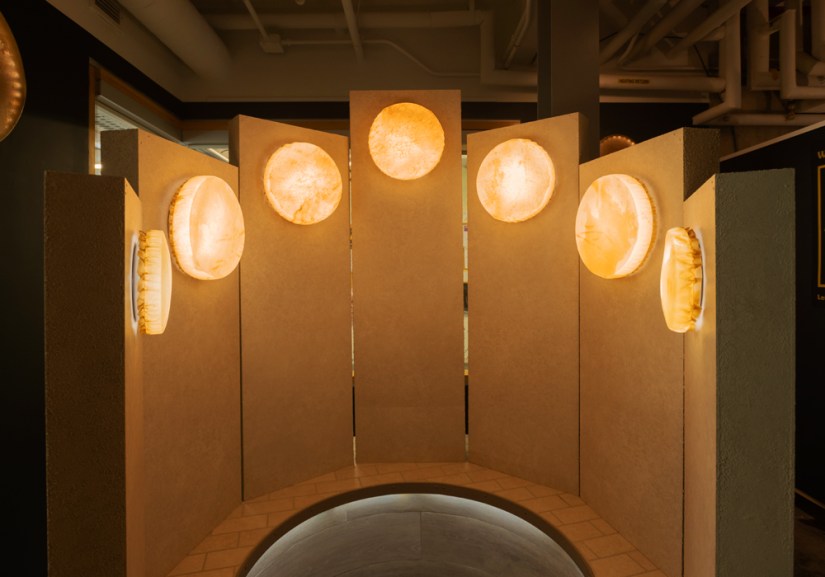
This is the story of how Po engineered the glowing vessels of the Glow Chamber.
The Search for the Perfect Light
Because an installation of this exact existence had never been done before, Po had no existing reference points or guides to follow. She embarked on a long, experimental journey of trial and error to find a light source that could evoke the precise emotional response of feeling truly seen.
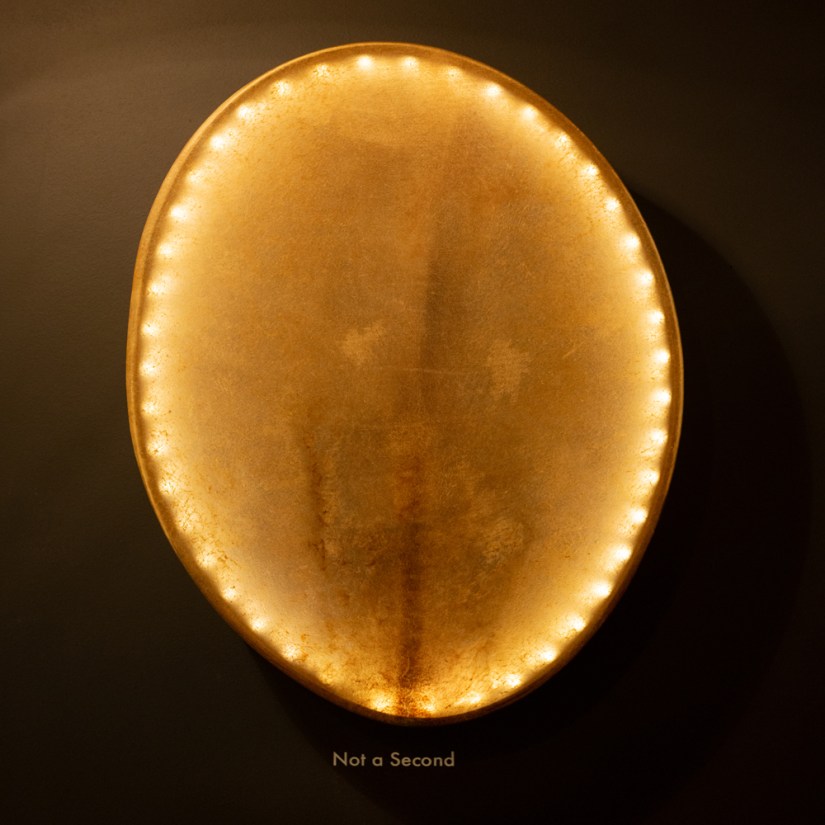
Her first attempts involved sampling incandescent lights. While they provided a comforting hue, the heat generated, even after drilling holes for vents, caused the enclosed rawhide to overheat, crack, ripple, and emit an unpleasant scent. Next, she tested cool LED strip, tape, and rope lighting. While these options beautifully framed her drums (such as her bison drum, “Not a Second”), they created a spotted effect rather than the unified, radiant glow she sought.
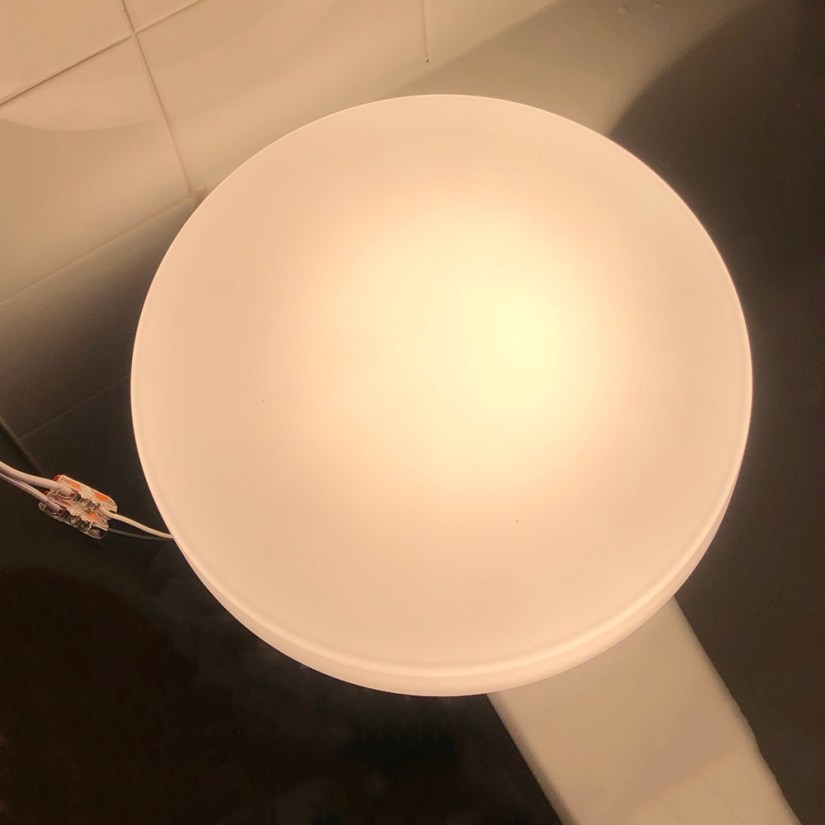
She then tried LED Flat Panel Flush Mount Ceiling Lights, which produced the right glow but proved cost-prohibitive and offered limited size choices. Finally, Po discovered an economical, budget-friendly round LED fixture equipped with a colour temperature adjustment switch (allowing selection between soft white, bright white, and daylight) paired with an opaque plastic diffusing shade. This combination yielded the soft, manageable, even glow she needed.
Selecting and Soaking the Hides
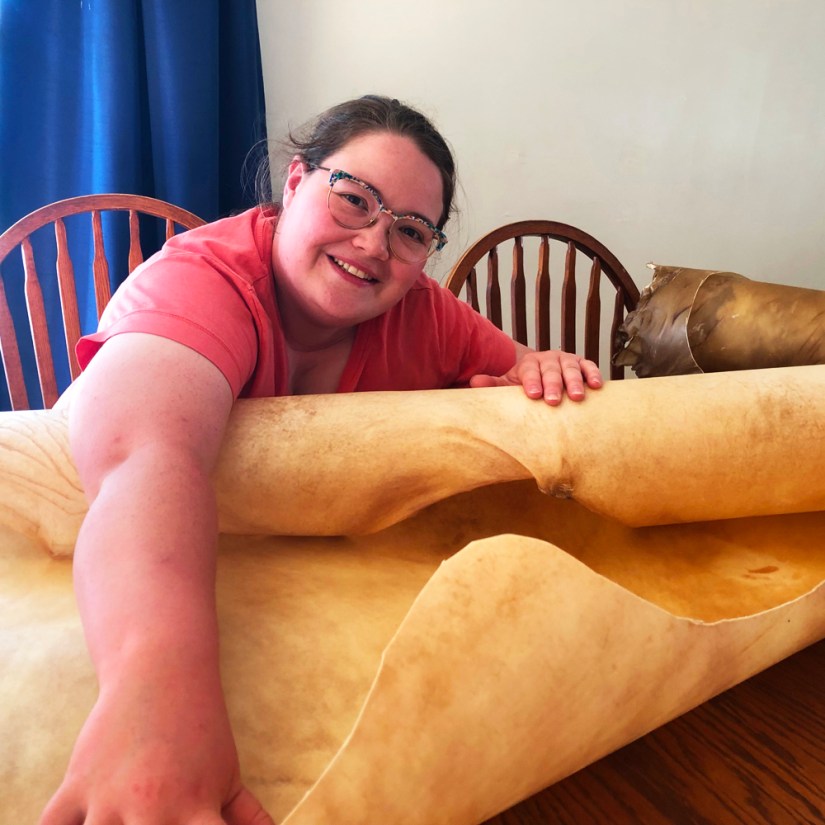
With her light source established, Po turned her attention to selecting the rawhide. Working in her studio, she unrolled various deer, elk, and bison hides to choose pieces for 8, 10, and 12-inch light diffusers. Because rawhide ranges from opaque to nearly transparent, and spans shades from silver to cream, gold, and deep amber, she meticulously curated hides with unique scars, holes, and mottled textures to achieve her desired ambient, glowing story.
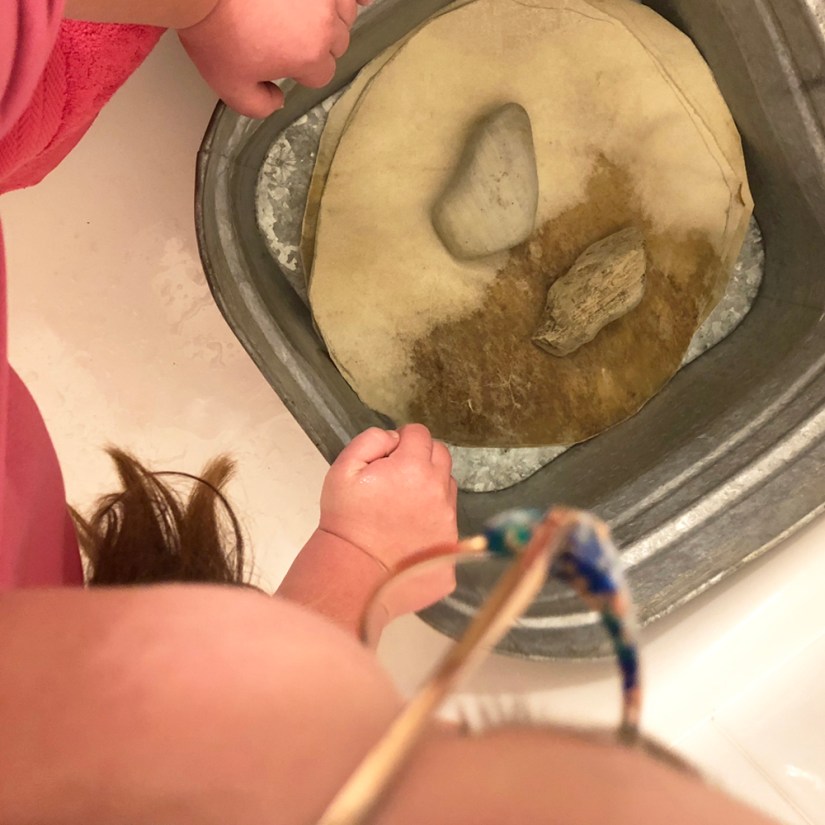
After rough-cutting the hide into rounds, Po submerged them two at a time in a dedicated galvanized washtub filled with tap water. The soak times varied significantly by hide type: deer rawhide soaked for 12 hours, elk rawhide soaked for 24 hours, and bison rawhide soaked for 48 hours. To keep the naturally buoyant hides fully submerged, she initially weighted them down with river rocks. Halfway through the soak, she removed the rocks and flipped the hides; once fully hydrated, the rawhide suspended naturally in the water bath like fish staying still in a clear pond.
The process differed from Po’s method of soaking rawhide drum skins which are soaked in rain water, weighted by natural crystals, and soaked one at a time for individually specific times.
Giving in to the Rawhide: A Technical Breakthrough
Wrapping wet, pliable rawhide over plastic diffusers proved vastly different from stringing traditional oak or maple frame drums. Rawhide exerts immense force as it dries and shrinks. Po’s early trials failed because pulling the hide tightly with standard drum-lacing techniques warped and buckled the plastic diffusers, preventing them from mounting back onto their LED base units. Po realized that to succeed, she had to stop strong-arming the material and instead give in to the nature of rawhide, allowing its natural, organic shape to form. She pioneered an entirely new process that included:
1/ Precision Drilling: She determined a precise location, hole pattern and frequency to drill directly into the plastic diffusers, matching them with holes punched around the hide using a leather punch.
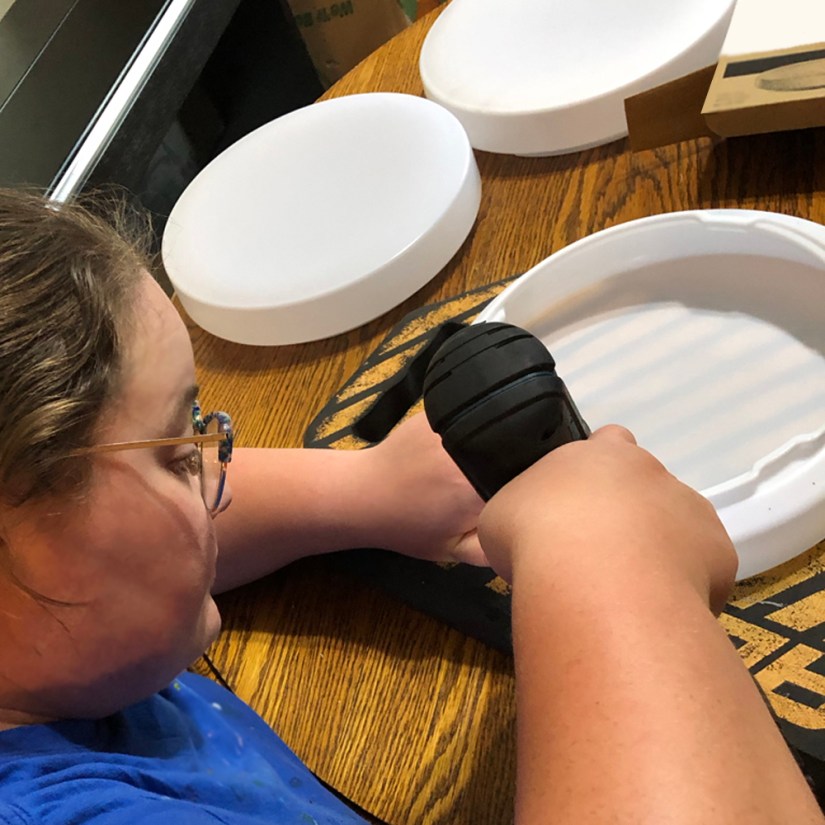
2/ Backstitch Lacing: Using synthetic sinew and a darning needle, she applied a loose, backstitch stitch pattern, that allowed the rawhide to gently shift as it shrank to fit the diffuser.
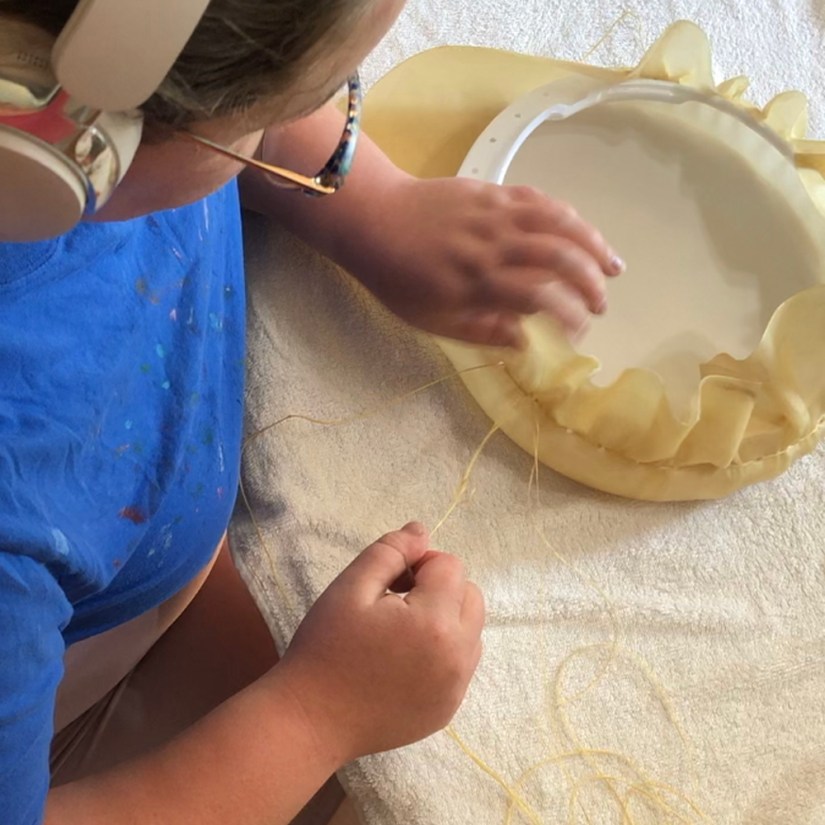
3/ Cake Fondant-Style Draping: She calculated her cut hide diameter using a dedicated formula—the diffuser diameter plus twice its depth, plus approximately two inches. Instead of stretching the hide tight, she draped it loosely over the diffuser like fondant icing over a cake.
This technique allowed a natural, flowing ruffle to form, rather than measured exact pleating that she creates for her frame dums. The excessive hide created a skirt that covered the metal mounting hardware.
Assembly, Engineering, and Testing
Once laced, the vessels were transferred to a wire drying rack in Po’s woodshop. Because the hide rested against a solid plastic diffuser, the drying process took longer than standard open-backed frame drums. During this drying window, Po actively hand-sculpted and finger-molded the curves and flow of the rawhide ruffles, progressively trimming them as they set.
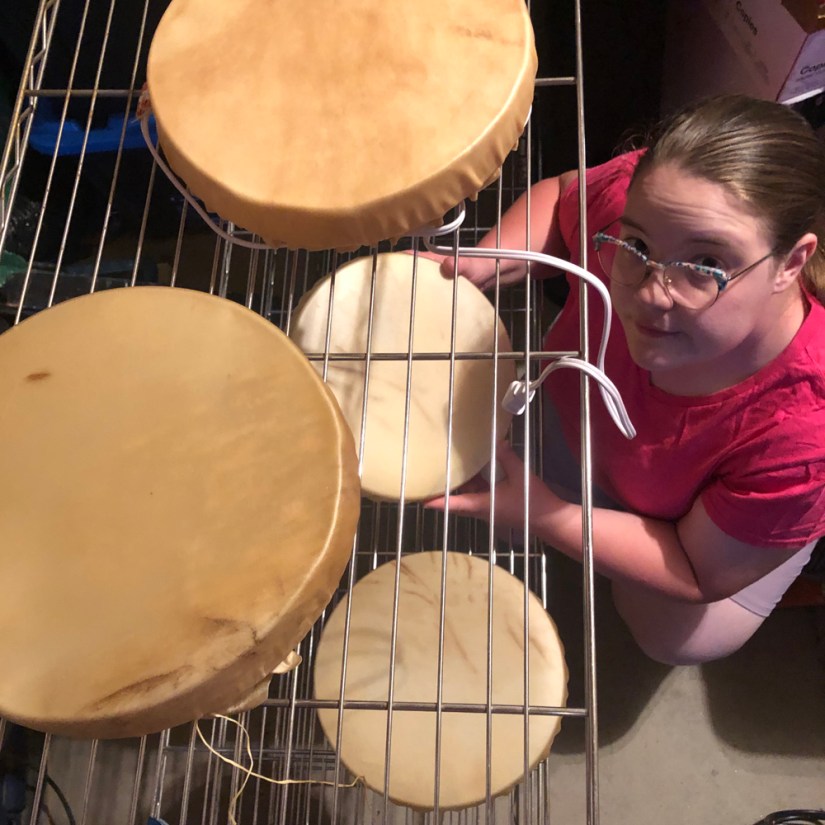
To prepare the fixtures for gallery mounting, Po converted the hardwired LED ceiling lights into plug-in lamp units using transparent Wago Lever-Nut connectors. This allowed all the monolith-mounted vessels to plug directly into a central power bar controlled by a single master dimmer switch that the gallery staff could use with ease.
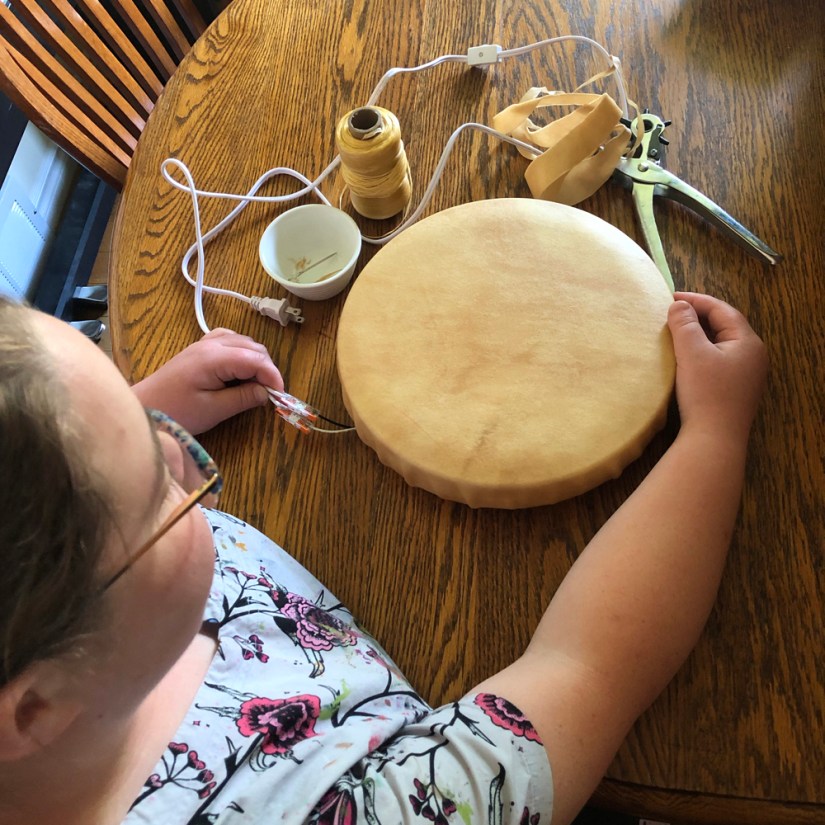
Before mounting, Po tested each vessel against panels of stone-hybrid sheeting (used to cover the MDF installation monoliths). Seeing the warm light shine through verified that she had successfully recreated the golden, sunlit warmth of a rawhide drum.
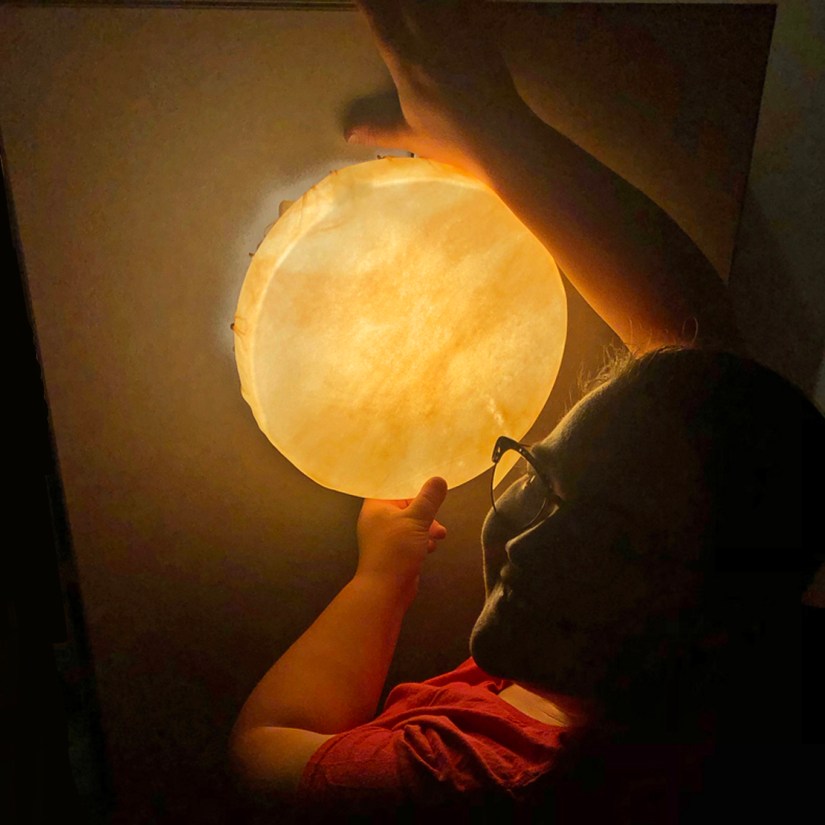
Community Impact and Celestial Alignment
When the Glow Chamber was assembled and lit on installation day, adjusting the dimmer switch immediately brought the desired sunlit warmth into the space. Just three days after the exhibition opened on July 28, nature provided a striking confirmation: on July 31, 2026, a bright full moon rose in the midnight sky, glowing with the exact golden warmth Po had engineered in her studio.
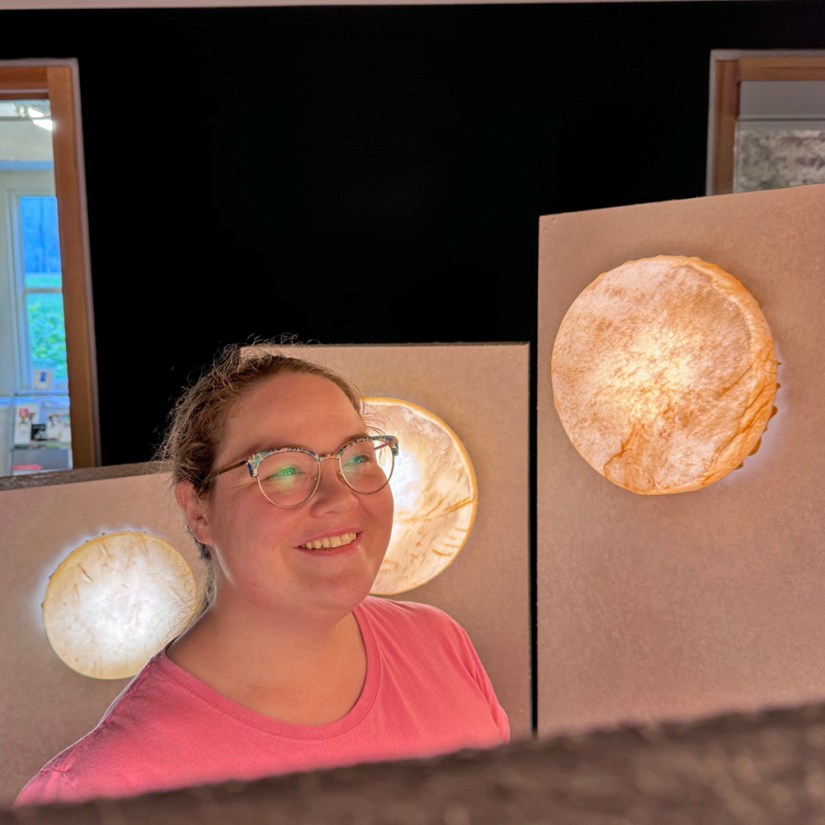
Gallery visitors responded with deep emotion, often describing the Glow Chamber as a comforting, “womb-like” space. As part of the interactive exhibition, 70 guests snapped selfie portraits inside the Glow Chamber and posted them onto an interactive gallery board alongside handwritten reflections of their experience.
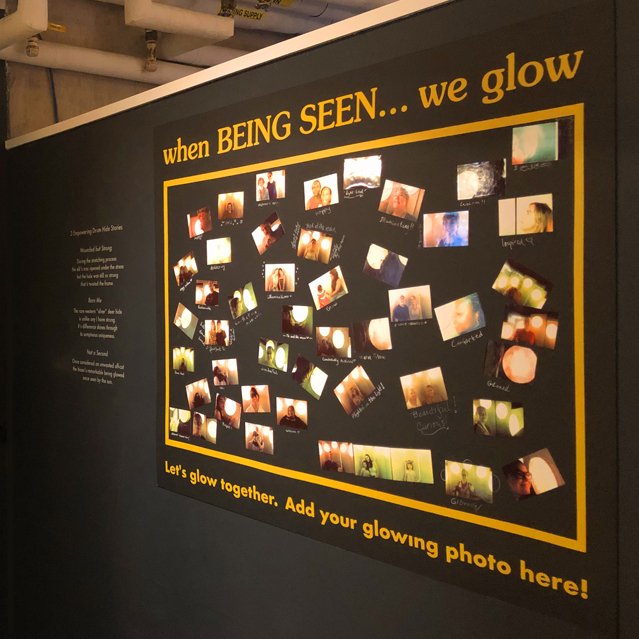
By capturing the feeling of noonday sunlight through rawhide, Portia “Po” Chapman created a space where visitors could joyously glow together—proving her core thesis: “Everyone glows when they feel seen.”
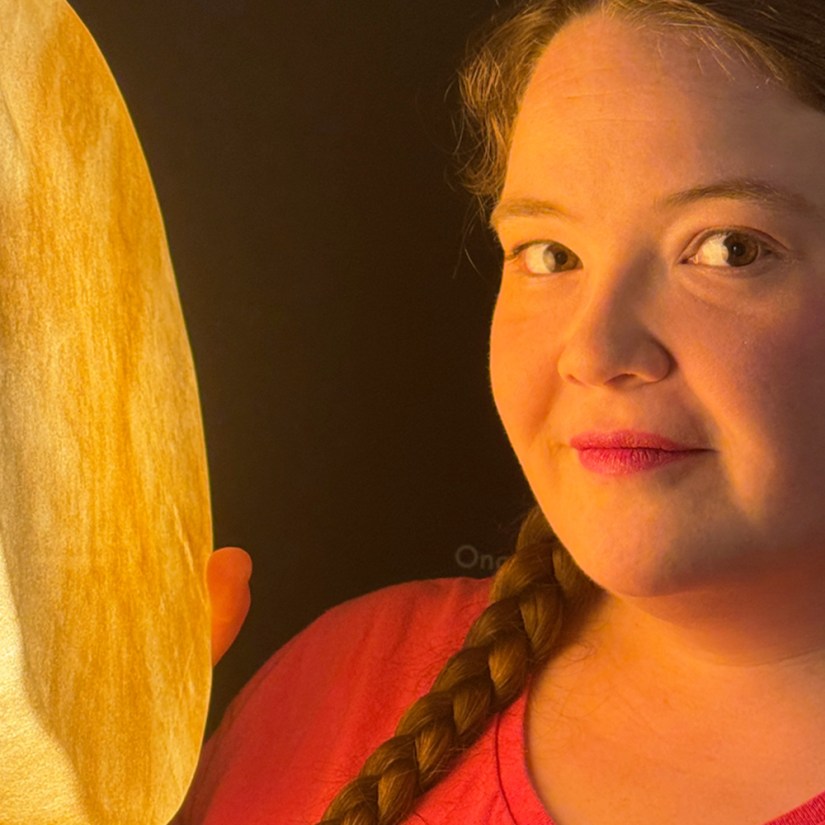
Hosted by the Kingston Arts Council at the Tett Centre for Creativity and Learning, Being Seen: when Being Seen… we glow, marked both a community success and a major advancement in Po’s ongoing evolution of rawhide art.
Portia “Po” Chapman is a Kingston-based multidisciplinary visual artist, muralist, and certified educator (BFAH, B.Ed, OCT) recognized for her site-specific Storytelling Art and signature high-contrast aesthetic. Blending traditional craft—such as artisanal rawhide sculpting and woodworking—with innovative lighting design and digital tools, she creates immersive, community-driven installations that invite viewers into a shared, radiant dialogue where everyone glows. Discover more of her portfolio, public artworks, and upcoming projects at loveartbypo.ca.

Portia “Po” Chapman, Kingston Artist
Serving Kingston, Ontario & Across Canada
Contact Po Using Form Below


Contact Po
Email: Portia@LoveArtByPo.ca
Instagram:
Love Art by Po
Facebook:
Love Art by Po Profile
Location
Private Art Studio:
Auden Park Kingston, ON
Google Business Profile:
Professional Listing


Let Me Know What You Think! Start or Join the Convesation