The Groundbreaking Threshold
Across the eight-week run of my solo exhibition, “Being Seen: when Being Seen… we glow,” hosted at the Kingston Arts Council (KAC) Pocket Gallery inside the Tett Centre for Creativity and Learning from July 27 to September 18, 2026, every design choice, technical calculation, and studio experiment returned to this truth: sculptural installation art directs movement, invites interaction, and speaks directly to the human experience.
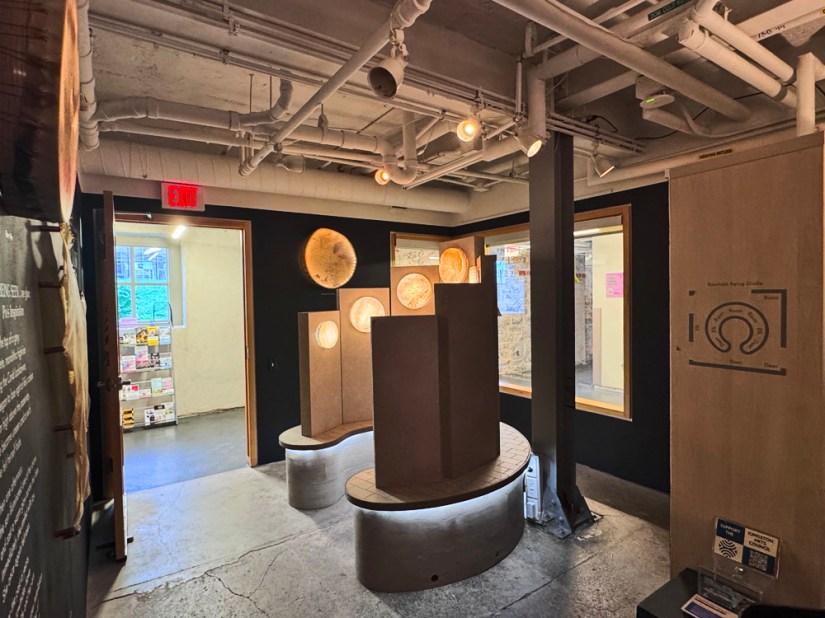
When visitors walked out of the Tett Centre’s limestone corridors and stepped across the Pocket Gallery threshold, they entered an environment that felt warm, welcoming, and effortless. Yet, that seamless emotional experience was the direct result of six months of intensive studio research, site-specific planning, structural engineering, optical light testing, and strict logistical scheduling. Not only did this solo exhibition require careful structural pre-planning, it required psychological research into how human beings react to contemporary urban isolation, and interact with glowing organic membranes, as well as physical urban spaces. My mission was to create a piece that achieved its goal of the public experiencing the positive glowing feeling of Being Seen once again, and in some cases, for the first time. The organic result was that the Glow Chamber became a vehicle of wellness over the 8 week run of the exhibition.
This comprehensive overview of the entire lifecycle of Being Seen and its central showstopper, the Glow Chamber, illustrates 3 things that every installation artist comes to know:
1/ Research is imperative.
2/ There is complexity in simplicity.
3/ The intended viewer reaction must remain in focus.
The Sidewalk Threshold: Integrated Print Media as an Active Installation Material
An art installation rarely begins at the gallery door. At its most powerful, an installation begins breathing long before a viewer steps into the room. When designing the print media for Being Seen: when Being Seen… we glow, I refused to treat posters, rack cards, business cards, and directional signs as passive marketing flyers or basic commercial advertising. Instead, I developed print media as an active, contemporary material of the installation itself, a physical and emotional bridge connecting the busy summer streets of downtown Kingston directly to the intimate interior of Room 115 in the Tett Centre.
1. Visual Identity and the Golden Glow Anchor
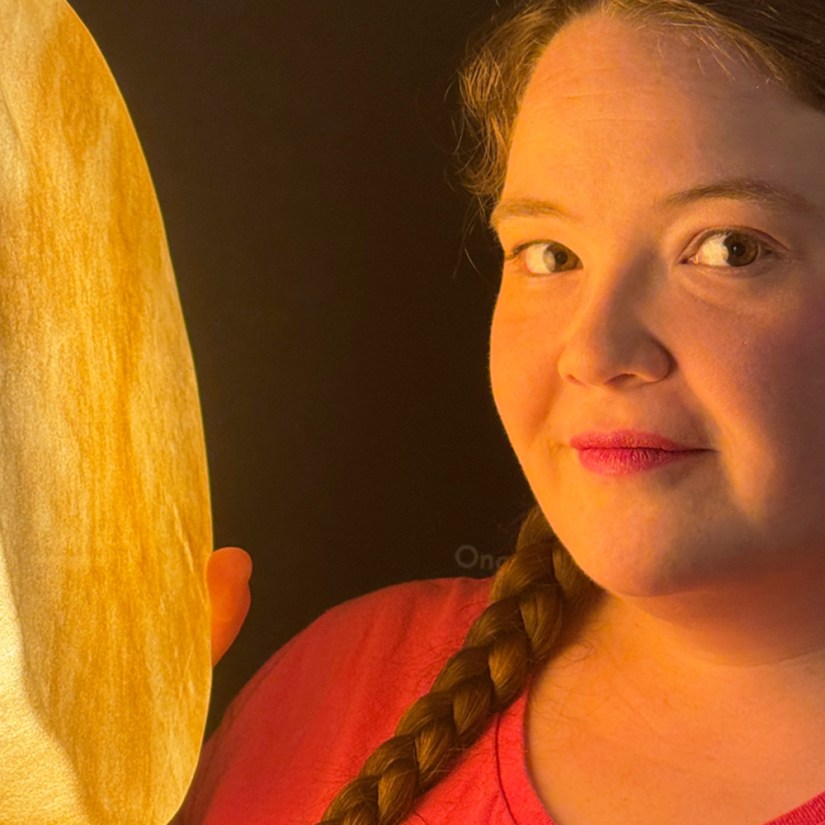
The entire visual identity was built upon a single, unedited night photograph taken outside my Kingston art studio. The photo captured me holding the first, successful illuminated rawhide vessel with its golden glow lighting up my face.
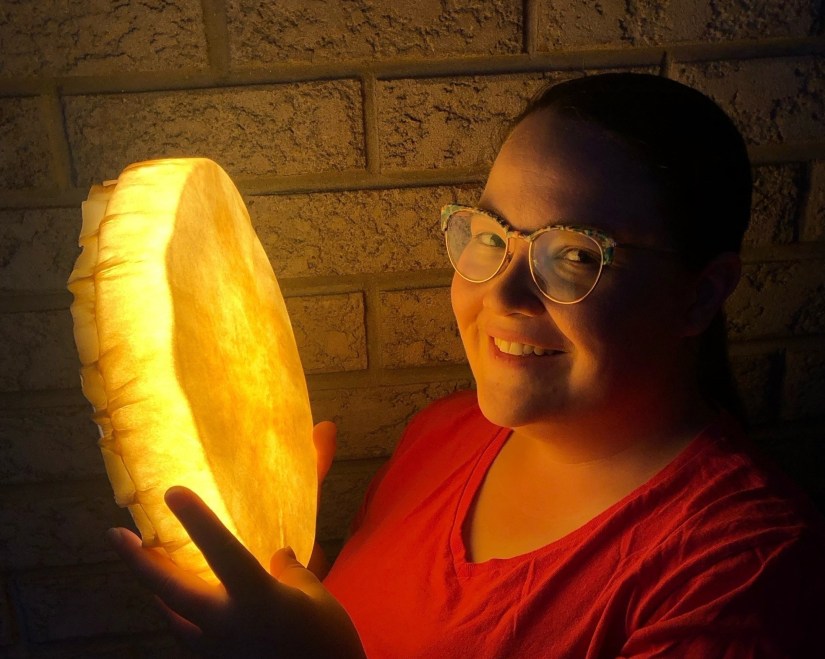
By anchoring all promotional print materials to this exact photograph, every poster, rack card, and digital announcement shared a high-contrast black backdrop and warm golden palette that visitors would later encounter inside the central Glow Chamber. This created a recognizable visual breadcrumb trail throughout the city, promising warmth, connection, and visibility.
2. The Physical Trail from Downtown to Foyer
As visitors walked from downtown Kingston shops, past the Isabel Bader Centre for the Performing Arts, and into the Tett Centre, the density of print materials steadily increased:
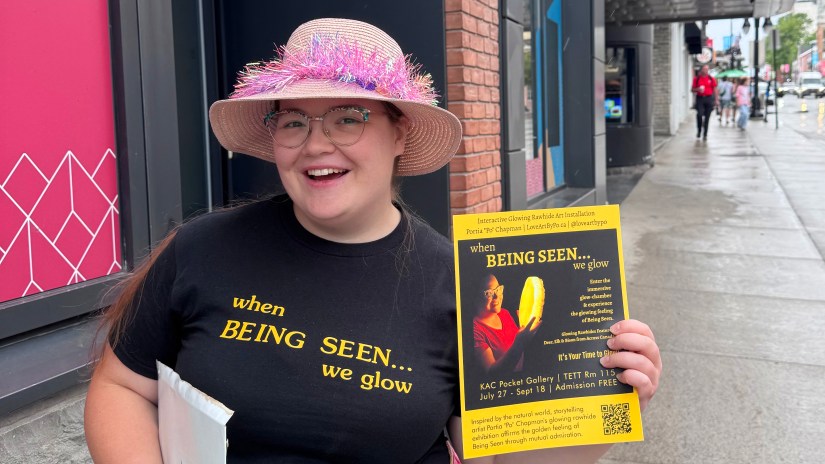
- Street-Level Posters: Displayed in local shop windows and public boards to catch the eye of everyday pedestrian traffic.
- Branded Apparel: On downtown promotion walks, I wore a custom black t-shirt printed with bright gold lettering matching the exhibition title wall, paired with a joyful tinsel hat. This outfit acted as a conversational icebreaker, turning casual sidewalk encounters into the very first note of the exhibition experience.
- Directional Signage and Posters: Positioned at the main entrances of the Tett Centre to welcome arriving guests and guide them down the stone hallway toward the Pocket Gallery.
- Tactile Takeaways: Inside the dark gallery space, takeaway rack cards and business cards were placed beneath an illuminated bison rawhide drum like hidden treasures, allowing visitors to take a physical piece of the golden atmosphere home with them.
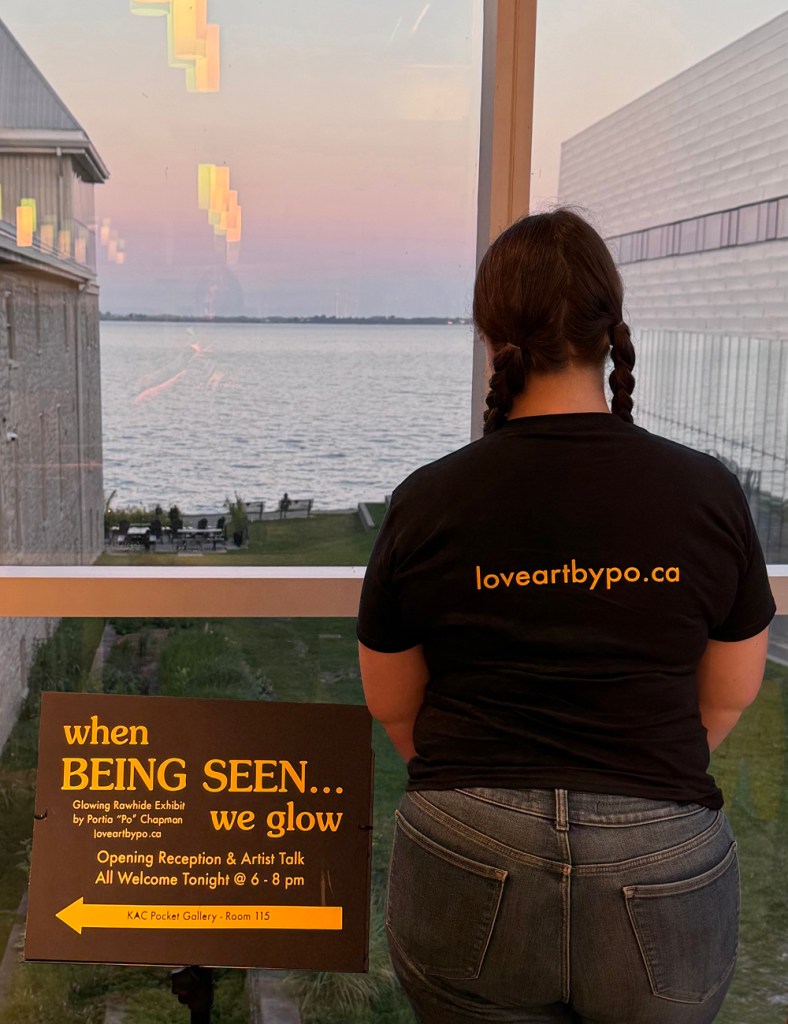
By weaving print media, personal presence, and spatial design into one connected ecosystem, I proved that a poster can transcend advertising to become the initial threshold of the artwork itself.
The Architecture of Invisibility: Site-Specific Planning and Brutalist Metaphor
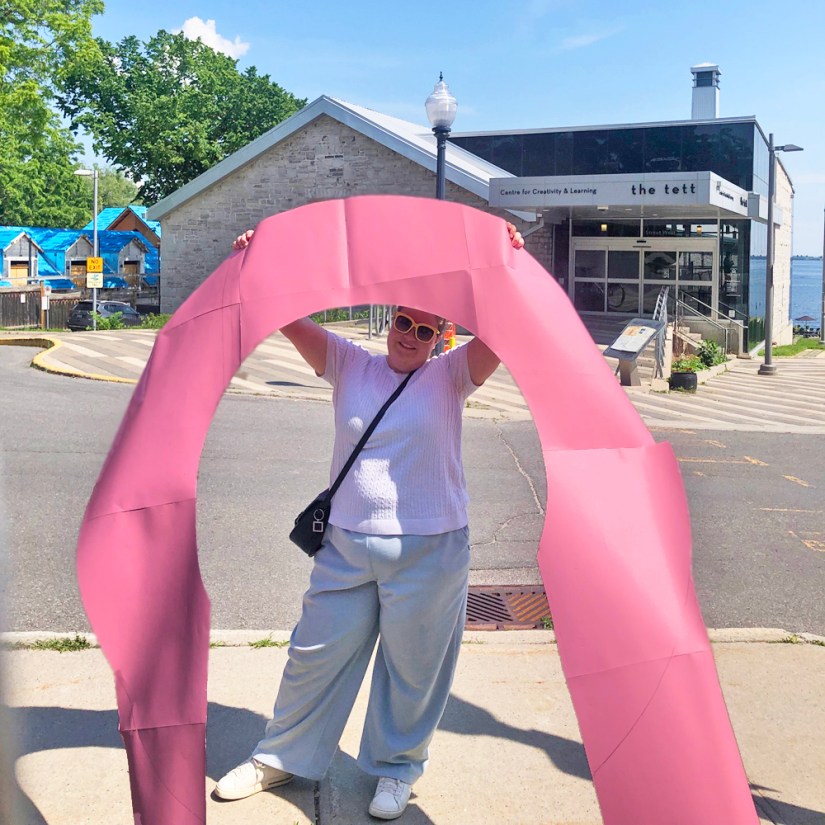
Creating an interactive installation requires an artist to engage in direct conversation with a physical space. Initial room dimensions rarely reveal the practical challenges or true architectural personality of a building. Before building anything in my Kingston woodshop, I built a complete 3D computer CAD model based on structural blueprints, followed by an essential on-site fitting using a full-scale 1:1 pink paper floor template.
1. Navigating Architectural Constraints
The KAC Pocket Gallery presented several real-world architectural challenges:
- An off-centre structural metal pillar located near the windows and sliding display wall
- Tight doorway clearance and specific sight-lines from the public hallway
- Hanging spotlights
- Strict accessibility guidelines requiring a wide, unobstructed path for wheelchair maneuverability
- L-shaped gallery windows to the Tett hallway
- A dedicated passage from the main entrance to the KAC offices
- Freshly painted black gallery walls
- The humid summer weather
- The potential for the public to sit on and touch the Glow Chamber
- The limited gallery space.
By laying out the pink paper floor template inside the empty gallery, I trimmed perimeter arcs and cut custom notches around the metal pillar. This step allowed me to solve spatial conflicts on paper before making a single cut in expensive lumber.
2. Structural Engineering in the Woodshop
Back in the woodshop, these physical requirements directed the fabrication process:
- The Integrated Plinth Base: To ensure total structural stability across the concrete gallery floor, I built a base using two staggered-seam layers of laminated plywood. This double-layer construction eliminated weak joints and provided a solid, wobble-free foundation.
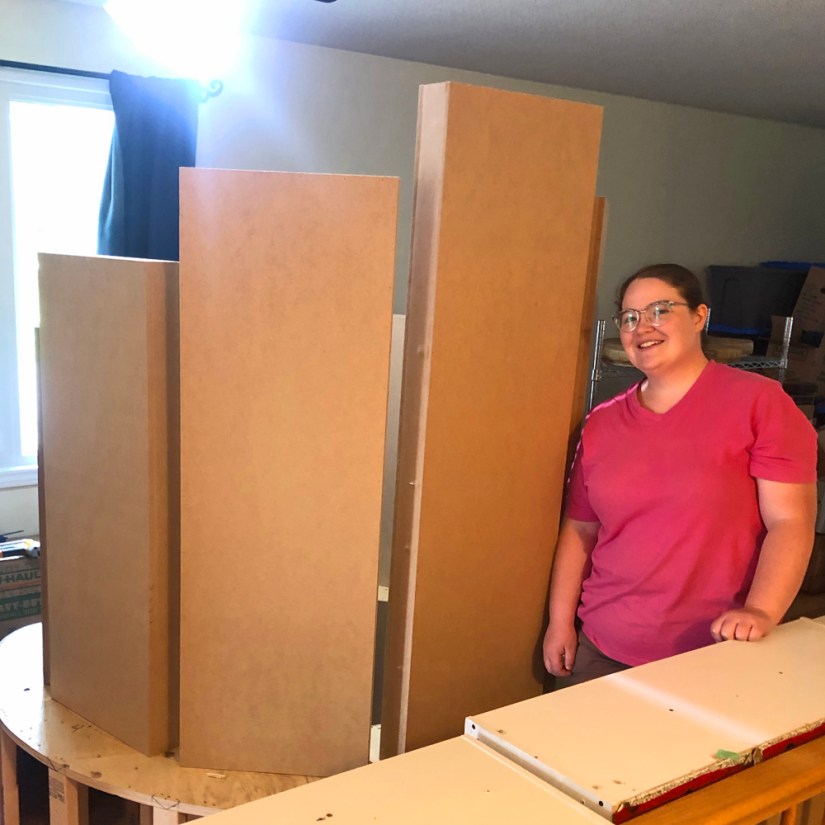
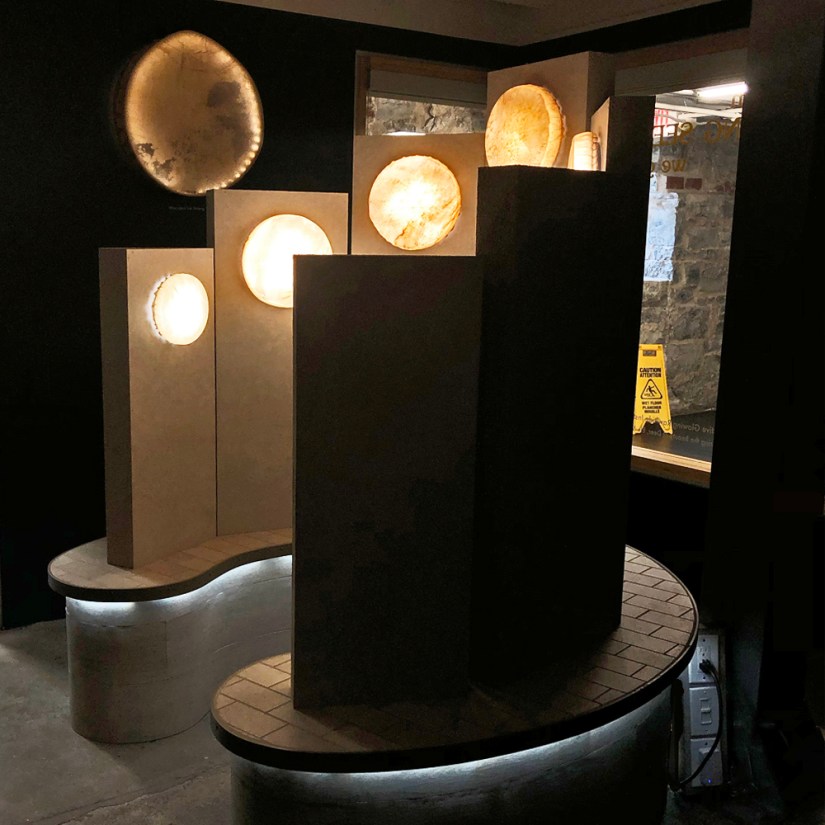
- Vertical Stud Monolith Skeleton: Secured vertical 2×3 wood studs formed the integrated plinth frame as well as a core internal skeleton for seven hollow MDF monolith structures to vertically slide over.
- Vertical Height Clearances: Because ceiling spotlights limited overhead room, the central monolith was designed to stand at exactly 6 feet 2 inches. This height maximized human scale and visual impact while allowing a safe clearance gap beneath the overhead gallery spotlighting.
3. Engineering Brutalist Urban Tension
To help visitors feel the warmth of being seen, I deliberately created the exterior of the structure to simulate a cold, grey, concrete city street.
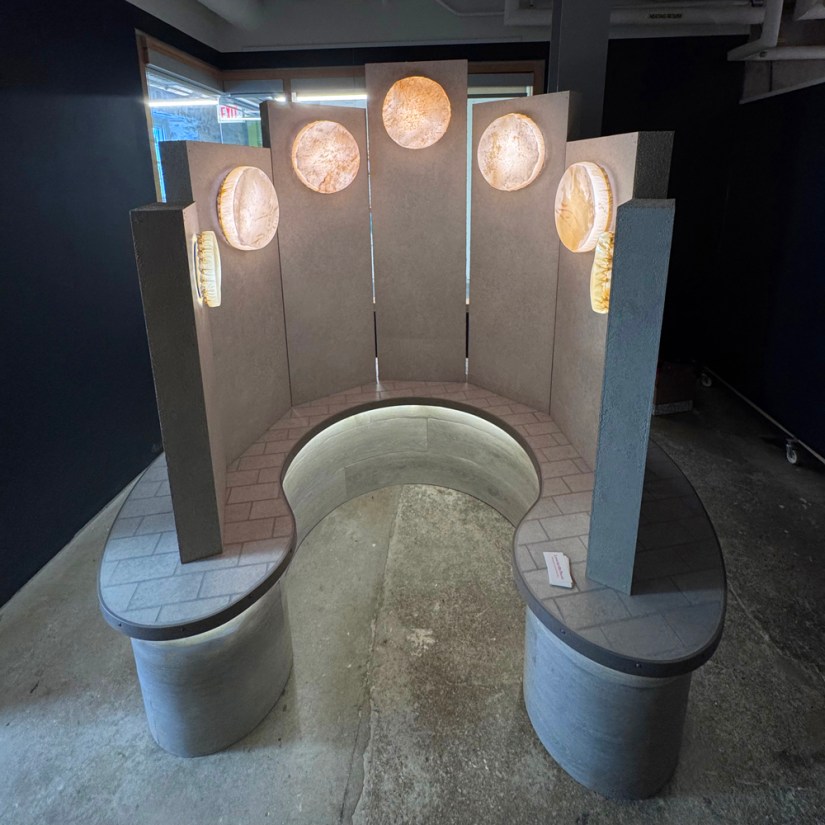
The seven monoliths were covered in custom-cut stone-hybrid panels and the plinth top with subway tiles (that I cut and shaped in my shop), flexible oak-look wrapping, and hand-troweled foam-plaster paint textures (giving the impression of broken stone or blocks), turning them into brutalist, concrete-like structures. Highlighted by cool grey strip lighting under the plinth top’s edge and a muted grey caution sign reading “when Being Unseen… we fade,” this artificial grey space was designed to reflect the cold isolation of modern urban life.
By building a rigid urban environment, the structural framework created the perfect visual contrast, setting the stage for guests to step forward and feel the comforting golden warmth of the glowing rawhide vessels located near the tops of the monoliths.
Innovating the Glowing Rawhide Vessels: Material Transmutation and Light Engineering
As a multidisciplinary visual artist and frame-drum maker, my rawhide practice follows an intentional rule: I do not paint the faces, eyes, or skin of figures in my drum paintings. I leave the natural rawhide completely clear so that the hide itself becomes the skin of the characters. When natural sunlight passes through the back of a painted drum, the figures come alive, radiating a warm, natural glow.
For Being Seen, I needed to invent a reliable way to simulate this daylight radiance using electrical backlighting. Because an installation of this exact design had never been created before, I conducted a long series of studio experiments to find the right light source and hidden mounting hardware.
1. The Prototyping Journey: Finding the Light
- Incandescent Bulbs: Tested for their warm hue, but even with drilled ventilation holes, the heat output caused enclosed rawhide to dry out, warp, crack, and release an unwanted scent.
- Cool LED Strip and Rope Lighting: Efficient and cool, but created uneven light spots and harsh stripes behind the hide rather than a continuous, smooth radiance.
- LED Flat Panel Ceiling Lights: Offered smooth diffusion, but were too expensive and restricted design choices due to fixed sizes and shapes.
- The Solution: I selected an economical round LED ceiling fixture featuring an adjustable colour temperature switch (Soft White / Bright White / Daylight) paired with a curved, nearly opaque plastic diffusing shade. This setup produced a soft, controllable, uniform glow when a dimmer was dialled to tune the lighting intensity.
2. Rawhide Hydration and Preparation Protocols
Working in my woodshop, I unrolled deer, elk, and bison rawhides to select sections for 8-inch, 10-inch, and 12-inch light diffusers. I deliberately chose hides featuring unique scars, natural dark spots, and translucent grain patterns to tell a story through texture.
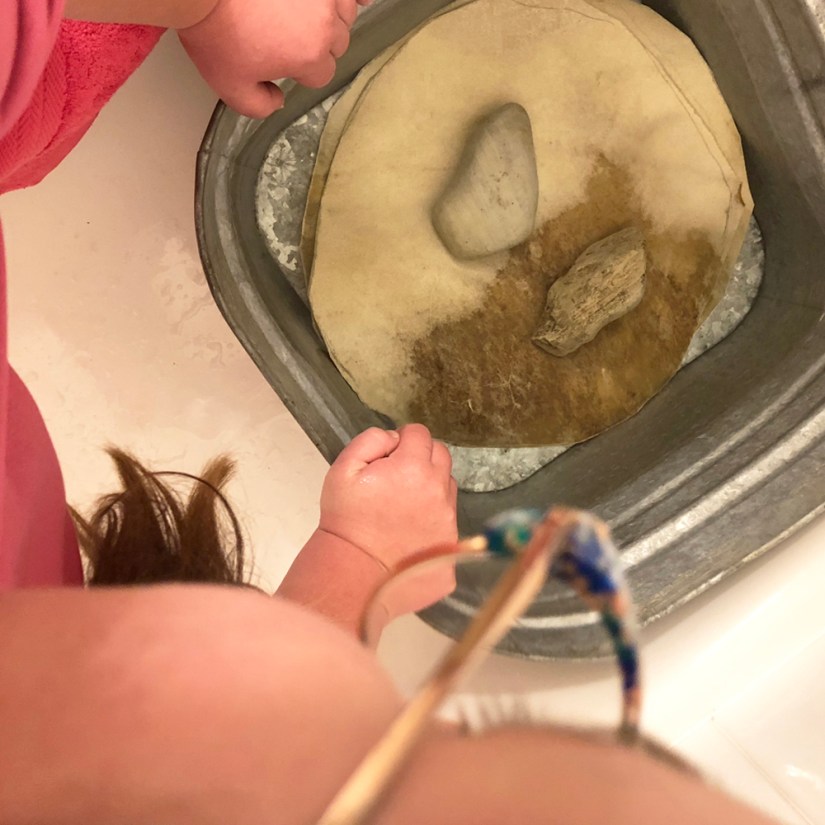
The selected hide rounds were submerged two at a time in a clean galvanized tub. Hydration timelines varied significantly by hide density: deer rawhide soaked for 12 hours, elk rawhide soaked for 24 hours, and bison rawhide soaked for 48 hours. To keep the buoyant hides under water, I weighted them with smooth river rocks. Halfway through the soak, I removed the rocks and flipped the hides. Once fully hydrated, the rawhides floated, suspended in the clear water bath.
3. The Cake Fondant Draping and Backstitch Technique
Wrapping wet rawhide around rigid plastic diffusers presented a major engineering challenge. As rawhide dries, it shrinks with immense force. My early attempts failed because pulling the hide too tighty warped the thin plastic diffusers, preventing them from twisting back onto their LED base mounts.
To solve this, I stopped fighting the hide’s natural shrinkage and invented an original three-step mounting method:
- Precision Drilling: Calculate matching hole patterns and drill pilot holes through both the plastic diffuser rim and the perimeter of the rawhide skin.
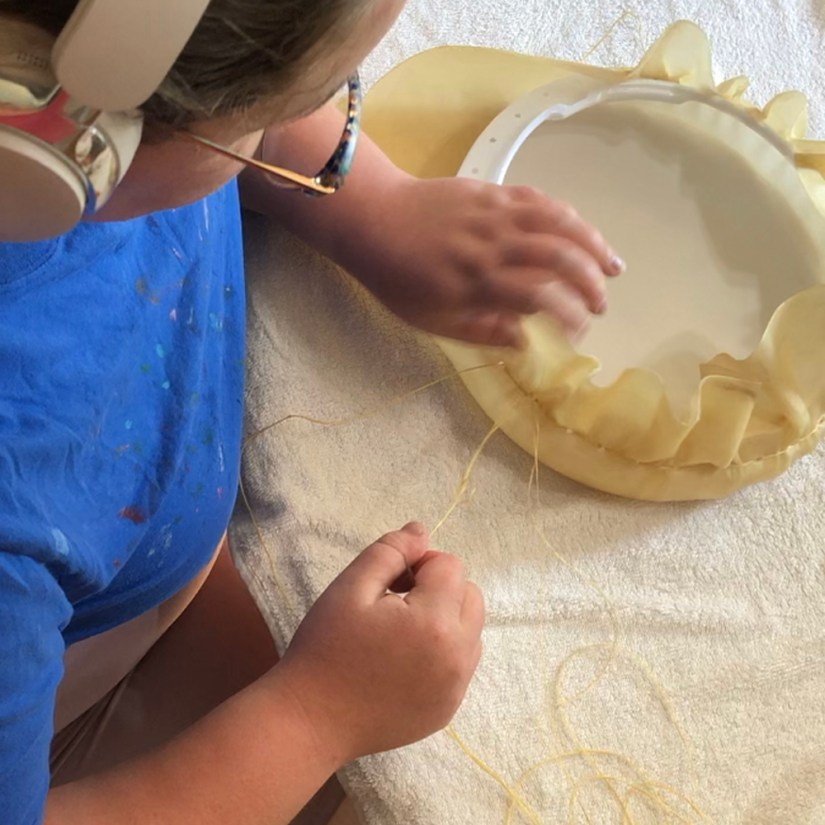
- Cake Fondant Draping: Calculate and cut rawhide diameter using the formula (Diffuser Diameter + [2 x Diffuser Depth] + 2 inches). Drape the wet hide loosely over the plastic dome like fondant icing over a cake, leaving soft, natural folds.
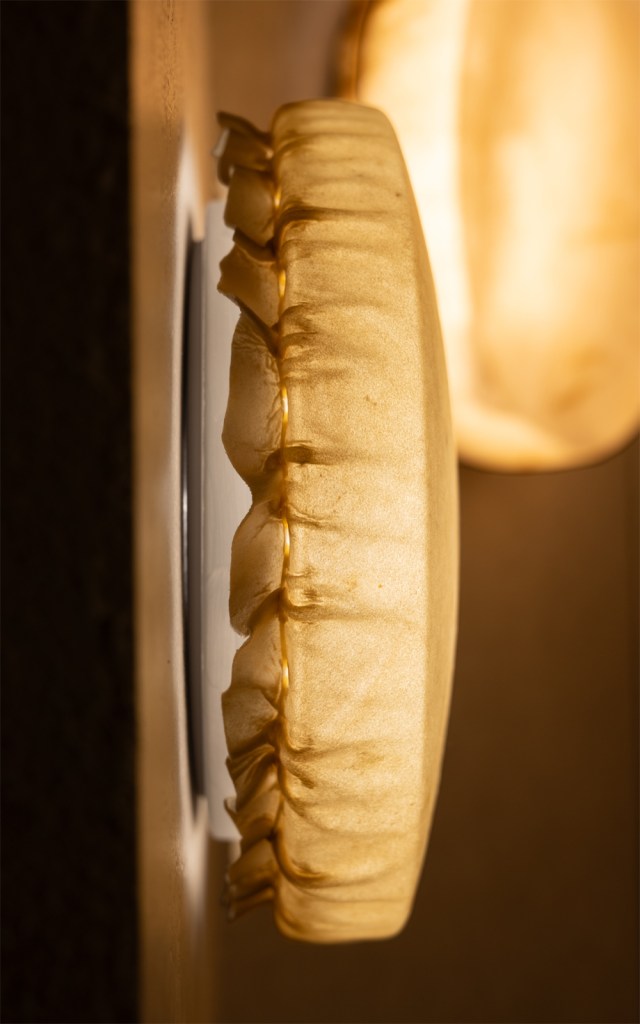
- Loose Backstitch Lacing: Lace synthetic sinew through pre-drilled holes with a darning needle using a flexible backstitch. This allows the hide to shrink naturally without crushing the plastic dome while forming a decorative ruffle that hides mounting hardware.
4. Hand-Sculpting and Electrical Conversion
The laced vessels were moved to a wire drying rack in my woodshop. Because hide rested against a solid plastic shade, drying took longer than open frame drums. During drying, I hand-sculpted the ruffles, shaping decorative folds as the hide hardened.
To prepare the fixtures for gallery installation, I converted the hardwired LED ceiling lights into plug-in lamp units using transparent Wago Lever-Nut connectors. All monolith lighting cables threaded down through internal pass-through holes and plugged into a hidden central power bar controlled by a master dimmer switch, allowing gallery staff to easily adjust illumination levels.
On July 31, 2026, just three days after the show opened, a bright full moon rose in the night sky, matching the golden warmth engineered inside the studio.
The Threshold Face: Preparing, Moving, and Mounting Deer Rawhide for the Title Wall
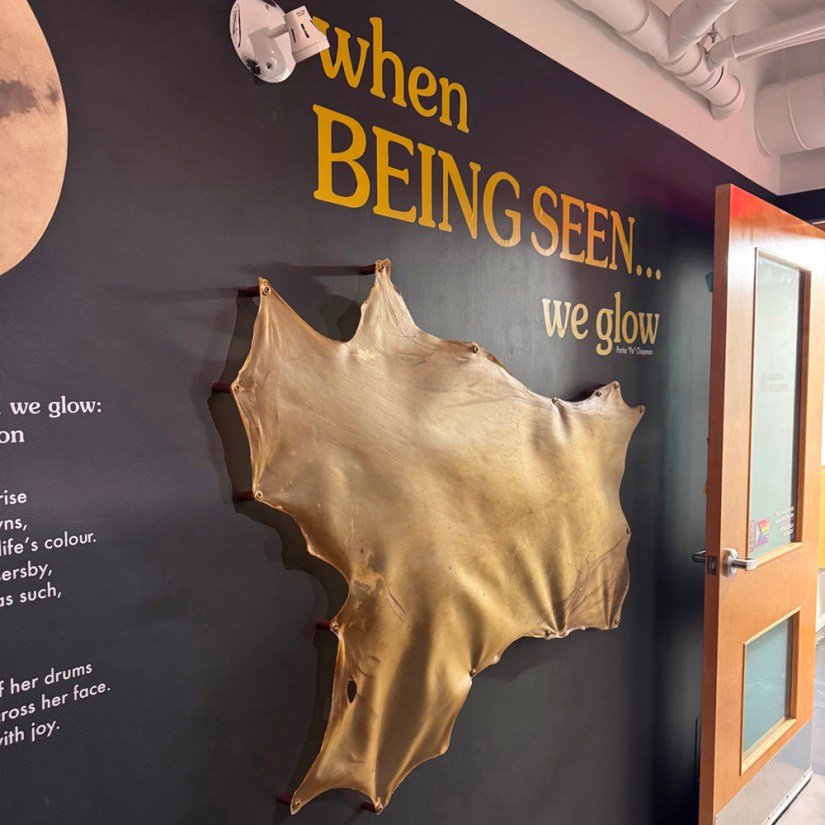
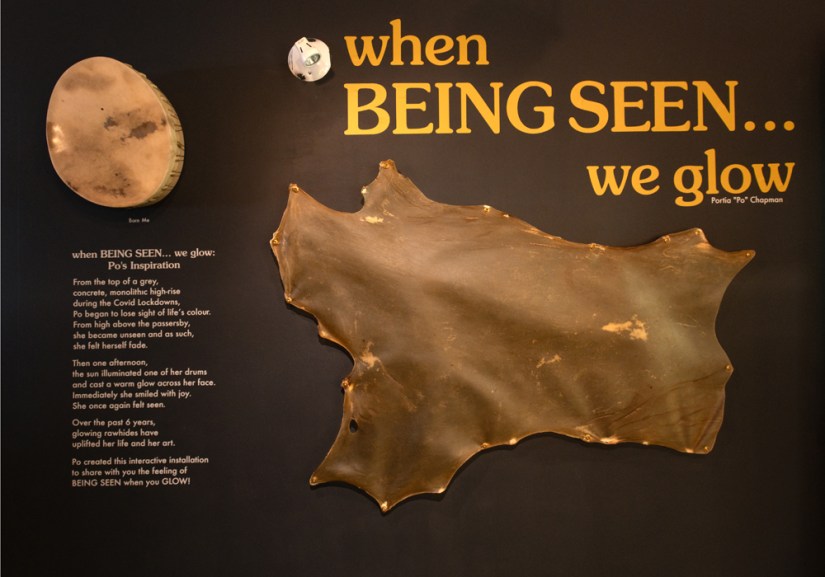
The gallery’s main title wall served as the visitor’s first contact point. Originally, I planned to mount a massive full bison rawhide across the wall. However, exact spatial measurements revealed the wall was too small for a bison hide. Pivoting quickly, I selected a pristine natural deer rawhide from my studio collection whose proportions matched the entry layout perfectly.
Stage 1: Studio Rehydration and Perimeter Framing
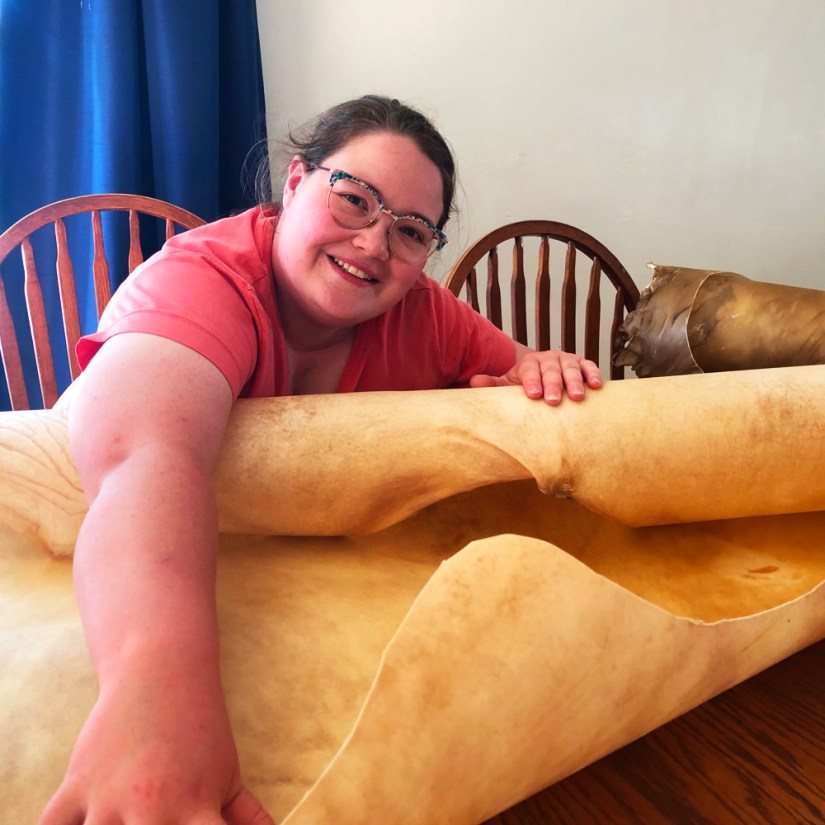
Rawhide arrives from suppliers tightly rolled, stiff, and unyielding. To transform rigid skin into a smooth gallery canvas I employed the following steps in my studio:
- Sanitization: I washed and disinfected a large tub to remove all soaps, oils, or residue that could stain the natural skin.
- Hydration: The deer rawhide unrolled underwater as it absorbed moisture, soaking for 24 hours until completely pliable.
- Wall-Stretching: The wet hide was lifted onto a flat studio wall, stretched taut, and nailed around its perimeter. Drying under tension produced a flat hide.
Stage 2: Hardware Engineering and Safety
- Edge Finishing: Because dried rawhide sets with firm, glass-sharp edges, I trimmed the perimeter with tinsnips to remove sharp corners and keep visitors safe as they walked past it in the gallery.
- Pilot Holes: Mounting points were measured and pre-drilled through natural structural nodes in the skin.
- Custom Floating Mounts: To keep the hide from sitting flat against the drywall, I innovated a custom standoff mount using cut copper pipe spacers paired with brass star-headed screws. This offset allowed gallery light to pass behind translucent sections, casting deep drop shadows that made the hide appear to float off the wall.
Stage 3: Protected Transit Logistics
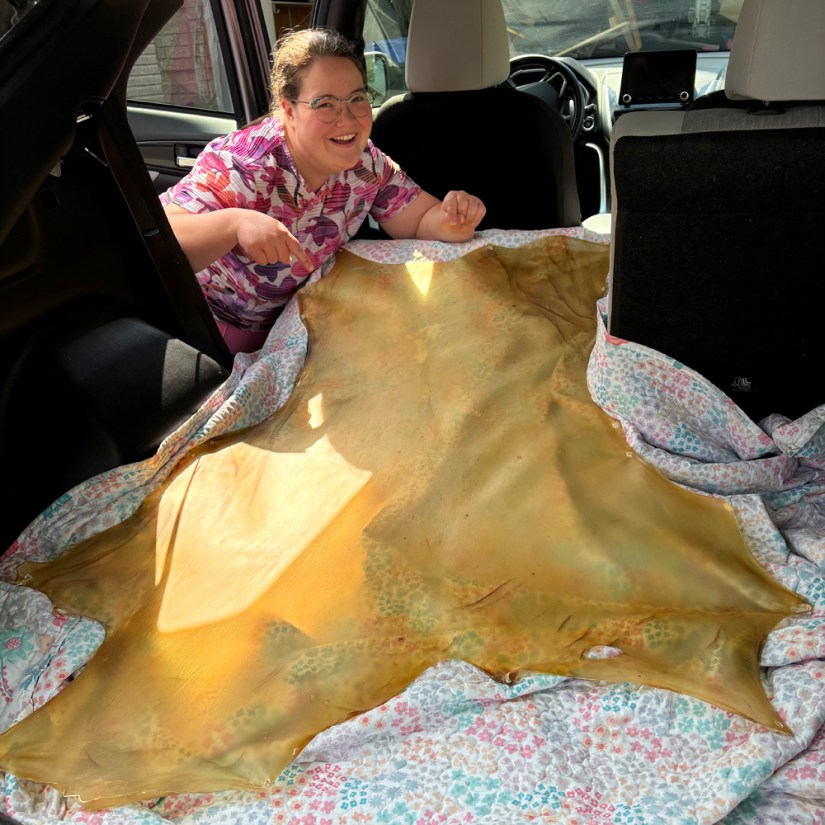
Transporting a wide, rigid rawhide sheet without folding or creasing required clear vehicle packing. Boxed lighting vessels were loaded into the trunk first to build a level base, followed by heavy moving blankets laid over the boxes to create a cushioned surface. The flat deer hide was laid flat on top of the blankets, covered with an extra protective layer to shield it during transport.
Stage 4: Mounting onto the Title Wall
Inside the Pocket Gallery, two of my volunteer assistants held the hide in place against the dark wall while I marked pilot holes onto the drywall. After setting heavy-duty wall anchors, we secured the brass screws and copper spacers using a cordless impact driver.
Mounted directly under gold vinyl lettering reading “when BEING SEEN… we glow,” the floating hide captured gallery lighting, highlighting its deer hide form, translucent grain, warm amber tones, and rich drop shadows.
Moving the Glow Chamber: Logistics, Load Schedules, and Assembly Choreography
The natural, golden atmosphere of the Glow Chamber looked effortless to gallery visitors. However, that seamless experience was built on six months of structural research and careful delivery logistics. Every component was thoughtfully created around clear threshold dimensions, transport limits, and quick assembly timelines.
1. Designing for Transit and Clearances
- Plinth Base Levelling: To guarantee that the plinth base rested flat on concrete floors without wobbling, I flipped the wooden base upside down outside my studio and sanded the lower edges level using a belt sander.
- Doorframe Clearances: The height from the bottom plinth to the top of the 2X3 interior monolith pillars was calculated to clear standard metal doorframes throughout the Tett Centre.
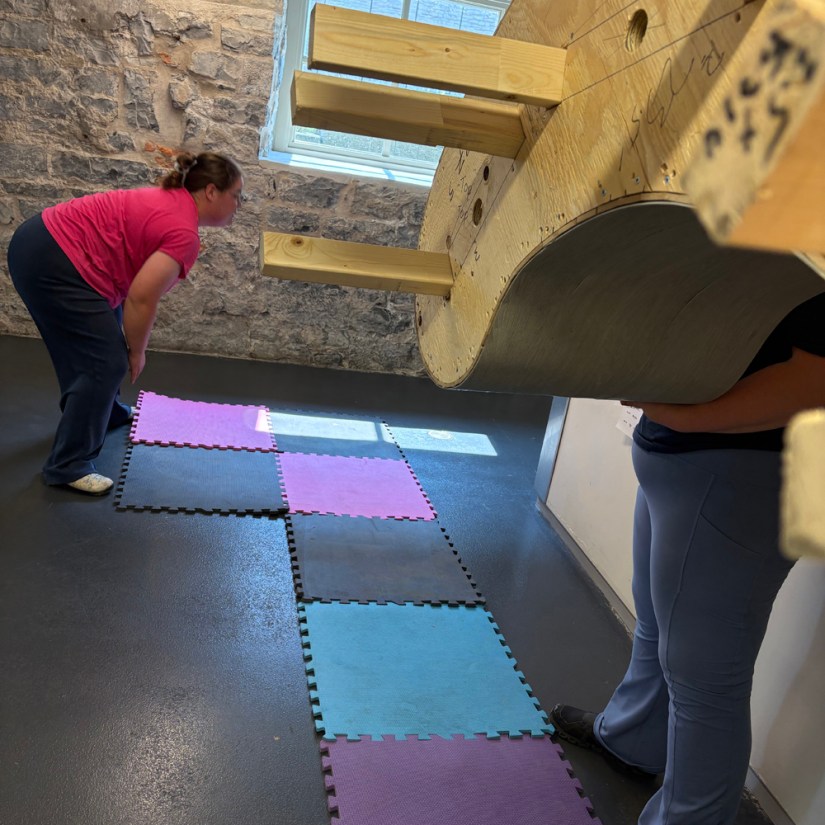
- The Slippery Slide Wrap: The outer sides of the plinth base were wrapped in smooth, durable oak-grain vinyl, allowing the heavy base to slide across interlocking foam floor tiles without scratching gallery floors and the Glow Chamber.
2. Gallery Assembly Sequence
Moving and assembling the structural components followed a strict step-by-step sequence:
- Unload Plinth Top First: Carry the circular tiled plinth top from the U-Haul truck and lean it safely against the gallery wall, exposing pre-wired LED perimeter tape underneath.
- Slide Main Base Through Hallway: Unload the heavy plinth base, laying colourful interlocking foam tiles across corridor floors to slide the base through doors into Room 115.
- Pillar Integration: Spin the base into position and lock its custom notch around the gallery’s structural metal pillar, providing direct access to electrical outlets.
- Alternate Monolith Installation: Bring in seven textured monolith structures from the truck, setting the tall central monolith first and alternating outwardaround the plinth.
- Wiring and Dimmer Tuning: Mount lighting diffusers using a stepladder, thread power cords down through pre-drilled access holes, and plug cables into the hidden power bar connected to the custom dimmer switch box.
By designing components around real-world transport limits, two people assembled the complete physical installation safely in about 1hr.
Celestial Alignment and Community Ritual: The Opening Ceremony
The formal opening ceremony on July 30, 2026, was planned to align with the summer Buck Moon, coinciding with the peak of the Southern delta Aquarid meteor shower and a morning planetary alignment of Saturn, Mars, and Venus. This celestial timing brought natural rhythms directly into the exhibition narrative.
1. Welcoming Space and Curated Refreshments
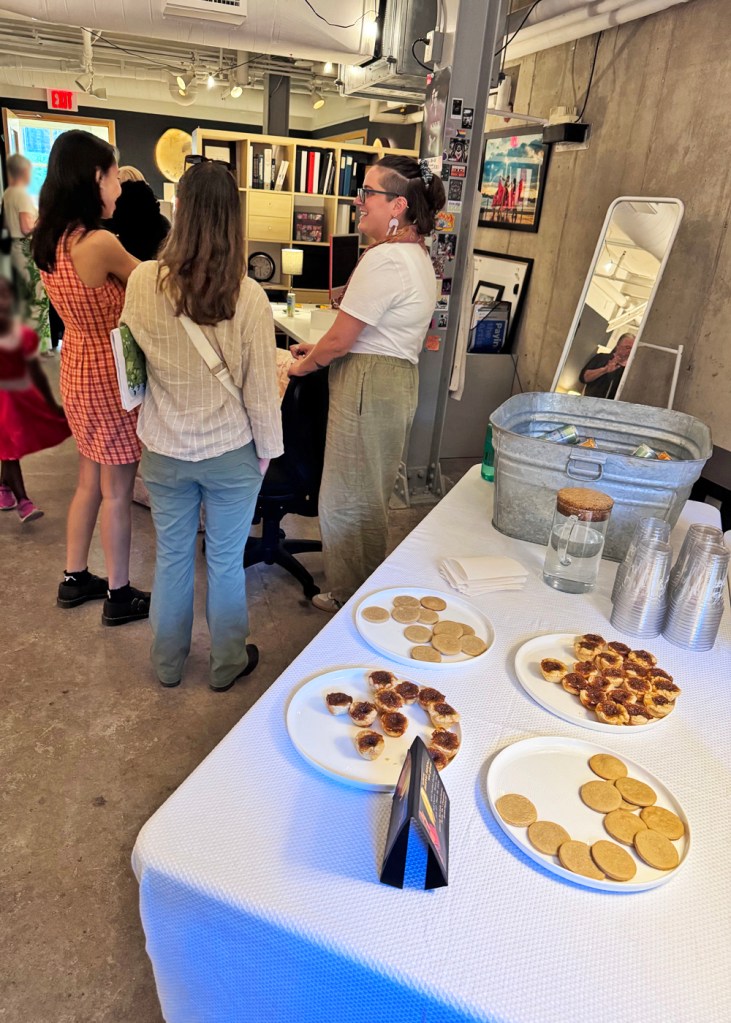
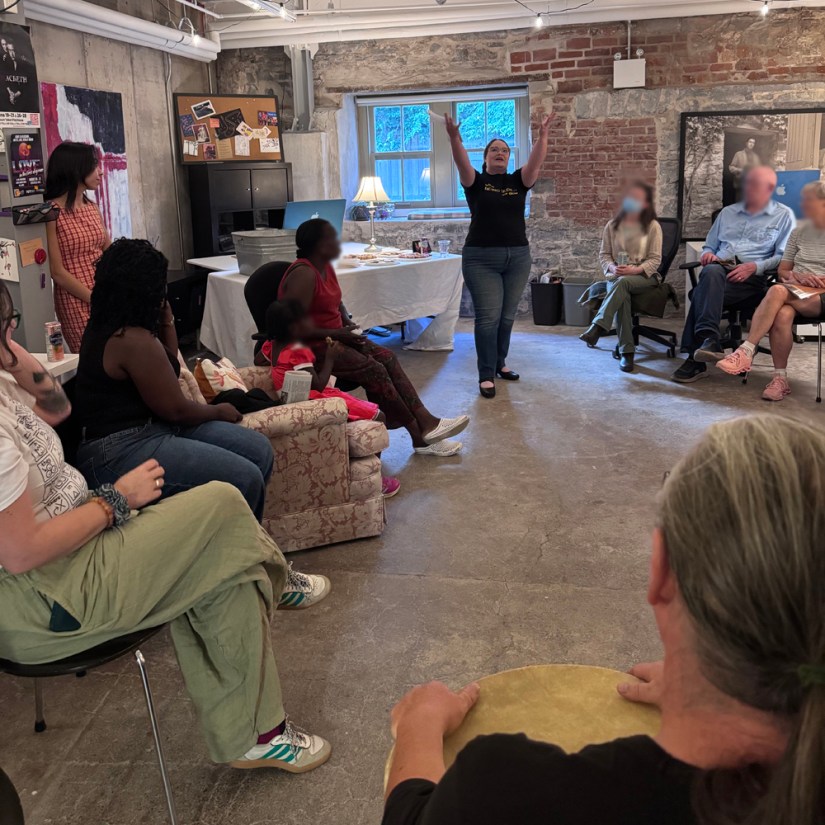
Outside the Tett Centre entrance along the Kingston waterfront, I greeted arriving visitors beside directional signs as sunset turned the sky lavender and pink. Inside Room 115, KAC Program Administrator Felicia Holmes opened the evening, welcoming guests into the KAC’s cozy “Living Room” seating setup.
The refreshment table mirrored the show’s material themes, featuring a galvanized tub filled with ice and SanPellegrino (referencing rawhide soaking tubs), spring water, and homemade treats baked by my mother, including family-recipe “Aunt-Ethel” brown sugar cookies and miniature taffy tarts shaped like glowing rawhide wall drums.
2. Inspiration Talk and Full Moon Drumming
During my artist talk, I shared the personal origin of the project: reflecting on the isolation of 2020–2021 inside my studio overlooking the Bay of Quinte, I recalled an afternoon when the noonday sun streamed through one of my elk rawhide frame drums, casting a golden light across the room that dissolved my loneliness. In that glowing moment, I once again felt seen. That moment inspired the Glow Chamber so others could feel that same sense of warmth and visibility.
Later in the evening, a live musician performed a full moon vocal and moose frame drum song, filling the gallery with serene acoustic sound. To conclude the ceremony, as a sign of my deep appreciation, I presented my chief volunteer and sister, Jazz, with a bespoke bison rawhide frame drum built on a steam-bent red oak rim.
Architectures of Attunement: Invisibility, Somatic Memory, and Biological Transmutation
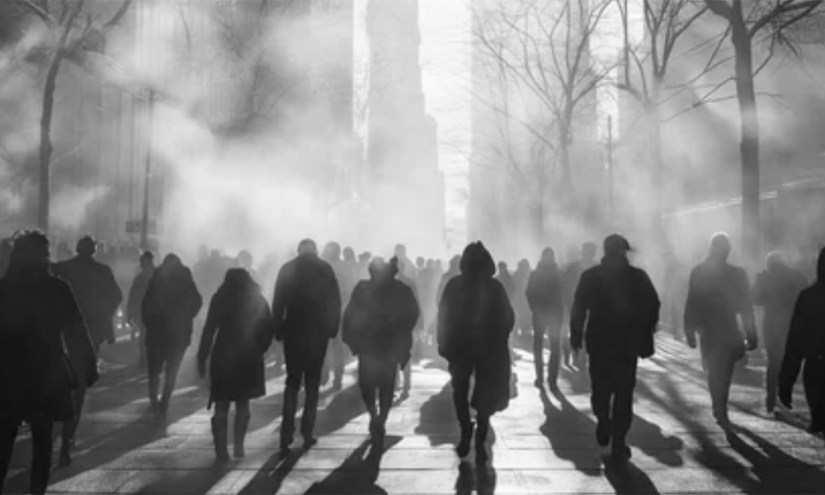
Modern public life faces a quiet crisis: widespread social isolation and a sense of invisibility. Modern city dwellers often experience detachment, moving through crowded streets while feeling unacknowledged and unseen. The Glow Chamber was engineered as a direct response to this isolation, utilizing spatial psychology, light physics, and biological materials to encourage somatic safety and mutual visibility.
1. Confronting Brutalist Isolation and Experiential Avoidance
Sociologist Georg Simmel described the “blasé attitude” as an emotional defence mechanism adopted by city dwellers to cope with sensory overload (Simmel 2016). People tune out their surroundings and avoid eye contact to protect themselves from urban stress.
This dynamic was highlighted during the exhibition by visitors’ reaction to the grey caution sign mounted on the rear framework reading “When being unseen… we fade.” Positioned against cold grey subway tiles, almost no visitors spoke about the sign. Those who did noted a clear feeling of discomfort.
In clinical psychology, this behavior is known as experiential avoidance—the automatic human drive to turn away from uncomfortable emotional truths (Hayes et al. 1996). Visitors turned away from the cold sign and moved toward the glowing rawhide vessels, demonstrating Roger Ulrich’s Stress Recovery Theory: hard monochromatic surfaces increase stress, while warm biological materials encourage physical relaxation (Ulrich 1979).
2. Biological Light Transmission and Somatic Womb Memory
Standard amber light bulbs fail to create a deep emotional response because artificial light stays flat and uniform. The transformation occurred when light passed through untanned animal rawhide.
- Subsurface Light Scattering: In optical physics, subsurface scattering describes how light penetrates a translucent material, bounces through micro-structures, and scatters outward (Gigilashvili et al. 2021). Human visual processing recognizes subsurface scattering as the signature of living tissue. When light passes through rawhide collagen fibres and vein structures, the brain interprets the radiance as a warm, living presence.
- Implicit Somatic Memory: Visitors frequently described the Glow Chamber as feeling like a comforting, safe womb. While adults have no conscious memory of early development, the somatosensory nervous system retains implicit memory of intrauterine warmth and filtered light (Fagard et al. 2018). Light scattered through biological hide acts as a somatic key, unlocking pre-verbal memories of safety, containment, and belonging.
3. Engineering Eye-Level Face-to-Face Encounter
Varying the heights of the monoliths produced an unexpected psychological reaction: visitors naturally sought out and stood before vessels that matched their exact height.
- Facial Pareidolia: Human visual processing is attuned to facial patterns via the fusiform face area. Because natural hide features irregular shadows and organic lines, viewers experienced spontaneous pareidolia, projecting friendly facial contours onto the glowing domes.
- Eye-Level Parity: Looking up or down creates subtle power dynamics. Eye-level alignment eliminates vertical dominance, signalling equal peer-to-peer recognition. Standing face-to-face with a vessel scaled to their height allowed visitors to feel recognized – to feel like they were being seen.
- The Blue-Base Upward Anchor: Hidden blue LED strip lighting along the plinth base anchored the floor plane while prompting the viewer’s eyes to travel upward toward the warm amber vessels, mirroring an emotional shift from urban isolation to golden warmth.
4. Historical Artistic Lineages
While my practice stands on its own distinct ground, Being Seen enters into a deliberate dialogue with historical and contemporary precursors:
- Jeffrey Gibson: Utilizes stretched rawhide with vibrant colour-blocking, though focusing on exterior surface narrative rather than immersive subsurface backlighting (Berlo 2018).
- Eva Hesse: Pioneered post-minimalist translucent polymers and latex to evoke visceral vulnerability and somatic containment (Lippard 1992).
- Rebecca Belmore: Employs hide and natural membranes to address voice and political visibility, using hide as an acoustic megaphone rather than an optical receiver (Augaitis et al. 2018).
- Wolfgang Laib: Constructs immersive chambers illuminated by warm light through beeswax walls, though lacking individualized, eye-level relational encounters (Ottmann 2000).
- James Turrell: Manipulates spatial light frequencies, whereas the Glow Chamber grounds abstract optical phenomena into tangible biological textures (Adcock 1990).
The Living Archive: Community Participation and Conclusion
The ultimate proof of the Glow Chamber’s success came from active community participation. Inside the gallery, an interactive photo board, curated by me, invited visitors to post instant-camera photo stickers alongside handwritten notes describing their experiences.
By the close of the show on September 18, 2026, 70 community members had added their portraits to the living display. Surrounded by brutalist grey surfaces yet held by the golden light of the rawhide vessels, visitors moved from passive viewers to active participants in a shared artwork.
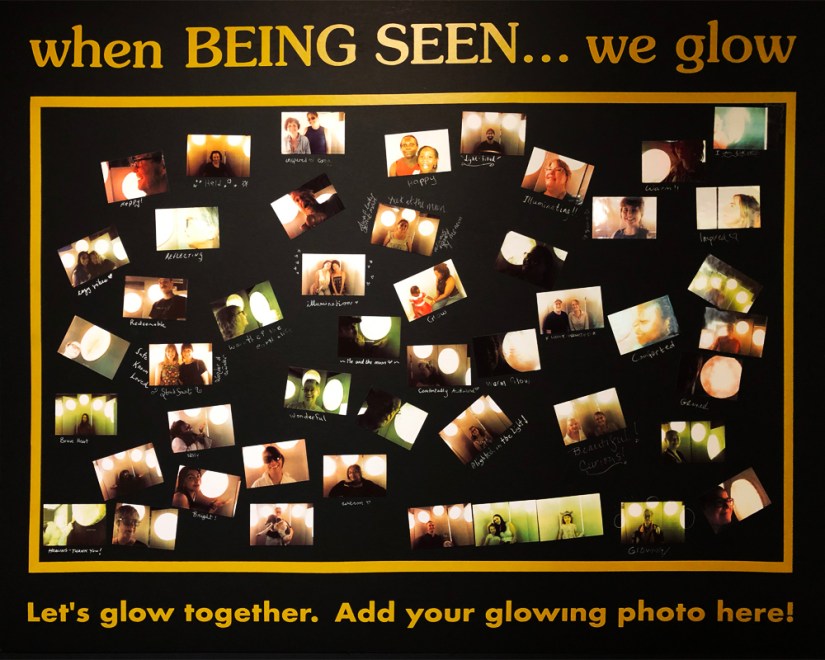
The Glow Chamber demonstrates that art can transcend aesthetic contemplation to become a technology of healing. By engineering an environment that honours human biological memory, utilizes the optical metamorphosis of subsurface scattering, and rejects urban alienation in favour of eye-level relational attunement, the immersive, interactive art installation offered visitors a rare sanctuary: a place where the quiet weight of invisibility is lifted, and where the human spirit, warmed by organic light, is safely reassembled. As captured on the title wall beneath our guiding axiom: “when Being Seen… we glow.”
Works Cited
Adcock, Craig. James Turrell: The Art of Light and Space. University of California Press, 1990.
Augaitis, Daina, et al. Rebecca Belmore: Beauty of a Fierce Longing. Art Gallery of Ontario / Information Office, 2018.
Berlo, Janet Catherine. “Jeffrey Gibson: Like a Hammer.” Denver Art Museum Review, vol. 42, no. 2, 2018, pp. 88–95.
Bowers, T. “Gaze Perception under Vertical Asymmetries in Illumination.” Scientific Reports, vol. 14, 2024, p. 13111.
Fagard, Jacqueline, et al. “Fetal Origin of Sensorimotor Behavior.” Frontiers in Neurorobotics, vol. 12, 2018, p. 23. https://doi.org/10.3389/fnbot.2018.00023.
Gehl, Jan. Life Between Buildings: Using Public Space. Translated by Jo Koch, Island Press, 2011.
Gerstel, Sharon E. J. “The Iconography of Light in Sacred Architecture.” Studies in Byzantine and Medieval Art, 2020, pp. 231–45.
Gigilashvili, Davit, et al. “Translucency Perception: A Review.” Journal of Vision, vol. 21, no. 8, 2021, p. 4. https://doi.org/10.1167/jov.21.8.4.
Groarke, Jenny M., et al. “Loneliness and Social Disconnection in the COVID-19 Era: The Impact of Psychological Interventions.” Journal of Affective Disorders, vol. 285, 2021, pp. 335–47. https://doi.org/10.1016/j.jad.2021.02.045.
Hartgerink, Chris H. J., et al. “The Ordinal Effects of Ostracism: A Meta-Analysis of 120 Cyberball Studies.” PLOS ONE, vol. 10, no. 5, 2015, p. e0127002. https://doi.org/10.1371/journal.pone.0127002.
Hayes, Steven C., et al. “Experiential Avoidance and Behavioral Disorders: A Functional Dimensional Approach to Diagnosis and Treatment.” Journal of Consulting and Clinical Psychology, vol. 64, no. 6, 1996, pp. 1152–68. https://doi.org/10.1037/0022-006X.64.6.1152.
Kozinets, Robert, Ulrike Gretzel, and Anja Dinhopl. “Self in Art/Self As Art: Museum Selfies As Identity Work.” Frontiers in Psychology, vol. 8, 2017, p. 731. https://doi.org/10.3389/fpsyg.2017.00731.
Laubin, Reginald, and Gladys Laubin. The Indian Tipi: Its History, Construction, and Use. 2nd ed., University of Oklahoma Press, 1989.
Leder, Helmut, et al. “A Model of Aesthetic Appreciation and Aesthetic Judgments.” British Journal of Psychology, vol. 95, no. 4, 2004, pp. 489–508. https://doi.org/10.1348/0007126042369811.
Lippard, Lucy R. Eva Hesse. Da Capo Press, 1992.
Loades, Maria Elizabeth, et al. “Rapid Review: The Impact of Social Isolation and Loneliness on the Mental Health of Children and Adolescents in the Context of COVID-19.” Journal of the American Academy of Child & Adolescent Psychiatry, vol. 59, no. 11, 2020, pp. 1218–39. https://doi.org/10.1016/j.jaac.2020.05.009.
McKenna-Plumley, Phoebe E., et al. ““It’s a Feeling of Complete Disconnection”: Experiences of Existential Loneliness from Youth to Older Adulthood.” BMC Psychology, vol. 11, no. 1, 2023, p. 408. https://doi.org/10.1186/s40359-023-01452-4.
Murata, Shinya, et al. “Psychological Distress and Loneliness Beyond the Acute Phase of the COVID-19 Pandemic.” Psychiatry Research, vol. 305, 2021, p. 114164. https://doi.org/10.1016/j.psychres.2021.114164.
Murray, Scott. Translucent Building Skins: Materiality, Light, and Space in Contemporary Architecture. Routledge, 2013.
Ottmann, Klaus. Wolfgang Laib: A Retrospective. American Federation of Arts, 2000.
Prizeman, Katie, Netta Weinstein, and Ciara McCabe. “Effects of Mental Health Stigma on Loneliness, Social Isolation, and Relationships in Young People with Depression Symptoms.” BMC Psychiatry, vol. 23, no. 1, 2023, p. 527. https://doi.org/10.1186/s12888-023-04991-7.
Meet the Artist
The creator, Portia “Po” Chapman (BFAH, B.Ed, OCT, ACE), of “Being Seen: when Being Seen… we glow” immersive art exhibition and the interactive Glow Chamber installation is a Kingston based Rawhide & Colour Blocking Artist / Site-Specific Installation & Mural Specialist.
Discover her public murals, gallery exhibitions, and studio practice at loveartbypo.ca.
Contact Po Using Form Below


Portia “Po” Chapman, Kingston Artist
Serving Kingston, Ontario & Across Canada
Contact Po
Email: Portia@LoveArtByPo.ca
Instagram:
Love Art by Po
Facebook:
Love Art by Po Profile
Location
Private Art Studio:
Auden Park Kingston, ON
Google Business Profile:
Professional Listing


Let Me Know What You Think! Start or Join the Convesation